I boycotted the railways for 20 years – nationalisation won’t save them
The inconvenient truth is that many people hardly ever use the train, says Sean O’Grady. A smart new livery for Britain’s trains can’t make up for the legacy of the Beeching cuts, cancelled plans for line expansion – and the fact that Britain is too skint to do much about it


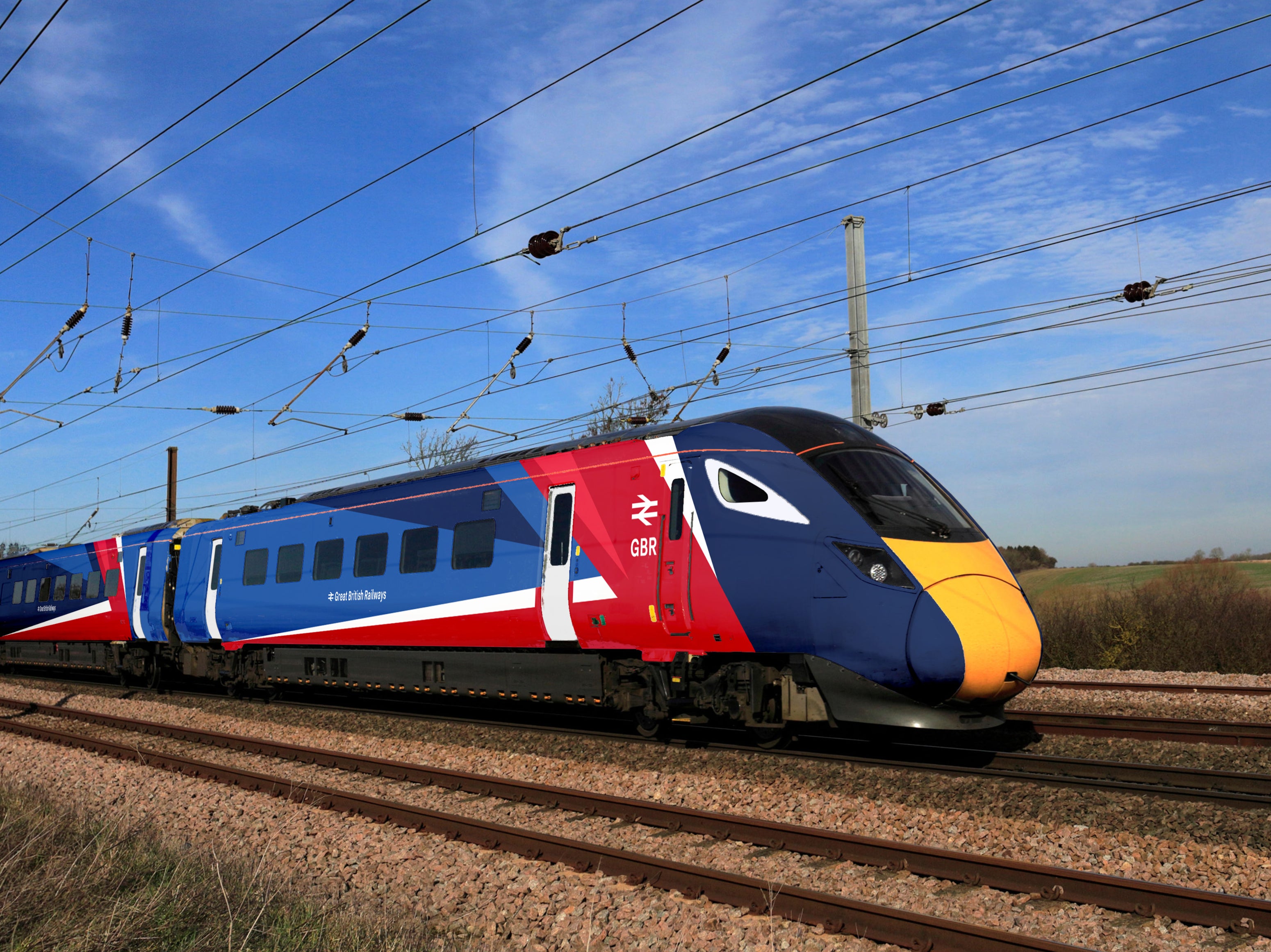
If all that was needed to sort out the country’s trains was a nice paint job, then I think we would all be pretty content. The formal launch of the government’s rail nationalisation bill has been accompanied by an image, possibly AI-generated, of the railway’s new livery for the state-owned operations, and, actually, the paint job isn’t that nice at all.
It’s supposed to be a patriotic mash-up of the union flag, which we probably see a bit too much of these days, to be honest, raggedly clinging to lampposts in Reform UK strongholds. But in any case, the jagged red, white and blue lines and disjointed shapes look like a premonition of a more dysfunctional future for public transport.
I’m not sure how fast the new trains will go, but they seem to be moving at breakneck speed towards a golden age of train travel that, as some of us old enough to remember will know, really never was. I do like the revival of the classic British Rail logo from 1968, which used to be everywhere, and the hint on the nose of the locomotive to the dull teal blue shade that was also once ubiquitous, but I’d have much rather they’d gone the whole hog and restored the full corporate logo and livery of British Rail before it was almost literally scrapped at the fag end of Thatcherism in 1993.
The problem, as with too much that the Labour government does, is overpromising. The very name of the new outfit, “Great British Railways”, simply begs to be satirised. It will be mocked soon enough, because nationalisation might make some things about getting on a train a bit better, and some a bit worse, but it will not be transformative. It will not restore much of the network that was destroyed by the Beeching cuts. It will not deliver any of the brave new lines, such as HS2 and the northern east-west line, that we were promised.
Fares might be frozen next year (paid for by higher taxes), but they will not come down. Industrial disputes will not cease, and, as a single national commercial entity, they may become more disruptive, approaching the scale of the national rail strikes we used to enjoy decades ago. Because there will be little new capacity, the passenger trains will still be “ram-packed” at peak times, as Jeremy Corbyn once famously said, sitting on the floor in the vestibule of some inter-city service; and because the network has been pruned so far back from its historic reach, freight will not return. The Elizabeth line in London, a railway but technically part of the Tube network, may well be the last major piece of such infrastructure to be built in the United Kingdom. That’s because we are skint, and the garish new livery cannot disguise that.
Indeed, that is not the end of the illusions. I am fortunate enough to have been one of the first to use the new rolling stock on the East Midlands line, the Class 810 “Aurora”, albeit painted maroon for now. There is much to be said for it. There is more space, more room for bags under seats, the drop-down trays are bigger, though the seats are maybe a bit thinner and less comfy (not sure), and there are more convenient charging points, and, so they say, there’s improved connectivity.
Of course, in the same week that I sampled the lovely new rolling stock, the last fast train up to the Midlands was cancelled, and the next time I used the service, the service was late. It’s still expensive, even when you book ahead, and like many, I still prefer the freedom of the motor car. Indeed, it’s too often forgotten just how many Britons hardly ever use a train at all; it’s more a London/commuter thing, hence the media attention.
Trains are too communal and too inconvenient. For about 20 years, I boycotted the East Midland line after a member of staff reprimanded me for taking a complimentary copy of the Evening Standard from first class into standard (cover price then being about 30p), which I admit is irrational but something I’m deeply proud of. At that time, I’d have been quite happy to see the radical 1982 Serpell Report implemented and the tracks tarmacked over to supplement the M1.
Lately, though, I’ve had to capitulate, because driving through London became impossible, as well as costly, and even the slightest prang on the M1 closes it for half a day. So, unwillingly, I’ve become a train user; but my expectations, as a traveller, taxpayer and voter, remain firmly second class. I’d like to think that one day we’ll be able to say, “Say what you like about old Starmer, but at least he made the trains run on time”. But I doubt it.
Join our commenting forum
Join thought-provoking conversations, follow other Independent readers and see their replies
Comments
Bookmark popover
Removed from bookmarks