The Tories’ bid to slash foreign aid won’t make Britain safer – it will make the world more dangerous
As a former soldier, I’ve learnt that Britain’s safety depends not just on our armed forces, but on the stability aid creates abroad, says James Cowan, CEO of The Halo Trust. The Conservative leader’s proposal would weaken, not strengthen, our national security and our global influence

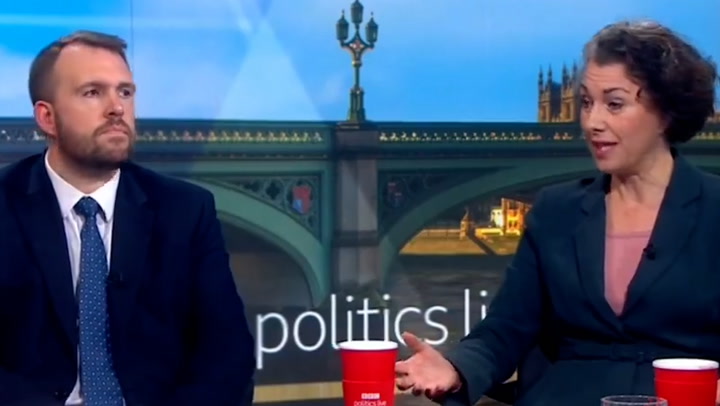
I write this from the Conservative Party Conference in Manchester, just days after the horrific attack on the synagogue in Crumpsall, in the north of the city, by a British citizen of Syrian descent. By chance, I have only recently returned from Syria, which I visited as CEO of the landmine clearance charity, the Halo Trust. The coincidence of these three events speaks to deeper connections – between British politics, a world at war, and safety on Britain’s streets.
At the conference, the shadow chancellor, Mel Stride, announced a proposal to slash international aid even further, to just 0.1 per cent of GDP. Too often, humanitarian aid has been treated as an easy cut to make. Yet in today’s tangled and volatile world, it is clear to me that aid is no longer a matter of international interest – it is a matter of national interest, and therefore no longer an optional extra.

I have spent over three decades commanding British soldiers in Northern Ireland, Iraq and Afghanistan, and now lead the world’s largest humanitarian landmine clearance organisation. From first-hand experience, I know that a nation’s security is built as much on soft power as it is through military strength. Overseas development aid is not charity or misplaced altruism; it is a strategic investment in global stability, economic resilience, and an affordable means of curbing irregular migration.
An effectively directed foreign aid budget amplifies UK defence and diplomacy by funding civilian efforts that mitigate conflict and build trust. Squeezing it again, at a time when global conflict has reached its highest level since the Second World War, will only diminish the UK’s international influence and weaken our long-term security.
It is obvious to me that defence spending and aid are two sides of the same coin. Together, they help make for a safer and more stable world. They need not be mutually exclusive, nor a choice between one or the other. Their combined power far exceeds anything that defence spending alone can achieve.
Consider the case of humanitarian demining, which occupies the grey space between the two – clearing the lethal debris of war that conflict leaves behind. Removing bombs and landmines from homes, roads and farmland is the critical first step in rebuilding shattered communities. Clearance allows people to remain in their home nations and enables the safe return of refugees.

Indeed, one of the largest groups risking their lives to reach the UK in small boats is from Afghanistan. Housing refugees cost the UK £5.7m per day between 2024-2025, yet the modest £2.8m per year allocated by the government for Halo’s work in Afghanistan has enabled us to make towns and farmland safe for millions of Afghans – ensuring they can remain at home rather than embark on perilous journeys.
Syria is another example of foreign aid’s real-world value to Britain. It is hard to convey the sheer scale of what has happened there. The devastation is biblical. When I recently stood in southern Damascus, as far as the eye could see, the city had been reduced to rubble. Whole districts were destroyed by a combination of barrel bombs and artillery. Only if bomb-strewn rubble is made safe can any of the millions of displaced Syrians hope to return home.
The Manchester attacker left Syria before the civil war, but conflict and devastation across the Middle East helped to feed the kind of extremism we saw last week. Yet change is possible. Halo has bomb disposal teams working to clear destroyed towns and cities across Syria so they can be rebuilt.
A 200km mine-belt currently runs across the former frontline in Syria. Until it is cleared, the country has no hope of restoring its economy, which was built on agriculture. Halo has teams using armoured excavators and drones to identify and clear contaminated areas far faster than was previously possible.
Syria is also drowning in unregulated weapons and ammunition, fuelling a surge in arms smuggling, fatal explosions at artillery depots, and an escalation in inter-communal violence. We can help to remove these weapons from circulation for good.
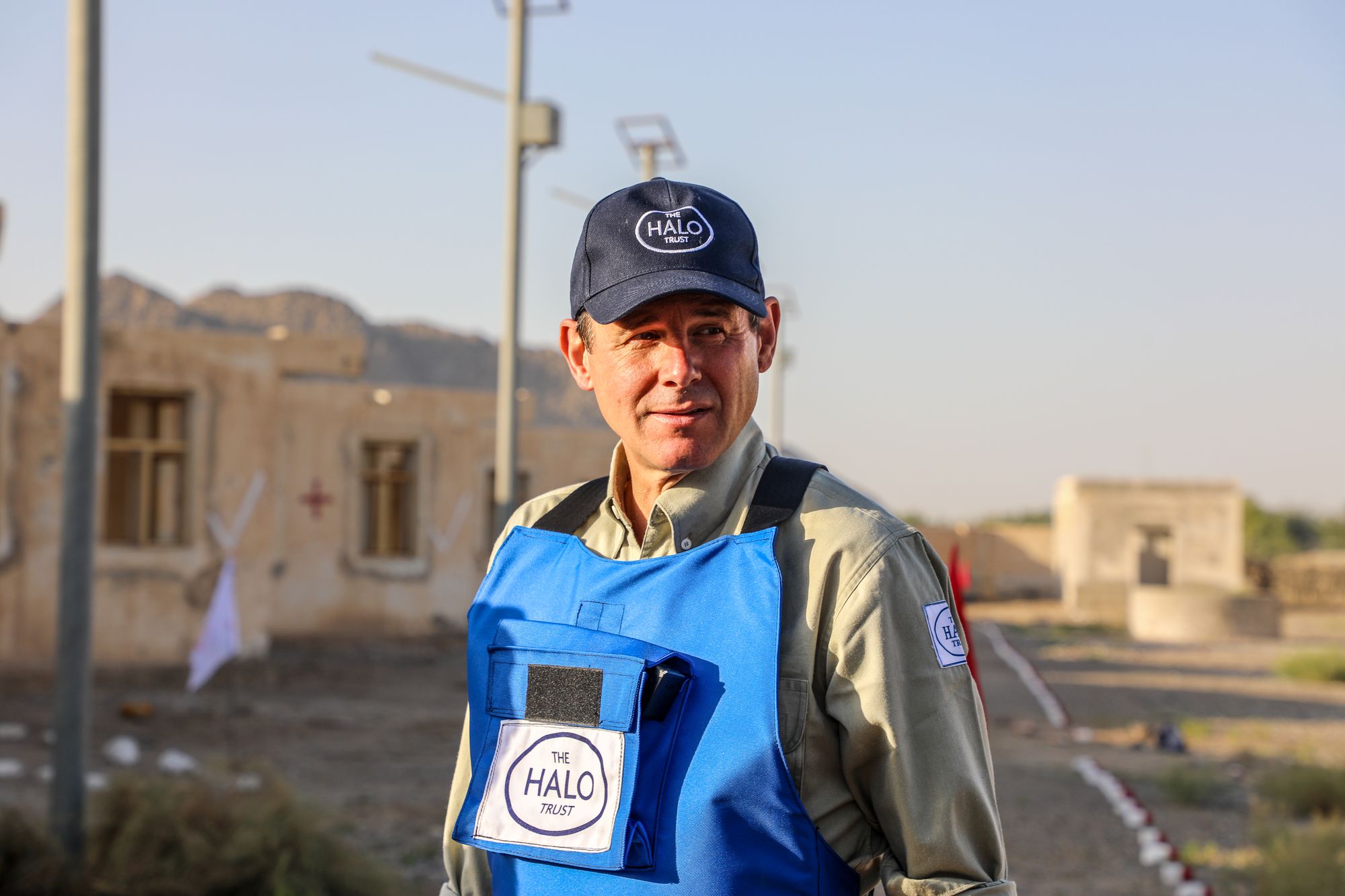
In 2004, I led my battlegroup, the Black Watch, during the signature battle of the Iraq war – the siege of Fallujah. Many of my soldiers were killed or wounded. The leader of al-Qaeda in Iraq at that time was Abu Musab al-Zarqawi. His deputy was none other than Ahmed al-Sharaa, now the new leader of Syria. As a former soldier and now as a humanitarian, I believe in the possibility of redemption, and I am glad that he has turned from violence to pursue a peaceful future for his country.
For him to succeed, we in the West must help him. At Halo, we believe that true security is built not just with tanks and weapons, but with development and stability. Gutting our aid budget would ignore the lessons of history. If Britain wants to lead on the world stage, we must recognise aid for what it really is – not charity or an optional moral duty, but a strategic imperative.
Major General James Cowan is CEO of The Halo Trust
This article was produced as part of The Independent’s Rethinking Global Aid project
Join our commenting forum
Join thought-provoking conversations, follow other Independent readers and see their replies
Comments
Bookmark popover
Removed from bookmarks