As Iranians, we cannot witness these crimes and remain silent
It takes total desperation to invite a superpower to attack your own country, write the Oscar-winning Iranian filmmakers Hossein Molayemi and Shirin Sohani – but that is exactly where we are


For almost five decades, the Islamic Republic has turned the lives of millions of Iranians into an ongoing tragedy through a combination of extremist ideology, nuclear and regional ambitions, and deep-rooted incompetence and corruption.
The regime in Tehran has spent hundreds of billions of dollars of the Iranian people’s wealth on its nuclear program and regional proxy forces without their consent. As a result, despite vast natural resources and a young, educated population, the monthly income of many families has fallen to $100-150. Unemployment is widespread, and runaway inflation has deprived millions of the most basic necessities, including food and shelter.
Under these conditions, Iranians took to the streets – not merely for freedom of expression, but for the right to survive. The government’s response was live ammunition and brutal repression. Thousands have been killed or permanently disabled, and still more now face imminent execution. Credible reports indicate the possible use of chemical weapons against civilians. Due to nationwide internet shutdowns, only a fraction of this catastrophe has reached the outside world.

No nation welcomes a foreign attack on its soil. But Iranians, facing a regime with no moral or ethical restraints, have no effective means of self-defence. The principle of “responsibility to protect” makes clear that the international community has a moral obligation to intervene militarily.
We do not mean occupation but targeted operations with surgical precision: removing regime leaders, disrupting financial resources and command networks, and enabling the people of Iran to reclaim their future.
Contrary to some assumptions, the fall of the Islamic Republic does not inevitably lead to instability. In the long run, true instability is the product of this regime’s continued existence. Our support for Prince Reza Pahlavi, as the leader of the transitional period, ensures that a power vacuum and civil war will be avoided and that extremist, terrorist, and separatist groups will not exploit the situation.
Some groups – particularly certain pro-Palestinian activists and segments of the left – have remained silent because Prince Reza Pahlavi’s name is associated with this uprising and because of fears of a restored monarchy. Prince Reza Pahlavi is currently the only transitional leader. He has pledged that a referendum will be held in Iran to determine the future political system.
But even if Iranians choose the restoration of the monarchy, those who genuinely believe in democracy must respect the will of the people – even when it contradicts their personal preferences. Some activists prefer to turn a blind eye to what is happening now in Iran because they take the Iranian regime into account as a pro-Palestine government. The Islamic Republic’s support for the Palestinian cause is largely tactical, driven by its own political interests rather than concern for Palestinian lives. Those who claim to defend human rights while remaining silent in the face of the killings here must reckon with the moral and historical consequences.
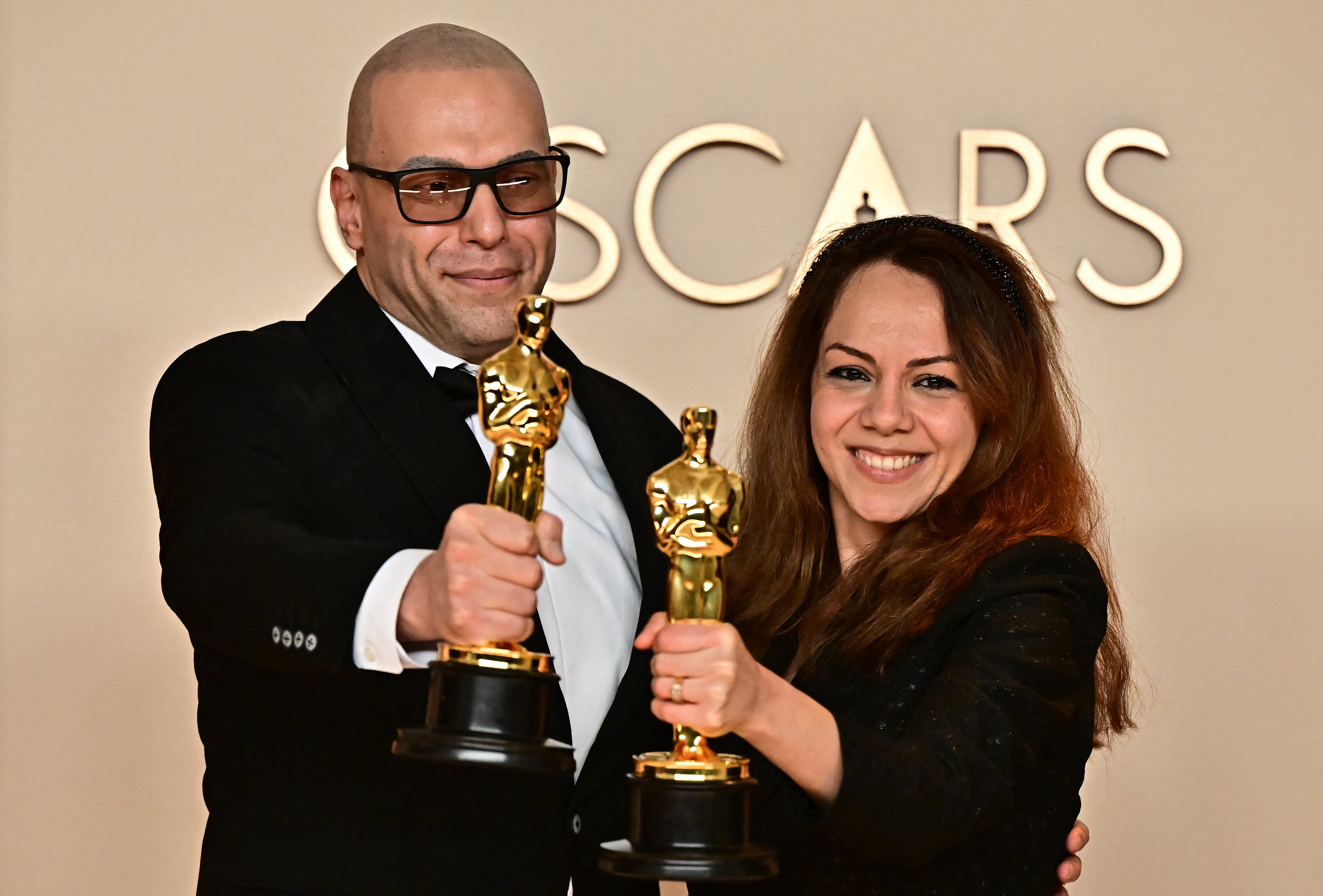
With the responsibility our names carry as Academy Award-winning Iranian artists, we cannot witness these crimes and remain silent. We cannot – and will not – speak in neutral or purely diplomatic terms. Our silence today would be judged as complicity tomorrow.
If world leaders, including the president of the United States, fulfil their moral responsibility by bringing down the Iranian regime and returning power to the people, their names will be remembered with honour in the historical memory of Iranians and the world’s conscience. Silence or delay, however, will impose a heavy cost on the international community.
The Iranian people are a peace-loving nation. If helped to achieve freedom, Iran can become a reliable partner and a source of regional and global stability, benefiting all. It is worth recalling the words of Saadi of Shiraz, the “Master of Speech” of 13th-century Iran, whose poetry is so often spoken as a reminder of our shared human responsibility:
“Human beings are members of a whole,
In creation of one essence and soul.
If one member is afflicted with pain,
Other members uneasy will remain.
If you have no sympathy for human pain,
The name of human you cannot retain.”
Join our commenting forum
Join thought-provoking conversations, follow other Independent readers and see their replies
Comments
Bookmark popover
Removed from bookmarks