If you traumatise women, is it any wonder they don’t want to give birth in hospitals?
The death of a young mother and her baby who died after choosing a home birth shows us a system that is failing mothers like me, says Lucy Hunter Ford

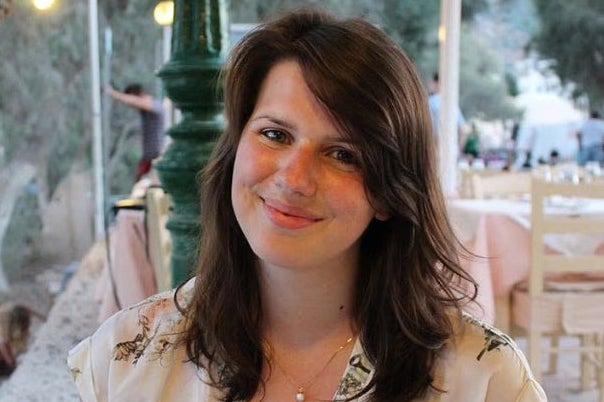
Jennifer Cahill and her baby daughter, Agnes, should still be alive. It is a story I have watched unfold with horror and heartbreak.
The coroner’s findings, published last week, are clear: a young mother, 34, died along with her baby after choosing to have a home birth and might have been saved if she was taken to North Manchester General Hospital earlier. The birth was catastrophically mismanaged from the outset. If she had been in a hospital, the specific mistakes that led to her death would likely have been caught.
Instead, a young boy is growing up without his mother and a husband is left without his wife and child, after an appalling catalogue of errors and negligent care, inflicted during a home birth that went terrifyingly, fatally wrong.
But it matters, profoundly, why she wanted to give birth at home. It wasn’t recklessness, or arrogance, or an imagined “cult of natural birth”. It was fear of giving birth in an NHS hospital. “I found Jen’s desire for a home birth was linked to trauma from her first pregnancy,” the report reads. This double tragedy – the senseless, desperate devastation of it – began there. That is why a narrative that stops at “home birth is bad and hospital birth is good” is a reductive polarity and one that entirely misses the point.
The answer to a system that traumatises women isn’t to trap them in it, it’s to fix it. If you still believe that hospitals are automatically safe places to give birth, then you’re simply not listening.
Let me remind you of the uncomfortable, disgraceful facts: a recent Care Quality Commission report showed that more than two-thirds of all maternity units are deemed unsafe, the worst levels since records began in 2018. Up to 45 per cent of women describe their birth experience as traumatic, and one in 10 experience PTSD symptoms – that is up to 30,000 women every single year in the UK.
Since 2019, the potential bill for maternity negligence claims stands at a staggering £27.4bn. Last year alone, the sum was £2.5bn, more than 40 per cent of the entire maternity budget for the year. Black women are more than twice as likely to die in childbirth and during the six weeks postpartum than white women.
That trauma doesn’t end when a mother leaves hospital – women describe months or years of panic attacks, dissociation, nightmares and flashbacks, an inability to bond with their baby, and all-consuming shame. Birth trauma steals women’s identity, relationships and future.
It should be outrageous and offensive that women walk away from childbirth with such severe psychological damage. It should be unthinkable that, should they want to grow their family, they’re expected to willingly re-enter the system that traumatised and then abandoned them in the first place. Against this backdrop, ask yourself: is it any wonder women are seeking alternatives? Is it really so outrageous, selfish or shocking that they might try to find some autonomy, some care – some actual semblance of the safety they were promised?
It feels almost controversial to point out, but for the majority of women, the majority of the time, a well-supported home birth is, in fact, safer than being in hospital. A 2020 Lancet review of more than half a million births found that low-risk women who planned to give birth at home experienced fewer severe tears, infections and haemorrhages, with no difference in maternal or neonatal mortality. Which makes sense: birth isn’t purely biomechanical, it’s relational. A body that feels safe, respected and trusted labours better.
Meanwhile, in hospital settings, intervention rates climb ever higher. The rate of spontaneous vaginal birth has fallen from 62 per cent to just 42 per cent in a decade, while close to half of all births are now caesarean sections. One in three labours is now induced. This wouldn’t necessarily matter if there were a correlating dramatic increase in outcomes. But outcomes haven’t improved, they’ve worsened. And interventions – while sometimes lifesaving – come with their own risks. Yet we persist with the fantasy that control equals safety. Anyone who suggests otherwise is painted as a “natural birth” zealot, as if questioning a broken system. Asking what women actually want means you belong to a cult.
I will never take for granted the caesarean that gave me my daughter. And some of the midwives who helped me to birth my three children showed exceptional, compassionate care – I will never forget them. But let’s not pretend that a hospital is safe simply because it’s a hospital, or that all medical care is created equally. A 2024 Cochrane review found that continuity of care – being supported by the same known midwife throughout pregnancy and birth – reduces interventions and improves both outcomes and experience. Safety depends on culture, resources, relationships and respect – on a properly funded system, with genuine and informed choice, and properly trained staff who put birthing people at the heart of what they do.
Amid all the swirling, shouting and blame, real women and their babies are being hurt. Jennifer sought safety outside the hospital walls and still met the system’s failures – a lack of joined-up care, underresourced and overworked midwives having to make life-or-death decisions after brutal 12-hour shifts, a service stretched to breaking point. She should never have had to choose between a hospital that traumatised her and a home-birth service so deficient it left her unprotected. But unless something changes, she will not be the last.
It is patently not right – and not safe – for all women to give birth at home. The danger is that the system is so broken that it is driving so-called “high-risk” women to deem it safer than the alternative.
Birth trauma is not a fringe issue; it is a public health crisis. The response cannot be to force women back into the very institutions that have hurt them, or shame them for trying to protect themselves. The response must be to make those institutions worthy of their trust.
Join our commenting forum
Join thought-provoking conversations, follow other Independent readers and see their replies
Comments
Bookmark popover
Removed from bookmarks