Who needs juries anyway?
Objection! How dare David Lammy remove juries from certain legal cases? Overruled! Former Justice of the UK Supreme Court Jonathan Sumption argues juries don’t always get it right – and judges really do know what they’re doing


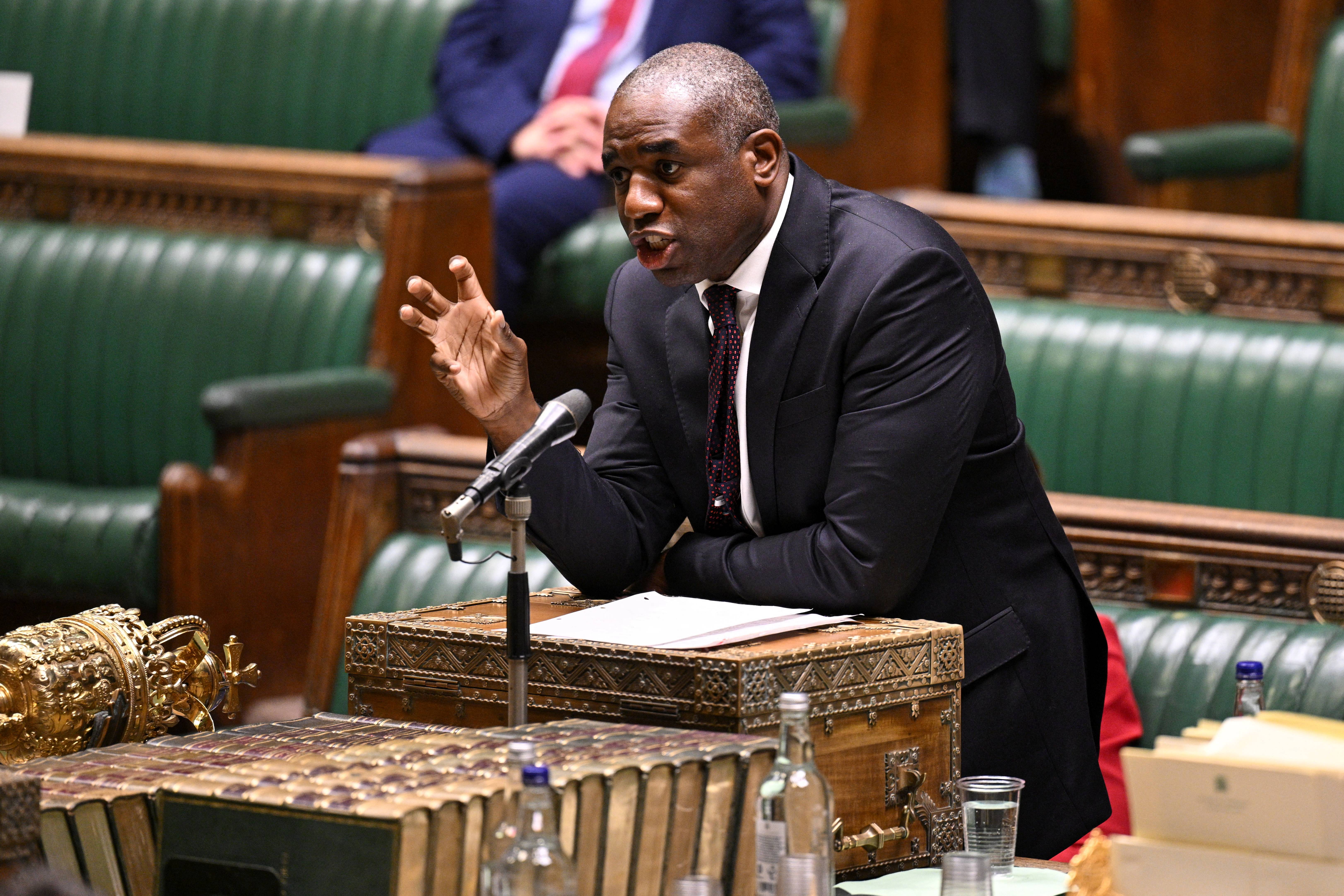
The chorus of outrage that has greeted David Lammy’s plan to curb the right to trial by jury is predictable, but rather extreme. We have heard that juries are bastions of our liberty, that they are key elements of our democracy, and that judges are agents of the police state. Much of this is extravagant, and some of it is just humbug. The reality is that there is much to be said for trial by jury, but also much to be said against it.
The main point to be made in favour is that the use of juries has strong public support. Rightly or wrongly, the public believe that they bring an element of common sense and down-to-earth wisdom to a criminal trial, which might otherwise be lacking. The idea of citizen participation is attractive. It makes people feel that the criminal justice system is, in an important sense, theirs. This matters, because public confidence in the work of the criminal courts is vital, and a reverence for juries is part of that.
However, there is a high price to be paid for a jury trial, not just in terms of efficiency but in terms of justice. The main problem is that juries do not give reasons for their verdicts, and can hardly be asked to. Writing a reasoned judgment is a skill that takes time and training, and anyway, a jury may have up to 12 different reasons. Under the current law in England, it is actually illegal for jurors to disclose their reasons.
As a matter of instinct, it seems inherently unjust that anyone should be convicted of an offence that may bring them to the prison gate, by a tribunal that does not need to say why. This is not just sentiment. Without reasons, we cannot have a proper appeals system.
If the judge conducted the trial properly, the appeal court is not concerned with the correctness of the verdict. Appeals usually turn on the quality of the judge’s summing up. But the summing up is not a verdict. The judge will not normally express a view on the factual merits of the case. He or she will always start by telling the jury that the facts are for them alone to decide, and that they must ignore what they may suppose to be the judge’s opinion. The one thing that a criminal appeal does not address is whether the jury’s reasons for convicting stack up, because no one knows what those reasons were.
The experience of the majority of judges is that most juries get it right most of the time. But is that really good enough? Some cases go badly wrong, and without a proper system for appeals, these miscarriages of justice will usually go undetected. Some decades ago, a man’s conviction for murder was quashed by the appeal court because it came to light that when the jury withdrew to their hotel for the night, they consulted a Ouija board to make contact with one of the dead victims. If the jury had been more discreet, or had confined their mystical communications with the victims to the confidential cocoon of the jury room, they would never have been found out.
Sometimes a jury will ask the judge a question, in the course of their deliberations, that shows that they have completely misunderstood their task. The judge will then often discharge them and start again with a new jury. But most juries do not reveal their misunderstandings in this way. All human institutions are fallible. But the mistakes and follies of judges are public, transparent and appealable, whereas the mistakes and follies of jurors are usually protected from scrutiny.
There is no evidence that professional judges are more likely to convict than juries. In Northern Ireland during the Troubles, terrorist offences were tried by judge alone in “Diplock courts”, because of the risk of “jury-nobbling” and the difficulty of selecting unbiased jurors. The conviction rate in these cases was broadly in line with the rate of conviction before juries. The notorious miscarriages of justice in IRA terrorist trials all occurred before juries in England, not before judges in Northern Ireland.
One reason for this appears to be that in serious cases, juries look for “closure” – something that only a conviction can achieve. Terrorist cases are not the only ones. It is, for example, well known that the cards are heavily stacked against people accused of the sexual abuse of children, however ancient the case or equivocal the evidence, because of public revulsion at this kind of offence. In cases like these, trial by judge alone is likely to be fairer to the accused.
There has never been an absolute right to trial by jury in all cases. There are three kinds of trial: before magistrates without a jury; in the crown court with a jury; or either way at the option of the court or the accused. Magistrates have always tried the great majority of criminal cases.
No one is suggesting the abolition of criminal juries. What is currently proposed is to shift the boundaries between these categories, so that fewer cases will go before juries. This is not a great constitutional issue, but a matter of practical management. Jury trials take much longer, for no discernible improvement in the quality of justice.
Currently, cases are taking up to five years to come to trial. In the meantime, memories fade, evidence disappears, and victims lose heart. This is far more shocking than the trial of the more minor kinds of offence by judges.
Join our commenting forum
Join thought-provoking conversations, follow other Independent readers and see their replies
Comments
Bookmark popover
Removed from bookmarks