Why Gen Z ‘soft boys’ like Lando Norris are replacing alpha males
We may hanker after the rivalries and aggression of old, writes Jack Burke, but it’s clear that new F1 champion Lando Norris marks the start of a new age where sporting excellence doesn’t require you to cut your emotions off


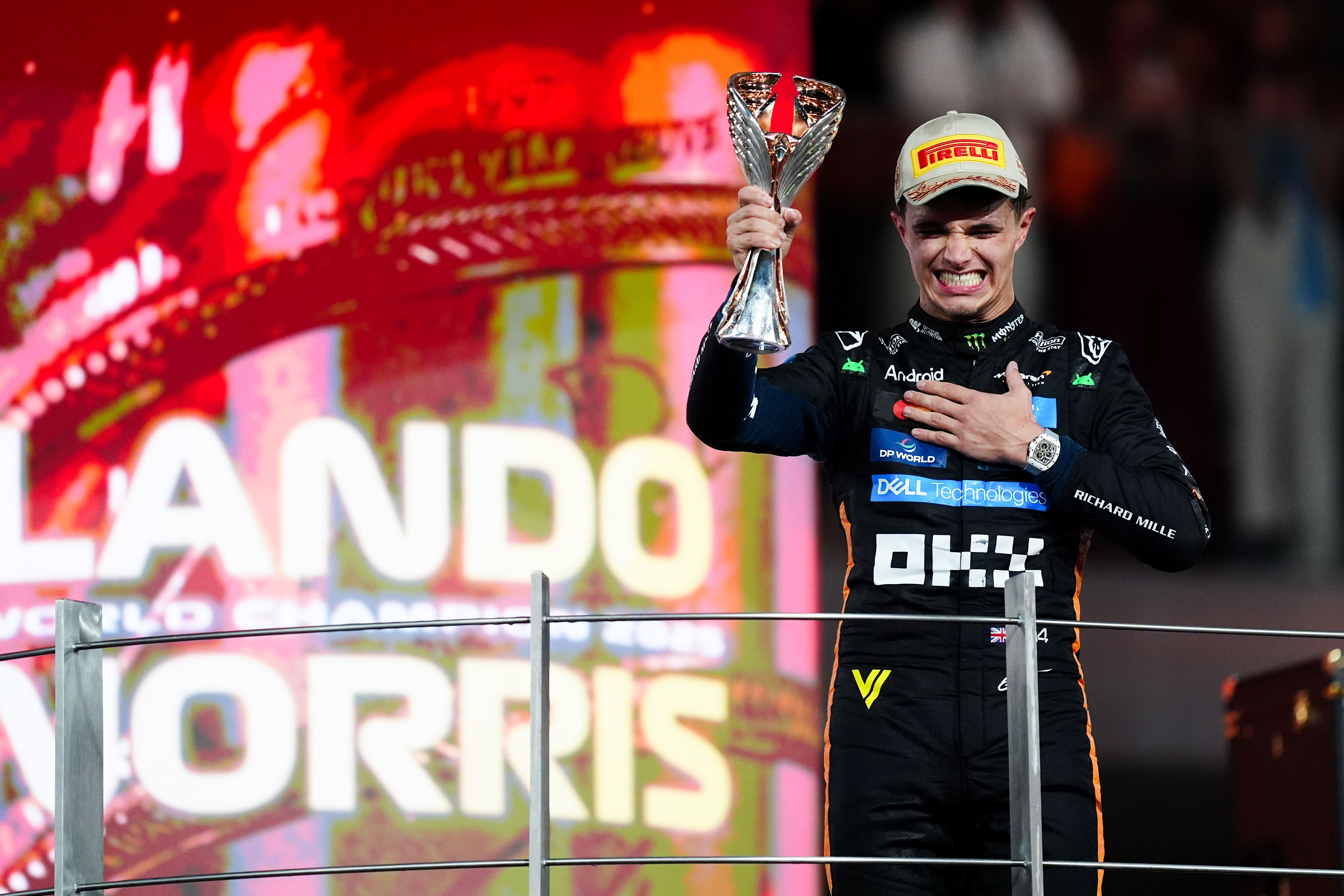
Somewhere between the new Formula One world champion Lando Norris taking the chequered flag and realising what he’d just done, something quietly unprecedented happened: rather than leaping around and raving about his own brilliance, the 26-year-old – the supposed apex predator of a sport built on noise, danger, and an almost visceral appetite for risk – simply stayed in his car, helmet on, shoulders quivering, as if peeling off the visor would let the entire world see him cry.
For years, people said Norris was too sweet. The conventional F1 champion is supposed to possess a kind of reptilian self-interest, a talent for detachment, the ability to climb out of a flaming wreckage, wipe the singed eyebrow from their forehead, and race again the next morning. Champions, historically, have sharp edges. Senna drove with a kind of volatile purity. Schumacher was weaponised efficiency personified. Even Lewis Hamilton – now the patron saint of cruelty-free self-actualisation, a man whose dog was vegan – had a ruthless, surgical streak in his dominant years.
Norris, by contrast, is nice. Polite, courteous, self-deprecating. He says thank you. He looks like he might get ID’d buying paracetamol. He talks openly about pressure. He’s admitted to loneliness. He jokes about nerves. He doesn’t pretend to be a psychopath in a carbon-fibre missile.
In 2025, this is what triumph looks like: earnest, quivering, overwhelmed. The kill-or-be-killed gladiatorial fantasy of masculinity has finally lost to a young man openly talking about his feelings. The soft boys have won.
Norris is the unlikely poster boy for a generation that has decided vulnerability is not a weakness but a form of swagger. He’s the perfect sports star for a generation raised on therapy-speak and online transparency.
I like Norris immensely. I was rooting for him yesterday. I like what he represents. He has brought a bit of humanity back into a sport that has spent the last decade sanding off the edges of personality until only the identikit corporate sponsors remain. And weirdly, that’s what makes him so compelling. Softness itself has become a kind of edge.
But watching the reaction to his victory – drivers piling into pits to hug him, commentators declaring his tears “a beautiful moment”, the internet conducting a full-scale emotional coronation – I felt a kind of longing for bygone days.
What bothers me isn’t Norris himself, who is clearly sincere, but the creeping realisation that sport – men’s sport in particular – has become almost suspiciously wholesome. Everyone is mates; everyone is brand-safe; everyone expresses their rivalry the way east London couples discuss boundary issues.
When footballers now release open letters apologising for missing penalties, when rugby players tweet about “taking the learnings”, when tennis players thank the crowd for “this journey together”, it’s clear something in the male psyche has shifted.
Even the language has changed. Instead of rivalry, we have “respect”. Instead of aggression, “good energy”. And instead of championship-deciding, multimillion-pound psychological warfare, we have drivers congratulating each other as if they’ve just completed a Duke of Edinburgh hike.
I’ll say it: part of me still misses the chaos. I miss the villains. I miss the rivalries fuelled by ego and the bad blood that made world titles feel like battles rather than politely negotiated outcomes. I even miss the weirdly aggressive handshakes.
What makes Norris interesting – and why, perhaps, he is so well liked – is that he isn’t performing softness for effect. He isn’t doing the curated “I am human too” shtick of the social media athlete. He is, by all accounts, genuinely a bit tender, a bit awkward, a bit embarrassed by his own fame. But still a breathtakingly quick driver.
Winning the title feels like a symbolic handover. The age of the snarling, merciless, slightly monstrous champion is over. In his place stands a man who cries into his helmet and thanks everyone around him for believing in him.
It’s a necessary evolution. The pendulum needed to swing away from the aggressive, brittle, car-crash maleness that once defined top-level sport. A champion who displays vulnerability is exactly what young men should see. The previous generation of men certainly didn’t learn emotional literacy from watching Kimi Räikkönen attempt a post-race interview.
Norris isn’t the end of something; he’s the beginning of a subtler, stranger phase of sport, one where ruthlessness and sensitivity co-exist and where excellence doesn’t require emotional cauterisation.
But it still leaves me with the sense that, without anyone noticing, the soft boys have completed a quiet cultural takeover. The tough guys have gone extinct, felled not by injury or scandal but by a generation that finds open-heartedness more compelling than aggression.
The new alpha male, it seems, isn’t the bloke grimacing through a visor. He’s the one crying behind it, head bowed, overwhelmed by the scale of what he’s just achieved.
Join our commenting forum
Join thought-provoking conversations, follow other Independent readers and see their replies
Comments