My 18 hours in A&E after a mini-stroke showed me what Wes Streeting is up against
The Independent’s political columnist, Andrew Grice, is more used to the Westminster bubble than A&E, but his recent encounter demonstrated how badly the NHS needs both money and reform

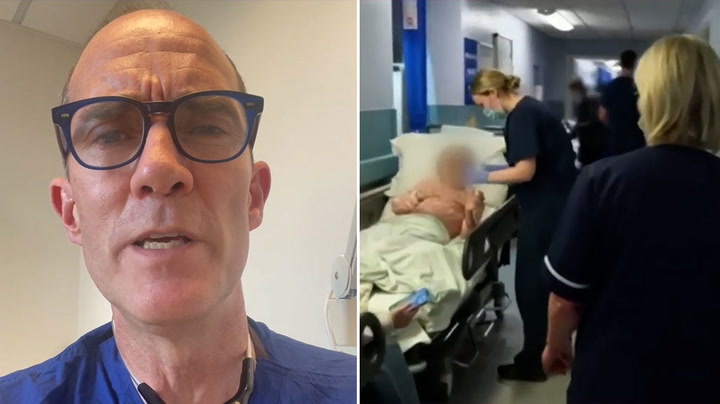
After a few tiny sips of wine (honestly), I realised I was slurring my words. I was sweating profusely and then couldn’t get any words out at all. My eyes closed.
When they opened, I was still sitting with two friends in a north London pub. They looked concerned, and one had already confiscated my drink. “What happened?” I asked. “I think you’ve had a mini-stroke,” one of them said, recalling his own one, and saying my speech had been slurred since we had met up 20 minutes earlier.
I was sceptical and tried to prove I was OK by rattling off a list of who was playing well this season for my mates’ team, Coventry City. But I wasn’t OK. One of them dialled 999. I now know that was the right thing to do. Wrongly, I persuaded him to call 111 instead. A face-to-face appointment with an out-of-hours GP was arranged, but she rang me and, after a few questions, ordered me to the nearest accident and emergency department as soon as possible.
Arriving at Barnet Hospital was surreal because my wife, Jacquie, had also driven me there exactly 12 hours earlier for a follow-up appointment about my fractured arm. (My ailments are trivial compared to hers. For good measure, we had spent the afternoon at another hospital where she is being treated for ovarian cancer).
My most recent experience at an emergency care centre was a brilliant one; at Chase Farm Hospital in Enfield, my arm was sorted in 90 minutes. Naively, I didn’t expect Barnet’s 24-hour A&E to be busy at 8.30pm on a Monday, but there was standing room only for the 150 people crammed into it.
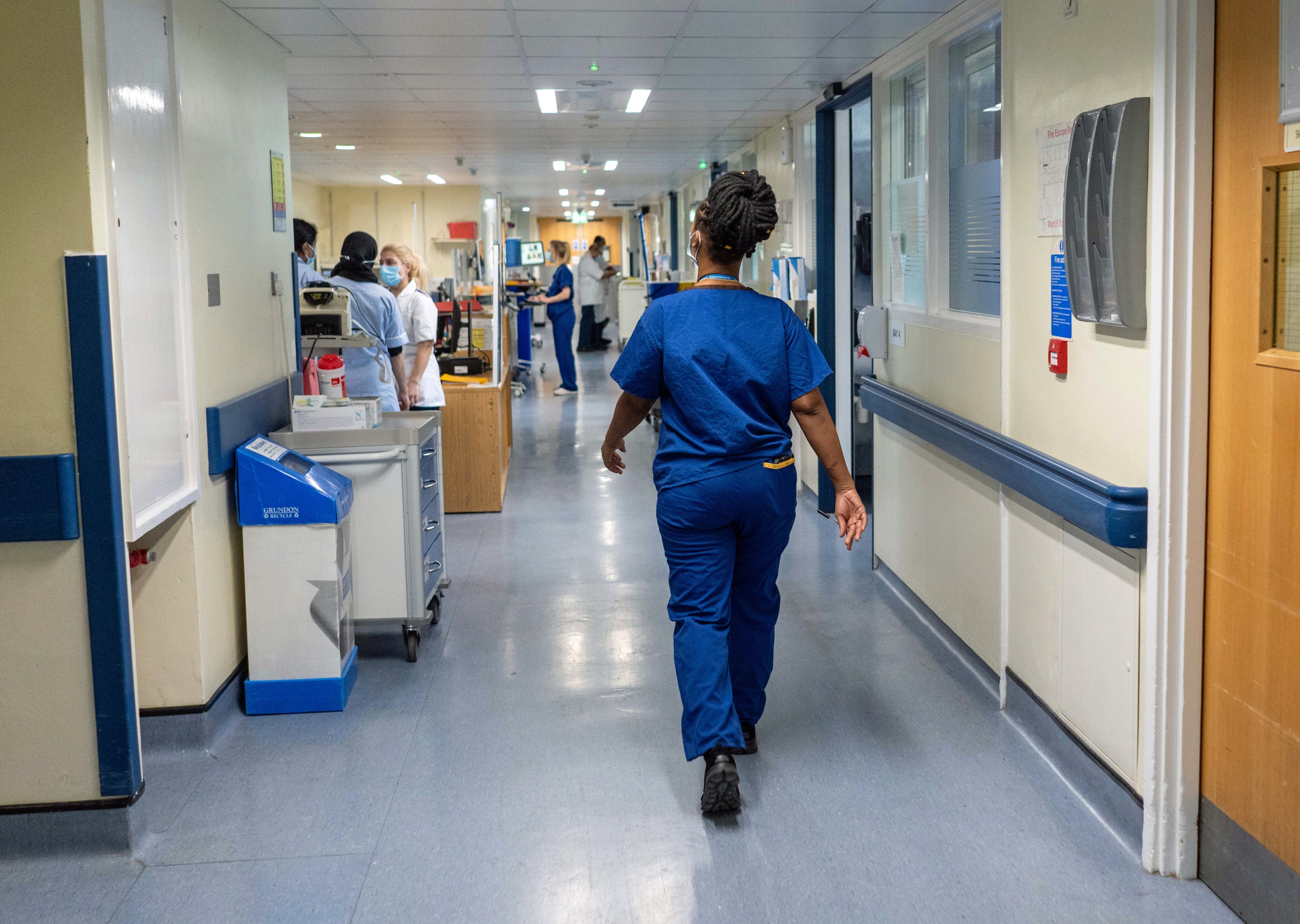
The triage system worked well; everyone was seen quite quickly. I had an ECG and some blood tests, though one repeat test for heart muscle problems had to be repeated four hours later as my sample hadn’t been taken to the lab quickly enough.
This delay didn’t make any difference since the bottleneck was the wait to see a doctor. Ominously, patients swapped stories about how long they had already been in A&E. “Seven hours,” one said. Another trumped it with eight. “It was 13 for me last week,” a third said.
Although we were rivals in the queue, there was camaraderie. People gave up their chairs so we could sit together. It was soon clear that few of us were being called in to see a doctor. The seats remained full. Nurses explained the doctors were dealing with emergencies – in other words, patients brought in by ambulance.
Three times during the night, a manager made a speech, like a headmistress addressing her school. We perked up to listen. But she didn’t bring good news: the average wait for the doctor rose from 11 hours to 12 and then 12.5. The government’s latest targets are for a minimum of 78 per cent of patients who attend A&E to be admitted, transferred or discharged within four hours, and to reduce the number waiting more than 12 hours by 10 per cent on 2024-25 levels.
As the longest night of my life dragged on, a huge lobbying industry was evident as increasingly exasperated patients button-holed overstretched staff. I vowed not to join them; I would wait my turn
The announcements sounded like an encouragement to go home. The manager appealed to us not to pressure staff about when they would see a doctor. Security guards were always very visible, and I soon realised why.
As the longest night of my life dragged on, a huge lobbying industry was evident as increasingly exasperated patients button-holed overstretched staff. I vowed not to join them; I would wait my turn. After 10 hours, we began asking questions, too: had I been forgotten? Mostly, staff took such complaints politely and with a smile, repeating that the night shift doctors were overwhelmed by emergencies. One nurse told me I might be admitted to get a quick MRI scan; otherwise, that would take months. However, later she confided that there were “no beds”.
A less sympathetic nurse told us that my case was not urgent. “This is the accident and emergency department,” she barked. True, and if I had had a full-blown stroke, I would have been seen quickly. But the GP had sent me there, and selfishly, I couldn’t help thinking that they didn’t weigh up the waiting time as much as they should. A friendly nurse whispered that I was seventh on the non-urgent list. Four hours later, I had moved up to fourth, but she warned I wouldn’t be seen soon. “Is it always this busy?” my wife asked. “Yes,” came the reply. I wondered what Friday and Saturday nights were like.
Many of the “non-emergencies” were much more serious than mine. I told myself I had nothing to complain about as I watched several anxious parents bring in babies and children for treatment. That must be the worst feeling in the world.
Two people collapsed in the reception area during the night, and a red alert was declared. The invisible doctors suddenly came running from their area. Another patient, who told me he was 45, pointed to the spot where he had had a heart attack on a previous visit. “I just made it through the doors,” he said. He looked like a regular and constantly badgered the nursing and reception staff.
I am no expert, but there seemed to be a long delay for patients who needed to be admitted, or at least quicker treatment. We worried about several young women. One person locked herself in a toilet for more than an hour. We suspected she might be having a miscarriage. The only other toilet was unusable; it was a sea of blood. When the woman finally emerged, she left a trail of blood on the A&E floor.
I didn’t close my eyes all night. I was worried I would fall asleep and miss my turn with the doctor
The lack of toilets became a problem. I ventured down darkened corridors in search of one and was intercepted by a security guard. He let me through when I explained. Later, I directed other patients to the loo I had found.
I didn’t close my eyes all night. I was worried I would fall asleep and miss my turn with the doctor. The other patients knew better. They all tried to sleep. A giant of a man covered his whole body with a blanket and didn’t move all night. I wondered if he was dead.
More and more of the names called out by staff to see a doctor elicited no response. I’m sure some of the patients called were asleep. Staff used the PA system only when issuing a “final call” for the named patient. It was like waiting for a flight in a departure lounge that never comes, but there would be no escape to a hotel for the night. Strangely, staff didn’t bother to look at our name tags, instead moving on to the next on the list.
Inevitably, some patients gave up and went home without treatment. A woman with excruciating back pain, to whom we chatted knew the system. She and her partner went home, but later reappeared. “I got three hours sleep,” she told us proudly. “You didn’t miss anything,” my wife said. I had begged her to go home because she is having chemotherapy, but she refused. She proposed a cut-off point: we should go home at noon. I said that, having waited so long, I should see it through.
The woman with back pain did miss one bit of drama. Two young women police officers arrived with a tall young man under arrest, aged about 15. I perked up, wondering if he was going to do a runner. He didn’t. The only time the officers rebuked him came when another patient slipped him a rolled-up cigarette. They ordered him to give it back. Understandably, the officers lobbied for him to see a doctor quickly. I thought he might jump the queue, but they had to wait four hours – an insight into how the police must use their time.
In the middle of the night, it became very cold. The only way I could stop shivering was to pull up the hood of my raincoat and put my carrier bag on my lap. Later, we grabbed one of the few blankets.
I was too tired to read. Being a news junkie, I listened to the midnight headlines on Radio 4 on my phone and counted the hours until I would tune in again at 6am. But to save phone battery, I didn’t allow myself the luxury of listening to the Today programme.
To amuse myself, I remembered my other long nights. An all-nighter at a trade union conference in my twenties, which was much more fun. Munching bacon sandwiches with MPs in a Commons bar at 3am, in the days when it sat so crazily late, and then crashing at an MP’s flat. No, the real parallel was my four general election nights as The Independent’s political editor. We produced several print editions to squeeze in as many results as possible, before collapsing into a hotel bed between 4am and 5am. I was always too wired to sleep and switched on the radio at 6am to begin the next news cycle.
A kind nurse took up my case and secured me a chest X-ray to try to prevent a further delay later. But my wife overheard an overworked night shift doctor saying I would have to wait for the day team.
So my hopes rose when the shift changed at 8am. Nurses smiled at us as they ended their 12-hour stint. Many of us had now been there longer than they had. There was a burst of energy and more doctors and nurses were evident. The remaining 30 patients woke up and lots of new ones were arriving. All-nighters like me grumbled when a doctor summoned one of the newbies.
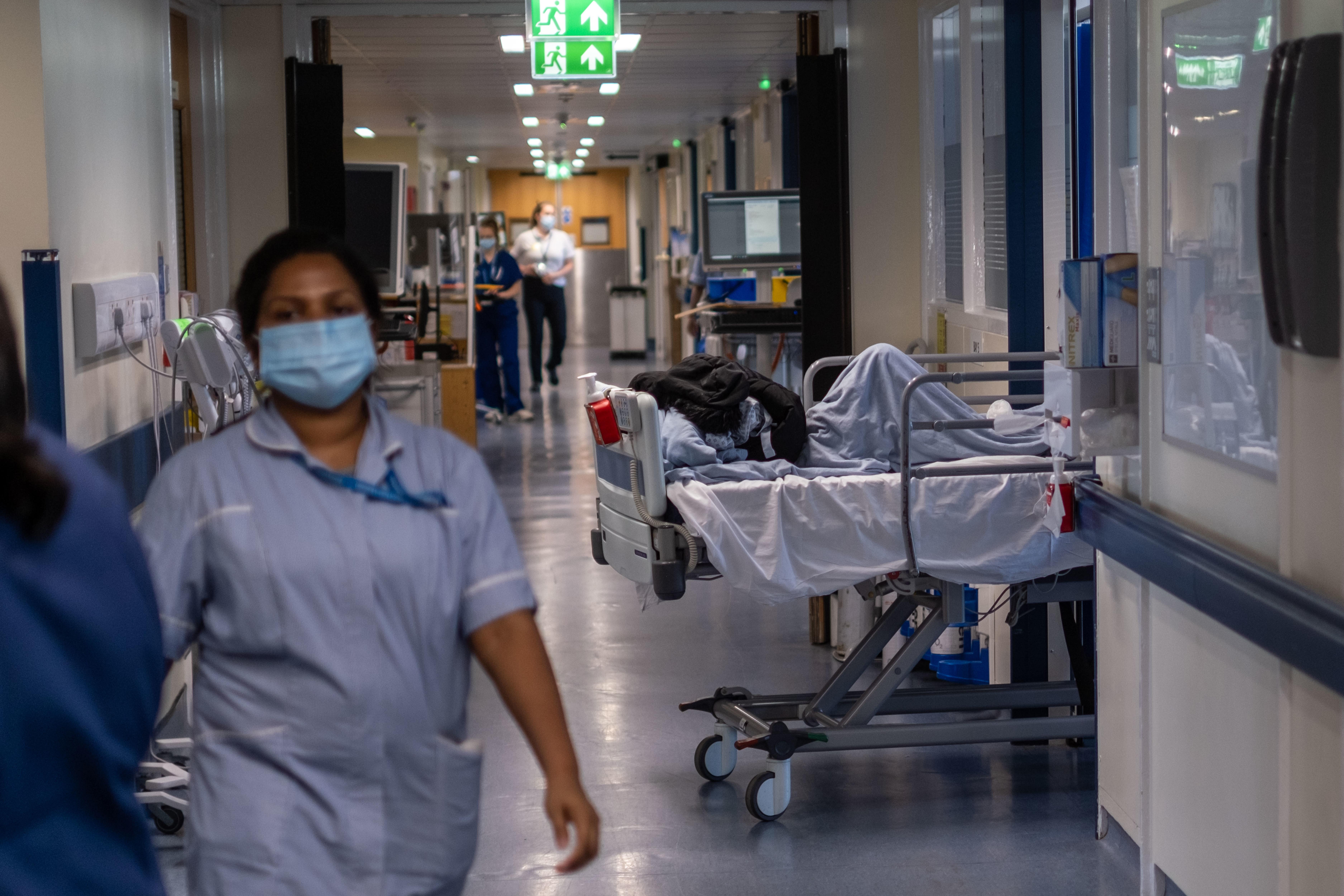
At 10.30am, I got the call to the promised land where the doctors were. It was nothing of the sort. It was heaving: all the bays were full, and patients were being treated in corridors. My doctor couldn’t find a room or bay. I followed him round and round. He knocked on several doors, but all the rooms were full. Eventually, he found one marked “urgent only”, the only space left. He concluded that I had probably suffered a mini-stroke and would be referred to a unit that handled them. My two later chats with him both took place in a corridor.
After 90 minutes of extra time in the pharmacy, we were free to leave after 18 hours. A long way above that four-hour target. I wondered what Wes Streeting, the health secretary, would make of my experience. The figures on his desk will surely tell him it’s a common one. Many people will have a worse experience than me. I am a fan of Streeting, though my wife is not, because of his inaction on social care. I can see why he prioritises NHS waiting times because that, not the creaking care system, is what Labour will be judged on at the next election.
As we left the hospital, both exhausted, I was relieved to feel fresh air and finally escape the bubble. I thought about the other bubble I know – the Westminster one, after 43 years as a journalist there. I recalled Keir Starmer saying that under the Conservatives, the NHS was “not just on its knees” but “flat on its face”. I remembered Streeting’s diagnosis after last year’s election that the service is “broken”.
And I wondered how the patients on my all-night sitting would react to hearing any politician’s promises on the NHS (not favourably) and whether they thought things had got any better under Labour. (I doubt it). Focus groups suggest people have started to notice there are more appointments – a glimmer of hope. But everyone has a story about the NHS, and the impact of people telling family and friends about a marathon wait in A&E or a postponed operation cannot be underestimated. It’s going to be very hard to convince the public that the NHS is not “broken”.
I still think it’s worth repairing. Despite their frustration, where would my fellow patients be without it? Does it need even more money when it already accounts for 40 per cent of day-to-day departmental spending? After the pressures I witnessed on a typical night, my answer is yes, even though that will require a rise in income tax, given the state of the public finances.
Is money the only answer? No, the NHS also needs reform to use the money better and will forfeit the public’s support if they judge it an unsustainable bottomless pit.
Join our commenting forum
Join thought-provoking conversations, follow other Independent readers and see their replies
Comments
Bookmark popover
Removed from bookmarks