I thought nice men were undateable – I was wrong
A new study suggests that men who are kind are less likely to find partners – but maybe that’s because we’ve been looking for the wrong things all along, says Alexandra Jones

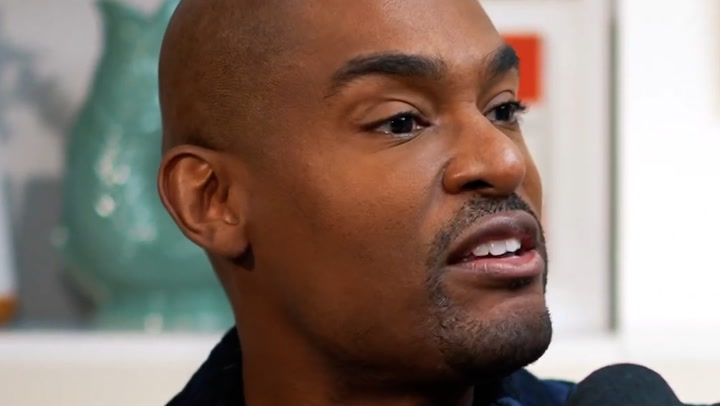
A new study has confirmed what many of us have long suspected: the nicer a man is, the less likely he is to get laid.
Researchers looked at how personality traits correlate with relationship status across nearly 4,000 people in Australia, Denmark and Sweden. The men who scored highest on agreeableness – basically a mark of how nice they were – were statistically the least likely to have a partner.
Obviously, the temptation is to assume that women (and the study focused on hetero relationships) are all secretly looking for a bit of a bastard, but that’s not what the research is saying – and, irrespective of the particular pitch and tenor of someone’s daddy issues, I think you’d struggle to find a woman who is actively looking for a cruel man.
What the research seems to imply, though, is that “niceness” has the romantic appeal of a council tax reminder letter – useful, perhaps, but not exactly the stuff of fantasy.
Which does make sense, in a way. Nice equates to bland – describing someone as “nice” carries the same energy as saying a meal is “fine”; it’s technically positive but spiritually damning. All of which is quite depressing when you consider the fact that, when “nice” is broken down into its constituent parts – empathy, cooperativeness and patience – finding a nice, “agreeable” partner is basically the Holy Grail. I should know: I found one.

But not before many, many years of dating the other kind. It wasn’t that I didn’t want someone nice – it was just that, on a list of desirable traits, “nice” came slightly below “has reliable wifi”. Of course he should be nice, I would think, but first he should be funny, exciting, outgoing...
In those days, I gravitated towards charming, gregarious types with big egos. The study authors found that extroversion counted as a significant advantage for men – outgoing, confident males were much more likely to be in relationships (extroverted women, on the other hand, saw no such advantage – a reminder that society still prefers its women passive).
And, of course, there’s something incredibly seductive about confidence. Outgoing people can make the world seem lighter, more conquerable. Their certainty becomes a kind of social currency, and if you’re standing close enough, you get to spend some of it, too. One person I dated, for instance, persuaded the receptionist at the Ham Yard Hotel to open the bowling alley after midnight so we could have a game. It was absurd, but also a little intoxicating – confident people make rules seem negotiable.
Often, though, the men with big egos also treated curiosity as a finite resource – rarely troubling themselves with anything so banal as asking questions or feigning interest. I remember, on one date with a man who worked in the music industry, speaking only twice the entire evening: to confirm my name at the beginning, and suggest it was time to get an Uber at the end. Another guy, apropos of nothing, talked me through every single Farrow & Ball paint colour in his flat.
One man – who had nine siblings – described to me the profession of every single one, as well as how they got into it, which took such an exaggeratedly long time that our meal ended before I’d gotten to ask anything other than, “So what’s your family like?” Many, many men gave me unsolicited financial advice.
The worst were the charmlessly arrogant – like the man who got drunk in a restaurant renowned for its lethal martinis and asked if he could pop behind the bar to make his own. “I can show the barman how to really balance the flavours,” he told the waiter. We were asked to leave.

Deprioritising “niceness” in favour of big personalities seemed like a safe bet for a fun time, but in practice it meant that I spent far too many evenings discussing crypto portfolios. It meant that I once helped a man choose his next book based on which cover best fit his personal brand – “In case I get photographed reading it on the Tube”, he said, a not-joke that I laughed at regardless.
The few “nice” guys I dated seemed to quickly tip over into cloying – I’m thinking specifically of a man who waited outside my house, after I broke it off with him, with a plastic bag of wine and cheese and an aggrieved determination to “prove me wrong”. The gesture strained towards romance but came off as desperate (and kind of scary), and I remember thinking, if this is what “nice” looks like, maybe the arrogant weirdos are better?
When I first met my now-boyfriend, I didn’t immediately think of him as “nice”; in fact, I wrote him off as aloof (he made fun of my interest in horoscopes) and decided I wouldn’t see him again. A few days later, though, he sent such an uncomplicatedly nice message that I reconsidered. He’d genuinely had a fun time, he said; he thought I was great and would like to see me again, but wouldn’t keep bothering me if I wasn’t interested.
It was neither aloof nor arrogant; it wasn’t wildly charming or exaggeratedly keen, either. It was just nice. I said OK.
The thing I remember most about our second date was that he asked so many questions, and seemed so genuinely interested in my answers, that I almost forgot to self-edit. We talked for a very long time. Afterwards, when my friends asked what it was like, I said it was really nice.
As the weeks wore on, I realised that I was dating a truly nice man. Obviously, we had a lot of fun together, but it was never sharp-edged; it wasn’t like other dates where it felt like a comedy roast, both of us clamouring to out-funny the other. There was no sense that he was assessing me for my cultural credentials, or calculating whether I would complement his “personal brand”.
And beyond that, he was an actually good person. He’d spent the pandemic raising money for charity – so much money, in fact, that he won an award. He loved his family and spoke to them every week. He was neither judgemental nor self-righteous. He gave blood. He was diligent about his recycling. He did the right thing because it was the right thing, not because anyone was watching. He was, somehow, both the most normal and the most remarkable man I’d met.
There was maybe some small part of me that wondered whether this wasn’t all too easy – whether being with a “nice” man would, in the long run, start to feel too safe. Four years later, though, I thank the Hinge algorithm every single day.
It turns out that “nice” isn’t bland at all – it just doesn’t demand your attention all the time. It makes life easier, kinder, better. In a world that celebrates charisma and chaos, finding someone who listens, and laughs – and even puts the bins out – feels radical.
Join our commenting forum
Join thought-provoking conversations, follow other Independent readers and see their replies
Comments
Bookmark popover
Removed from bookmarks