Dark money is flooding Nigel Farage’s push for power – and it might be his undoing
With Reform’s election spending under review and three men responsible for three-quarters of the party’s £30m donations since 2019, Chris Blackhurst asks who exactly is paying the way for Reform UK


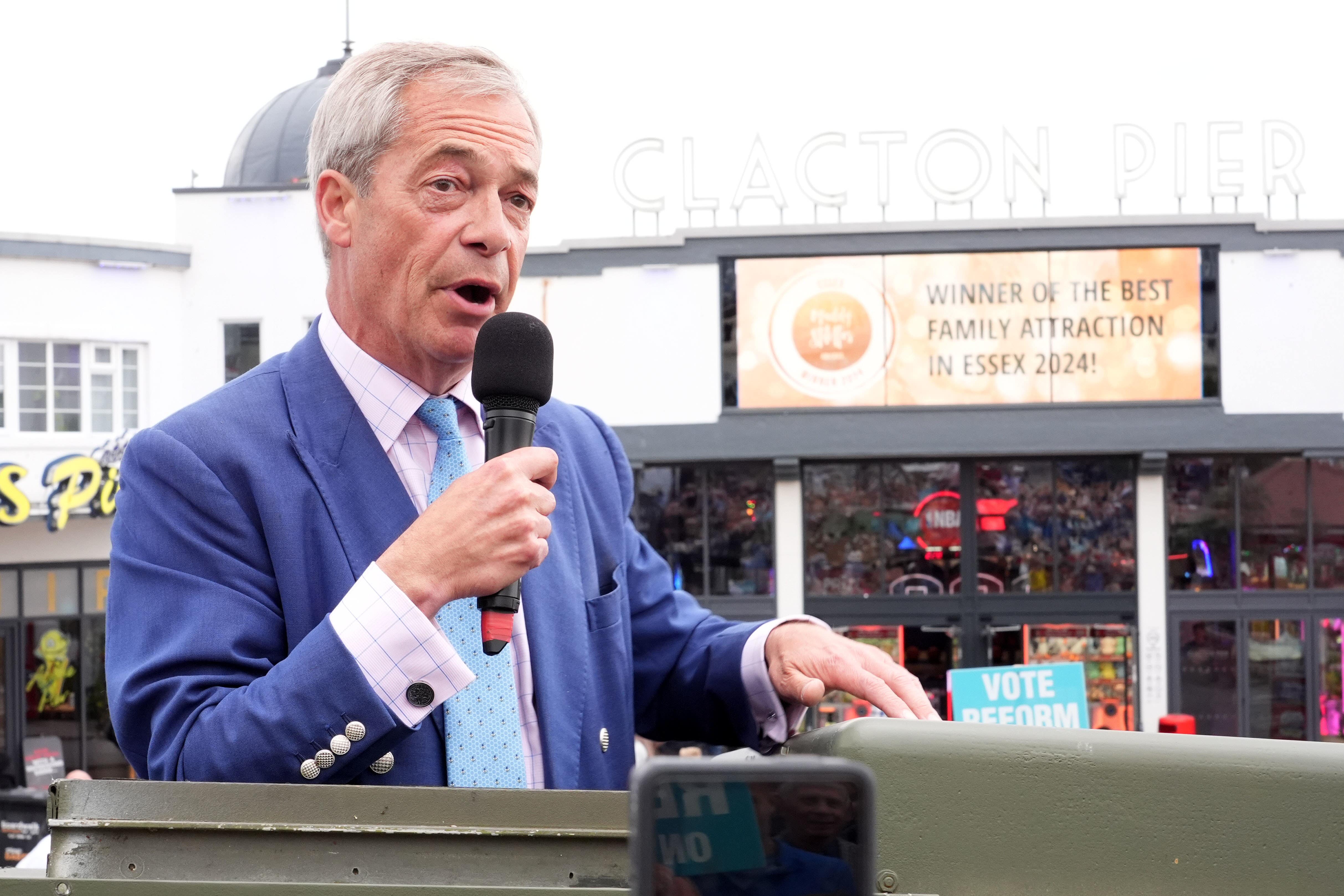
Hardly a day goes by without Nigel Farage appearing in the news. Usually and increasingly, it is because he is alleged to have transgressed: behaving as a racist bully while at school, exceeding the election expenses limit in his Clacton constituency. So far, he has picked his way through the accusations, and on he goes.
The schooldays must be having an impact because of how he responds, which is by borrowing from the Trumpian playbook and lashing out – rounding on the messenger, accusing the BBC of having itself previously aired programmes that would not be acceptable today. It’s true: it did. But the BBC is not seeking to run the country and has since corrected its approach – no one could sensibly accuse the broadcaster of being racist (political bias is not the same).
On Farage’s constituency funding, Reform UK is said to have breached the spending rules. The charge is made by a former member of his campaign team, who has reportedly submitted documents to Scotland Yard showing that Farage’s constituency party spent more than the £20,660 limit. Labour and the Tories have piled in, demanding answers; Reform maintains the complainant is a “disgruntled former councillor”.
The source, Richard Everett, says the party’s official return came to £400 below the cap set by electoral law, and the undeclared spending would have put it above. He also said he thought Farage himself had been “blissfully unaware,” which does seem to weaken the case against the Reform leader. It may well prove to be an instance of carelessness – something that is frequently laid at the Farage door.
Certainly, while other parties fret and worry, Farage gives the impression of not bothering. The signal he conveys is that the rules are petty, obstructive and for others. This is part of Farage’s larger message that he wishes to sweep away the bureaucracy and red tape, the state machine that so holds the nation back. He will get things done quickly and directly: trust him.
Some misdemeanour may be unearthed that will bring him down, similar to what happened to Marine Le Pen. But that has not happened yet; Farage has so far proved to be Teflon-coated.
His core supporters are unmoved. As are his financial backers. Research by the Democracy for Sale newsletter found that three-quarters of all Reform donations since its founding in 2019 have come from just three men. Anyone visiting the Reform conference in Birmingham would have been struck by the absence of blue-chip business sponsors and exhibitors. Instead, tech and crypto were in evidence.
They flock to Farage. Why? Because, unlike his rival leaders, he boasts of getting it. Other parties stick to the traditional; his stands for the future. “You know, stablecoins, crypto – this world is enormous and I’ve been urging for years that London should embrace it,” he said in a recent interview.
In May, he appeared at the Bitcoin Conference in Las Vegas and said Reform would launch a “crypto revolution” and introduce a crypto assets and digital finance bill. In a City speech last month, Farage again repeated his call for the deregulation of crypto.
He says Reform has received “a couple” of donations in cryptocurrency but refuses to supply the details. Last week, the Electoral Commission revealed that the Thai-based crypto billionaire Christopher Harborne had given Reform a £9m donation – the UK’s largest political donation by a single living person.
While the other parties fulminate against possible conflicts of interest regarding Reform’s acceptance of crypto and Farage’s promotion of the alternative digital currency (he said he was heading to the Bank of England to argue for the lifting of curbs on its use) and insist he must come clean about the extent of his funding, in crypto as well as traditional money, he sails on regardless.
Farage is only doing, as he has said, what Trump did in the US, when the president’s campaign became the first to accept donations in crypto. Trump, Trump; tech, tech. There is a pattern.
But does Farage’s draw go beyond the relaxation of regulations and pushing back the establishment on crypto? There is a reason the US digital titans are referred to as the “tech bros” – theirs is a heavily male-dominated industry. These days, Silicon Valley has an authoritarian air, documented by the journalist Gil Duran in his newsletter, The Nerd Reich.
Trump deliberately concentrated his election effort on the likes of Joe Rogan, the podcaster who enjoys an enormous following among young men who feel disenfranchised. Trump’s supporter base is predominantly male. His messaging, his treatment of women – witness the personal abuse directed towards female reporters who dare to challenge him at his press conferences – is masculinity at its most unvarnished.
In the UK, Farage is following an identical path – albeit to date without the belittling of women opponents and journalists. Those attending his rallies, standing in the shadows behind him, fronting the party alongside, are mostly men.
So the call from a leading Trump funder, the venture capitalist Joe Lonsdale, for the return of public hangings for offenders who commit “three violent crimes” to restore what he terms “masculine leadership” is significant for the UK. Lonsdale is also co-founder of the US surveillance company Palantir, which in 2023 was awarded a £330m contract to run the NHS’s new data platform. He was responding to the backlash secretary of war Pete Hegseth received for another rocket attack on a boat the Trump administration said was suspected of ferrying drugs to the US. “Sinking narco boats publicly helps deter others. As does hanging repeat violent criminals,” Lonsdale wrote on X (Twitter).
He continued: “Killing bad guys is [the department of war’s] job,” and declared that Hegseth should “brag more”. He ended: “Masculine truth: bold, virtuous men deter evil.”
Later, he followed with: “We will quickly try and hang men after three violent crimes. And yes, we will do it in public to deter others. He added, “our society needs balance” and “it’s time to bring back masculine leadership to protect our most vulnerable”.
In replicating Donald Trump, that is where Nigel Farage may be taking the UK. Rather than focusing on transgressions that may not deter him and that he can bat away with ease, his opponents would do well to focus on the bigger picture.
Join our commenting forum
Join thought-provoking conversations, follow other Independent readers and see their replies
Comments
Bookmark popover
Removed from bookmarks