Why a war with Europe has never looked so tempting to Putin
The United States has said it wants to sell weapons to the EU, not back it up – that alone will have Moscow licking its lips, says Mark Almond


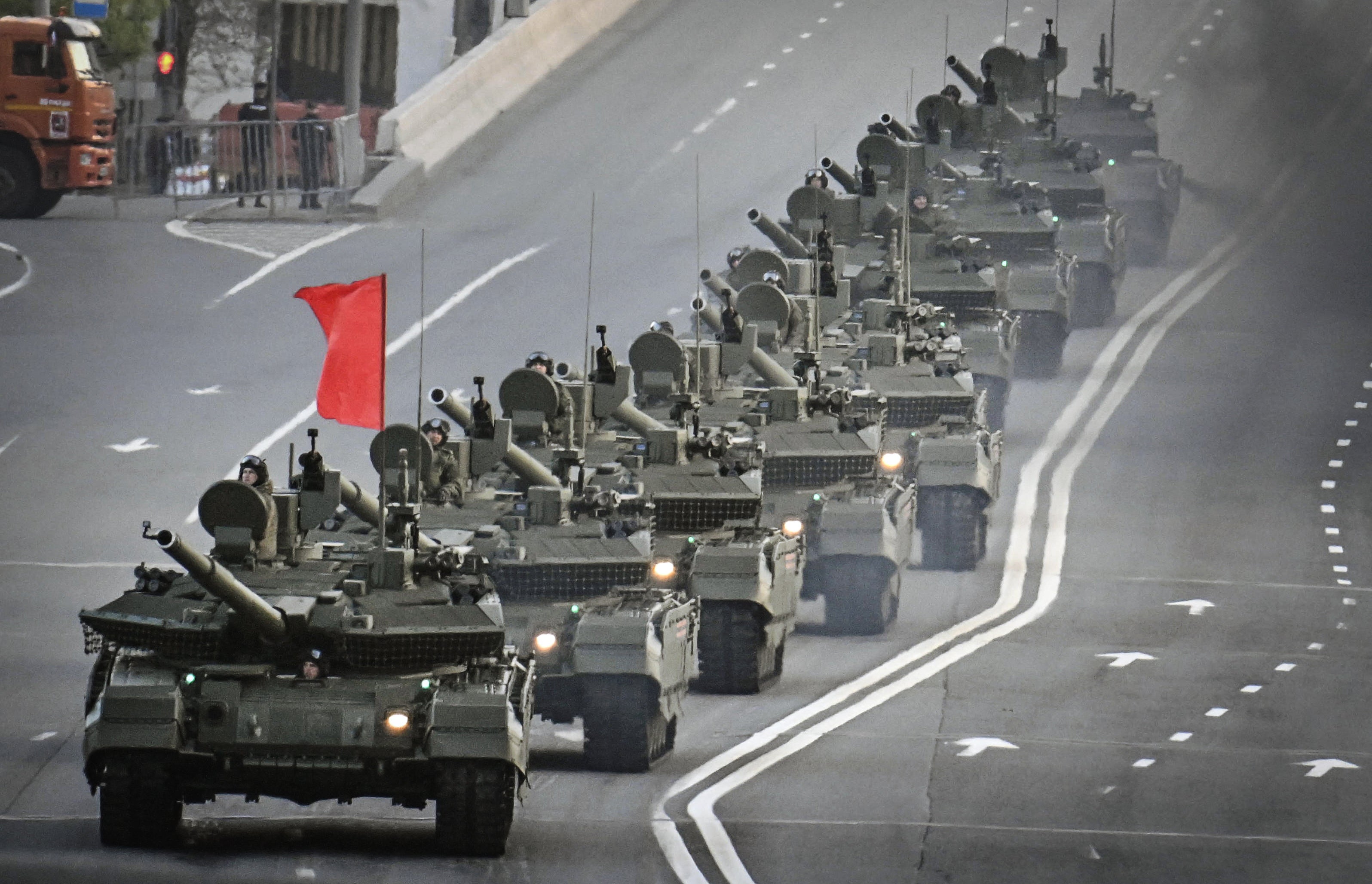
When Vladimir Putin says he is “ready” for war with Europe, he means it.
So much discussion about the talks between Donald Trump’s team and Putin gives the impression that either the Americans will strong-arm Ukraine into swallowing a deal acceptable to the Kremlin or, failing that, the war in Ukraine will just grind on. But no one should ignore the third option: the risk of war spreading.
Western sanctions have tried to strangle Russia’s oil exports to contain funding for Putin’s war effort. But Ukraine’s intelligence agency, the SBU, has been waging a sabotage campaign against Russian shipping far beyond Ukraine’s Black Sea coast. Attacking Russia’s “shadow fleet” of oil tankers in the Baltic as well as the Black Sea could draw Russian retaliation to coastal states like Denmark or Romania, who both also provide much aid to Ukraine.
Russian drones and missiles have hit the Romanian side of the Ukrainian border as Moscow tries to strangle trade down the Danube to Ukrainian ports there.
With no peace deal, and Trump’s US distancing itself from clearly backing allies, the risk that Russia will see an opening to intimidate or even attack countries like Romania or Denmark is growing. Denmark, of course, straddles the exit from the Baltic Sea to the world’s oceans for Russia’s navy and its oil exports, but the country is also building a factory to manufacture rocket fuel for Ukraine’s own missiles, creating a potential target for sabotage.
The recent frenzy of drone sightings across northern Europe might be a classic war psychosis, but sadly, they could be a prelude to actual Russian sabotage attacks. The Kremlin has been gauging Western European reactions.
It knows European deterrence has always rested on the expectation that Washington would stand by its allies on this side of the Atlantic if Russian forces rolled westwards.
Without a credible US guarantee to every European Nato ally, the temptation for Russia to probe the defences of numerically-weak Baltic States – Estonia, Latvia, and Lithuania, all members of Nato – could be realised.
The US Treasury secretary, Scott Bessent, sent shivers down European Nato spines when he remarked, “Now Putin has started making incursions into Nato borders. The one thing I can tell you is the US is not going to get involved with troops or any of that. We will sell the Europeans weapons.”
Marco Rubio’s skipping of the Nato summit in Brussels on Wednesday was another symptom of official Washington’s disdain for its allies.
Anyone believing that Nato’s famous Article 5 really mandates an all-for-one military response to any Russian aggression on an individual member needs to think again. If Washington’s nuclear deterrent is solely domestic, doesn’t Russia’s nuclear arsenal become viable against non-nuclear neighbours?
Transatlantic wobbles put European Nato members at risk, but much of their vulnerability is the result of over-reliance on American guarantees and also on the US delivering new weapons to boost their own armed forces.
Despite almost four years of tough talk about the Russian threat, countries like Britain have seen their firepower shrink since 2022 as they sent military hardware to Ukraine but failed to replace it at pace, let alone build arsenals up. Poland has boosted defence spending and troop numbers, but its post-communist neighbours like the Baltics are too small to equip an effective deterrence of their own.
Others, like the Slovaks or Hungarians, have governments that see Kyiv, not the Kremlin, as the problem. That could tempt Putin to test the allies’ resolve and try to push into gaps.
As Ukraine and Russia grapple far beyond the frontline in their war, the risk of a wider war spreading in Europe is very real. Never forget, Putin miscalculated in February 2022 that he could wage a swift and limited operation – and decide when to stop it. Wars take on a dynamic of their own, and don’t follow anyone’s masterplan.
Join our commenting forum
Join thought-provoking conversations, follow other Independent readers and see their replies
Comments
Bookmark popover
Removed from bookmarks