Racists can no longer hide behind Tommy Robinson and free speech mantras – it’s time to call them out
As Keir Starmer calls Reforms plans to return legal migrants racist, Zoe Beaty reflects on how much of the recent rhetoric from Tommy Robinson’s Unite the Kingdom march to MP’s sloganeering echoes messages from the National Front marches of the 1970’s. And why, until now, there has been a hesitancy to call it what it is?


It has been weeks since London’s Trafalgar Square became a stage for Tommy Robinson, Katie Hopkins, and Elon Musk. “Enough is enough,” crowds chanted. “Stop the invasion,” megaphones blared across the capital. The red and white of St George’s cross was draped over shoulders as men clutching warm cans of lager shouted, “England ’til I die.”
They proclaimed they were there to protect “free speech.” “We’ll take our country back,” the marchers promised. Homemade placards demanded the deportation of “illegals”, all supposedly in the name of Britishness.
In the days surrounding the protest, videos circulated showing brown British women being chased through London streets by English men and women yelling “smack her”. Others showed Black citizens being abused on trains, forced either to confront their abusers, to move, or to endure the silence. I watched footage of British men assembling flags in a small town, demanding to know a passer-by’s nationality – apparently a show of “common sense” power.
It is estimated that 110,000–150,000 people attended the march, but the exact number was almost irrelevant. The fact that a crowd could be mobilised by such an extreme group at all – and that rhetoric once considered unacceptable could now be reframed as merely “controversial” was where the real danger lies.


Much of the messaging scrawled on placards denouncing “illegals” could have been lifted straight from the pro-fascist movements of nearly half a century ago. Back then, the National Front and the British Movement – a white supremacist organisation founded in the late 1960s – openly attempted to stir racial hatred against immigrants and Black Britons. And while there’s no denying that infrastructure issues in small towns – oversubscribed schools and hospitals, for example – are real in 2025, it’s an old trick to tell the disenfranchised that their neighbour is to blame, rather than chronic underinvestment and neglect, in order to redirect otherwise effective anger.
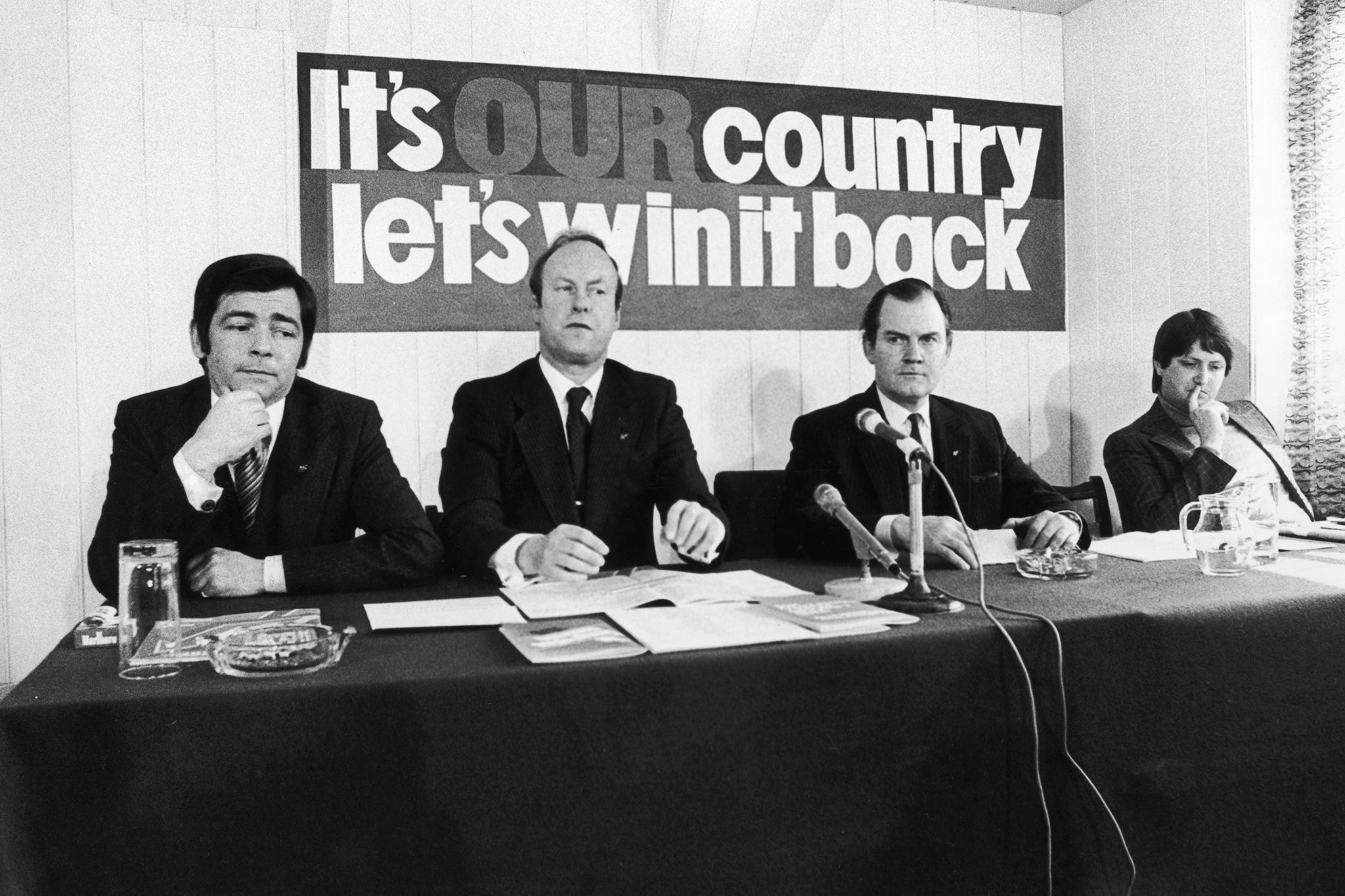
The NF stood in hundreds of elections. They rallied, weaponised fear, and took to the streets. In August 1977 – just shy of 50 years before last weekend’s unite the kingdom march – the NF tried to force its way through a multiracial community in South London in what became known as the “Battle of Lewisham”. Back then, placards read “Stop the muggers” – a euphemism for Black immigrants – and leaders promised to “send back aliens”.
The attendees, while insisting they were “not racist”, also told reporters they wanted Britain to be “predominantly white”. Their concerns, they claimed, were legitimate and reasonable: that “illegals” coming over on small boats (28,000 in 2025) stay in five-star hotels at taxpayers’ expense, possess no discernible skills, and yet take British jobs and benefits. Some of the protesters who came to the capital were demanding mass deportation and insisting that Black and brown men were a threat to their wives, sisters, and daughters.
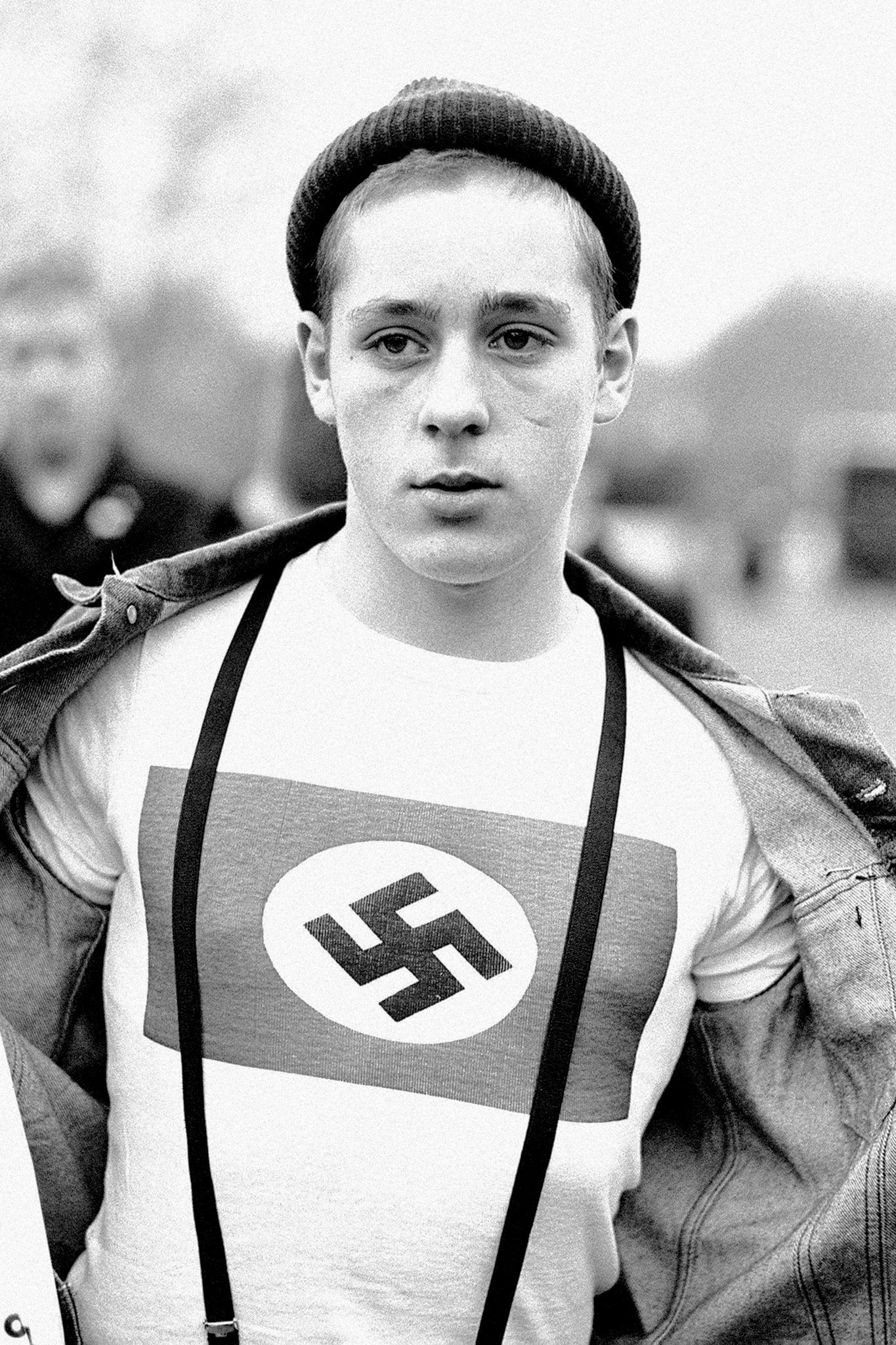
This rhetoric was familiar from National Front rallies of the past – but now it was not just shouted by skinheaded thugs – it is echoed by men in tweed and Silicon Valley billionaires.
Elon Musk appeared on a giant video screen, warning of “massive uncontrolled migration” contributing to what he described as the “destruction of Britain”. He declared: “Whether you choose violence or not, violence is coming to you. You either fight back or you die.”
The French far-right politician Éric Zemmour also addressed the rally, telling protesters they were facing “the great replacement of our European people by peoples coming from the south and of Muslim culture.” Compare this to National Front chairman John Tyndall in 1974: “Our nation is under siege. Coloured immigration is flooding our shores, diluting the stock of the British people. Unless we act, our culture will be destroyed, our birthright stolen.”
A few weeks later Reform UK’s plan to scrap indefinite leave to remain was announced. A policy that has been called "racist" and "immoral" by Sir Keir Starmer as he condemned Reform UK’s legal migration policies while rallying Labour MPs at the start of party’s annual conference in Liverpool.
As Diane Abbott wrote days after the Tommy Robinson march: “Britain has seen anti-immigrant politics for generations. Post-war migrants from the Caribbean were harassed and beaten up by the equivalent of Robinson’s followers today. The only differences now are a toxic social media ecosystem and US billionaires prepared to publicly support the successors of the Teddy Boys.”
Nick Lowles, founder of Hope not Hate and author of How to Defeat the Far Right, says we are witnessing the normalisation and legitimisation of positions that, decades ago, were considered racist and extreme. Lowles, who has worked in anti-fascism for 35 years, said: “For a lot of Black and Asian people, they are starting to get scared in a way they haven’t done for many years. We are in a far more dangerous position now than we were in the late 1970s.”
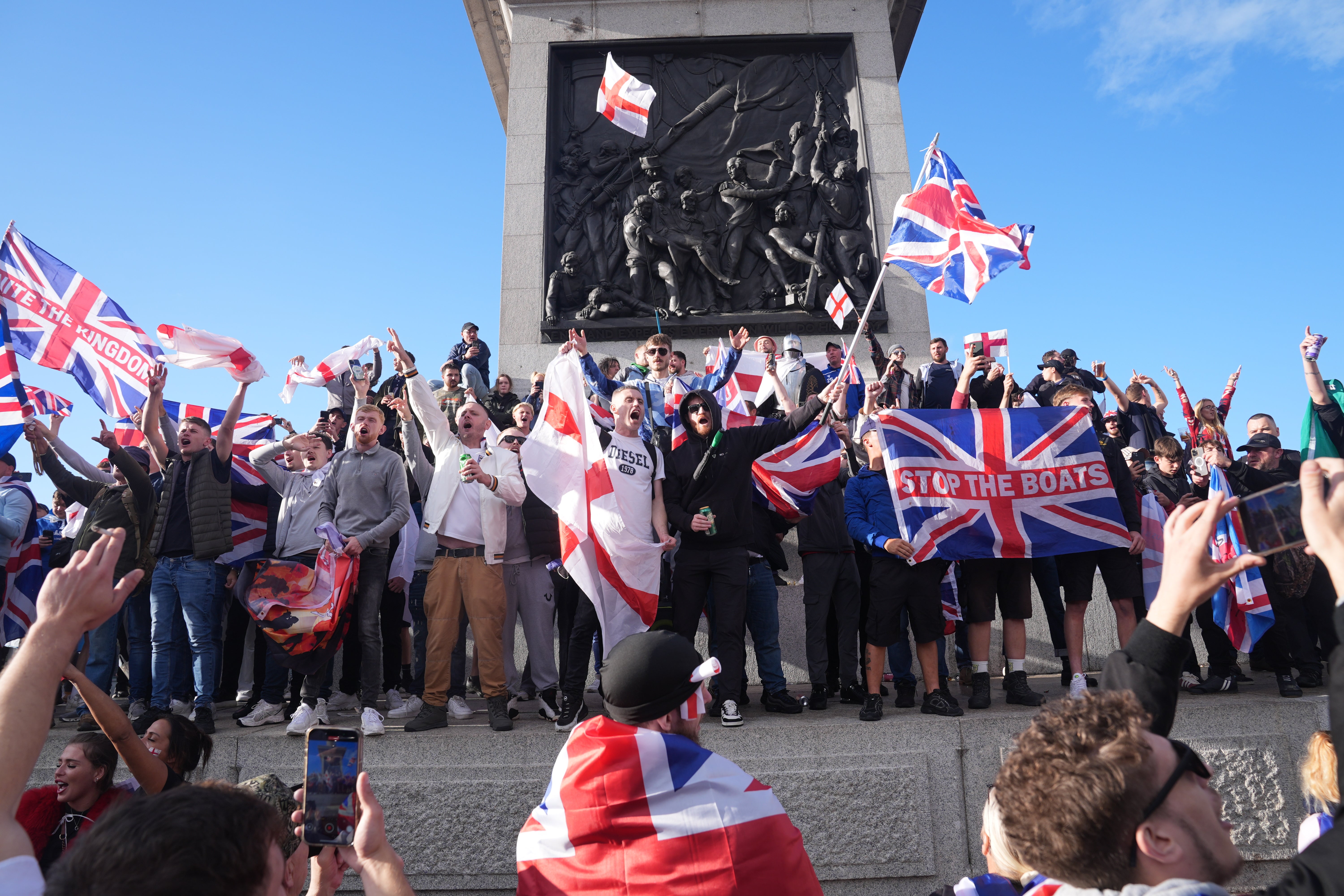
Over the summer, far-right activists launched concerted efforts to target migrant organisations and individuals. The Robinson demo, Lowles warned, left many fearing what’s to come: “The far right are obviously very confident and increasingly aggressive.”
Abbott concurred, saying that out of all the rallies she had seen, this was the only one where she actually felt threatened. While most attendees were hooked in by “small boats” grievances, many railed against multiculturalism itself in an atmosphere that was openly hostile to those who weren’t born here, or were of another faith. The same thing happened at National Front rallies in the 1970s and 1980s, but back then, communities united to call it out as racism – and defeated it.
That, Lowles says, is what we must do again. But one of the most frightening developments is that brazen, unapologetic racism increasingly goes unchallenged. Fifty years ago, the far right was loud but marginal, mocked and confronted in equal measure. Even in 1999, when the British National Party saw a brief surge in popularity, it dropped its policy of compulsory repatriation because it was seen as too extreme even for its own supporters. Now, things are different.
There is timidity in confronting Robinson and his ilk; what would once have been unequivocally called racism is now reframed as “legitimate concerns” by sections of the mainstream.
The internet has played an enormous and horrifying role in this. The NF once relied on leaflets and graffiti to spread its word. Today’s far right lives in the pockets of millions – on constant livestreams, boosted by algorithms designed to shock and misinform. Telegram channels tout conspiracy tidbits. Facebook posts turn neighbourhood grievances into racial paranoia. Fringe groups don’t even need marches to polarise. All they need is your attention span – and wifi.
In 2025, shame has all but evaporated. Reform UK can propose deporting 600,000 people – including women and children – to war zones, and no one blinks. Radio callers openly state they would watch children drown on our shores without remorse, and they are broadcast live.
As the political centre of gravity has shifted, Lowles warns, “what was really extreme 20 years ago is now controversial at best, or simply accepted.” The idea that “everyone is entitled to an opinion” has become a toxic shield for spreading racial hatred under the banner of “free speech”.
In the 1970s, a vibrant counterculture of musicians, football fans and trade unions helped power anti-fascist movements. Today, years of austerity, Brexit divisions and post-pandemic isolation have left youth culture fragmented. Local press – once a cornerstone of democracy – has been overtaken by the chaos of the internet, where facts are unchecked and truth often irrelevant. Many are simply exhausted.
“People are beaten down,” Lowles agrees. “But the risk is if we don’t do something, it will come back to haunt us.”
The lesson of the Battle of Lewisham wasn’t that fascism can be stamped out once and for all, but that it must be defeated again and again.
“We, the people of Britain, need to stand up and say: this is the country and this is the system we want to defend,” Lowles says. It was ordinary people who fought for their right to live in a multicultural society against the National Front – and we must learn from them quickly. “It’s not somebody else’s job,” he adds. “It’s about us.”
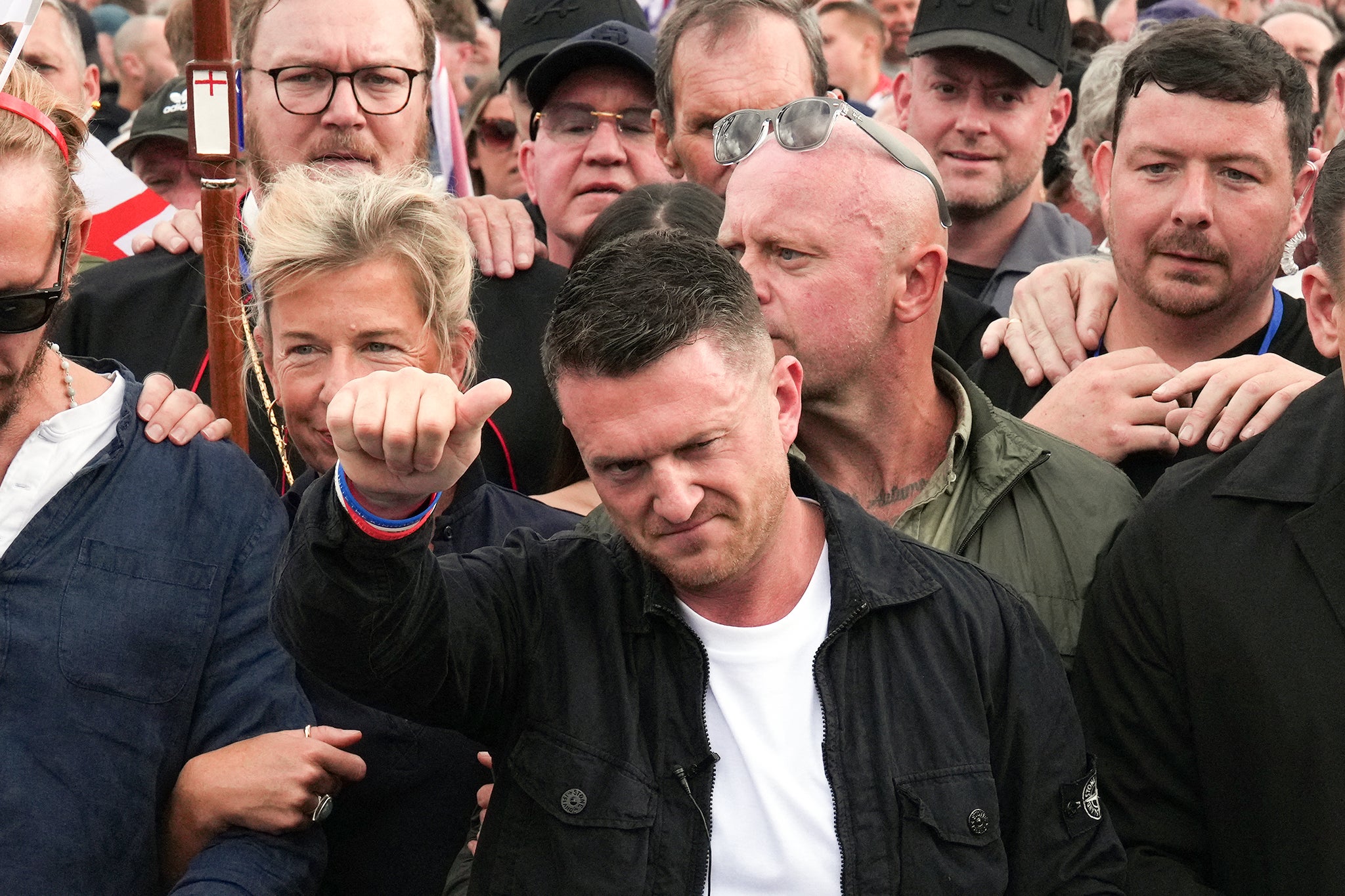
It might feel tempting to dismiss all of this as just another marginal wave that will inevitably recede. But it is dangerous to allow rhetoric that actively harms British citizens to be disguised as “opinion”.
Racists hiding behind Tommy Robinson and the shield of “free speech” need to be called out. This is not a movement of “common people”, as Robinson’s supporters claim. To label racist rhetoric as a grassroots uprising is to swallow its central lie. Its logic is familiar: appeal to threatened people, claim a treacherous government favours those who “look different”, and blame them for what you lack.
There is, of course, no quick fix. The disturbances we have seen for the second summer in a row are tied to the fact that the underlying causes of anger have not been properly addressed. “A year on, we still don’t have a cohesion strategy. But also, it’s not just immigration that was behind these riots”, says Lowel. “If you look back to the riots in 1981 or 1985, there were serious attempts to address underlying issues. We didn’t see that from this government last year.”
Decent, moderate, fair-minded people have always defined who we are as a nation. Tommy Robinson and Elon Musk do not. Communities have risen to stop racism before – and they can do it again. This will continue only as long as we forget our own power to stop it.
Join our commenting forum
Join thought-provoking conversations, follow other Independent readers and see their replies
Comments
Bookmark popover
Removed from bookmarks