Mapped: Holiday hotspots most at risk from wildfires revealed as blazes sweep Europe
Experts also issue health warning over potentially deadly blazes ahead of bank holiday weekend
The holiday hotspots most at risk from wildfires have been revealed as blazes continue to sweep Europe amid scorching temperatures.
As many Britons jet off for the bank holiday weekend, experts have also issued a health warning over the potentially deadly fires.
Meanwhile, in the UK, wildfires have continued to break out, as the country endured one of its hottest and driest summers on record, and four heatwaves so far.
But those looking to head abroad have been warned that Greece is the country most at risk from wildfires this summer, followed by Turkey, then Cyprus. Health and security company International SOS revealed Spain, Portugal and Albania come next on the list, with Montenegro, Germany, Italy then France following.
Adam Lakhani, security director at the firm, told The Independent: “There has been below-average wildfire activity in the lead up to the summer months, likely due to high levels of rainfall across historically at-risk regions, including Southern Europe – France, Italy, Portugal and Spain.

“However, in recent days and weeks, wildfires have begun to hit the regions, also extending as far as Eastern Europe. Currently, much of Southern Europe is facing fires and warnings of extreme heat.
“Wildfires can directly impact health by causing injuries and even death from burns or smoke inhalation.”
Dr Kate O’Reilly, regional medical director, explained: “The smoke from wildfires is a mixture of hazardous air pollutants, including particulate matter, that can affect those in near proximity to the fire, as well as distant populations. Exposure to wildfire smoke can irritate the lungs, cause inflammation, affect the immune system and increase susceptibility to respiratory infections.
“The long-term impacts of wildfire exposure include worsening lung and cardiovascular disease. Mental health conditions, including post-traumatic stress disorder, depression and anxiety, in both adults and children can increase after witnessing a wildfire.”
She added that access to healthcare can also be impacted during and in the aftermath of wildfires.
She warned: “The current situation across Europe is of great concern.”
New research by International SOS found the country worst affected by wildfires in 2024 was Portugal, where roughly 425 square miles (1,100 square km) of land was burnt, according to the Copernicus Atmosphere Monitoring Service, making up approximately 25 per cent of the total area burnt in Europe that year.
The report, titled 2025 Europe Wildfire season: preparation, response, said, in Europe, Greece has regularly been one of the worst-affected countries by wildfires, with authorities increasing the number of firefighters from 15,500 in 2022 to more than 18,000 ahead of this year’s wildfire season, while the Greek Ministry of Climate Crisis and Civil Protection increased its fleet of firefighting vehicles from 270 to 3,700.
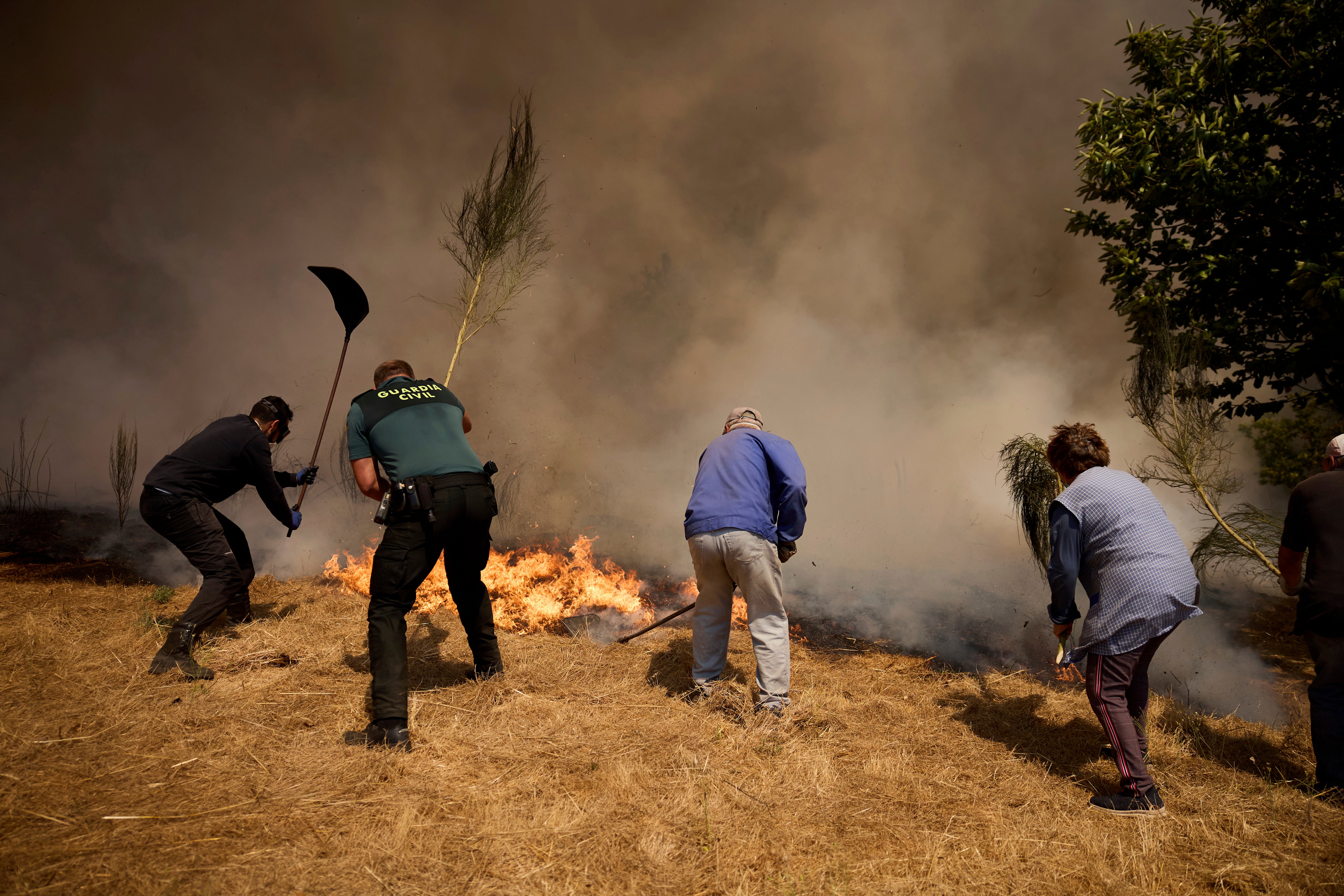
Firefighters have been battling to put out blazes across southern Europe in one of the worst summers for wildfires in 20 years.
Europe has been warming twice as fast as the global average since the 1980s, according to Copernicus. Scientists say that climate change is exacerbating the frequency and intensity of heat and dryness in parts of Europe, making the region more vulnerable to wildfires. The EU monitoring agency says that 2024 was the hottest year on record both globally and in Europe, which experienced its second-highest number of ‘heat stress’ days.
The blazes in Spain have killed four people this year and burned more than 382,000 hectares or about 1,475 square miles, according to the European Union's European Forest Fire Information System (EFFIS). That surface area is more than twice the size of metropolitan London, more than six times the 2006-2024 average for land burned during the same period, according to EFFIS. Air quality deteriorated across large parts of Spain over the past week as a result of the wildfires, data from the EU's Copernicus climate monitoring agency showed. Smoke from the Iberian Peninsula fires reached France, the UK, and Scandinavia, it said.
In Portugal, wildfires have burned about 235,000 hectares or 907 square miles, according to EFFIS – nearly five times more than the 2006-2024 average for this period. Two people there have died.
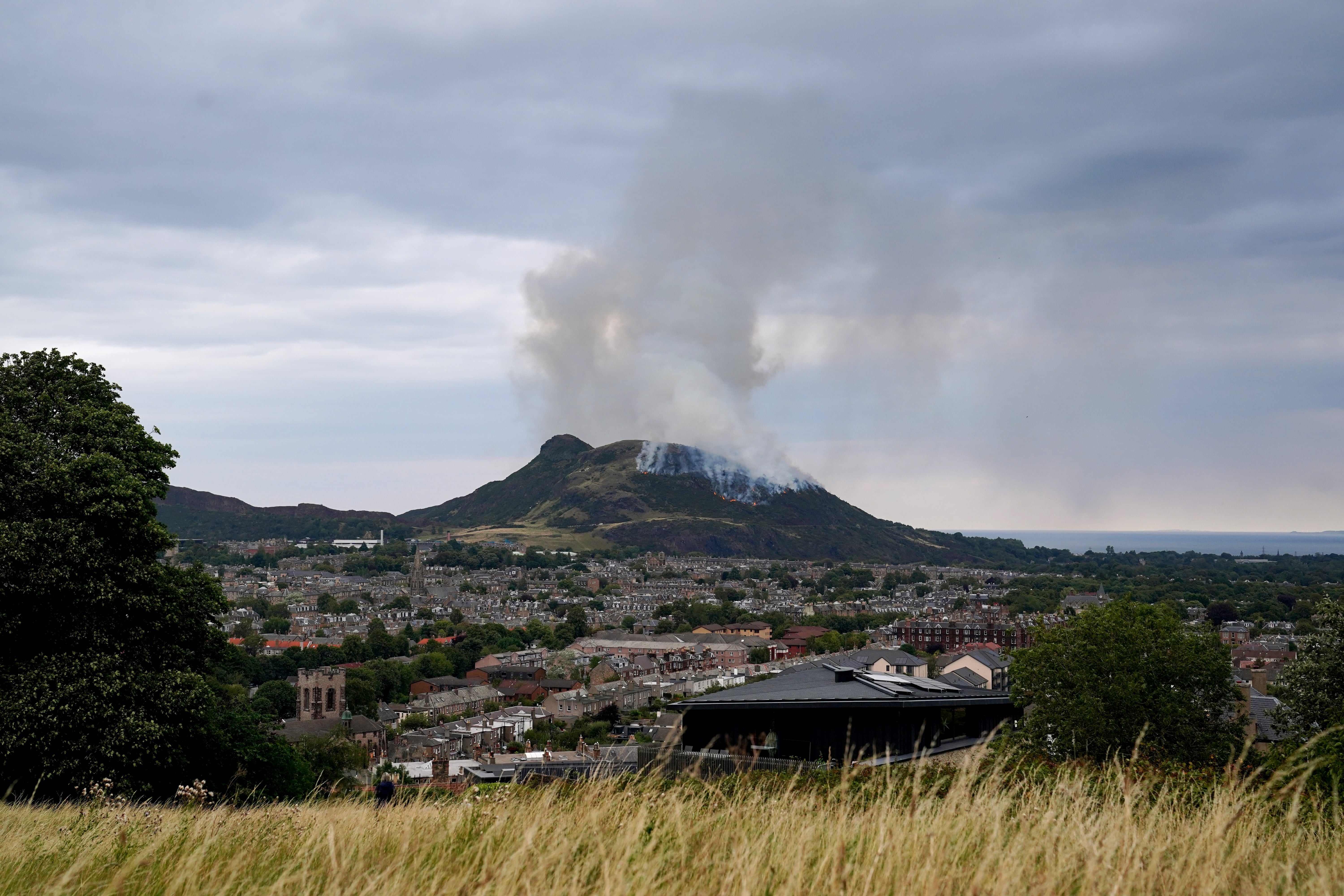
Meanwhile, the UK experienced the fourth heatwave of the summer last week, with some areas seeing the mercury climb above 33C in the hottest places.
A major incident was declared by firefighters tackling a large moor fire in the North York Moors National Park last week, just days after a huge blaze broke out at the iconic Arthur’s Seat landmark in Edinburgh.
Fire and rescue services in England and Wales had already responded to 856 wildfire incidents in the UK as of last week, with firefighters warning the country is on track to break the wildfire record this year.
Warning that fire services are “being pushed to their limits”, National Fire Chiefs Council (NFCC) chair Phil Garrigan said: “We are already seeing more wildfires at this point in the year than in 2022 – which itself was a record year – and that is deeply concerning.”
Join our commenting forum
Join thought-provoking conversations, follow other Independent readers and see their replies
Comments
Bookmark popover
Removed from bookmarks