If the boomer memoir is the new misery memoir, they could at least say sorry
Two distinguished British writers – Sebastian Faulks and Geoff Dyer – have recently published vivid boomer tales of a world shaped by food shortages and the Second World War. But will anyone want it – or buy it – from the never-had-it-so-good generation, writes Robert McCrum


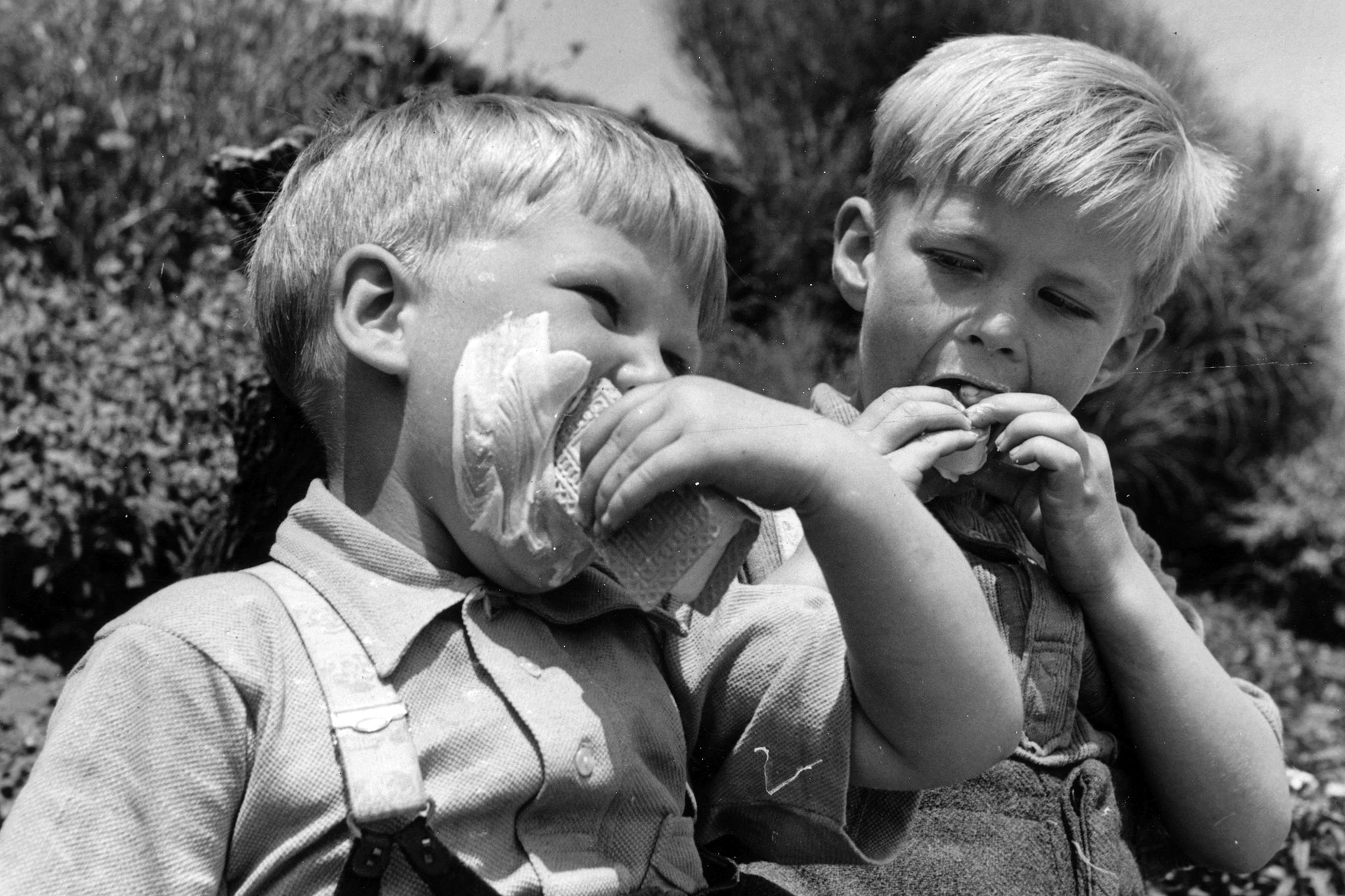
Once upon a time, in the cold grey years after the Second World War, Britain was a land of hope (if not glory), symbolised by a Labour landslide and the newly created welfare state. Simultaneously, the baby-boom generation, born between 1946 and 1964, grew up in a mood of never look back, fuelled by coronation chicken and toad in the hole, washed down, in the immortal words of Enid Blyton, with “lashings of ginger beer”.
Our parents were committed to renewing a broken world through the three Es of energy, economy and education. The biggest “never” in our coming of age – I was born in 1953 – was Harold Macmillan’s “You’ve never had it so good”.
History seemed to have scattered fairy dust on us boomers – the children of peace. In the age of free school milk, we were too young to grasp the extent of our good luck. Only the survivors of world war – prematurely aged veterans, sometimes scarred beyond recognition – knew the horrors we’d been spared.
By 1963, notoriously the year the poet Philip Larkin discovered sexual intercourse, Britain had been remade for a certain kind of English boy (still a full decade before women’s lib). The soft power of English language, culture and football seemed briefly to restore Britannia to her throne. In retrospect, this was a post-war restoration, an end-of-the-pier show starring James Bond, the Beatles and Dad’s Army. This surreal farrago of Britishness would culminate in Monty Python’s Flying Circus, which launched on BBC in the autumn of 1969.
While the Seventies began with the three-day week and juxtaposed the Queen’s silver jubilee with punk rock’s “Anarchy in the UK”, it culminated with “Labour Isn’t Working” and the election of Margaret Thatcher. Despite harbingers of future trouble, the boomers were enjoying a Neverland of manageable inflation, steady jobs with good pensions, and the blessings of free healthcare. We revelled in peace, wallowed in plenty and flew wherever we chose.
 Books of the Month: What to read this September, from Arundhati Roy’s searing memoir to Ian McEwan’s sci-fi outing
 Lulu: ‘I had such terrible shame. I never wanted to look at myself and know that I, too, was an alcoholic’
 Del Amitri’s Justin Currie: ‘Parkinson’s has highlighted just how arrogant I used to be’
Then baby boomers began coming into government and anything seemed possible – the Argies were put to flight and even the Labour movement, shattered by its failures in the Seventies, began to renew itself under the direction of two ambitious boomers, Tony Blair (1953) and Gordon Brown (1951).
With the stock market deregulated, house prices going through the roof, “loadsamoney” to burn, and a short-lived cultural bonanza (“Cool Britannia”), the Neverland of the Sixties seemed back in business. From the other side of the Atlantic, an optimistic American academic set the seal on this fantasy, declaring “the end of history”.
Fat chance. In Britain, history is what we do. By the turn of the millennium, the Neverland dream was morphing into a post-millennium nightmare – perhaps symbolised by the Dome – first with the “war on terror”, and then the credit crunch of 2008-09, followed by Brexit, and finally the death of the baby boomers’ queen in the tormented autumn of 2022. Once a seat of empire, a seasoned liberal democracy, Britain had been an arbiter of world events. Today, we’re a tatty museum of curiosities, devoted to the flattery of rich American tourists.
The children of Neverland once lived as if there was no tomorrow, but now they’ve begun to ask, “What is to be done?” That classic pre-revolutionary, existential question haunts my contemporaries as lottery winners faced with the belated audit of a bitter legacy.
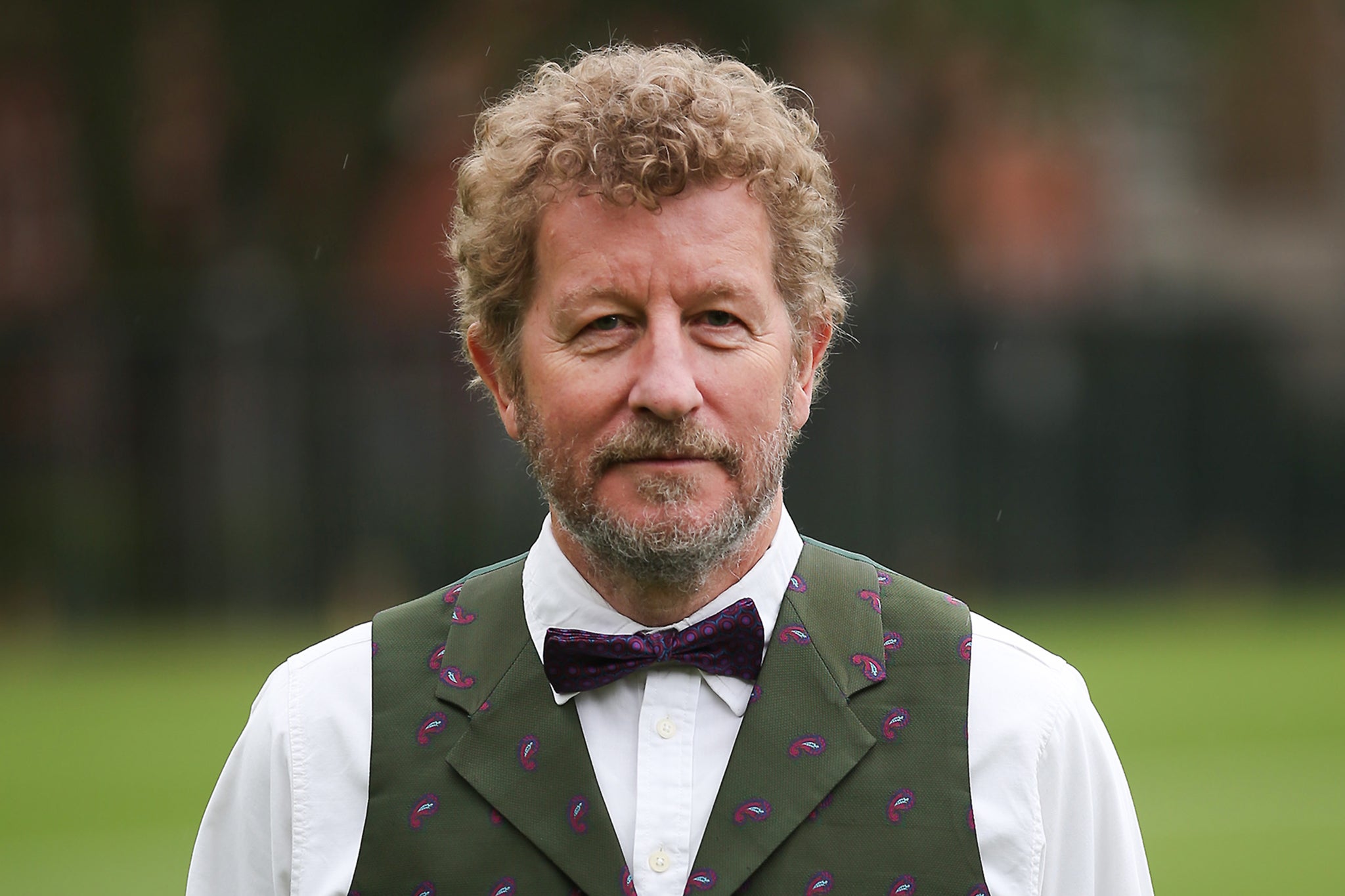
Some have begun to compose their recollections of a fascinating era. This autumn, two distinguished British writers – Sebastian Faulks and Geoff Dyer – have published compelling fragments (see below) of vivid boomer autobiography, the former in Fires Which Burned Brightly, the latter in Homework. It’s a fair bet that this will become a new genre of memoir: the boomer confessional.
Faulks, the best-selling author of Birdsong, celebrating “a life in progress”, opens the batting with the authentic, semi-ironical confidence of the Fifties’ boy. “Everything is fine. We’re alive. We live in England. It’s all good.” He pictures his family as “pioneers in a landscape that’s been through a bad time but on which the sun is now going to shine”. This can’t last and – spoiler alert – there’s a reckoning. Faulks’s crack-up is all about him, of course, but it’s emblematic of the hidden neuroses within Neverland.
As well as “cowboys on television” (The Lone Ranger, naturally), and with peace and prosperity apparently furthering “a continuation of the War by other means’’, the boomers’ imaginative landscape is illuminated by black-and-white screenings of The Wooden Horse and The Dam Busters. This was a time when everyone was in the sanitarium, when schoolboys were instructed in irregular Latin verbs by veterans with horrific war wounds and stoically undiagnosed PTSD. Our minds were at war. Toys were plastic weapons, and racing cars replaced Spitfires. My first headmaster had a prosthetic leg and would never forget El Alamein. Other survivors had been pulled from blazing tanks with melted features. Post-war cities were scarred and crumbly with bomb damage.
Dyer, who offers a more elaborate literary persona, seems more in thrall to fighting Nazis, noting “how close to home the war was in the consciousness of any boy growing up in the 1950s… All our games were war-related.” This “boy” recalls his Sekiden toy pistol in astonishing detail, and feels in his marrow the thrill of the Airfix model, especially the Spitfire and the Focke-Wulf 190.
“Airfix”, he remembers, “offered a complete childhood vision of a world at war.” Some ageing boomers faced with the demise of this restoration still hum, “Non, je ne regrette rien.” Oh, for the magic of an Airfix fix!

Later generations, notably Gen Z (1997-2012), won’t be buying these tales of woe. They despise “never had it so good”, mistrust the sun that never sets, and look askance at their parents’ and grandparents’ Neverland as a botched restoration. To non-boomers, their elders are undeserving property-misers or frivolous pensioners leading a comfortable old age at the expense of everyone who came after them.
Contrariwise, some boomers will protest that their generation adapted with optimism to a peacetime world, disposed of an empire and managed a complex national reconciliation with historical change. They will never concede their tragedy: that they squandered countless opportunities, lost control of the argument and blew it, leaving Britain more broken than ever.
In this fraught inter-generational landscape, contemporary British politics feeds on envy, insecurity and dread, sponsoring the frenzy of retribution that surrounds the Reform party. Now, added to the anxiety of “what is to be done?” there’s a more visceral, and insular worry: “Who are we?” and “Where are we going?”
The search for new and better narratives has become a dominant theme of disrupted times. If the boomer memoir is to join the misery memoir of the 1990s as a popular genre, it might be well-advised to strike a note of contrition, and find a new way to say “sorry”.
“Homework, A Memoir” by Geoff Dyer is published by Canongate
“Fires Which Burned Brightly – A Life in Progress” by Sebastian Faulks is published by Hutchinson
Join our commenting forum
Join thought-provoking conversations, follow other Independent readers and see their replies
Comments
Bookmark popover
Removed from bookmarks