Doomsayers warn about a post-lit society – here’s why they are wrong
Our concentration levels may be going down, but predictions of the death of the novel – and reading – are wide of the mark, says Robert McCrum. As 2026 is declared the year of reading, he takes a look at why the life of the mind has a future – even more so in a world of AI


The sky is falling in has always made good copy. At the dawn of the UK’s National Year of Reading, several voices of doom have begun to promote the “end of civilisation” with an ominous catalogue of bad news from the world of books. Suffice to say, all is not sweetness and light.
Last year, Times columnist James Marriott froze his readers’ marrow with an anatomy of the post-literate society, before locating the golden age of literary culture in the 18th century. It was the Enlightenment which, in Marriott’s words, had sponsored “an unprecedented democratisation of information”.
And it was in revolutionary France, apparently, that the literacy rate had been “higher than in the 20th-century US”. A low bar, possibly, but Marriott found, in an age of ecstatic reading, the origins of “human rights, democracy, and the industrial revolution”.
It’s been downhill ever since, apparently. We are now “living through a counter-revolution” in which “books are dying” and “reading is in freefall”.
Marriott’s shapeshifting argument then attaches itself to some fashionable academic concerns about “attention”, and our diminished powers of concentration, for which he blames the smartphone, a menace described in apocalyptic tones as “a watershed in human history”.

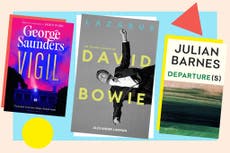
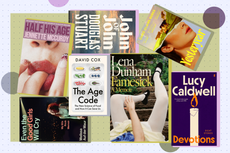
The intellectual tragedy surrounding the demise of the book creates a world without mind, the ”end of creativity”, followed by the “death of democracy” and the eruption of “the moronic inferno”, a phenomenon recently headlined by one New York magazine as “The Stupiding of the American Mind”. In short, the evil dawn of a voraciously unread “post-literate society” discovers the herbivorous devotee of the book joining the hippogriff in a benighted future. Why not? All round, it’s a polemic worthy of Swift – passionate, provocative, and intermittently persuasive.
This heady take was then echoed, in The Sunday Times, by a rival salvo from Niall Ferguson, a seasoned contrarian, whose dread anatomy of a bookless world pictures the coming generations as “outright barbarians” facing “a fundamental civilisational crisis of literacy”. Ferguson’s thunderous conclusion? “At stake here is nothing less than the fate of humanity”.

So there you have it: the sky is falling, we’re all doomed, and the end is nigh.
Almost, but not quite.
Lurking within these provocative departures from intellectual complacency are several lines of argument in which we find the reading doomsayers both hurling the kitchen sink at the “stupid” problem – the torments of unregulated social media – something that’s not really about books.
First is the contemporary debate about “attention”, and the college concentration crisis analysed by the American pop psychologist Jonathan Haidt, author of The Anxious Generation: How the Great Rewiring of Childhood is causing an Epidemic of Mental Illness. Is this the post-literate society? It’s certainly become a widespread concern. The OED’s choice of “rage-bait” as last year’s word of the year exposes the academy’s worries about the blight of social media. In turn, the marriage of the iPhone with the age of Trump has sponsored a unique outbreak of bourgeois dread.
Microsoft plus history equals the rise of the cretin. Yet the Western intellectual tradition has always grappled with dunces, while books and reading have been a minority pursuit. Besides, amid this maelstrom, are we equipped to secure a sensible perspective on such a moment of unprecedented change? Should we not acknowledge that our society is still buzzing with trillions of digital words, the majority of them in some version of the English language?
Second, and equally important, such “way-we-live-now” dread is driven, among educated society, by a “books ain’t what they used to be” nostalgia. One Swiftian part of Marriott is the covert Tory essayist who might denounce faddish neologisms and mourn the corruption of grammar and syntax. This Year of Reading should be a good opportunity to interrogate more closely the unproved notion that “books are dying”. Ever since the dawn of the Renaissance, books (and their languages, especially Latin) have been a focus for conservative despair about the state of culture and society.

The historic resilience of the book becomes instructive and consoling in the face of doom-mongers. The way we use – or don’t use – books is braided into the evolution of the thing itself: the miracle of the printed volume. Today that comes in many guises (Kindle, audio, PDF), which are rarely analogue and most likely digital. But both Gutenberg and Caxton would still recognise the bookishness of what we call books.
“Reading” has also grown more, not less, complex. Until the late 19th century, literacy was a thrilling and privileged transaction subordinate to mass culture – and it still is. The heady freedom of our imagination is still the only departure lounge for the flight of the mind. For that itinerary, there’s no GPS. We will learn to accommodate massive distractions from the competition of rival media, but the sovereign reader remains – and always has been – a free agent. In his or her liberation with a book lies the joy of reading: it is careless and unpoliced, at its best solitary, and typically private, in a world without borders or government.
Especially when we concede the catalogue of stress and disruption advertised by the culture’s naysayers, our reading brain, even in the condition of 21st-century misuse and neglect, has not shut down. How can it? We are wired with a hunger for meaning; a narrative gene is part of our DNA.
The human animal is a storytelling creature that lives for news, gossip and entertainment – the word.
Although the reader has to concentrate more, and differently, our stone-age brains will continue to generate the delicious trance, inspired by close reading, as we put it, of “getting lost in a book”. Indeed, there’s plenty of anecdotal evidence that we are now acutely conscious of, and adaptive to, the changed technological environment of the digital renaissance. Take BookTok, for example, bete noir of old school book culture.
At first dismissed as frivolous, BookTok was indispensable to the success of Madeline Miller’s Song of Achilles, a prizewinning novel inspired by The Iliad. TikTok is also responsible for the sale of some 20 million new books per annum since 2021. In The New York Times, a Princeton professor, Yarimar Bonilla, having confessed to leisure hours of doom-scrolling, describes BookTok as “an escape from the barrage of dread”, hailing a new medium that’s “encouraging people to read”. Having joined her students, “It’s fun,” she writes. “And if it happens to alter your brain chemistry? Even better.”
Consider the good-and-bad dimensions of the AI revolution. Despite a Cambridge University study that claims a majority of authors dread an AI-shaped future, there are vigorous counter-indications. One intrepid UK start-up, inspired by LLMs, is the brainchild of a twentysomething member of Graham Greene’s family. Books By People, with enthusiastic industry support, is inviting publishers to subscribe to a code of practice (and a book stamp) that guarantees creative authenticity. “Readers want to protect what feels sacred to them,” says Esme Dennys. We may be getting dumber, but our antidotes are getting smarter.

So the novel is not yet dead, and literature is experiencing one of its periodic recalibrations, for instance the transition from the scroll to the codex. Publishers are not going bankrupt; new imprints are blossoming. The life of the mind has a future, and perhaps doom-mongering will inspire a creative backlash. Faced with the tech giants, it might pay to think small: pick up a book to read closer.
Most writers dedicate themselves to their vocation as if in thrall to ink and paper. They work long hours, and put up with every kind of adversity. OK, they are not going down the pits, or numbing their hearts and minds on a production line. Part of an ancient craft, they’re engaged in the enhancement of everyday life, telling better stories about the human condition.
Originality is difficult, but it’s also addictive. If you are lucky enough, as a writer, to find the voice to say things that have not been heard before (on whatever Richter scale of critical scrutiny), you won’t willingly give that up. Pound’s “make it new” and Eliot’s “intolerable wrestle with words and meaning” never gets any less intolerable. But it’s the only game in town.
This upcoming Year of Reading is a time for vigilance plus common sense. Maybe, in some existential way, beyond our ken, the end is nigh. In the world of books and reading, it’s not that nigh.
Join our commenting forum
Join thought-provoking conversations, follow other Independent readers and see their replies
Comments
Bookmark popover
Removed from bookmarks