McCarthyism 2.0: From Stephen King to Judy Blume, nobody’s safe from Trump’s book banners
A new list of the most cancelled books in the US includes some of the most revered texts in the world. Here, Alex Hannaford talks to the librarians on the frontline of the battle for free speech


What do A Clockwork Orange by Anthony Burgess, The Perks of Being a Wallflower by Stephen Chbosky, Forever by Judy Blume, and Wicked by Gregory Maguire all have in common? Answer: they’re among the most-banned books of the last school year in America.
That’s the same A Clockwork Orange that Time magazine included in its list of 100 best English-language novels since 1923 (the year the magazine was founded). The same beloved children’s author, Blume, who wrote Are You There God? It’s Me, Margaret. And the very same Wicked that imagined the backstory of the wicked witch of the West from L Frank Baum’s 1900 novel The Wonderful Wizard of Oz, adapted into an Oscar-winning film starring Ariana Grande.
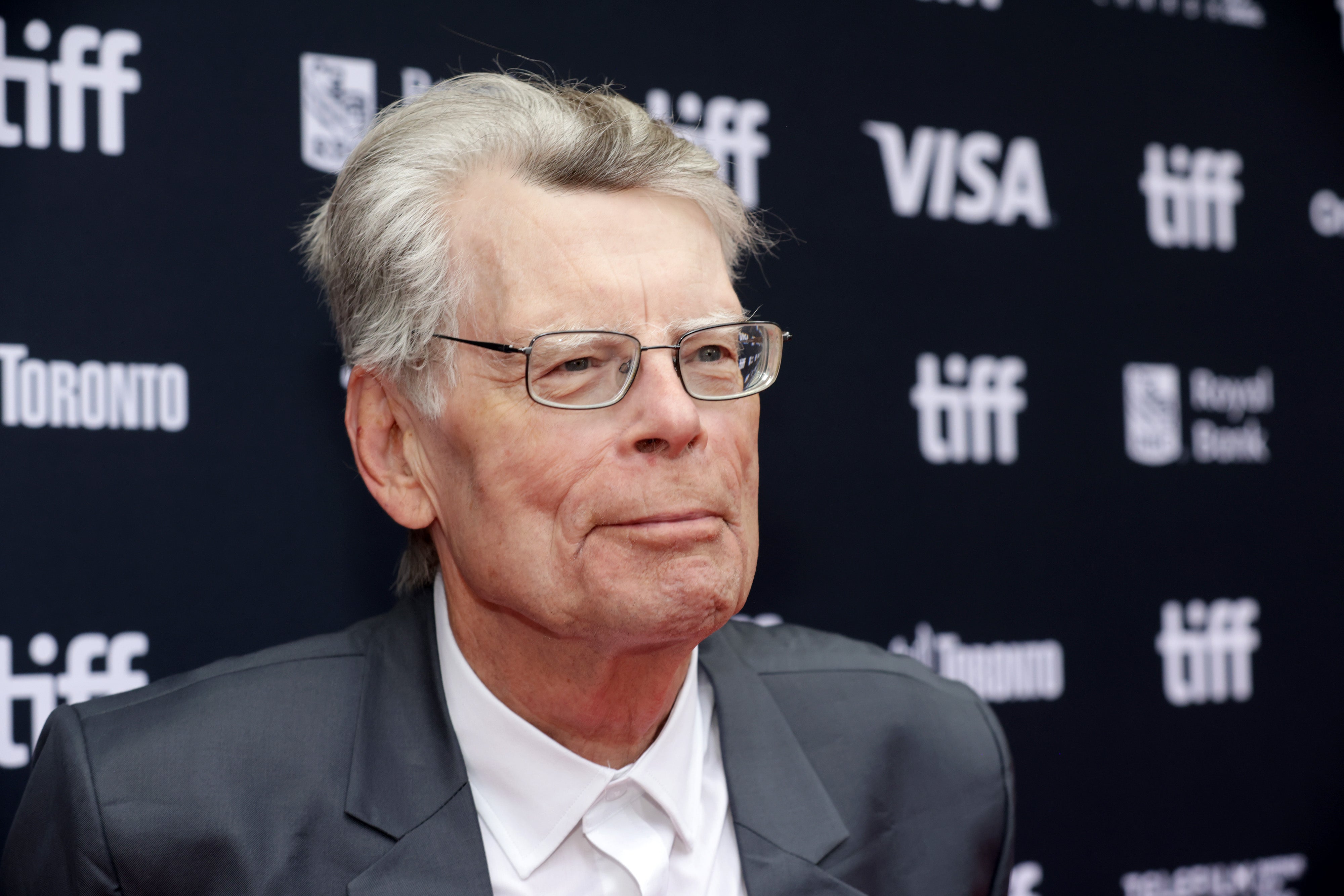
According to the latest report from PEN America, which fights to protect the right to free expression, Stephen King is now the most-banned author in US schools.

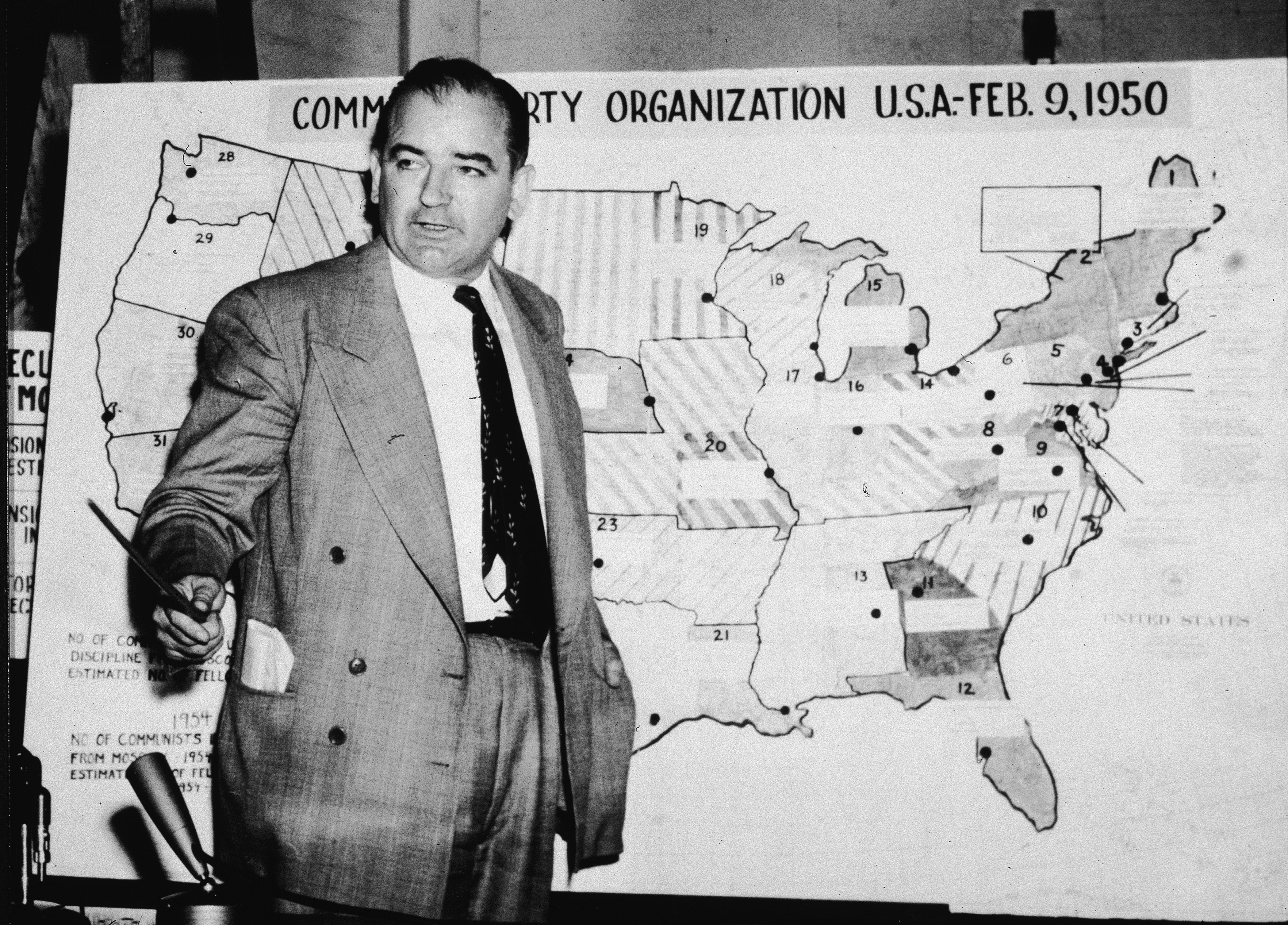
It has terrifying echoes of the McCarthy era in America, when suspicion of communism led to blacklists targeting actors, writers, and intellectuals, stifling careers and silencing dissent. Today, a new wave of censorship is sweeping through the country, and with Donald Trump’s return to power, these efforts have only intensified, creating an environment in which fear and political pressure threaten the free expression of ideas – and some say democracy itself. Which is all quite ironic when you consider the rhetoric about freedom of speech that is also coming from this administration, leading to the conclusion that speech should be free only when you are saying what they want you to say.
And it’s not just books. Since Trump became self-appointed chair of Washington, DC’s Kennedy Center (and overhauled its board) in early 2025, more than 20 productions and events have been cancelled or postponed, including Hamilton and the children’s musical Finn.
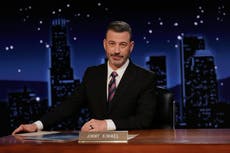


The Trump administration rescinded $1.1bn (£817m) in grants to the Corporation for Public Broadcasting. The US Naval Academy removed nearly 400 books from its library collection to comply with executive orders. And most recently, under pressure from the Federal Communications Commission, late-night TV host Jimmy Kimmel was temporarily suspended by ABC after he made comments suggesting that the alleged killer of conservative activist Charlie Kirk was linked to the Maga movement.
That latest incident led to two unlikely allies coming out in support of Kimmel’s right to free speech. Texas senator Ted Cruz, a polarising figure known for his staunch conservative positions on immigration, abortion, and government spending, said it was “unbelievably dangerous for government to put itself in the position of saying we’re going to decide what speech we like and what we don’t, and we’re going to threaten to take you off air if we don’t like what you’re saying”.
And representative Marjorie Taylor Greene of Georgia, who gained national attention for promoting conspiracy theories, challenging the legitimacy of the 2020 presidential election, and making inflammatory remarks, said she believes free speech “must be protected. Even speech that I don’t like and disagree with … And most importantly, Americans must retain the right of free speech to criticise their own government and any other government”.
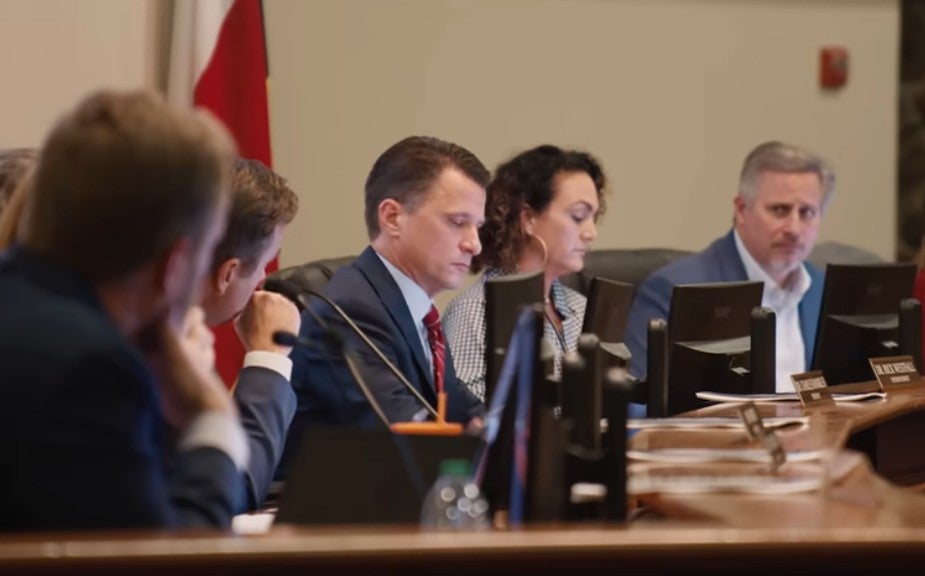
Four years ago, then Texas representative Matt Krause initiated an inquiry into the presence of certain books in Texas school libraries, which would include works by authors of international note whose books are studied as academic texts across the world. Krause published a list of around 850 books, asking schools in his state if they held any on their shelves, explaining that he was targeting titles that “might make students feel discomfort, guilt, anguish, or any other form of psychological distress of their race or sex”.
On Krause’s list was John Irving’s The Cider House Rules, Quinceañera, a book about the traditional Latin American celebration marking a girl’s 15th birthday and her transition from childhood to womanhood, numerous other titles whose authors are Black, Indigenous or people of colour or contain LGBT+ content, and a graphic novel edition of Margaret Atwood’s The Handmaid’s Tale – ironically, a dystopian story about a totalitarian society where women are stripped of their rights.
Carolyn Foote, a Texas librarian, was on the frontlines in 2021 when fears of book bans became national news. “We started engaging in this when Matt Krause’s list came out,” she tells The Independent, “and back then, of course, we never imagined a scenario where it would become so widespread in our state and nationally.”
“One district in San Antonio pulled all the books they owned from [Krause’s] list off the shelves,” Foote continues. “I think at the time, school libraries were the canary in the coal mine. What we’ve been seeing, especially in the last year, is the chilling effect on academic freedom at the university level, led by the state, the crackdown on protests on college campuses … there’s a concerted effort by politicians to remake public institutions into political vehicles to carry their message.”
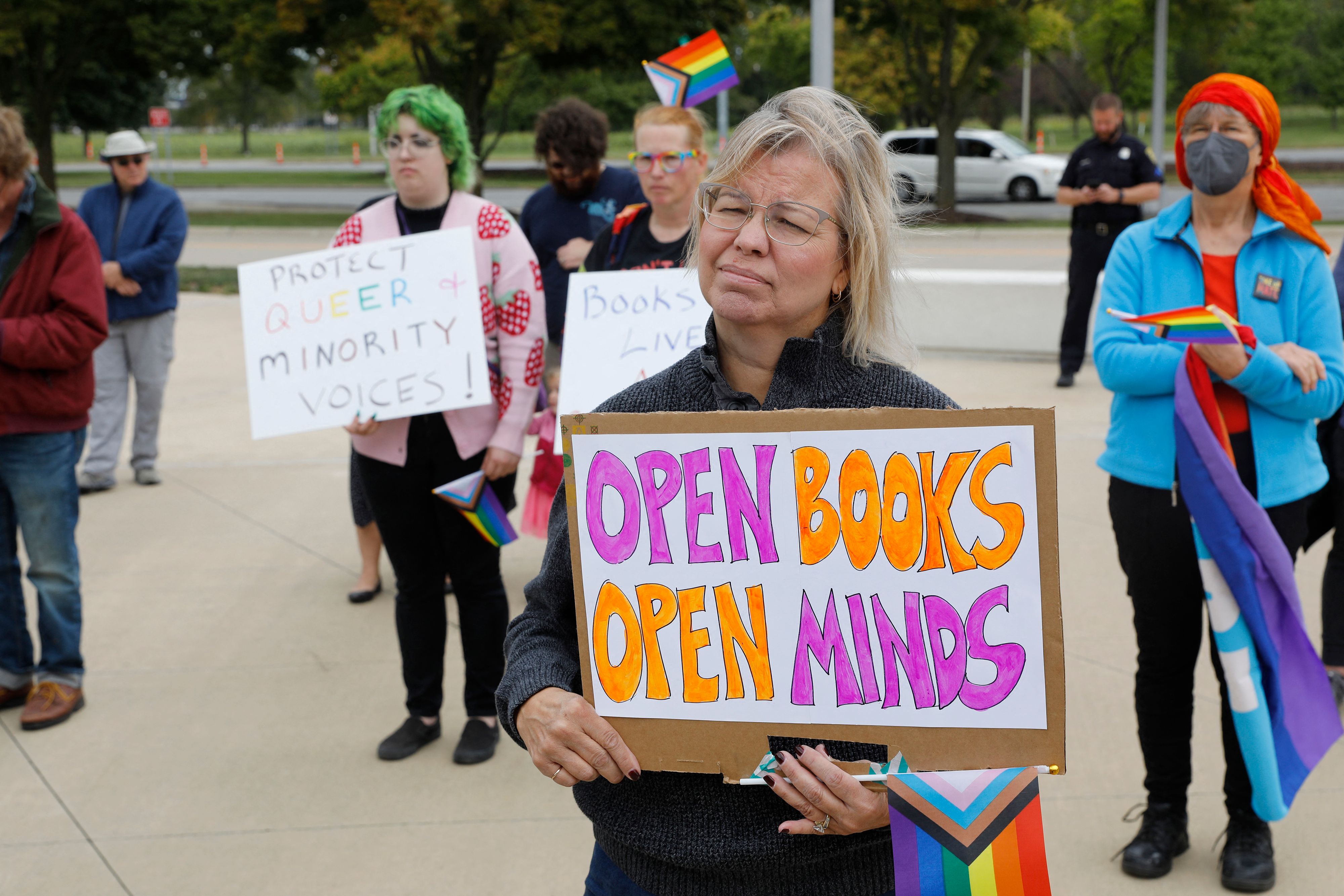
Foote says she fears the proverbial Pandora’s box has been opened. “It feels like the South has suddenly moved back to Jim Crow days, where our laws were different from everybody else’s, our freedoms different from everyone else’s. There’s a pernicious movement in some states to meld Christian nationalism in universities and schools – that’s the piece I’m more worried about. And I feel the harm to students. They will go out of state to attend college … take a job somewhere across the country, creating a cultural divide.”
But, Foote adds, groups have sprung up to fight censorship. “We’ve seen pushback at the local level against these bills. In early races that have happened in different states, there’s been big gains on the Democratic side. Even Ted Cruz spoke up about Jimmy Kimmel. So it gives me hope we will move out of this moment.”
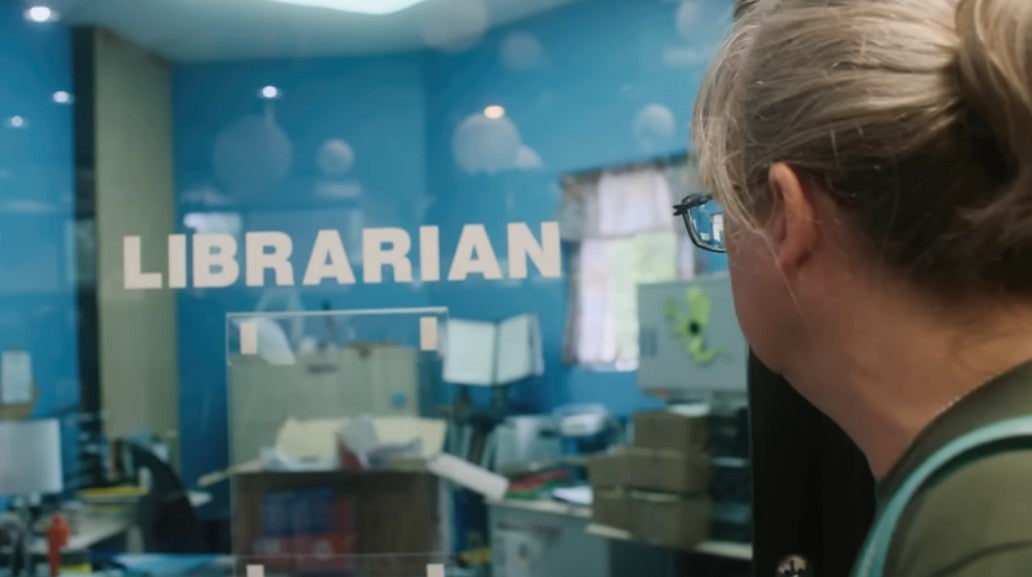
Foote appears in a new documentary film, The Librarians, from Oscar-nominated and Peabody Award-winning director Kim A Snyder, about a group of unlikely activists taking on the battle against censorship. It follows librarians across Texas, Florida, and beyond as they join together and resist the growing wave of book bans.
Appearing alongside her is Weston Brown, whose battle against censorship became personal. When he came out to his evangelical Christian parents as gay at the age of 24, he was told he wasn’t welcome in their home, and for a long time had limited access to his siblings.
But it wasn’t until he watched a viral video of his mother calling on a Texas school board to pull library books she deemed pornographic or “LGBTQ-positive”, and insisting a local pastor decide which titles should stay, that he decided to speak out publicly.
“Texas still, in a lot of ways, is the Wild West,” Brown says. “Ideas are tested. It’s like a petri dish to see what will happen here, what will be tolerated.”
Then, he says, those ideas, in this case book bans, are taken to Florida and other states – states, he points out, “that receive the most federal aid, and are the most Republican, and have the worst education, but the ideas spread anyway”.
Brown says he made it his goal to read as many of the banned books and makes the point that it isn’t just books that deal with sexuality that Republicans are targeting. “Anything that teaches a version of American history that is uncomfortable” is on the list, Brown says. “They want to replace it with a version of American history that is comfortable for them, but it’s worse than that, because it’s not only going on the offensive against people who don’t fit into that sort of straight, white, Christian, God-and-country mould. What is happening here is the spread of Christian nationalism.”
Becky Calzada, another Texas librarian, says: “In a way, I think a lot of this is happening because there’s no understanding of the processes we have in place; this comes from a few people that really are intent on sharing false information about what libraries do, about the purpose of libraries.”
In 2021, Texas governor Greg Abbott signed a bill banning the teaching of “The 1619 Project” in Texas public schools – a journalistic initiative by Nikole Hannah-Jones and The New York Times that re-examines US history through the lens of the legacy of slavery. “We can’t even use that in a school now,” Calzada says. “In other words, if a teacher wants to teach Black history or maybe wants to just talk about history and wants to bring this perspective, it’s not allowed. That is state law.”
Calzada says when she was growing up, she didn’t have access to books with characters that looked like her – a little Hispanic girl – and that’s changed, until recently. “Book banning will only reverse this”, she says. “I think of the analogy of pulling a rock out of a dam,” she says. “The whole dam is going to burst. So if they pull one book, when are they going to stop?”
On Wednesday this week, the actor Jane Fonda announced she was relaunching her father’s McCarthy-era free speech initiative, the Committee for the First Amendment.
“I’m 87 years old. I’ve seen war, repression, protest, and backlash, but I can tell you this: this is the most frightening moment of my life,” she said in a statement.
Actor Henry Fonda originally founded the group to combat a new wave of censorship in the late 1940s and it was supported by some of the most famous faces of the era, including Humphrey Bogart, Judy Garland, and Frank Sinatra. His daughter’s retooled campaign is backed by around 600 people in the entertainment industry, including Ben Stiller, Barbra Streisand, Spike Lee, Ethan Hawke, and Whoopi Goldberg.
Controlling speech is the hallmark of an emerging autocracy and, according to New York’s lieutenant governor Antonio Delgado, at this moment in time, America finds itself in a unique position. “The extent to which our constitution is being disregarded at the highest levels is something that I cannot ever recall us having to endure,” he says. “And [this is] where we are in less than one year of this administration.”
Delgado says what he believes is often overlooked in all this are the close relationships Trump has with the likes of Jeff Bezos and Elon Musk, and his interest in who takes over TikTok.
“Because if you control the platforms upon which information is shared as well, and you have a direct line to how to manipulate that information and disseminate that information, you’re not only controlling people’s speech, you’re controlling what they receive. You’re controlling the world around them and how they perceive it.”
“There is no desire here to enable the free flow of information, which is an essential component of any free society,” Delgado adds. “An informed citizenry is absolutely necessary; having an objective reference point that is rooted in fact is also a critical component.
“All of these things are being eroded at an incredibly accelerated rate. To be American in so many respects is to speak freely – it’s very much at the centre of who we are. And if there’s anything that I think will raise the collective ire across the political spectrum of Americans, it’s their speech being controlled.”
As Offred, recalling life before Gilead, says in The Handmaid’s Tale, “Nothing changes instantaneously: in a gradually heating bathtub you’d be boiled to death before you knew it … The newspaper stories were like dreams to us, bad dreams dreamt by others. How awful, we would say.”
In Atwood’s imagined future United States, this insidious change was gradual and almost imperceptible. In Trump’s America, the chilling of free speech is unsubtle and unapologetic. But the effect is the same. It too is like a bad dream – and all the signs are there that the next chapter could be even worse.
Join our commenting forum
Join thought-provoking conversations, follow other Independent readers and see their replies
Comments
Bookmark popover
Removed from bookmarks