In Maga world Charlie Kirk was a moderate – those vying for his crown could be different
Equal parts preacher and salesman, the right-wing activist had an instinct for connecting with and mobilising the youth vote for Trump. But he was also seen as someone who thrived in a modern right-wing economy where conflict is a valuable currency and who comes next could change everything, writes Alex Hannaford


Hey everybody, JD Vance here, live from my office in the White House complex,” the vice president said, staring straight into the camera. He was, he said, “filling in for somebody who cannot be filled in for, but I’m going to try to do my best”.
Vance was helming the latest episode of The Charlie Kirk Show, a popular right-wing talk show that had been running since 2020. Five days earlier, on 10 September, Kirk, its 31-year-old host, was shot and killed with a single bullet while addressing a young crowd at an event at Utah Valley University. The next day, his coffin was carried onto Air Force Two, and accompanied by Vance to Arizona, Kirk’s home state.
Vance said of Kirk, “Charlie was the smartest political operative I ever met. And,” he said, “he’s irreplaceable.”
But is he? Kirk was, arguably, the face of conservative youth in the US. Born in Chicago, Kirk dropped out of college at 18 and, at the encouragement of retired marketing entrepreneur and Republican activist Bill Montgomery, founded Turning Point USA, a grassroots charity advocating for conservative politics on school and college campuses.
Over the years, he built a multimillion-dollar media empire and was recognisable to anyone under the age of about 30 on both sides of the political spectrum. His death has unquestionably left a vacuum. On Thursday, Turning Point’s board announced that Kirk’s widow, Erika, had been elected as its CEO and chair, but the question remains if there is anyone else who can fill Kirk’s shoes and has the ability to excite young people in the way he did?
 The reaction to Charlie Kirk’s murder proves America is closer than ever to its next civil war
 There are disturbing aspects to the Silicon Valley Trump whisperers that shouldn’t be ignored
 They became the internet’s most hated couple with their pronatalist lifestyle. Now they’re telling Trump how to up the birth rate
This week, The New York Times said many conservatives now view Kirk’s death as a galvanising force; that not only is Kirk a martyr, but his assassination “could be a watershed moment that will propel their cause and cement both conservative and conservative Christian values in American life.”
Over more than a decade, Kirk had built a persona that turned grievance into belonging for young conservatives. He was equal parts preacher and salesman, employing both theatre and confidence to mobilise a movement. While Donald Trump has, whether you like him or not, a charismatic showman’s swagger, Kirk was the young firebrand conservative who had managed to harness social media and master the algorithm.
Foster Friess, a Wyoming-based investor and prominent Republican donor, was an early financial backer of Kirk, helping bankroll much of the organisation’s initial growth. It became obvious that the combination of Kirk’s personality and approach was turning him into one of the American right’s most effective organisers.
In 2016, Turning Point USA set up its Professor Watchlist, an online registry identifying academics it accused of mistreating conservative students or promoting a left-wing agenda in the classroom. On social media, he was scathing, quick, and instantly memeable.
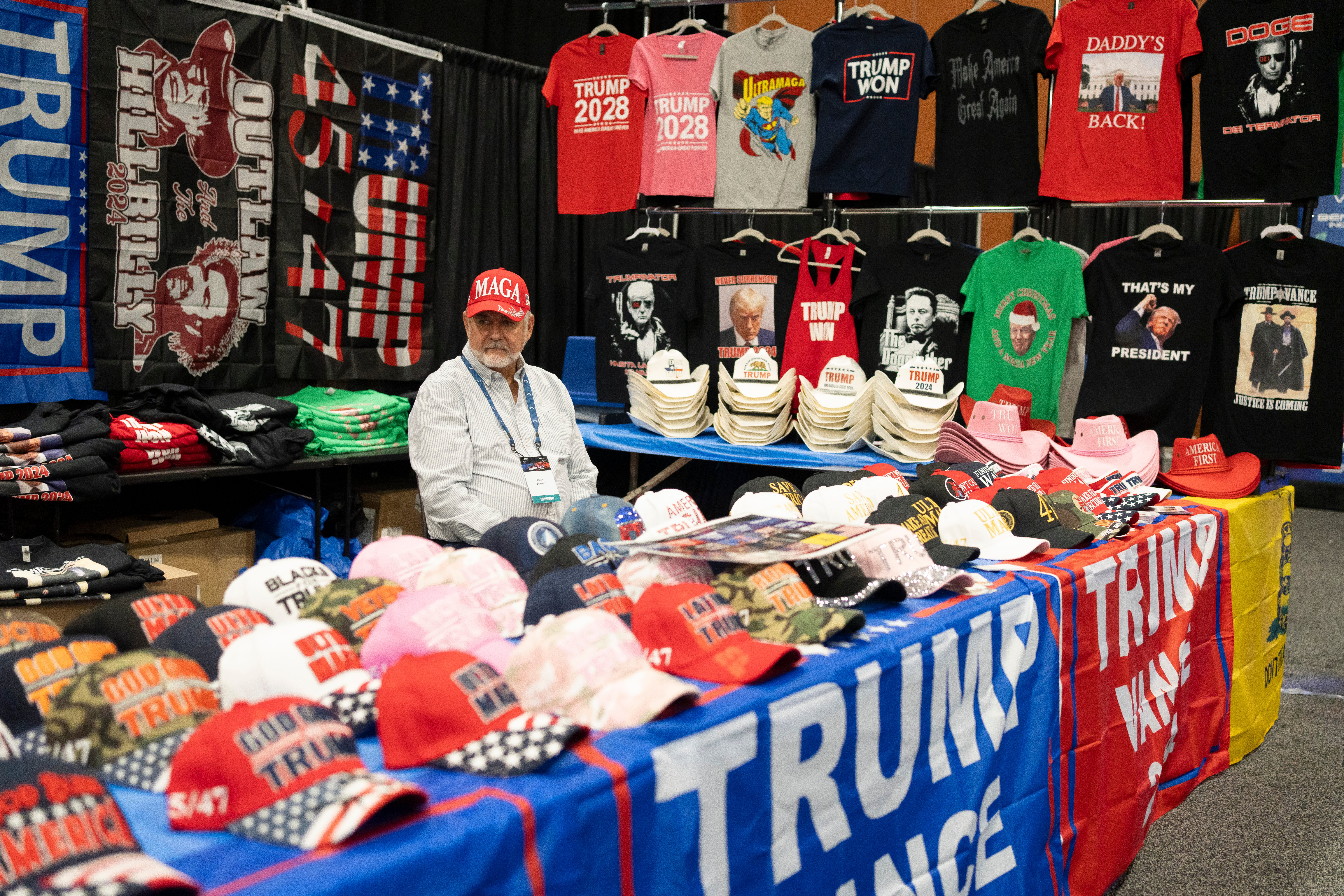
In the words of political scientist and Democratic strategist Rachel Bitecofer, Kirk represented a generation who were thriving on division. As she wrote this week in her newsletter, The Cycle, “By the late 2010s, TPUSA was not a student group – it was a nonprofit empire. Annual revenues soared into the tens of millions. By 2022, filings showed roughly $80m a year flowing through the organisation. That money built Kirk’s ecosystem.”
In 2019, Kirk launched the spin-off political arm, Turning Point Action, absorbing Students for Trump, whose mission was to elect Trump in 2016. That, Bitecofer wrote, gave Kirk “direct access to Trump’s youth mobilisation”.
The co-founder of Students for Trump was Ryan Fournier, a New Jersey-born 29-year-old. Confident, smart, good-looking, with hair perfectly combed into an improbable quiff, Fournier was still a teenager when he volunteered to help with presidential hopeful Mitt Romney’s campaign. Three years later, in 2015, together with his friend John Lambert, a fellow student at Campbell University in North Carolina, he started S4T.
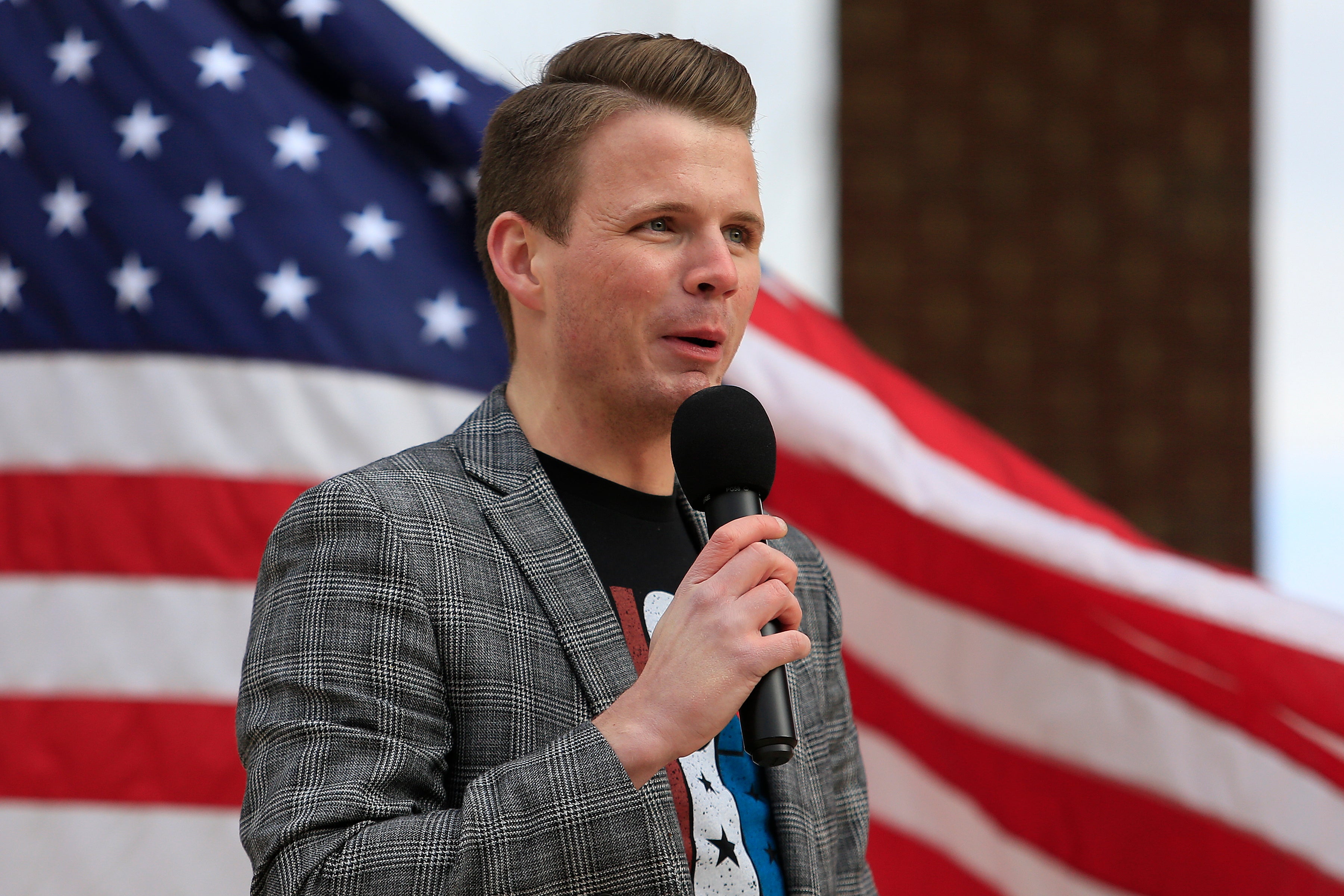
Like Kirk, Fournier is a digital native, and his social media savvy meant he knew how to push the buttons that mattered most to Trump supporters. To his millions of social media followers across Facebook, Twitter, Snapchat, and Instagram, he posts memes, re-posts comments, and crafts short, incendiary texts designed to fire them up.
Sample: he tweeted, “I fully support reparations to any former slaves that are still living.” In response to news that a state attorney in Illinois was dropping charges against Black Lives Matter protesters, he wrote, “While police put their lives on the line, this woman spits in their faces. Disgusting.” A few years back, I interviewed Fournier, who was revelling in his online world “where all the magic happens in terms of engaging with young people”.
This week, in the wake of Kirk’s death, he’s taken to publicly outing anyone who has revelled in his former mentor’s demise. In one post, he introduced his followers to a cashier he said worked for a dollar store in Virginia. The man had apparently celebrated Kirk’s assassination on social media and Fournier @ messaged the store in his post, presumably hoping to see him fired.
While Kirk welcomed those who opposed him, many others are now directly targeting and trying to cancel anyone who challenges their worldview. And, while this seems diametrically in opposition to what Kirk believed in, commentators say it is very much in keeping with the hostile atmosphere that helped him thrive.
.jpeg)
Earlier this week, Bitecofer wrote that Kirk was “the prototype of a generation of right-wing internet entrepreneurs who figured out that the surest way to build power, attention, and money otherwise off limits to them, is not by governing, legislating, or even persuading – it’s by manufacturing outrage and monetising it.”
The irony, she believes, is that Kirk himself wasn’t ever especially ideological “He didn’t have the intellectual rigour of a William F Buckley or even the crude charisma of a Trump. What he had was instinct. He understood that in the modern right-wing economy, conflict is the only currency that matters.”
Rachel Bitecofer debated Kirk at his studio in Arizona in 2022 about DEI initiatives that were proving to be a polarising force in the US, and an election issue for Donald Trump. “I fiercely denounce political violence of all forms, and Charlie Kirk didn't deserve to be shot, clearly, but it is also simultaneously true that he figured out how to monetise propaganda and fear.
“Charlie was a propagandist, but he was first a victim. Somebody ruined his brain – somehow, somewhere, along the way, the Tea Party radicalised Charlie Kirk, and his career’s legacy is the radicalisation of millions of people.”
Bitecofer said she felt Kirk genuinely thought what he was doing was mentoring young people, but that the character he’d created – the right-wing provocateur – had come to define him.
“There reached a point, I think, for Charlie, where the character became him. But backstage [at the debate], what I saw of Charlie Kirk was a kind person, absolutely polite.”
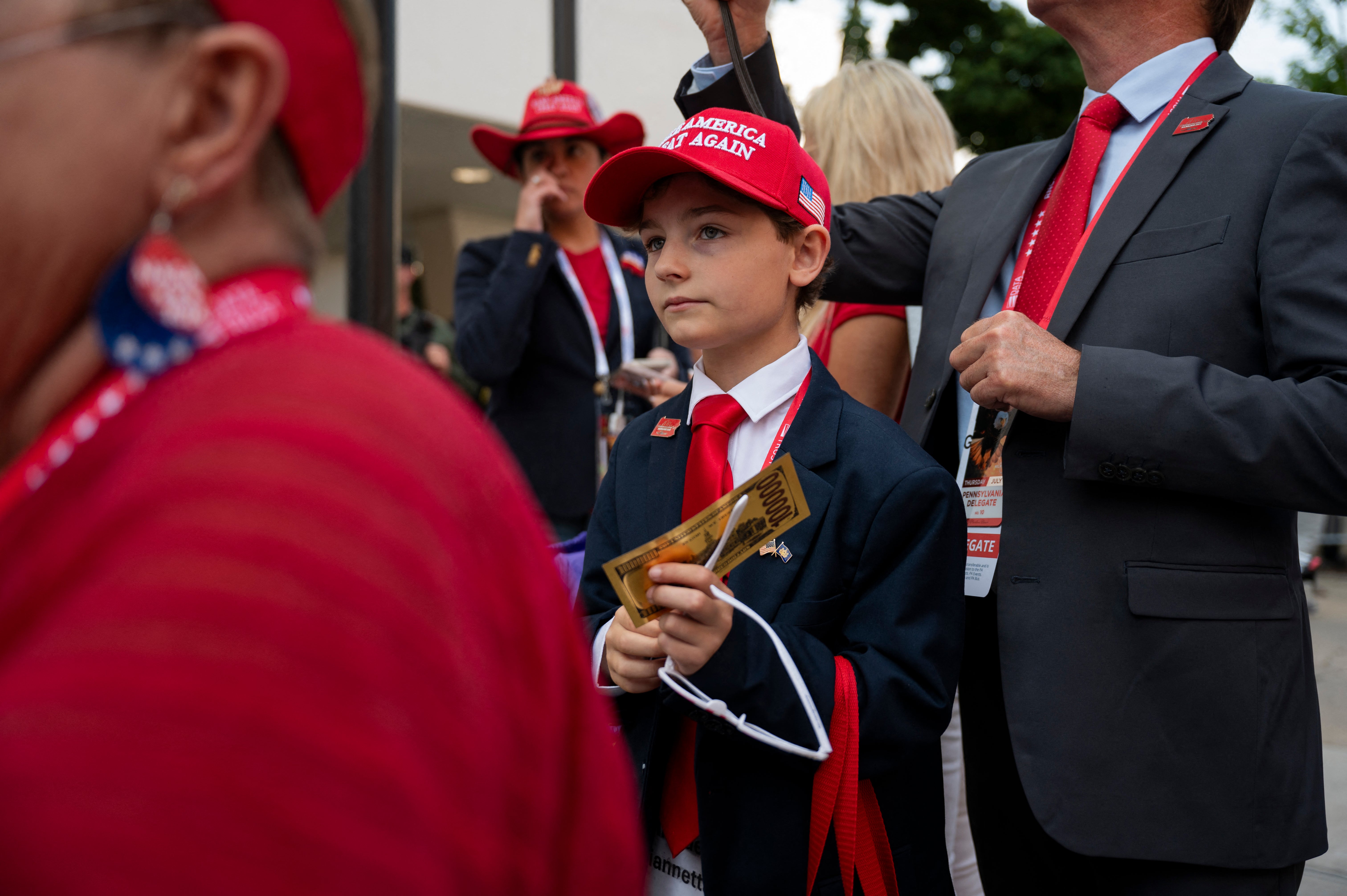
Bitecofer believes that in his wake, Turning Point, the organisation he founded, will only become stronger – and by consequence more dangerous.
This week, Jesus Mesa, a politics reporter at Newsweek, wrote that in Maga world, “Charlie Kirk was a moderate. What comes next could be more extreme”.
Kirk, Mesa wrote, built his career on debate. “Online, on campus, on stage, on TV. He thrived on challenge and disagreement. In the aftermath of his assassination, there's growing concern that the space Kirk occupied – a space of open debate, not violence – may be closing fast.”
And worryingly, there are far more controversial candidates waiting in the wings, ready to siphon the attention of Maga’s younger audience. People like Nick Fuentes, the self-styled “America First” streamer, decried as a white supremacist and Holocaust-denier who has been repeatedly deplatformed, and Matt Walsh, the Daily Wire provocateur whose 2022 documentary What is a Woman? and sustained anti-trans crusade have led to him being accused of amplifying violent rhetoric in the service of ramping up the culture wars.
Each contender for Kirk’s crown employs a different brand of grievance-baiting showmanship. They may not have Kirk’s campus-organising infrastructure, but in an increasingly tense and hostile world where people are being asked to pick a side, they can pack a powerful punch – and are angrier than ever.
Join our commenting forum
Join thought-provoking conversations, follow other Independent readers and see their replies
Comments
Bookmark popover
Removed from bookmarks