This year’s Oscar nominees are furiously political – so why are their stars silent?
‘One Battle After Another’, ‘Bugonia’ and the forthcoming ‘The Secret Agent’ strike overt parallels to modern politics and the ongoing clown show of Donald Trump’s second term. But few have been saying it all out loud on the awards circuit this year, writes Xan Brooks


The Secret Agent – a dark horse contender at this year’s Academy Awards – spins the freewheeling tale of a dissident scientist in 1970s Brazil. Kleber Mendonca Filho’s film features a veritable rogues’ gallery of supporting characters, from a sleazy police chief to a satanic tailor to a disembodied zombie limb called Hairy Leg that escapes the ziplock bag in the evidence room and proceeds to storm the local hook-up park. The revellers have barely begun their illicit carousing when in hops Hairy Leg to sour the mood and violently break up the party. This should be their big night, their indulgent happy time. Now it’s been ruined by an animated appendage that’s come to teach them all a hard lesson.
Hairy Leg plays a minor, mischievous role in The Secret Agent, but I’m seeing it as the unofficial mascot of this awards race, the gremlin in the works of the well-oiled machine as the nominees and presenters try to keep on track, stay on script and avoid causing any offence. These people would prefer to avoid politics and would rather not mention Donald Trump by name and yet they can’t quite ignore the persistent noises off. Sooner or later, hey presto, there’s Hairy Leg in the form of another grisly real-world news story that demands their response, or at least an expression of sympathy. There’s no running from politics, it seems, not even on Oscar night. It’s the star player of many of this year’s Best Picture nominees and is about to pogo onstage whether the Academy likes it or not.
Were the Oscars ever truly political, or was that always a myth – a sentimental confection glued together with antique newsreel footage of Sacheen Littlefeather and Michael Moore? Probably so, the past is rose-tinted, but this award season has felt more depressingly safety-conscious than most, particularly given the climate, the context and the ongoing clown show of President Trump’s second term.
The tone was set last autumn when Jennifer Lawrence – briefly tipped as an Oscar frontrunner for her role in Die My Love – told reporters that she would no longer criticise Trump because she had done so in the past and it hadn’t done any good. To do so, she said, would only “add fuel to a fire that’s ripping our country apart”, and her line has been adopted by others to the point where it is now standard policy, even a weird badge of honour.
“I’m not going to say his name. I’m not even going to mention him,” vowed the comedian Nikki Glaser ahead of hosting this year’s Golden Globes, and she was as good as her word; she never once did. Protests at the Globes were duly restricted to a few “ICE out” badges, while a joke about renaming the venue the “Trump Beverly Hilton” was quietly cut moments before the transmission.


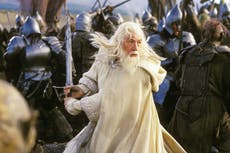
There’s no reason to expect that the Oscars will be different. They haven’t been for many years. And yet this constant defensive crouch feels at odds with the nominated movies themselves, many of which are fuelled by a noisy righteous rage. It could be the most political line-up in decades, practically one insurrectionist banger after another, not that you’d know it from the bland tone of the campaign. The films are speaking up while the stars remain silent.
Anyone listening to Leonardo DiCaprio promoting One Battle After Another, for instance, would be forgiven for expecting a gentle dad-and-daughter comedy in the mode of Father of the Bride as opposed to what it is: a rambunctious state-of-the-nation thriller that explicitly references sanctuary cities, migrant detention camps and a fascist cell within the federal government. The villain of the piece is Sean Penn’s gurning Colonel Lockjaw, a pocket-Nazi who bears a striking resemblance to Gregory Bovino of US border patrol and who longs for the approval of his ethno-nationalistic superiors.
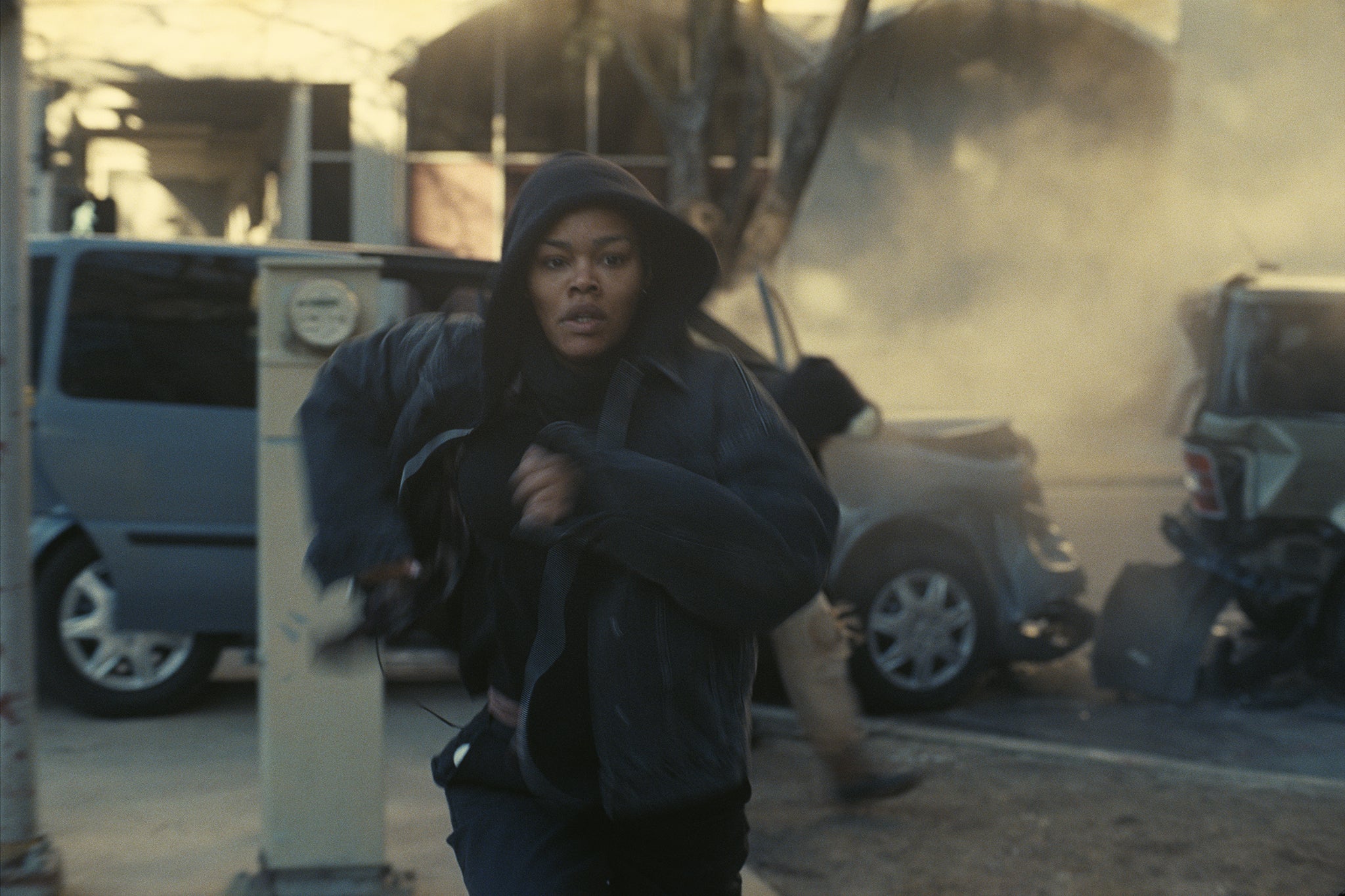
One Battle After Another was shot just ahead of the second Trump presidency, but it perfectly anticipated the country’s direction of travel. In so doing, it’s become a kind of culture-war flashpoint; feared by the bad and loved by the good; hazardous waste to critics on the right and a fierce rallying cry to those on the left. Political extremism, it warns us, results in casualties on both sides. But there’s no mistaking who it believes the real baddies are. It is the comical Colonel Lockjaw and his wannabe-fascist crew. It is men like Pete Hegseth, Stephen Miller and Kash Patel.
Let’s say, for the sake of argument, that One Battle’s divisive nature works against it – that it splits the vote and comes up shy. In that case, the winner will surely be Ryan Coogler’s Sinners, a tale of the 1930s Jim Crow era that’s been stylishly dressed-up as a vampire flick. It’s about two streetwise brothers who open a juke joint in Mississippi. But it’s also about cultural appropriation; about how white America sucks the lifeblood out of Black culture, even when it makes nice and claims it only wants to be friends. Like Jordan Peele’s Get Out (2017), Coogler’s film is a sleek piece of genre entertainment that has smart, complex things to say about American race relations.
Hopping further down the list of nominees, then, we arrive at Yorgos Lanthimos’s Bugonia, a sci-fi movie of sorts that stars Jesse Plemons as a conspiracy theorist and Emma Stone as a millionaire corporate CEO. Plemons’s hero hates big pharma, which he blames for killing the bees and pushing the planet towards environmental collapse. But he’s mainlined too many podcasts and spent too long on the dark web, and so he’s not quite thinking straight and is liable to do something dumb. He’s like the emblematic All-American; the nation’s decent backbone, warped by years of disinformation.
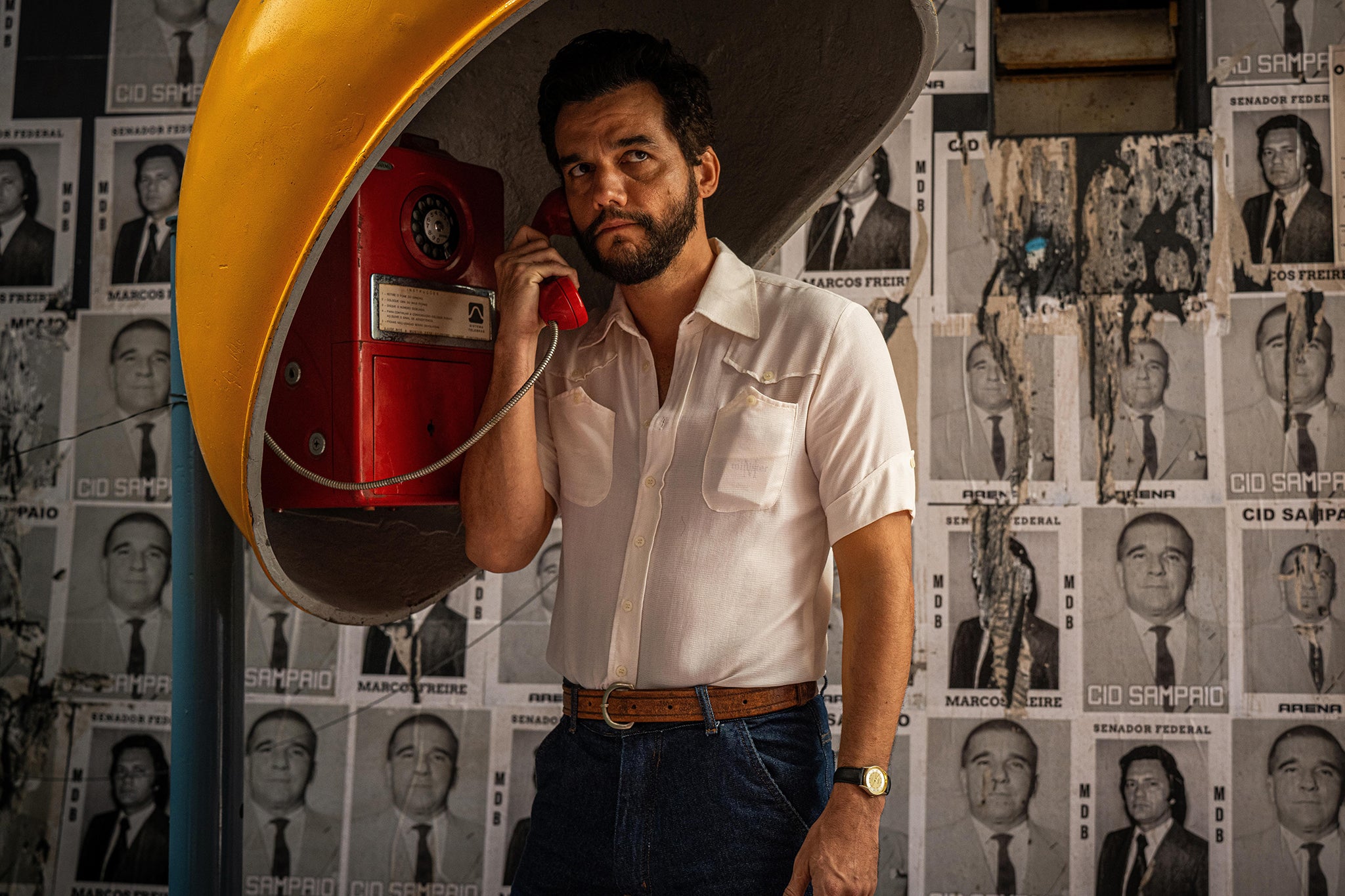
And then there is The Secret Agent, probably my favourite picture from a vintage Oscar shortlist, in which a liberal scientist falls foul of the military dictatorship and hides out at a safe house in the city of Recife. The Secret Agent is safely set in mid-Seventies Brazil and therefore isn’t about modern America at all. Except that it features a Doge-style purge of the nation’s academic elite, spotlights a culture of state-sanctioned violence and opens with a tense scene in which a band of ICE-type goons search the vehicles at a humdrum petrol station.
History repeats, and sometimes it rhymes. The past is not dead, it is not even past. You can seal it in a ziplock bag and bury it deep in the archives or the evidence room. Eventually, though, it is bound to break free. It’s alive and it’s kicking, and we ignore it at our peril.
‘The Secret Agent’ is in cinemas from 20 February
Join our commenting forum
Join thought-provoking conversations, follow other Independent readers and see their replies
Comments
Bookmark popover
Removed from bookmarks