How Amadeus turns a wild rumour about Mozart and Salieri into unmissable Christmas TV
As Sky’s five-part drama hits our screens, stars Will Sharpe and Gabrielle Creevy plus writer Joe Barton talk to Patrick Smith about fiction straying from fact, risk-taking television, and whether the musical genius was neurodivergent
No music biopic comes close to Miloš Forman’s 1984 masterpiece, Amadeus. Adapted by Peter Shaffer from his own 1979 stage play – itself inspired by Alexander Pushkin’s poetic 1830 drama, Mozart and Salieri – the film is gaudy and provocative, a glittering two fingers up to historical accuracy. It’s based on a wild rumour: that Wolfgang Amadeus Mozart was driven to an early grave, aged 35, by the obsessively jealous court composer Antonio Salieri. But it’s also concerned with a deeper metaphysical question: why would a just God bestow genius on a giggling, foul-mouthed vulgarian like Mozart while condemning the devout Salieri to recognise his own mediocrity? Not for nothing did the film sweep the Oscars with eight wins, including Best Picture and Best Director.
Now from Sky comes a new five-part adaptation of Shaffer’s play. Reuniting some of the key players from the excellent Anglo-Japanese crime series Giri/Haji– writer Joe Barton, director Julian Farino and Bafta-winning actor Will Sharpe – it’s lavish and lively. Brilliantly acted, too.
Salieri is played by Paul Bettany, while Sharpe was the natural choice for Mozart, according to Barton. “Will has a very unique essence,” says the 43-year-old. “He has this sort of puckish quality and he can do these very high energy comic performances, but he also has a darker side to his work that we mined for his role in Giri/Haji. I was also thinking about the show he did, Flowers, where he played this very sweet, almost childlike man who bounced through the world but then had this great well of sadness within him. That’s what I saw for this character.”
While the series traces the familiar contours of the film, the fact it stretches to five hour-long episodes means there’s room to look “at the domestic lives of these people and explore other perspectives alongside the central idea of burning jealousy”, Sharpe tells me.
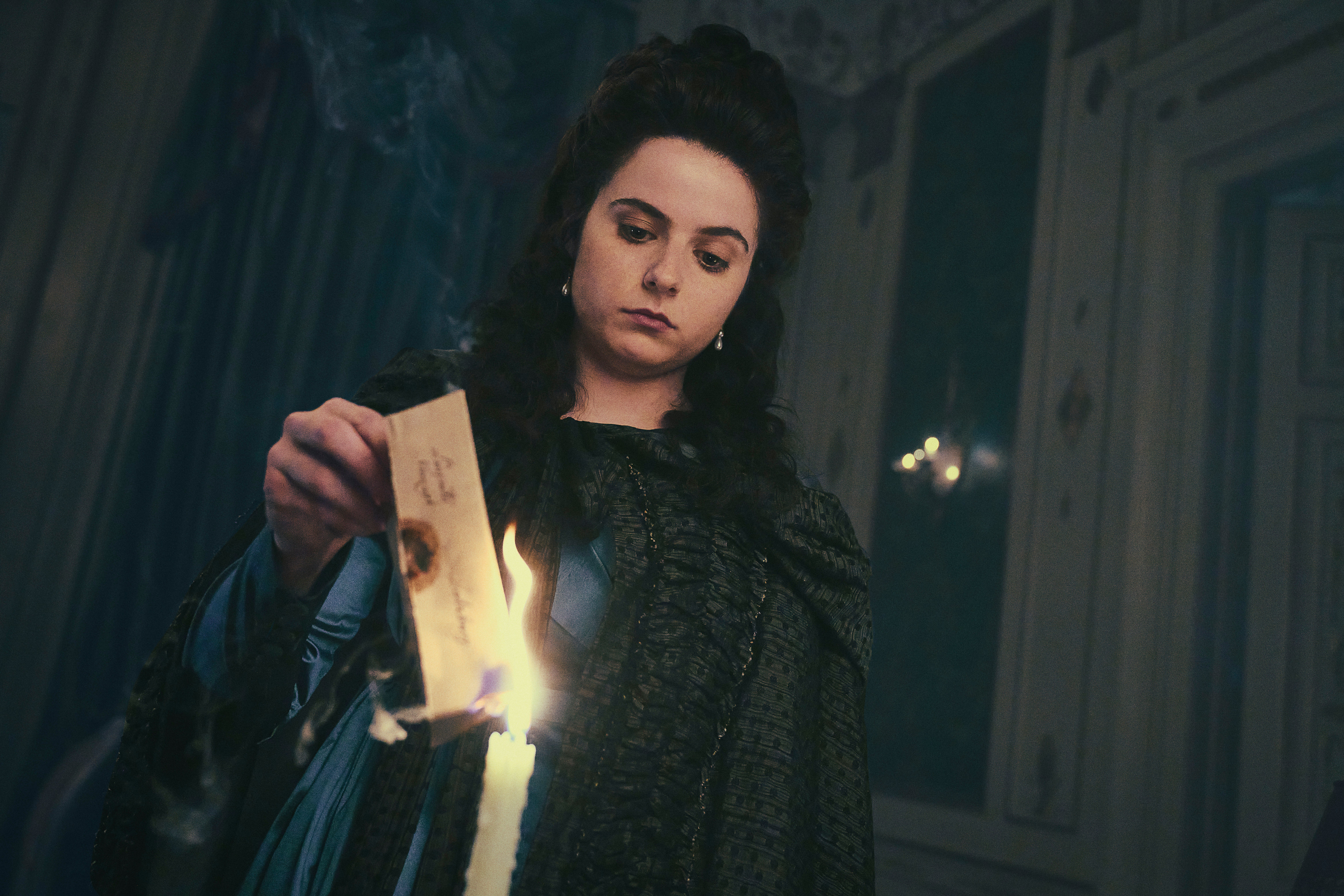
Mozart’s wife Constanze is a case in point. A minor character in the original play, she’s now centre stage, with Gabrielle Creevy – who previously worked with Barton on his series Black Doves– playing her as smart and strong-willed, with a vein of melancholy running through her. For Barton, who is a fan of the film but hadn’t seen it for many years, making Constanze more multifaceted was one of the main aims. “I was interested in this woman who had to constantly support this almost mythical figure,” he says. “In real life, she was key in preserving and promoting Mozart’s music after his death – ensuring her own financial survival in the process. She’s been slightly lost in the telling of this story.”
In preparing for the role, Creevy looked first to the film. “Elizabeth Berridge’s performance was so fun,” says the 29-year-old. Creevy then delved deeper by reading one of the few books available on Constanze. “Being married to a genius must have been really hard,” she says. “She’s so overlooked. She’s not just his wife; she’s her own person. She had a dream to sing and never really got to do it. Being married to a genius, you just get pushed aside… It must have been very painful at times,” Creevy adds. “They lost children. There’s only so much you can take before you walk away.”
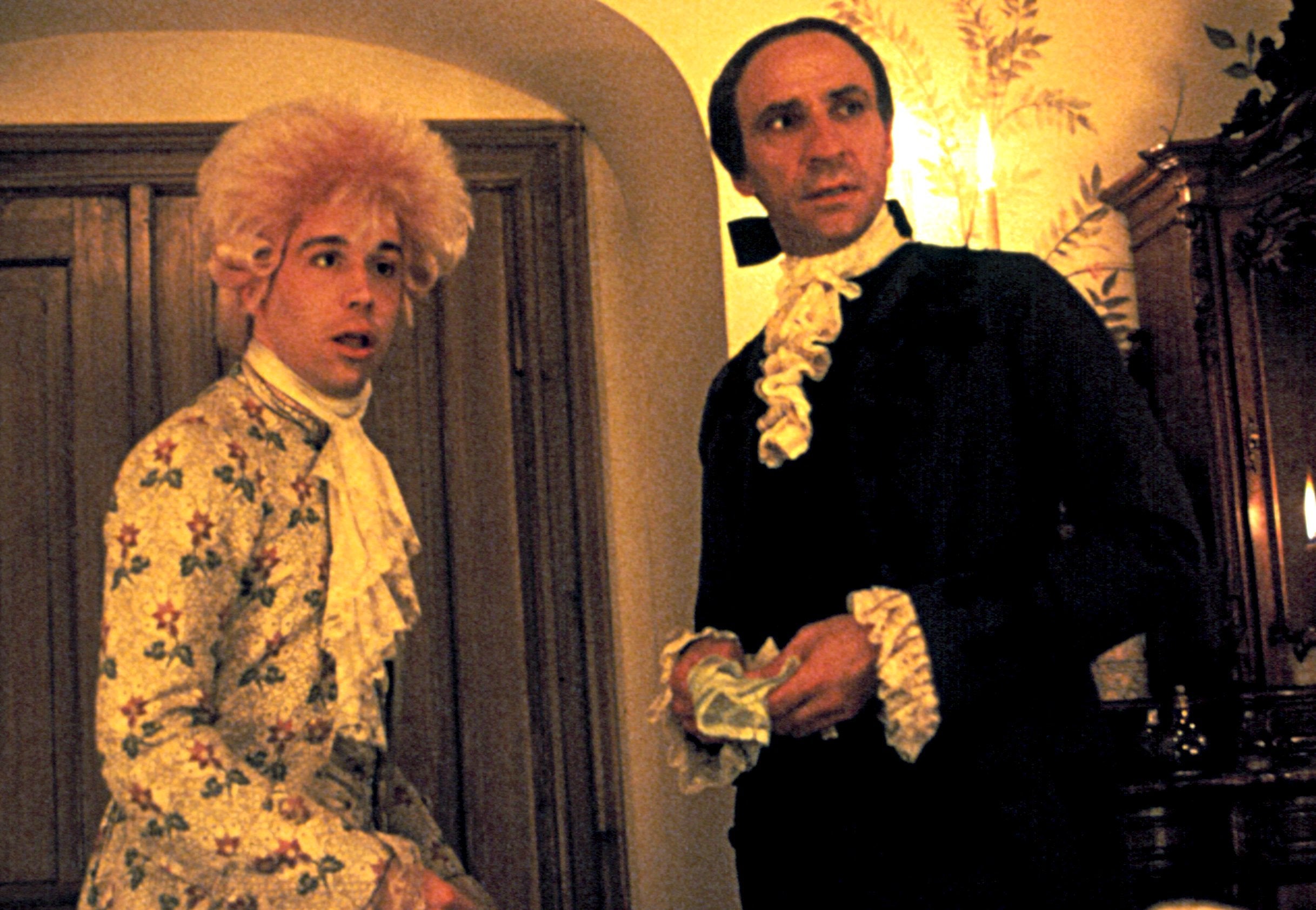
If Constanze is given more life in this interpretation, Sharpe’s Mozart reins it in. Gone are the pink punk-rock wigs and paroxysms of high-pitched laughter from Tom Hulce’s 1984 performance. This Mozart is less annoying, but more priapic and virile, which only deepens Salieri’s envy. Crucially, he’s oblivious to their rivalry and ruthlessly blunt without meaning to be. “We talked about theories he might have been neurodivergent,” Sharpe, 39, explains. “My take was to play him as someone who doesn’t understand social norms. If he believes something is true, he’ll say it. If someone’s offended, he doesn’t understand why. He thinks his music is objectively great, so if anyone questions that, he thinks they’re objectively wrong. It’s genuine confusion. He just says what he thinks.”
This makes the central dynamic – ordinary versus genius – more painful for Salieri. Yet Barton is keen to stress just how far the fiction strays from fact. “This is made up, of course,” he says. “In truth, Mozart was as religious as the next man, and Salieri had eight children and a happy marriage.” Salieri was also a revered composer in his own right. “The more you read about Salieri, the more you see that this really is all a character assassination,” Barton adds. “He was a very good composer and by all accounts a generous and well-liked man. But now his name has been turned into a shorthand for jealousy and mediocrity.”
This tension fascinated the writer. “I was interested in how his legacy has been shaped by this story that he is a key figure in,” he says. “I had the idea to make it almost a ghost story, about a man who is haunted by the future version of himself that now lives on in theatres around the world every night. What did he do in his life to make this future for himself?”

Watch Apple TV+ free for 7 day
New subscribers only. £9.99/mo. after free trial. Plan auto-renews until cancelled.
ADVERTISEMENT. If you sign up to this service we will earn commission. This revenue helps to fund journalism across The Independent.
Watch Apple TV+ free for 7 day
New subscribers only. £9.99/mo. after free trial. Plan auto-renews until cancelled.
ADVERTISEMENT. If you sign up to this service we will earn commission. This revenue helps to fund journalism across The Independent.
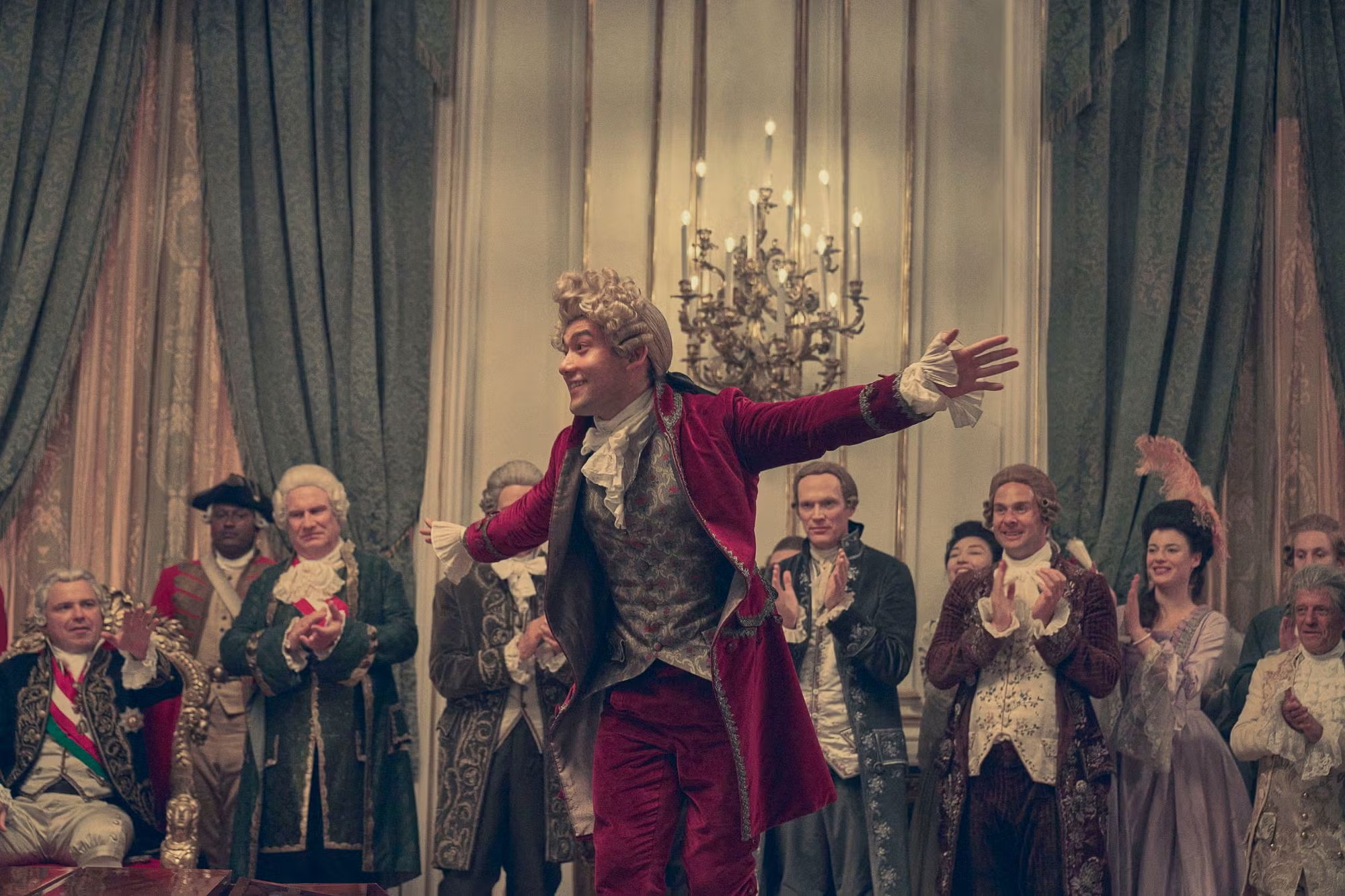
For Sharpe, what intrigued him was unpacking genius itself. He and Barton spoke extensively about the burden of Mozart’s gift – “how it’s both blessing and curse,” Sharpe says. “How he needs it but it keeps him at arm’s length from people because he sees the world so differently.” Mozart allegedly experienced bouts of depression, but Sharpe avoided “retro-diagnosing him. I tried not to pay attention to specific conditions he may or may not have had.” Instead, he focused on Mozart’s interior life. “Because God is such a big part of this show, and the creative process is wrapped up in God speaking through him, that was a helpful way of exploring what you could interpret as magical thinking. In the creative process, it can feel like you weren’t in control – like it came from somewhere else. Assigning that to God within the story is quite helpful.”
People are playing it safe, which restricts what stories are able to get told
Sharpe sees Mozart as someone unaffected by the fashions of his time, pushing forward with what he believed was the best way to compose, regardless of accepted norms. He notes how someone said recently that “it’s almost like he has the opposite of imposter syndrome, where he’s so convinced that what he’s doing is great, that he’s [just] trying to get whatever is in its way out of the way”.
His piano playing in the show is remarkable – all the more so when you realise he was a Grade 3 pianist before taking on the role. To transform into the Austrian maestro, he was paired with Benjamin Holder, musical director on the Wicked films, who had six months to mould him into a credible prodigy capable of performing segments from 20 fiendishly difficult pieces. When work took Sharpe to the US and Japan, Holder bought him a portable keyboard to practise on hotel ironing boards.
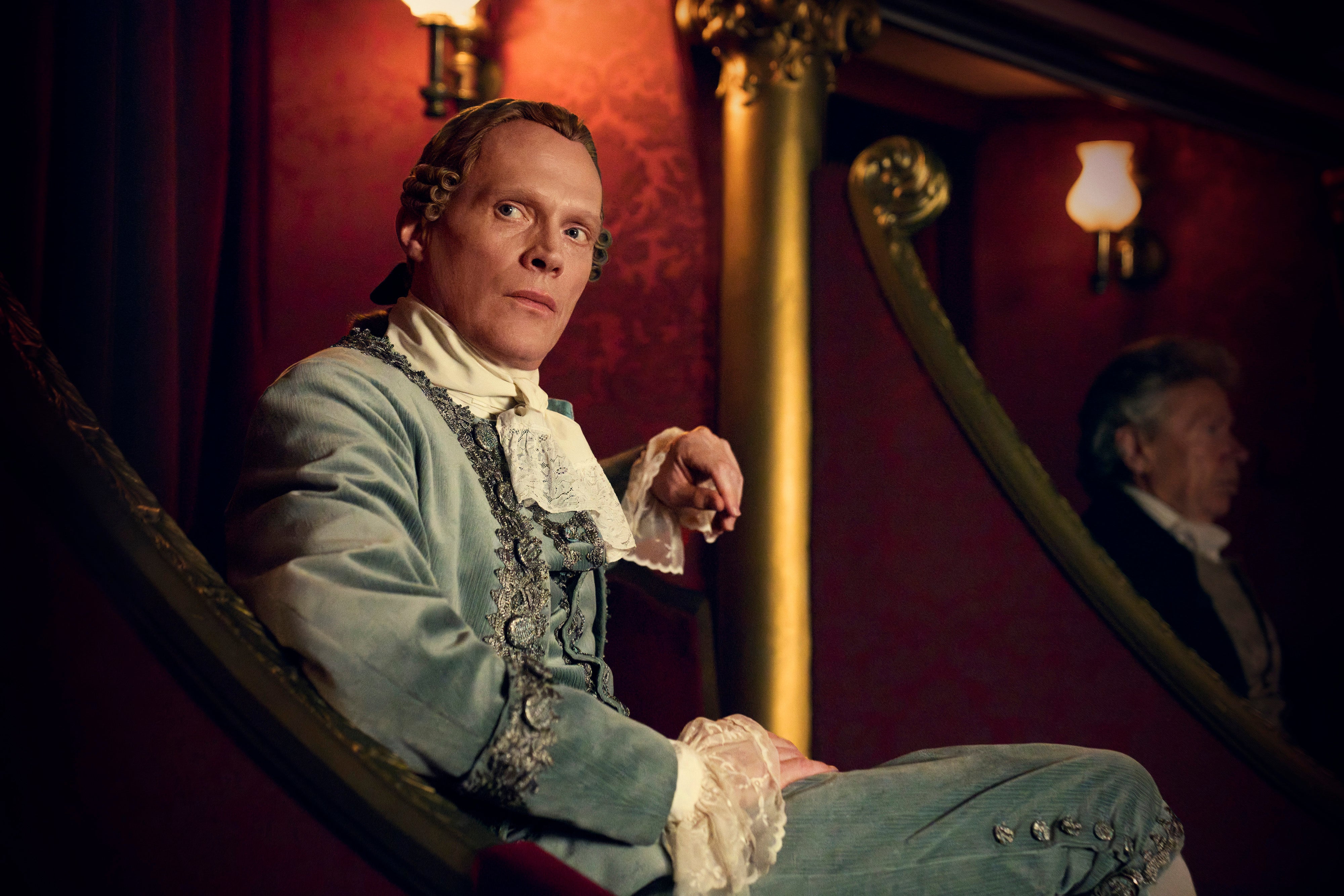
The series also examines how art shapes society. As Rory Kinnear’s Emperor Joseph II notes in the series, opera has power – it reflects the world and can drive change. The theme feels particularly resonant now, as President Donald Trump threatens media and cultural institutions in America. This connects to the current creative landscape more broadly, Barton argues. “In drama, you have to increasingly smuggle more challenging or subversive or human ideas into your work, which is as much a result of the economic reality of the current media industry as it is political censorship,” he says. “Or probably now it’s both. People are certainly playing it safe, which restricts what stories are able to get told.”
Sharpe was blown away by the film’s set pieces, which he says are exactly the sort of thing that requires confidence “from the people who are making [television] and supporting it and funding it. There’s a version of the future where everything sort of gets homogenised, because it’s so statistics-based, and people try to make creative decisions, based on what they think the audience wants, based on data,” he notes. Amadeus, like the composer himself, is prepared to take risks.
‘Amadeus’ will launch on Sky and NOW on 21 December
Join our commenting forum
Join thought-provoking conversations, follow other Independent readers and see their replies
Comments
Bookmark popover
Removed from bookmarks