Protecting the living monuments
THE ARTICLES ON THESE PAGES ARE PRODUCED BY CHINA DAILY, WHICH TAKES SOLE RESPONSIBILITY FOR THE CONTENTS

At the Beijing Stone Carving Art Museum, formerly a temple, two ginkgo trees, each with a diameter exceeding 6.5 feet, stand like sentinels in front of a pagoda. These ginkgos, each more than 600 years old, guard the ancient structure with timeless grace.
Since autumn, the site has been a magnet for visitors, with thousands arriving daily to capture photos and admire the golden tree leaves. On weekends, the number of visitors can soar to over 3,000.
Wu Di, who works in the museum’s cultural relics management department, has been caring for the trees for six years. Each week, he conducts a special “check-up” on the ginkgos, taking photos of them from over a dozen angles to update their digital records. This meticulous monitoring helps track the trees’ health, enabling Wu to promptly consult arborists for additional care and treatment.
The museum regularly invites professionals with expertise in the maintenance of ancient trees to carry out routine pruning of the ginkgos. The process requires great caution, as aside from removing dead branches, there is generally no artificial interference or arbitrary trimming involved, Wu explains.
“Our museum houses more than 2,600 artefacts, including steles, epitaphs, stone sculptures and stone carvings, but only these two ancient ginkgos are truly living relics,” Wu says.
Upon entering the museum, visitors are immediately greeted by the sight of the majestic Vajra Throne Pagoda. From a distance, the pagoda appears to rest atop a tall base, with five smaller towers constructed on it. This structure, completed in 1473, blends traditional Chinese and Indian architectural styles. Flanking the pagoda are the two ginkgo trees, standing like steadfast guardians, sworn to protect the pagoda.

Wu’s primary responsibility is the preservation of ancient towers, stone carvings and other cultural relics. Due to the harmonious natural landscape created by the ginkgos and the pagoda, the museum has allocated funds in recent years for the trees’ protection. A donation plaque with a QR code is on one of the trees, allowing visitors to contribute to its preservation.
In September, the National Cultural Heritage Administration, the National Forestry and Grassland Administration and the Ministry of Housing and Urban-Rural Development announced the first-round list of ancient and notable trees and cultural relic sites for collaborative protection. Among the 28 sites selected were the ginkgo trees at the Beijing Stone Carving Art Museum.
The list is a result of a nationwide campaign to preserve ancient and notable trees, designating such trees for better preservation efforts. Ancient trees are classified as those over 100 years old, while notable trees hold historical, cultural, or ecological significance. The ancient trees included on the list are all over 500 years old.
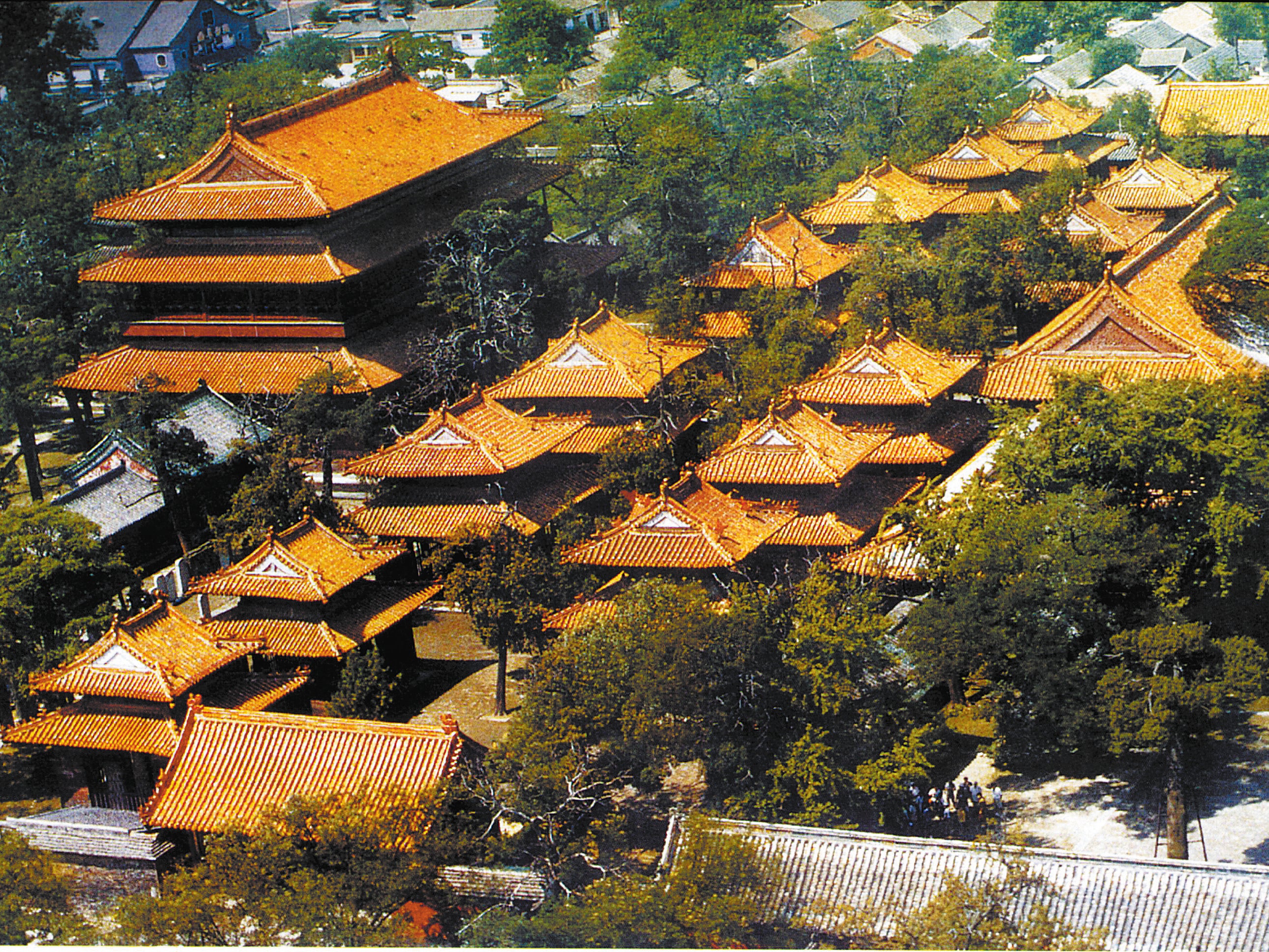
The temple, cemetery and family mansion of Confucius, the great Chinese philosopher and educator from the 6th to 5th centuries BC, form a large complex of monuments located in Qufu, Shandong province. This complex also houses thousands of ancient trees. It is included in the list due to its cluster of 310 ancient trees, each over 500 years old.
Confucius and Confucian culture have long admired the spirit of pine and cypress trees, associating the cypress with noble character and high moral values. For over 2,000 years, Qufu, the hometown of Confucius, has continued the tradition of planting the species.
“In Qufu, there are more than 10,000 trees that are over 100 years old. The locals have always demonstrated a strong awareness of tree protection,” says Cao Shenglei from the Qufu Ancient and Notable Trees Protection Centre.
For two millennia, celebrated poets and emperors have composed verses in praise of the tree, while master painters have captured its form through their art. The tree is accompanied by more than a dozen inscribed steles, including calligraphy dedicated by Emperor Kangxi and Emperor Qianlong from the Qing Dynasty (1644-1911).
“The cypress tree has a well-documented lineage with extensive historical records. It is a witness to history, a reflection of Qufu’s culture, and a true living cultural relic,” Cao says.
Zhu Xingxin and Zhao Ruixue contributed to this story.
Bookmark popover
Removed from bookmarks