Smart policies, location key to Tianjin FTZ success
THE ARTICLES ON THESE PAGES ARE PRODUCED BY CHINA DAILY, WHICH TAKES SOLE RESPONSIBILITY FOR THE CONTENTS

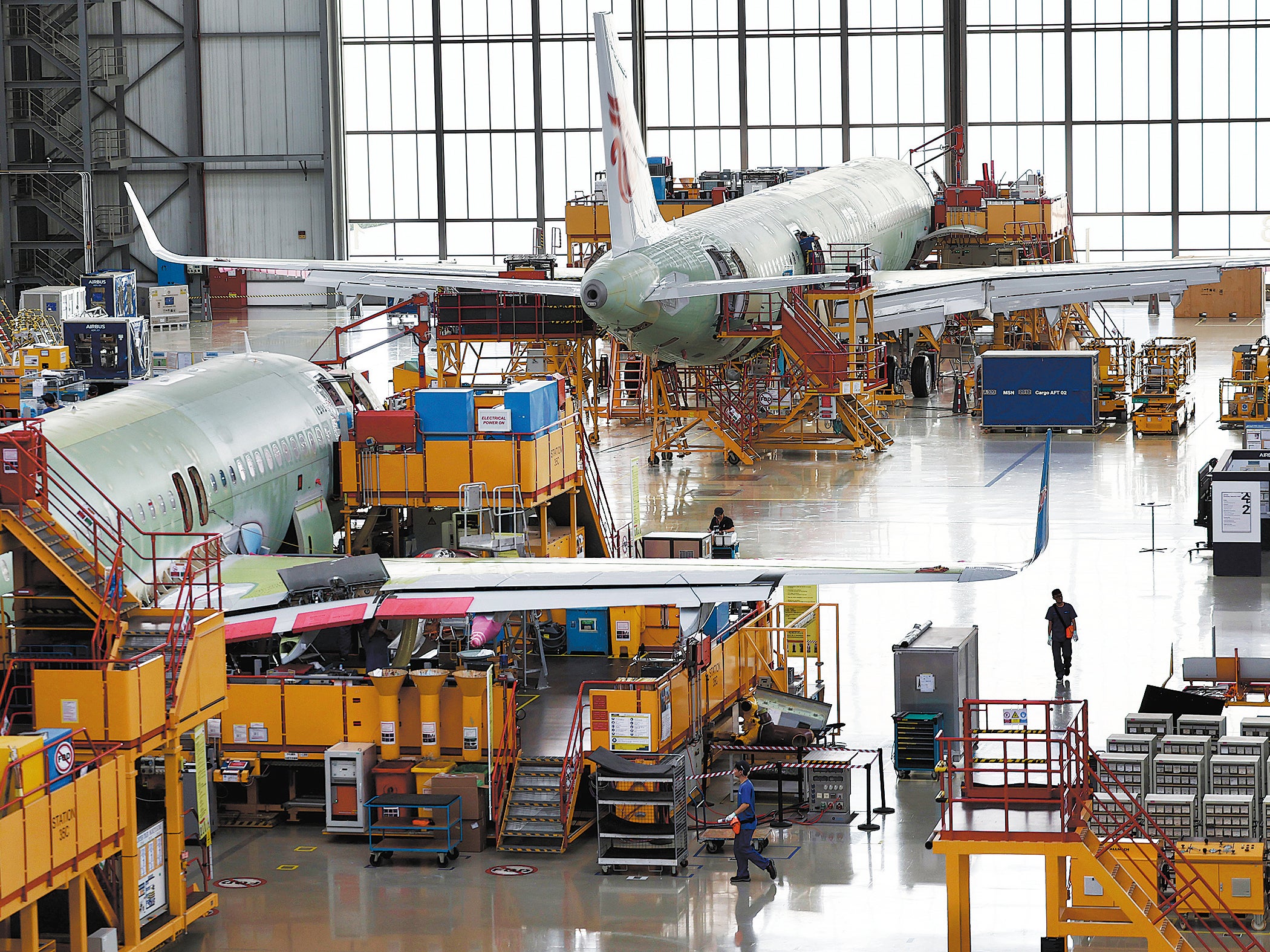
Cargo ships carrying large Airbus A320 aircraft components arrived at Tianjin Port in early August, before being transported to the European aircraft manufacturer’s final assembly line in Tianjin’s Binhai New Area, where they will be assembled into passenger aircraft ready to take to the skies.
The Tianjin campus, which began production in 2008, was Airbus’ first civil aircraft final assembly line outside of Europe. So far, the FAL has delivered more than 750 A320 family aircraft.
In addition to Tianjin, Airbus operates A320 family final assembly sites in Hamburg, Germany; Toulouse, France; and Mobile, Alabama in the United States.
Currently, Chinese airlines operate some 2,300 Airbus aircraft in China, its largest single-country market. The number accounts for over 50 per cent of the market share in China, one-third of which were delivered from Tianjin.
The plane maker said it is expanding the A320 aircraft’s final assembly capacity in Tianjin, with a second line expected to enter into operation early next year. The second line will not only expand production capacity in China, but also help satisfy demand from the global aviation market.
“China stands as an important strategic partner of Airbus’ global map, and we will continue to insist on the ‘in China, for China’ business strategy,” said George Xu, Airbus executive vice-president and Airbus China CEO.
China’s civil aviation market has been resilient and shown rapid growth. Last year, Airbus forecast that in the next two decades, the country will need 9,520 new passenger and cargo aircraft, accounting for over 20 per cent of the total demand globally, and the total fleet size is expected to reach 11,160.
At the Tianjin centre, a facility that spans 6.35 million square feet, all necessary support facilities, including a large component warehouse, final assembly workshop, paint shop and delivery area are fully equipped. Fuselage sections and wings transported from Europe and China have been assembled, painted and ultimately delivered to airlines there.
In the past few years, the A320 family aircraft’s final assembly line has served the Chinese market and continuously expanded its international customer base, with delivered aircraft flying to Europe, Asia and the Middle East, joining the fleets of British low-cost carrier easyJet, Hungary’s Wizz Air and Cebu Pacific from the Philippines.
“The newly built second final assembly line of Airbus in Tianjin will help double the production capacity of the single-aisle aircraft and further attract core suppliers such as Collins Aerospace and Safran Group to establish operations locally, thus driving the localised production of key aircraft components such as wings and nacelles,” said Yin Li, director of the aviation industry development bureau of the Tianjin Port Free Trade Zone.
Airbus’ development in Tianjin is not isolated. Leading aviation companies such as Bombardier and Goodrich have also established operations there, making the bonded zone the largest Airbus production base outside Europe and an important aviation manufacturing and maintenance base in the Asia-Pacific region.
Global 500 multinational corporations in the high-end equipment-manufacturing sector, including Caterpillar, General Electric Healthcare, JLG and Honeywell, have also invested and established operations there.
Latest data from the Binhai New Area show that foreign-invested enterprises account for over 60 per cent of the total in the China (Tianjin) Pilot Free Trade Zone, which comprises three special zones in Binhai New Area, Tianjin Port and Tianjin airport.
The free trade zone has taken the lead in implementing reforms such as “separation of licences and permits” and “one licence per enterprise”, introducing more than 600 institutional innovations, 49 of which have been replicated and promoted nationwide.
Bao Jian, director of the Binhai New Area commerce promotion bureau, emphasised that high-quality services are an important guarantee for attracting foreign investment.
Bao mentioned that over the past five years, the Binhai New Area has organised officials to visit foreign-invested enterprises every year, engaged in exchanges with enterprises through round table meetings, afternoon tea and other formats, and helped to solve more than 200 practical problems.
Liu Zixuan and Lu Ruotong contributed to this story.
Bookmark popover
Removed from bookmarks