China is ruthless when it comes to arresting foreign spies – Starmer needs to take note
When dealing with spies, China is clear: cross us, and we will destroy you. As dozens of foreigners are caught up in opaque prosecutions under the country’s national security laws, Mark L Clifford looks at their cases and concludes there are lessons to be learnt from Beijing’s ruthless resolve

Keir Starmer faces a test of nerve over Britain’s handling of alleged Chinese espionage. The prime minister’s instinct for caution – his preference for tidy processes and calm diplomacy – may serve him well in domestic politics, but when it comes to China’s global gamesmanship, it looks dangerously like weakness.
Beijing’s leaders, by contrast, have no qualms about playing hardball – never more so when it comes to accusing people of spying. China’s Communist Party doesn’t flinch at diplomatic fallout or trade reprisals. Indeed, espionage cases comprise one of the sharpest tools in its foreign policy kit. Over the past decade, dozens of foreigners – businesspeople, pastors, journalists – have been caught up in opaque prosecutions under the country’s national security laws.
This isn’t a bug in China’s system. It’s a feature. Accusations are vague, trials are secret, evidence is flimsy or non-existent. Conditions in detention are harsh, and the notion of presumption of innocence is alien. China doesn’t live under the rule of law: it rules by law, wielding legislation as a hammer of state control.
Beijing has turned hostage diplomacy into an art form. In December 2018, Chinese authorities detained two Canadians, former diplomat Michael Kovrig and businessman Michael Spavor, within days of Canada’s arrest of Huawei executive Meng Wanzhou at the request of US authorities. The message was unambiguous: two innocents would pay the price until Beijing got what it wanted.
For more than 1,000 days, the “two Michaels”, as they became known, endured grim conditions – much of the time in solitary confinement – while Meng awaited extradition in comfort, shopping in Vancouver boutiques. When Canada finally brokered a deal with China and the US freed Meng, the Canadians were released. Few episodes so clearly expose China’s readiness to use human lives as bargaining chips.


The regime regularly targets figures both obscure and prominent. The arrests broadcast a clear warning: cross us, and we will destroy you.
Take the case of Cheng Lei, a respected Australian anchor for the Chinese state-run broadcaster CGTN, who was accused of sharing an embargoed news release minutes early. That trivial slip was twisted into a state secrets offence. She spent three years behind bars. Beijing never disclosed what secret she was alleged to have betrayed. Bloomberg journalist Haze Fan endured a similar ordeal: she was detained for more than a year before being released and quietly forced out of the country.
No case better captures the moral rot at the heart of China’s “justice” system than that of Jimmy Lai, the Hong Kong media tycoon and pro-democracy activist. Lai has spent most of the past five years in solitary confinement on national security charges. His real offence was publishing Apple Daily, the city’s most outspoken pro-freedom newspaper, and meeting with US officials to plead for sanctions to be imposed on human-rights abusers.
Lai became a British citizen in 1992, moved by the ideals of a country that, as a colonial power, had nurtured Hong Kong’s freedoms. Yet during the more than 1,700 days he has spent in prison, no British diplomat has yet been permitted to visit him. Beijing insists, absurdly and illegally, that he is Chinese, because he was born on the mainland. London’s polite requests for consular access have been met with silence – and there’s been little more than tepid protest from the Foreign Office.
Starmer’s government says securing Lai’s release is a priority. But words are not enough. Compare Britain’s reticence with the ferocity of Beijing’s defence of Meng. China leaned on its entire diplomatic machine to free her. Britain, by contrast, appears to have mislaid its moral compass – and its courage.

China has also weaponised its courts to intervene in business disputes. Irish executive Richard O’Halloran travelled to Shanghai in 2019 to settle a commercial matter and was hit with an exit ban that kept him in China for nearly three years. He blames Dublin’s timid “quiet diplomacy” for prolonging his ordeal.
British consultant Peter Humphrey and his American wife Yingzeng Yu were sentenced to two and a half years and two years respectively on spurious national security charges after investigating a well-connected Chinese businesswoman. Humphrey later told the US Congress that other prisoners were instructed not to speak to him after he was branded a British “spy”. The couple’s only real mistake, he said, was offending someone powerful.
The list of victims goes on, and increasingly, China’s reach extends onto British soil. Hong Kong authorities have issued arrest warrants and £100,000 bounties for exiled activists living in the UK, including my 20-year-old colleague Chloe Cheung. The territory’s chief executive, John Lee, has threatened to hunt them like “street rats”. These are threats against people exercising free speech in Britain – yet the UK government’s response has been mild.

No one wants Britain to imitate China’s ruthless lawlessness. But it must stop mistaking civility for strategy. China respects strength, and scorns accommodation. Each concession is read not as goodwill, but as proof of weakness.
Xi Jinping and his wolf-warrior diplomats routinely recite a grievance narrative: the Opium Wars, the “century of humiliation”, Britain’s colonial sins. When London presses Beijing to honour the Sino-British Joint Declaration – the international treaty guaranteeing Hong Kong’s freedoms – China snaps back that Britain is clinging to a “colonial mindset”.
This is not a government that negotiates in good faith. It is a regime that sees international law as a tool to be used or ignored at will.
Britain’s own responses have been painfully cautious. When a senior Chinese diplomat, Zheng Xiyuan, dragged Hong Kong democracy protester Bob Chan into the Chinese consulate in Manchester in 2022, the footage was unequivocal. Zheng later boasted that he had simply been “doing his duty”. Yet instead of expelling him, the Foreign Office allowed him to leave quietly two months later.
It is precisely this instinct to de-escalate – to tidy away confrontation rather than confront it – that signals to Beijing that it can act with impunity.
Xi has made no secret of his worldview. The world, he says, is undergoing “profound changes unseen in a century”. The East is rising, the West declining. His project is to prove himself right. In his dog-eat-dog vision, power is what counts; moral scruples are for the weak.
Britain should respond not with imitation, but with confidence in its own strengths. China has secret prisons and sham trials. Britain has an independent judiciary, transparent courts, and a centuries-old commitment to liberty. Those are not quaint relics – they are the foundations of national resilience.
That means taking espionage seriously at home, pursuing prosecutions when warranted, and resisting the instinct to back down at the first diplomatic growl from Beijing. It means standing up for British citizens abroad, and for the activists in exile who embody the freedoms Hong Kong has lost.
If Starmer wants Britain to lead on the world stage, he must accept that engagement with China is not a dinner-party debate. It is a contest of will. Beijing has made that clear.
Britain does not need to mimic China’s ruthlessness – but it must rediscover its own resolve. Freedom, transparency, and justice are the weapons that no dictatorship can match. What’s missing is the courage to use them.
Less fear, more spine, please, Mr Starmer.
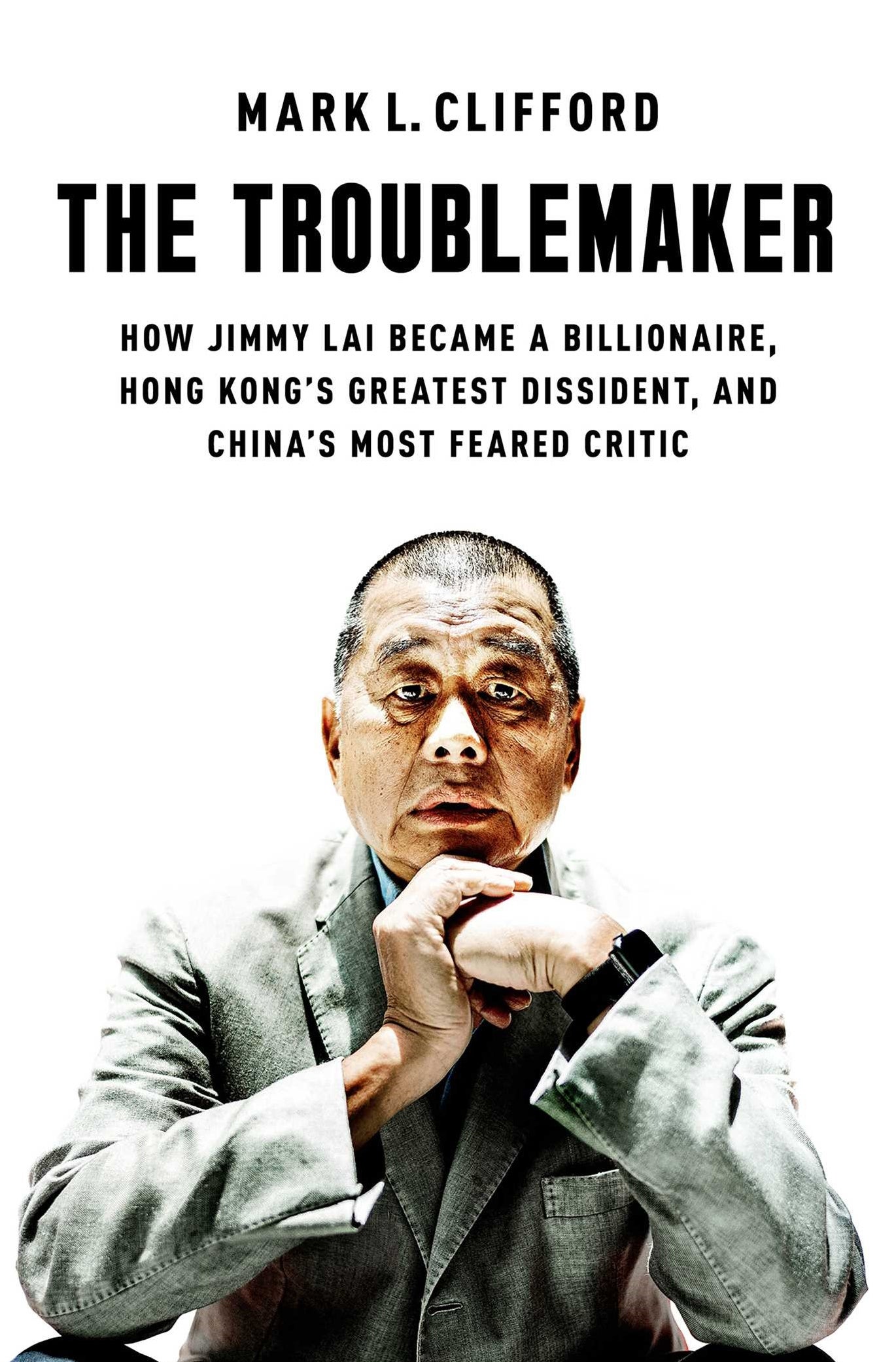
Mark L Clifford is president of the Committee for Freedom in Hong Kong Foundation and author of ‘The Troublemaker: How Jimmy Lai Became a Billionaire, Hong Kong’s Greatest Dissident, and China’s Most Feared Critic’
Join our commenting forum
Join thought-provoking conversations, follow other Independent readers and see their replies
Comments
Bookmark popover
Removed from bookmarks