Wallis Simpson’s forgotten year in China – and how it shaped her life with the King
Despite her story being told many times, the Duchess of Windsor’s time in China has never been seriously researched. Author Paul French explores this missing year in her life, the rumours of scandal and how Edward came to her defence
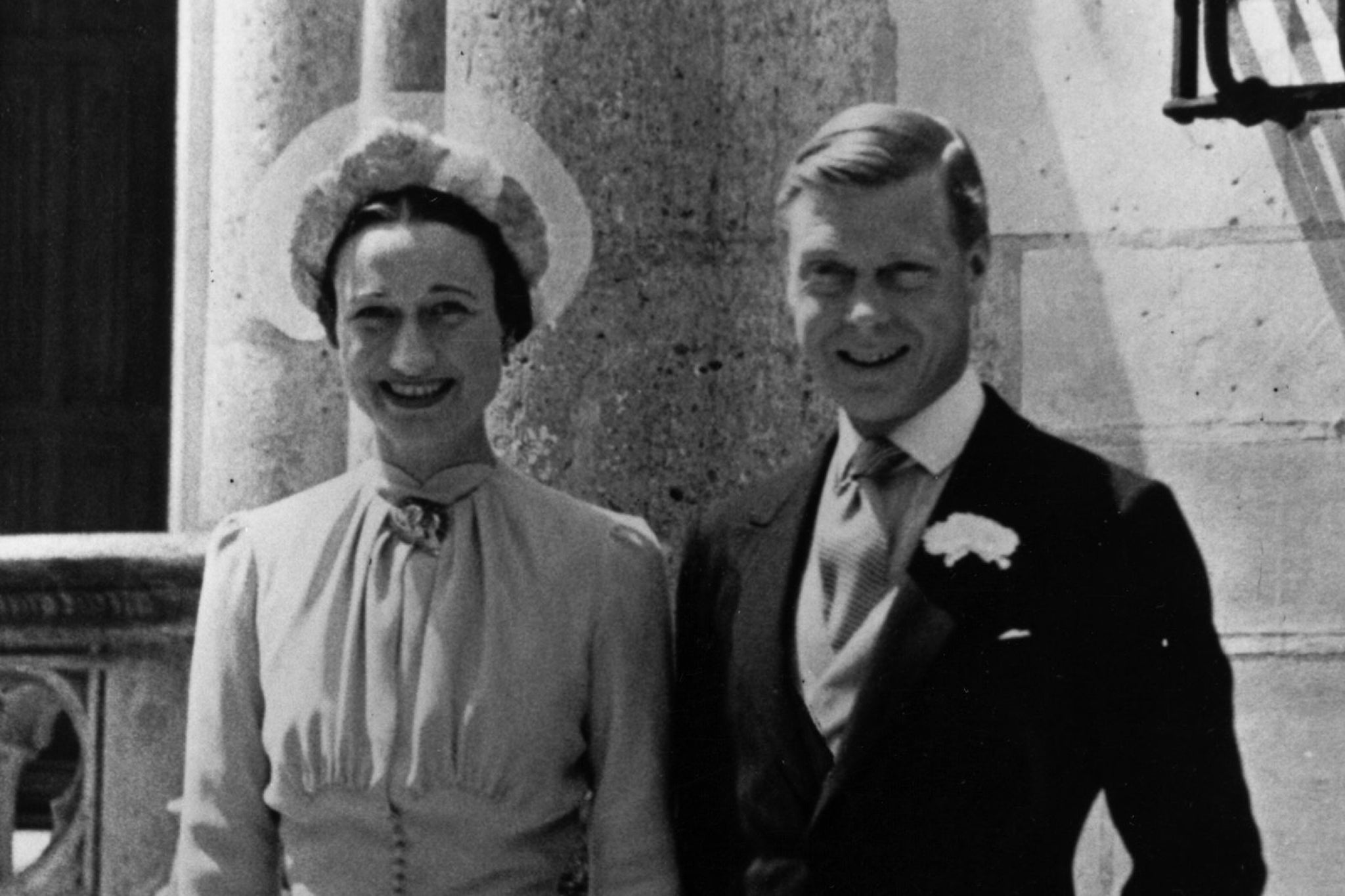
The story of Wallis Simpson, Duchess of Windsor, has been told many times. It’s part of the national consciousness, of British mythology. A twice-divorced American who became the mistress of the Prince of Wales. When the prince became King Edward VIII, he was faced with the choice: forsake Wallis or marry her. End the relationship, and he could continue as a king-emperor. Marry her, and he must abdicate. He chose the latter, throwing the monarchy and the country into crisis. His brother became King George VI while the Duke and Duchess of Windsor went into a half-century of exile. Wallis died in 1986 at 89, still a divisively controversial figure.
However, there is one aspect of her life that, while much gossiped about, has never been seriously researched – the year she spent in China. Between September 1924 and September 1925, Wallis sojourned in Hong Kong, Shanghai and Beijing (then called Peking). Why she went to China, what she really got up to there and how it shaped her life are little understood or appreciated.
Later, in the storm of the abdication crisis, Wallis’s China year would be dredged up, sensationalised and used against her by those who thought her a threat to the monarchy. In 1936, a “China Dossier”, supposedly compiled by the intelligence services, was circulated among the royal family and the establishment. This document was said to contain evidence of adulterous affairs and illegal abortions, as well as having posed for pornographic photographs, worked in bordellos and fronted opium and gambling rings. Although Edward stood by her, it was enough to poison her reputation to this day. But none of it was true.
Bessie Wallis Warfield was born in Pennsylvania in 1896. She dropped the Bessie quickly (“sounds like a cow’s name”) and, after a perfunctory education, married US Navy pilot Win Spencer on 8 November 1916.
The problem was that Win drank. And he was a nasty and abusive drunk – verbally, emotionally and physically. Fed up with him, the navy posted Win to America’s small contingent of gunboats stationed in the British colony of Hong Kong. A largely meaningless posting in 1923 – the gunboats were outdated rust buckets, America’s interests were minimal in southern China, and it was decidedly the Royal Navy’s sphere of influence.
After six months, Win wrote to Wallis pleading for another chance, swearing he was sober, begging her to come to Hong Kong. She reluctantly agreed to a reconciliation and sailed for Hong Kong and the China coast, a part of the world she had not, up to that point, given a second thought.


After an idyllic second honeymoon at the picturesque Repulse Bay Hotel on the south side of Hong Kong Island, Wallis was left to adapt to life overseas in a grim lodging house in Kowloon, on the less salubrious side of Victoria Harbour. She found Hong Kong tough – few Americans, a rigid colonial hierarchy she couldn’t penetrate and a backwards port city that, in 1924, had never heard of cocktails and lacked the flashy nightlife and modernity of Shanghai.
Win started drinking again, to excess. He became violent once more. Around this time, Wallis was hospitalised in Hong Kong. The later rumours said an abortion from an affair, but it’s more likely a result of the physical harm from Win’s beatings. It was finally enough. Wallis made the incredible decision for the times to leave Win and head to Shanghai, where she thought she might be able to get a divorce.
An incredible decision, not just because of the perceived shame of divorce at the time, but because in late 1924, China was in a state of absolute chaos. Hong Kong was riven by a general strike, nearby Guangzhou also saw labour trouble that spilt over into gunfights, and eastern and northern China were the scene of endless skirmishing and outright battles between self-appointed Chinese warlords and their private armies. Meanwhile, heavy rains led to outbreaks of cholera, typhoid and plague. As crops failed, the number of bandits and pirates across the country swelled. European embassies cabled home that China was in danger of collapse.
But in Shanghai, Wallis discovered a modern pulsating city that thrilled her. She enjoyed cocktails, shopping for clothes, and horse racing. But, despite the later claims of the “China Dossier”, she didn’t sojourn for long. Rather, she headed to Beijing. Where Hong Kong had been colonial and Shanghai a Western-influenced, buzzing metropolis, Beijing was an ancient city of quiet hutongs (narrow alleys and laneways), temples and high city walls. She fell in love with the city instantly and stayed for nearly eight months.
In Beijing, Wallis learnt to appreciate Chinese aesthetics. The cheongsam-inspired dresses, chignon hairstyle and jade jewellery that would become the hallmarks of her lifelong style were all discoveries made in Beijing. The city was home to roughly a thousand foreigners in 1925. Despite warlords fighting and political chaos all around, they lived in a protected cocoon of privilege.
Wallis and her friends weekended at the remote temples of the nearby Western Hills, whose shady pools and almost Alpine climate provided respite from Beijing’s intense heat and dust. She dined at one or other embassy in the city’s Legation Quarter. By the time she left for America in the late summer of 1925 Wallis was no longer a shy Baltimore girl nor the drab “navy wife”, but a woman who had struck out alone, in a strange land, escaping an abusive husband to discover cities that overwhelmed her senses and cosmopolitan circles that would inform her sense of style and social ease.
She would never return to China – her life took new turns.

But that “China Dossier” was to haunt her. The nasty rumours, the salacious gossip, a hit job of a whispering campaign which she declared in her memoirs to be “Venom, venom, VENOM…”
Previous biographies of Wallis have exclusively been written by royal specialists. China is not their area of expertise – it’s complicated, so many names, dates, places. But as a writer who lived in China for many years, often walked in Wallis’s footsteps and wrote extensively about the chaotic interwar period in the country, I wanted to explore this missing year in her life.
And while it turns out the rumours about Wallis were fake news, they were all true about other people, and those tales are often wild and worth telling. Additionally, the truth of Wallis’s China sojourn is that she was couriering important documents for the state department and the US Office of Naval Intelligence between the country’s consulates and embassy.
Ultimately, she not only survived this chaotic experience but thrived in China, emerging as a confident, independent and strong-willed woman. Now, uncovering her previously little-known year in China, we have a new and more rounded view of the woman who became the Duchess of Windsor.
‘Wallis Simpson: Her Lotus Year in 1920s China’ by Paul French (Elliott & Thompson) is out now in paperback, £10.99
Join our commenting forum
Join thought-provoking conversations, follow other Independent readers and see their replies
Comments
Bookmark popover
Removed from bookmarks