South Korea moves closer to ending decades-long ban on non-medical tattoo artists
Despite opposition from Korea Medical Association, thousands of underground tattoo artists could get licensed after the parliamentary sub-committee approves the landmark bill
South Korea has taken a big step towards ending its decades-long ban on professional tattooing by non-medical practitioners.
On 20 August, a parliamentary sub-committee approved the country’s first bill to legalise tattooing as a recognised profession, overturning rules that since 1992 had restricted the practice to licensed doctors.
The decision could pave the way for thousands of underground tattooists in South Korea to operate legally after years of working in secrecy under the threat of arrest.
The proposed Tattooist Act outlines a licensing system overseen by the country’s ministry of health and welfare. Tattooists would be required to pass a national exam, adhere to strict hygiene standards, and participate in an insurance programme to cover potential damages.
The law also introduces clear safeguards – minors would still need parental consent to get tattoos, and artists would only be allowed to operate in registered shops.
The bill also sets clear limits, permitting only the use of approved anaesthetics while banning tattoo removal or laser treatments, in an effort to address growing concerns over unsafe, unregulated procedures in private studios.
The legislation still faces several hurdles, including approval by multiple committees, the full National Assembly, and final sign-off from president Lee Jae Myung, who has previously pledged support for legalisation. Earlier in 2022, he said that “Korea was the only country that continued to classify non-medical tattooing as a medical act”.
If enacted, the law could take effect as early as November.

While tattooists and advocacy groups have hailed the move as a victory against stigma and criminalisation, the Korean Medical Association has strongly opposed it, warning that tattooing remains a public health risk.
“Tattooing poses serious risks, and we will not stand idly by if this law advances under pressure from interest groups and public sentiment,” it said in a statement.
An estimated 13 million people in South Korea sport tattoos, according to Korea JoongAng Daily.
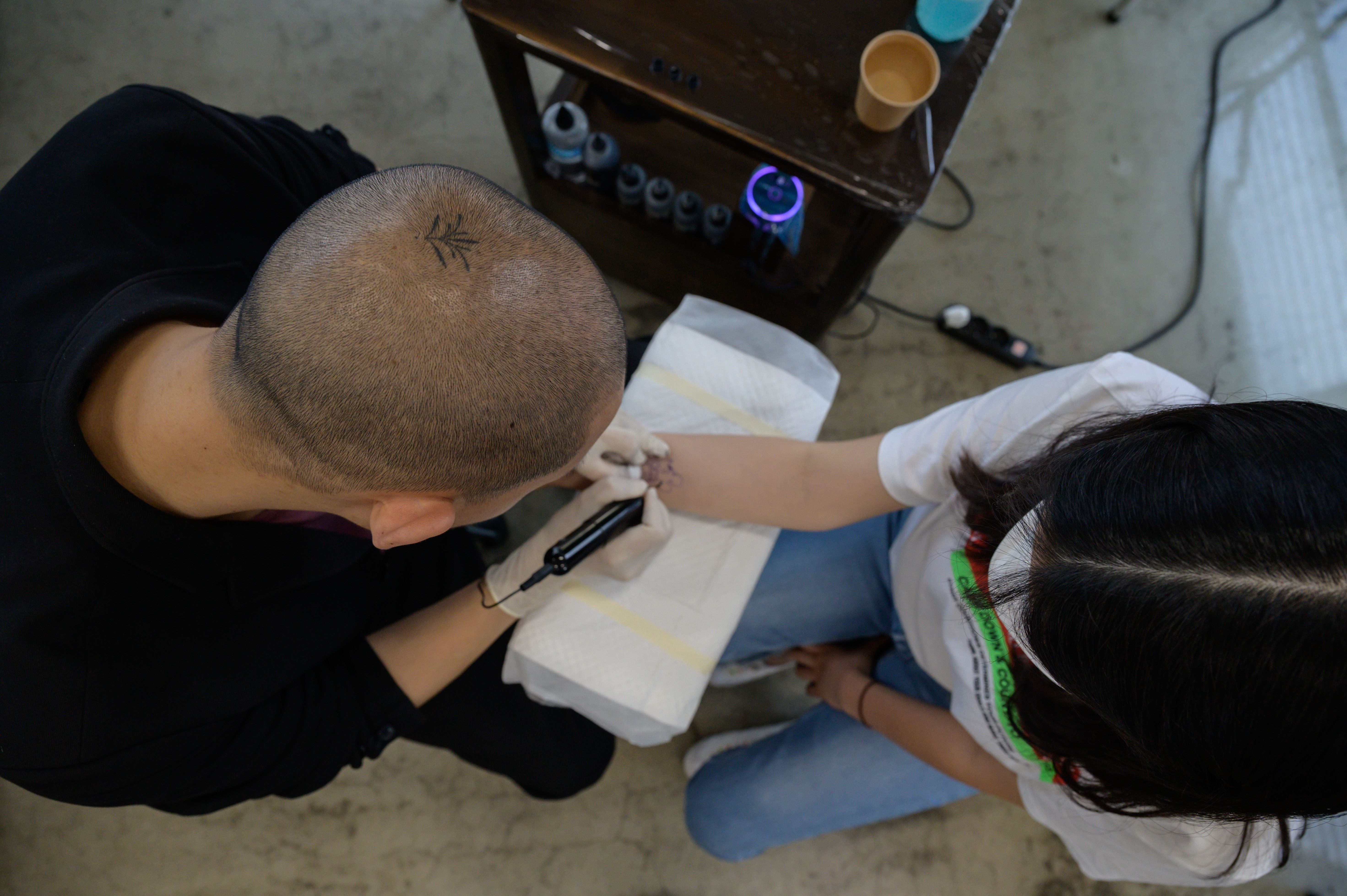
According to the National Evidence-based Healthcare Collaborating Agency – a government-funded research institution under the ministry of health and welfare – this figure includes roughly 10 million individuals who have had semi-permanent cosmetic treatments such as eyebrow tattoos, and about 3 million who opted for body art.
The tattoo industry also reportedly employs more than 300,000 workers.
A 1992 Supreme Court ruling classified tattooing as a medical procedure, effectively making any work by non-doctors illegal for the past three decades.
On Thursday, Democratic Party of Korea representative Park Ju-min said: “For years, the law punished tattooists simply because they were not medical professionals. There is no reason to delay this legislation any longer.”
Im Bo-ran, president of the Korea Tattoo Federation, said the group had spent more than ten years pushing to dismantle the social stigma and legal barriers that tattooists continue to face.
“Now that we’ve taken the first step, we will continue to push for the remaining stages of approval with a unified voice,” she said.
Join our commenting forum
Join thought-provoking conversations, follow other Independent readers and see their replies
Comments
Bookmark popover
Removed from bookmarks