Protests in India after rapist politician is granted bail by high court
Survivor, her family, and activists condemn Delhi High Court’s order suspending former ruling party legislator’s life sentence
Scores of people gathered outside the Delhi High Court on Friday to protest its grant of conditional bail to a former ruling party lawmaker imprisoned for rape, renewing a debate about accountability for sexual crimes in India.
Kuldeep Singh Sengar, former state lawmaker from prime minister Narendra Modi’s BJP party, was sentenced to life imprisonment in December 2019 for raping a minor girl. This week, the high court suspended his sentence while his appeal against conviction remained pending. The order triggered criticism, protests and legal challenges amid renewed fears for the survivor’s safety.
“This is an injustice towards our family,” the survivor’s mother told reporters at the protest, according to the news agency PTI.
“I am not blaming the entire high court, but only the two judges whose decision has shattered our trust.”
She said her daughter had endured years of suffering and the family would now move the Supreme Court. “I have faith in it,” she said.
The survivor, now 24, said that she was feeling “extremely unsafe” following the order. Narrating the history of intimidation surrounding the case, she warned that the threat posed by Sengar extended beyond formal bail conditions. “He is a powerful man,” she said. “He would get his men to do his dirty work for him.”
Recalling a 2019 car crash that killed two of her relatives and her lawyer, she added: “Sengar didn’t do it himself. His henchmen did. Now that he is out, we are all unsafe.”
Sengar was convicted of abducting and raping the girl in Unnao district of northern Uttar Pradesh state in 2017.
The case gained national attention after the survivor attempted to immolate herself outside the residence of chief minister Adityanath in 2018. Her father died in police custody shortly after.
In July 2019, a road collision killed two members of the survivor’s family and left her and her lawyer critically injured.
The truck that hit their car reportedly had number plates. At the time, police assigned to protect the survivor weren’t travelling with her, later claiming there was no room in the car.
In the wake of these incidents, the Supreme Court ordered the case to be shifted from Uttar Pradesh to Delhi. It also directed that security be extended to the survivor, her family and her lawyer and ordered the Uttar Pradesh government to pay the survivor interim compensation of Rs 2.5m (£20,626).
In early 2020, Sengar and his fellow accused were each sentenced to 10 years in prison in a case involving the father’s death in custody.
The Delhi High Court suspended Sengar’s life sentence saying he has already spent more than seven years in jail, exceeding the minimum punishment prescribed under the Protection of Children from Sexual Offences Act, or Pocso, for rape by a non-public servant.
The court, however, imposed conditions on Sengar’s bail, including that he not come within a 5km radius of the survivor’s residence or threaten her or her mother.
Any violation of the conditions, it said, would result in automatic cancellation of bail.
In spite of the order, Sengar remains in prison because he’s still serving his sentence in the custodial death case.
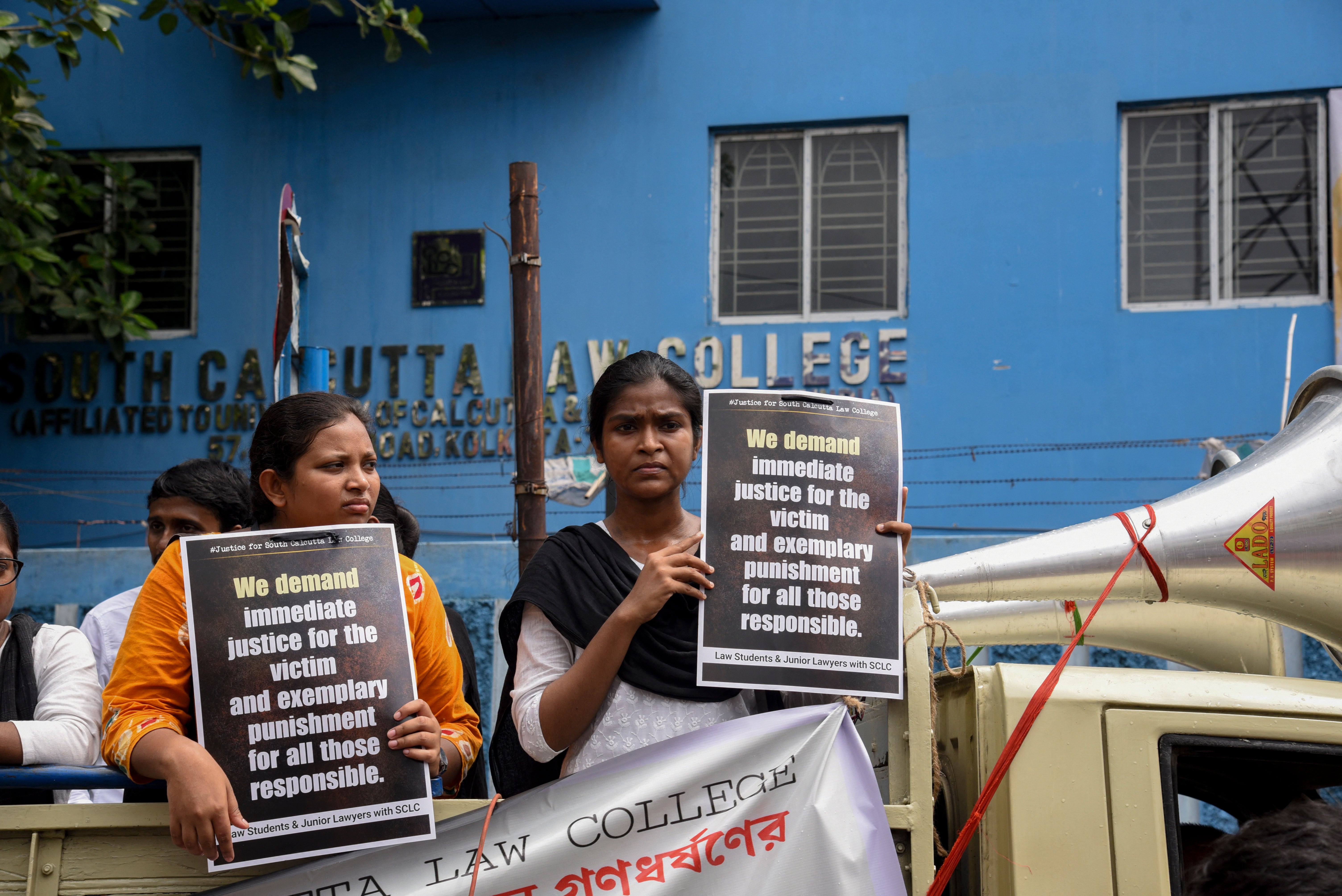
Outside the high court on Friday, protesters held placards and shouted slogans calling for an end to what they described as “protection for rapists”. One demonstrator asked why a man convicted of rape and linked to murder could get bail at all.
“On what grounds was Kuldeep Sengar granted bail when it was declared that he had committed rapes and murders?” the protester told ANI news agency. “If a life sentence was given to him, then why is he out? We demand that the rapist should go behind bars so women feel safe.”
Yogita Bhayana, a women’s rights activist closely involved in supporting the survivor, said the decision had shaken public confidence in the justice system. “Women across India are deeply hurt that the sentence of a rapist has been overturned,” Ms Bhayana was quoted as saying by ANI.
“This happened in this very court. So, we will seek justice from the same place where the injustice occurred.”
Tensions escalated earlier this week when the survivor and her mother attempted to do a sit-in protest at India Gate, one of the capital’s most prominent squares. Footage of security personnel dragging them away spread rapidly on social media, prompting widespread condemnation. The survivor’s mother later alleged rough handling by police and said her daughters were taken away in a vehicle and dropped elsewhere.
“His bail should be rejected,” the mother said at the time. “We will knock on the doors of the Supreme Court. We have lost faith in the high court.”
In a statement underscoring the family’s despair, she added: “If we don't get justice in the Supreme Court, we will go to another country.”
The survivor’s sister said if Sengar was being let out, “then put us in prison. At least we will be safe there”.
“He had killed my uncle, my father. He has been released but the threat hovers over us and our family. Who knows he will erase our entire family once he is out,” she alleged.
“My sister is grieving. If something happens to us, will the court take responsibility? If so, then it is okay. We have small children, our brother. His men continue to threaten us.”
The bail order has also reopened a complex legal debate about how the law defines a “public servant”.
The high court relied on a long-standing interpretation that elected representatives such as MPs and MLAs were not deemed public servants under the relevant criminal laws, a technical distinction carrying major sentencing consequences.
Under Pocso, rape of a child by a person in authority or a public servant attracts harsher minimum punishment than rape by an “ordinary person”.
Meanwhile, the Central Bureau of Investigation, a federal agency, announced that it would challenge the bail order in the Supreme Court by filing a special leave petition.
A spokesperson said the agency had studied the ruling and would move the top court “at the earliest”.
Bookmark popover
Removed from bookmarks