Angry mob sets fire to offices of leading newspapers after activist shot dead in Bangladesh
Violent protests erupted across Bangladesh after the death of outspoken activist Sharif Osman Hadi, with crowds storming and setting fire to the offices of the country’s two biggest newspapers, trapping journalists inside


Angry protesters stormed the offices of two of Bangladesh's leading newspapers late on Thursday after the death of a prominent activist who was involved in last year's political uprising in the country.
Sharif Osman Hadi, a spokesperson for the Inquilab Mancha student activists’ group, died in hospital in Singapore early on Thursday evening after a week-long battle for his life. He was shot in the head by masked assailants on the streets of Dhaka, the capital of Bangladesh, last Friday while he was on a rickshaw.
Two men on a motorbike followed Hadi and one of them shot him before fleeing the scene. After days of treatment at a local hospital in Dhaka, Hadi was flown to Singapore in a critical condition.
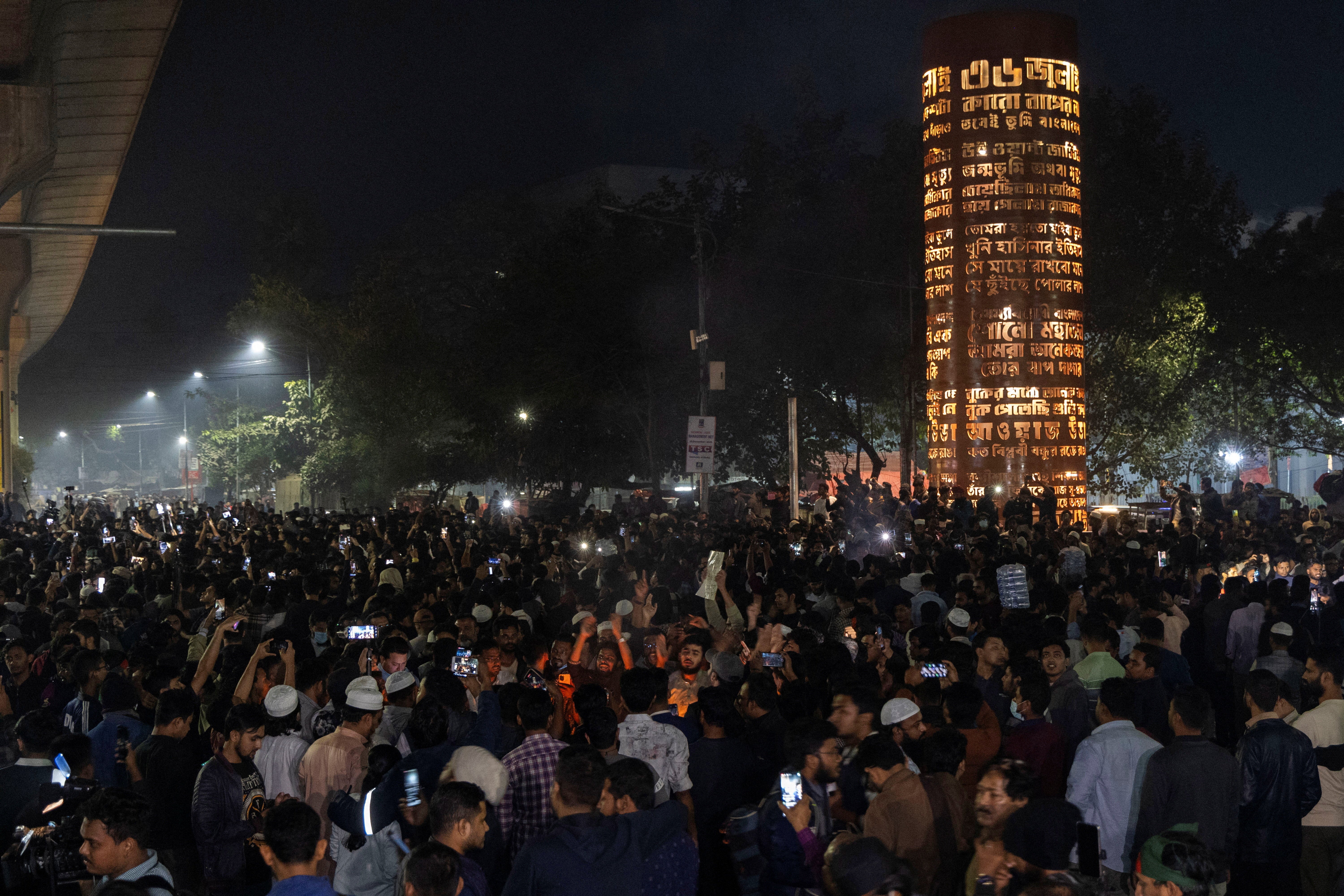
Police and paramilitary troops fanned out across Dhaka and other cities amid concerns of further unrest ahead of national elections. Hadi had planned to run as an independent candidate from a major constituency in Dhaka in the elections which the country's interim government has announced for February.
Hadi was an outspoken critic of neighbouring India, where former prime minister Sheikh Hasina has been living in exile since she was ousted in the student-led protests last year. The Inquilab Mancha describes itself on its website as a revolutionary cultural platform inspired by the spirit of the uprising.
Authorities said they identified the suspects and that the shooter had most probably fled to India – remarks that sparked a new diplomatic squabble and prompted New Delhi this week to summon Bangladesh's envoy to express its condemnation.
In Dhaka, videos circulating on social media showed mobs vandalising the offices of the country largest daily newspaper Prothom Alo as well as the Daily Star on Thursday night.
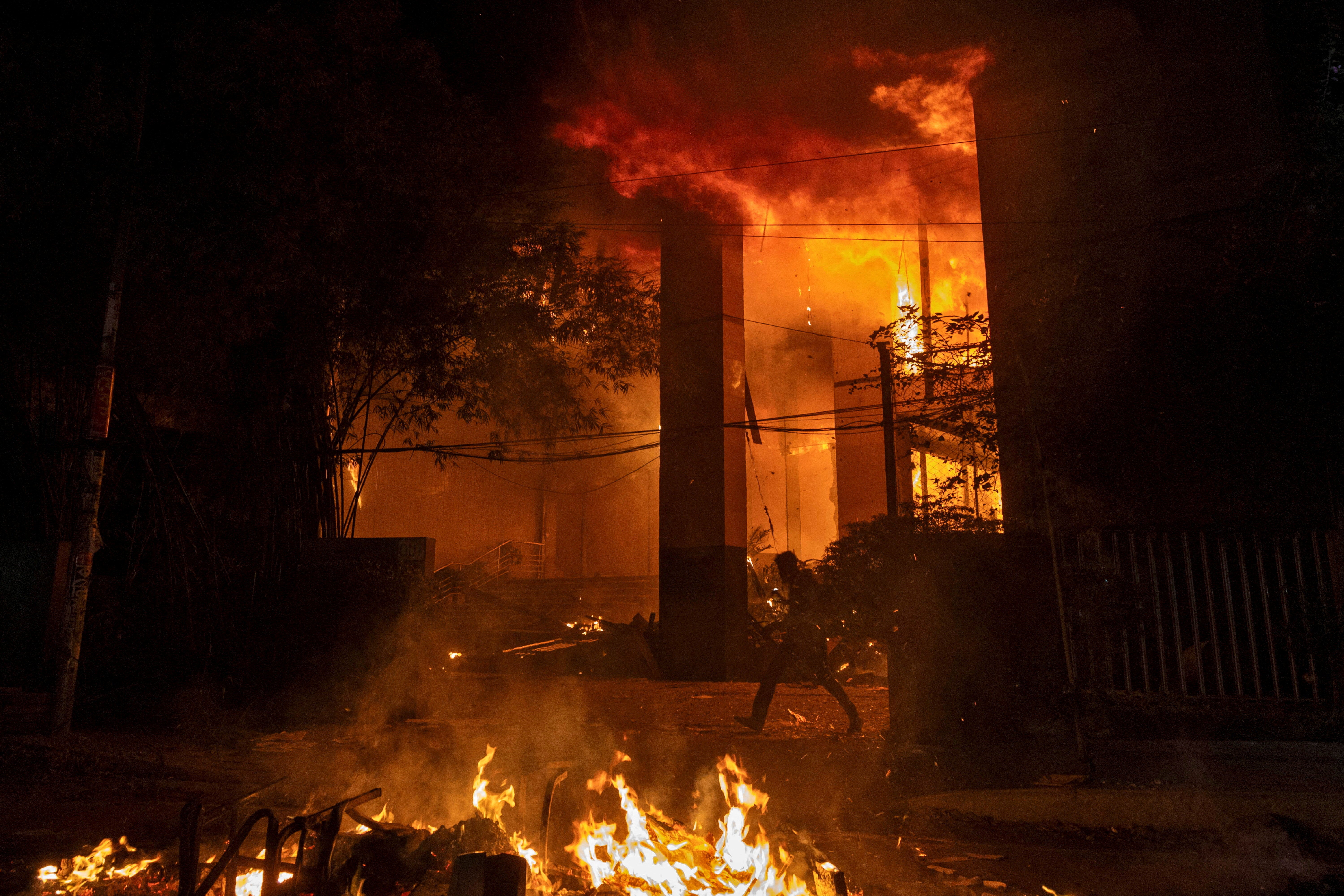
Angry crowds set fire to the buildings of the dailies, trapping journalists and other staff inside. Staff members were evacuated and the fire was brought under control early on Friday.
Protests were organised in recent months outside the offices of the dailies by Islamists who accused the newspapers of having links with India.
Streets were calm in the morning, but residents in the Muslim-majority South Asian nation said they were worried there could be fresh violence after Friday prayers later in the day. Bangladesh also summoned the Indian envoy to Dhaka and sought clarification.
Hadi was also a fierce critic of former Hasina, whose 15-year rule of Bangladesh ended in last year's uprising.
The Inquilab Mancha group, formed after the ouster of Hasina last year, has been organising street protests and campaigns denouncing her and India. The country's Islamists and other Hasina opponents have blamed her government for being subservient to India during her rule.
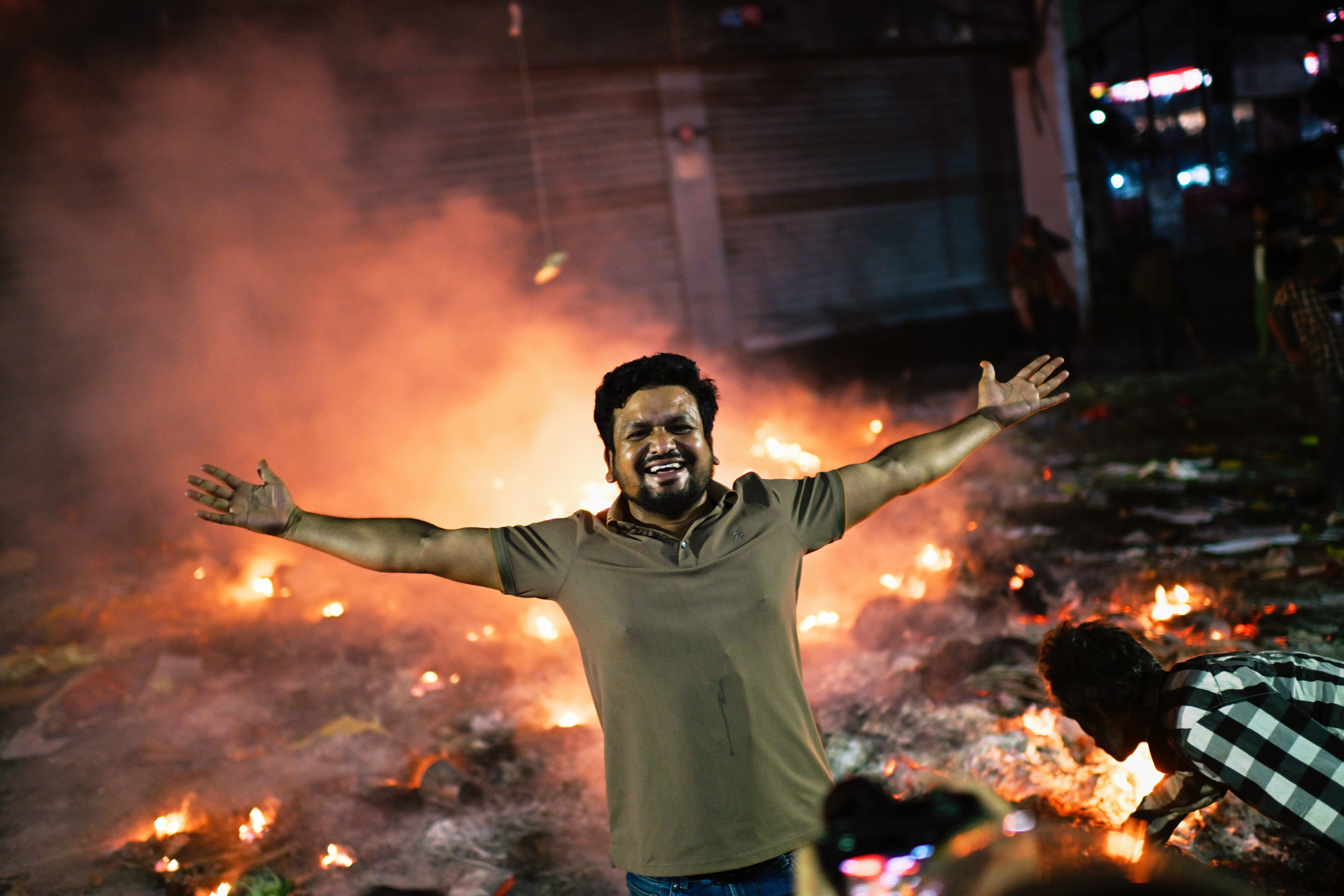
Witnesses and media reports said hundreds of protesters took to the streets of Dhaka immediately after the news of Hadi's death, rallying on Shahbagh Square near the Dhaka University campus where many chanted slogans such as Allahu Akbar, or God is great. There were also similar protests elsewhere in the country.
The demonstrations were marked by emotionally charged slogans invoking Hadi’s name, with protesters vowing to continue their movement and demanding swift justice. Several areas remained tense, with additional police and paramilitary forces deployed to prevent further violence.
Later, a group of protesters gathered outside the head office of the country's leading Bengali-language Prothom Alo daily in Dhaka's Karwan Bazar area. They then surged into the building, vandalised it and set fire to it, according to online portals of various leading media outlets.
A few hundred yards away, another group of protesters pushed into the premises of the country's leading English-language Daily Star and set fire to the building, according to footage from Kaler Kantha, another mainstream newspaper.

One of the Daily Star's journalists, Zyma Islam, wrote on Facebook that she was inside the building."I can't breathe anymore. There's too much smoke," she said. Both dailies stopped updating their online editions after the attacks and they did not publish broadsheets on Friday.
Violence was also reported in a number of cities across Bangladesh, including the port city of Chittagong, where protesters attacked the Indian Assistant High Commission and set fire to a house belonging to a former Awami League education minister.
At least four people were injured after violence erupted outside the Indian Assistant High Commission. The injured included two police officers, reported the Assam Tribune, citing local media. The injured were taken to Chittagong Medical College Hospital, while authorities detained several individuals involved in vandalising the office, the Dhaka Tribune reported.
The protesters on Thursday night also targeted Chhayanaut, a leading cultural institution widely respected by liberals, in Dhaka's Dhanmondi neighbourhood. Hadi's body would be brought to Dhaka from Singapore on Friday evening, authorities said.
The attack on Hadi is still being investigated, but the shooting has set off tensions. Human Rights Watch and Amnesty International have recently expressed concerns over violations of human rights in Bangladesh.
The country's interim leader, Nobel Peace Prize laureate Muhammad Yunus, who took over three days after Hasina's ouster in August 2024, promised in a televised address to the nation late Thursday to punish Hadi's killers.
Mr Yunus said: "His passing represents an irreplaceable loss to the nation's political and democratic sphere."
He also appealed for restraint, warning that violence would only undermine the country’s path toward a credible election.
The interim administration has declared Saturday a day of state mourning in honour of Hadi, with national flags to be flown at half-mast and special prayers planned across the country.
The home of the country’s first president, Sheikh Mujibur Rahman, the father of Hasina, was vandalised and set on fire once again, after having been attacked twice previously in February and August last year.
New Age editor Nurul Kabir, who also heads the country's Editors Council, was harassed by protesters outside the Daily Star building on Thursday night as they vandalised the premises, with videos showing him pushed into a crowd, verbally abused as an Awami League collaborator, and having his hair pulled.
Mr Yunus's critics and Hasina's Awami League party have blamed the interim government for the rise of Islamists in Bangladesh, a parliamentary democracy with a history of political violence.
The interim government has banned all activities by Hasina's party, including its running in the February election. Last month, a Bangladesh court sentenced Hasina to death on charges of crimes against humanity involving the uprising.
On Wednesday, anti-India protesters attempted to march toward the Indian High Commission in Dhaka, prompting it to close its visa section. After Hasina's ouster India stopped issuing tourist visas to Bangladeshis, citing security concerns, but continued giving visas for medical treatment in India.
On Thursday, protesters in the southwestern city of Rajshahi tried to march toward the office of a regional Indian diplomat. Police stopped both marches.
Join our commenting forum
Join thought-provoking conversations, follow other Independent readers and see their replies
Comments
Bookmark popover
Removed from bookmarks