Why Thailand and Cambodia have been fighting for much of this year
Southeast Asian neighbours have agreed a new ceasefire after weeks of renewed clashes along their disputed border
Thailand and Cambodia have agreed a new ceasefire after weeks of deadly fighting along their disputed border, halting their worst conflict in years over competing territorial claims.
The deal was signed by their defence ministers on Saturday after renewed clashes killed dozens of people, displaced hundreds of thousands, and threatened to destabilise one of Southeast Asia’s most sensitive frontiers.
The agreement commits both sides to halt military operations, freeze troop movements and respect each other’s airspace. It also provides for the repatriation of Cambodian soldiers captured earlier in the fighting.
This is the second ceasefire between the neighbours this year. The first came in July after five days of intense combat killed at least 48 people and displaced over 100,000 civilians.
The conflict flared once again this month amid rising tensions along the 817km frontier, triggering artillery duels, air strikes and mass evacuations.
The renewed violence drew attention from US president Donald Trump, who said he planned to call both sides to stop the war after claiming credit for helping broker the earlier truce.
“Who else could say I'm going to make a phone call and stop a war of two very powerful countries, Thailand and Cambodia,” he boasted.

What is the conflict about?
The conflict erupted in May when the armed forces of Thailand and Cambodia briefly fired at each other in a relatively small “no man’s land” claimed by both countries.
Both sides said they acted in self defence after a Cambodian soldier was killed.
Although Cambodia and Thailand said afterwards that they had agreed to de-escalate the situation, their officials continued to implement or threaten measures short of armed force at each other, keeping tensions high.
Thailand added restrictions at the border, limiting crossing times and barring casino tourists and workers from crossing into the neighbouring country.
Cambodia banned Thai movies and TV shows, stopped the import of fruits and vegetables and boycotted its neighbour's international internet links and power supply.
That uneasy calm collapsed in July and was restored after five days of intense clashes.


Thailand accused Cambodia of firing rockets near a hospital in the province of Surin, prompting the evacuation of patients and staff. It also said Cambodian drones, tanks and rocket fire hit several points along the frontier, including areas near the contested Preah Vihear temple complex.
“Our forces destroyed an anti-drone position to the south of Chong Chom in order to support operations to clear Cambodian elements in a mango plantation that has been planted across the line of operations,” the Thai military said.
Cambodia alleged that the Thai military launched artillery strikes and drone attacks in Pursat province, dropped mortars on civilian homes in Battambang, and sent F-16 jets across the border to bomb populated areas.
The defence ministry said nine civilians were killed and 20 seriously injured.
Thailand reported four soldiers dead and 68 wounded before the latest ceasefire, while Cambodia said nine civilians had been killed and 20 seriously injured.

How long have the two fought over land?
Border disputes have long caused tensions between the neighbours. The contesting claims stem largely from a 1907 map drawn up by French colonial rulers to separate Cambodia from Thailand.
Cambodia has been using the map as a reference to claim territory, while Thailand has been arguing its accuracy.
In 1962, a landmark International Court of Justice ruling awarded sovereignty over the area to Cambodia, with Thailand angrily rejecting the decision and disputing it ever since.
Cambodia went back to the court in 2011, following a series of clashes between its army and Thai forces which had killed about 20 people and displaced thousands.
The court reaffirmed the ruling in 2013, a decision that once again rattled Thailand.
In February, Cambodian troops and their family members entered the ancient Preah Vihear temple in one of the disputed areas and sang the national anthem, leading to a brief argument with Thai troops.

How did the latest fighting erupt?
Both sides insisted the other fired first to spark the latest round of fighting. Thailand then authorised military operations “as planned earlier”, with prime minister Anutin Charnvirakul saying “we've got to do what we've got to do”.
Cambodia claimed it held back initially but eventually decided to retaliate. “Cambodia wants peace but Cambodia is forced to fight back to defend its territory,” Hun Sen, the influential former leader and father of prime minister Hun Manet, said.
Thailand carried out air strikes along the border which it described as defensive missions against military installations. Rear Admiral Surasant Kongsiri said such operations would continue “until attacks stop”.
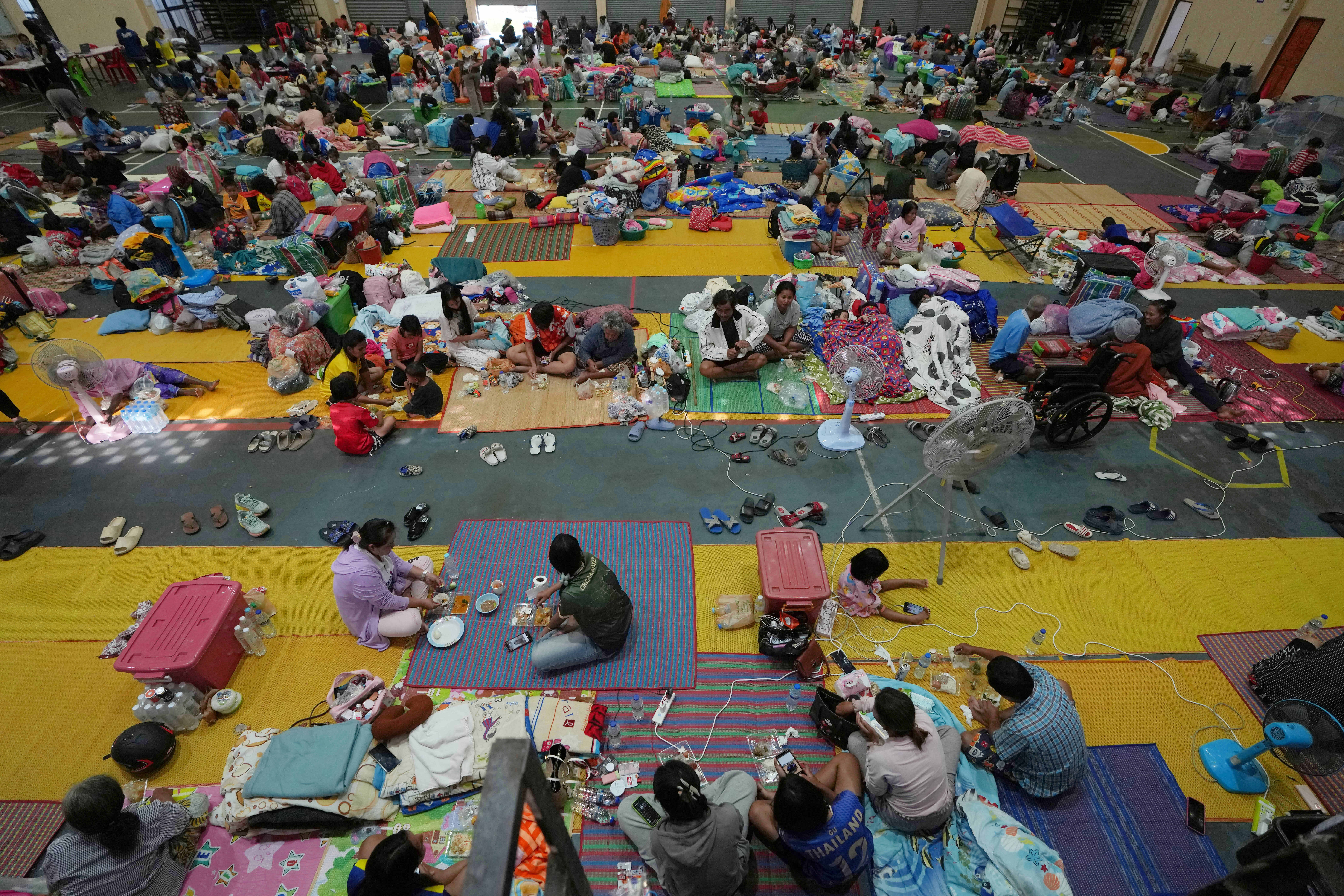
Both governments said they had moved large numbers of civilians away from the frontier. Thailand set up almost 500 temporary shelters hosting more than 125,000 people. Cambodia said it evacuated about 55,000 people.

The road to ceasefire and beyond
The July ceasefire was pushed through by Malaysia and influenced by Mr Trump, who threatened to withhold trade privileges unless the two sides agreed to stop fighting.
But little of that agreement was implemented. Washington had urged both nations to remove heavy weapons, clear landmines and improve cooperation but they continued to trade allegations of landmine use, airspace violations and prisoner mistreatment.
Thailand suspended parts of the de-escalation plan after a Thai soldier was maimed by what it said was a newly planted Cambodian landmine. Cambodia denied laying new mines, saying the unexploded devices were remnants of its civil war, which ended in 1999.
The latest ceasefire builds on those previous efforts, but includes additional commitments, including restrictions on airspace violations, a freeze on troop movements and renewed border demarcation talks. Whether it holds is uncertain after months of mutual accusations and sporadic clashes.
So far, though, the ceasefire was holding, a Thai Defence Ministry spokesperson, Rear Admiral Surasant Kongsiri, told Reuters about two hours after it went into effect at noon local time.
"So far there's been no report of gunfire," he said.
Bookmark popover
Removed from bookmarks