Mercedes-Benz C-Class review: Sophisticated plug-in hybrid
The Mercedes-Benz C-Class isn’t the most exciting car around, but its plug-in hybrid tech is impressive and works really well in the real world. It’s a shame about the compromises in practicality and the stiff prices, though.
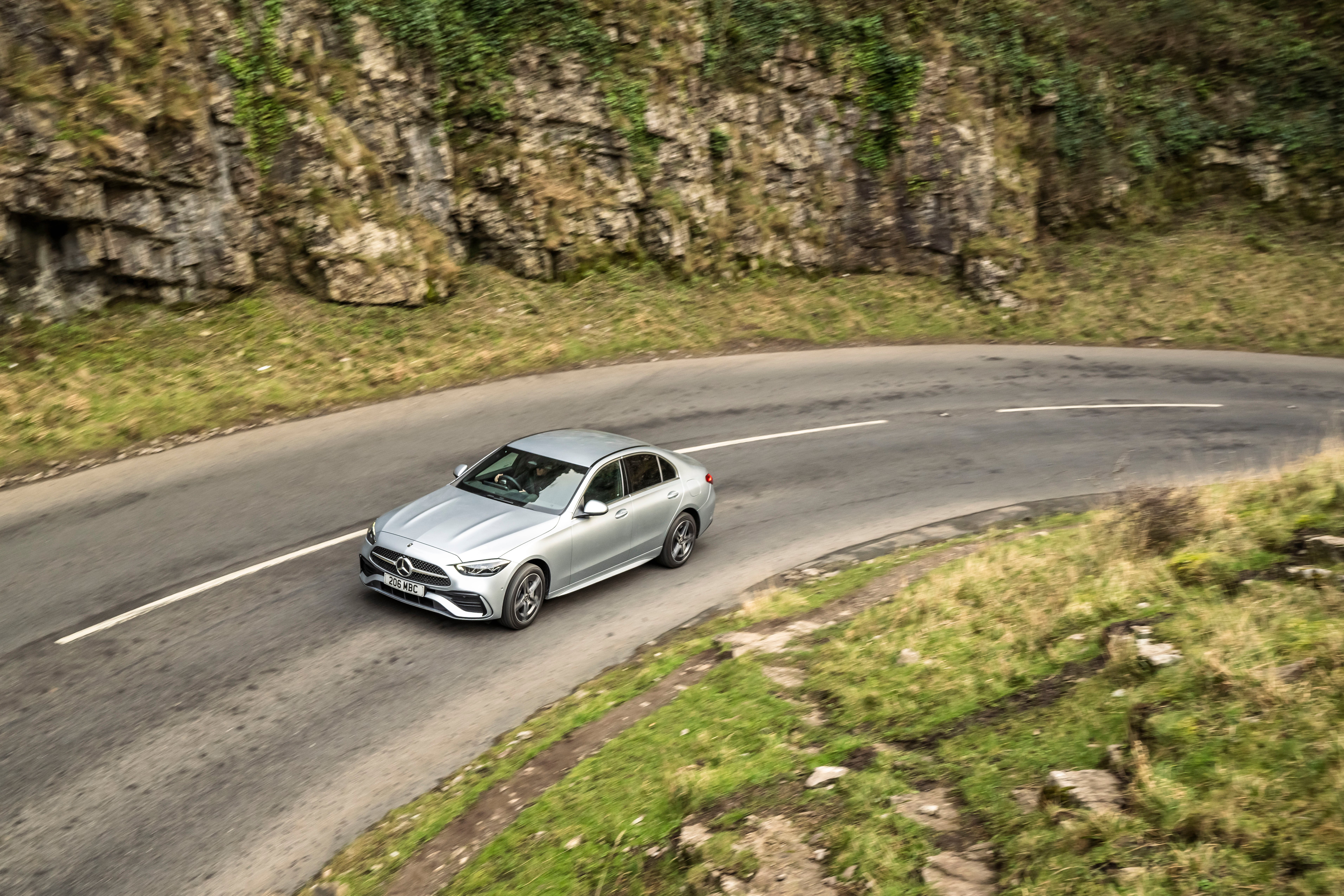
The Mercedes-Benz C-Class is a staple of the executive car world, alongside the famed BMW 3 Series and recently-renamed Audi A5 (née Audi A4). As this is a sector focused on company car drivers, it means that all three brands offer plug-in hybrid versions of their premium saloons and estates, all of them with extended ranges to help lower company car tax liabilities.
The Mercedes-Benz C-Class has a 19.7kWh battery that gives a long EV distance of up to 73 miles – an impressive range that means it will serve as a viable pure electric car for many, particularly if they can charge overnight. When combined with ultra-low CO2 emissions, it delivers enviable savings for fleet car drivers.
Uniquely, Mercedes-Benz also offers the C-Class plug-in hybrid with a choice of petrol or diesel engine. The C 300 e and C 300 de are both 2.0-litre turbo engines, using the same battery or electric motor, meaning the only choice is which fuel type you prefer. It’s rare to have diesel-engined plug-in hybrids, but higher-mileage drivers will find them beneficial, thanks to the inherent greater efficiency of modern turbodiesel motors.
To drive, the Mercedes-Benz C-Class is an impeccably accomplished car. It exemplifies cool, calm and collected excellence, with superb stability and a taut, controlled ride. The plug-in hybrid C-Class gets rear air suspension as standard, to offset the weight of the batteries and maintain the Merc’s masterful manners.
I love the interior, too. It’s very Germanic, with dark trims set off by intricate brightwork, but it’s all brightened up by well-integrated ambient lighting that brings it to life at night. The latest Mercedes-Benz infotainment system is also top-notch, with a slick and well-integrated display that’s both comprehensive and easy to use. It’s yet another reason why this would be a lovely car to live with.


How we tested
I spent a week with the Mercedes-Benz C-Class, in which time I happily spent hours in its natural environment, the motorway. This included a trip to Leicester to discover the latest US fast food joint now here in the UK.
Mercedes-Benz C-Class: From £50,745, mercedesbenz.co.uk
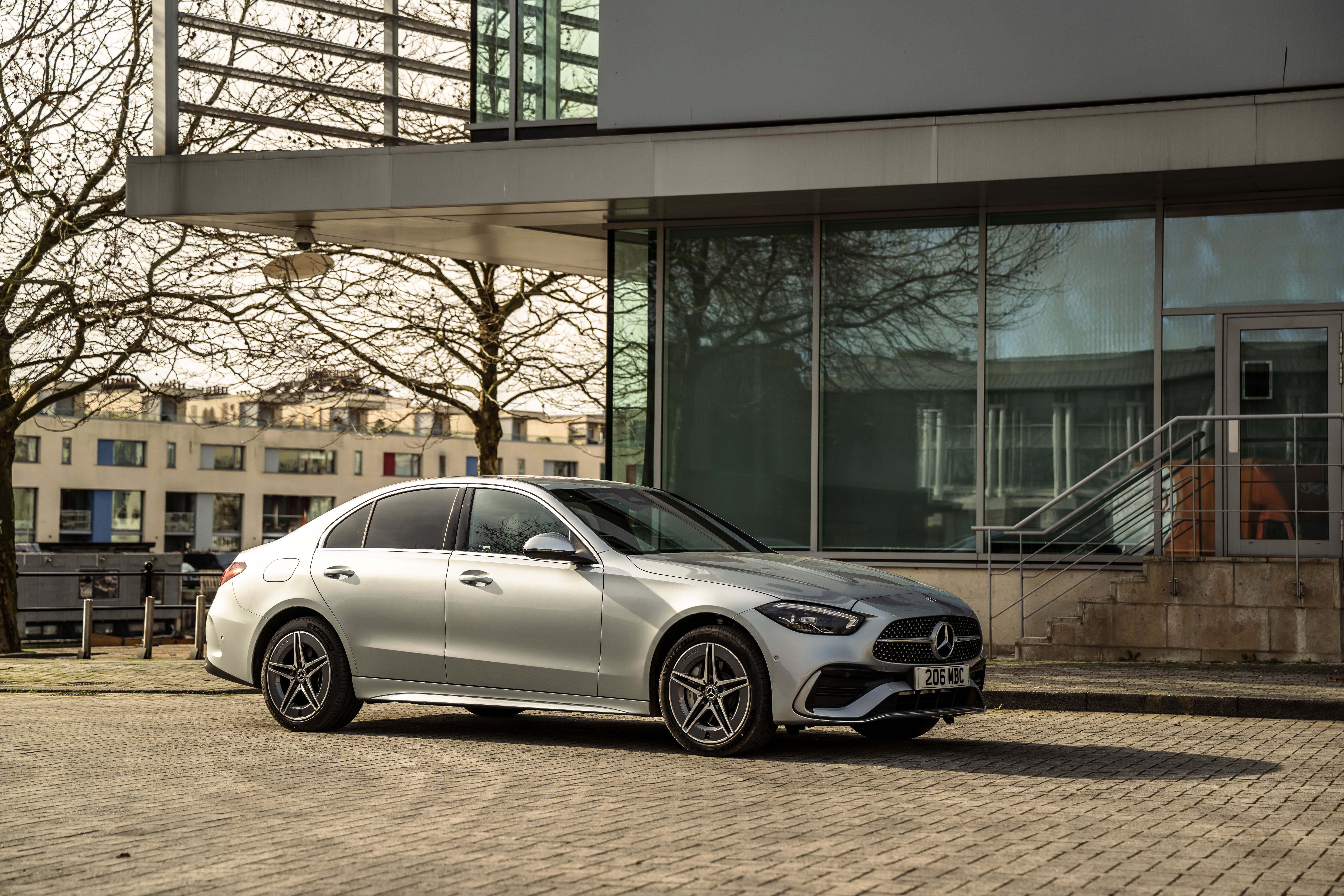
Independent rating: 8/10
- Pros: Effective plug-in hybrid tech, super-smart cabin, impressive infotainment tech
- Cons: Expensive, small boot
Mercedes Benz C-Class Specs
- Price range: £50,745-£63,745
- Battery size: 19.5kWh
- Maximum EV range: 73 miles
- Engine: 2.0-litre petrol or diesel
- Claimed battery & engine range: TBC
Battery, range, charging, performance and drive
The choice of 2.0-litre petrol or diesel engines makes the Mercedes-Benz C-Class plug-in hybrid something of a unique proposition. No rival offers such a choice – petrol is the default choice for plug-in hybrids. Mercedes-Benz, however, still believes in the long-distance efficiency of diesel, making it an interesting alternative for high-mileage motorists. Diesel does come with a £2,250 price premium, though.
With a large 19.5kWh battery, the engineers hope many C-Class will largely be driven in pure electric mode. With an EV range of up to 73 miles, this is a realistic proposition. The battery offers DC rapid charging speeds of up to 55kW, and will fully charge in three hours via a 7.4kW wall box – ideal for ensuring those with a driveway start each day fully-charged.
There is one intriguing difference between models, though: Urban Edition versions have a smaller 50-litre fuel tank, while all other versions have a 66-litre tank. The difference is probably down to chasing lowest-possible CO2 figures for the entry-level Urban Edition, but it’s a point of difference worth noting for those planning on making full use of the petrol and diesel engines’ range.

ADVERTISEMENT
ADVERTISEMENT
The Mercedes-Benz C-Class is as assured as you’d expect to drive. The ride is authoritative and handling is assured. The controls don’t have BMW-levels of feel and feedback, but it is accomplished over all road surfaces. I did notice a bit of tyre roar over certain surfaces, but refinement was otherwise impressive too – the C-Class feels a rock-solid and safe car to drive.
Interior, practicality and boot space
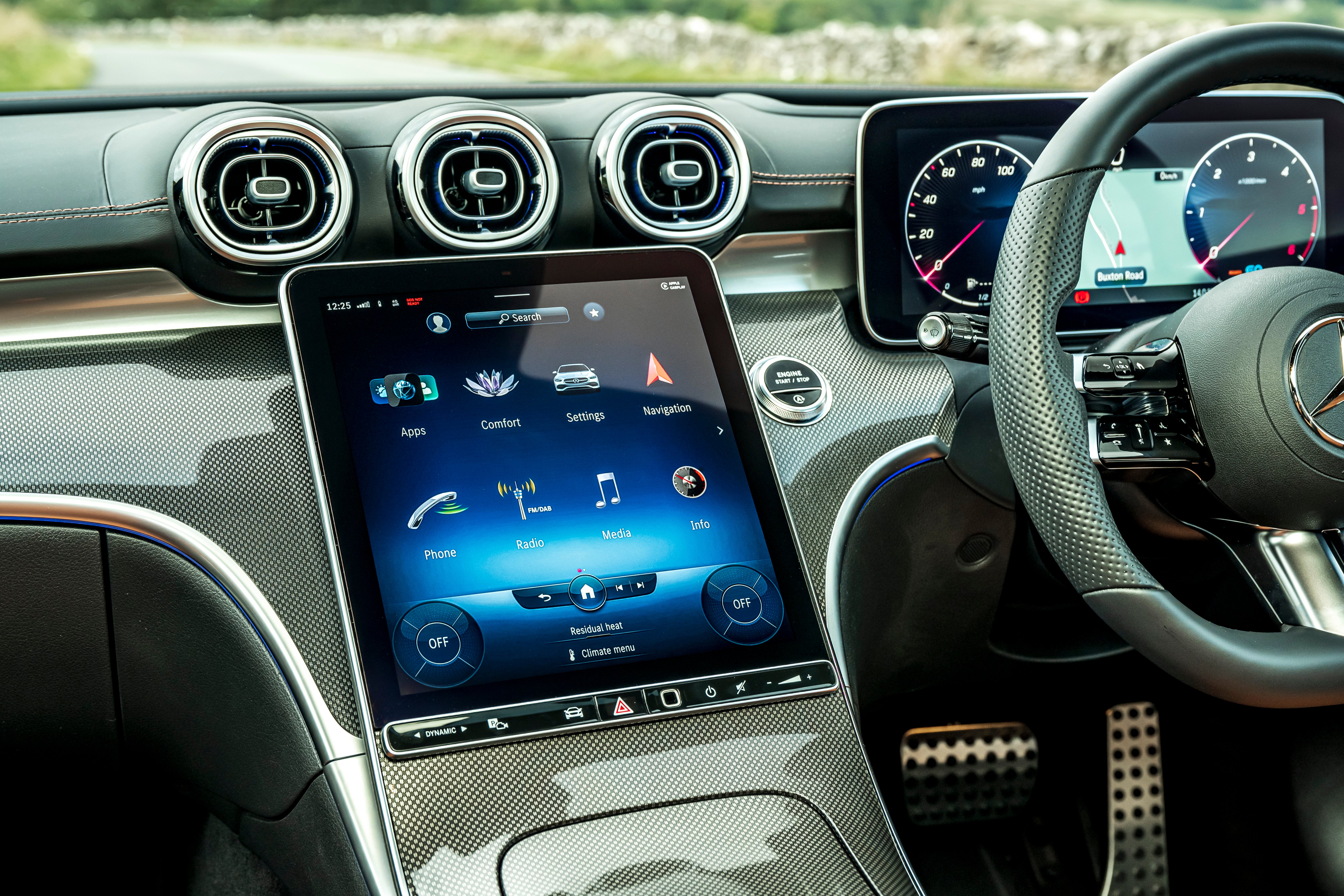
The Mercedes-Benz C-Class has an impressive interior that brings the luxury and wow factor of the larger S-Class into a more affordable sector. It’s largely digital, with an electronic driver’s display and large central touchscreen, which adopts a novel portrait format.
Most controls are integrated into it, including the heater settings, with just a slim array of physical touch-sensitive buttons below. I found this could be a bit fiddly, particularly as the steering wheel contains double layers of similarly touch-sensitive buttons, which are decidedly hit and miss. The setup lacks the precision feel you expect of a Mercedes-Benz, and it can’t be long before these compromised controls are replaced.
The C-Class has quite a sporty feel behind the wheel, with firm seats, a well-placed steering wheel and a dashboard made sportier by its tactile trim and five freestanding air vents. Some might find it a bit cool and clinical, but keener drivers will love it, particularly because the seat and steering wheel have such a huge range of adjustment.
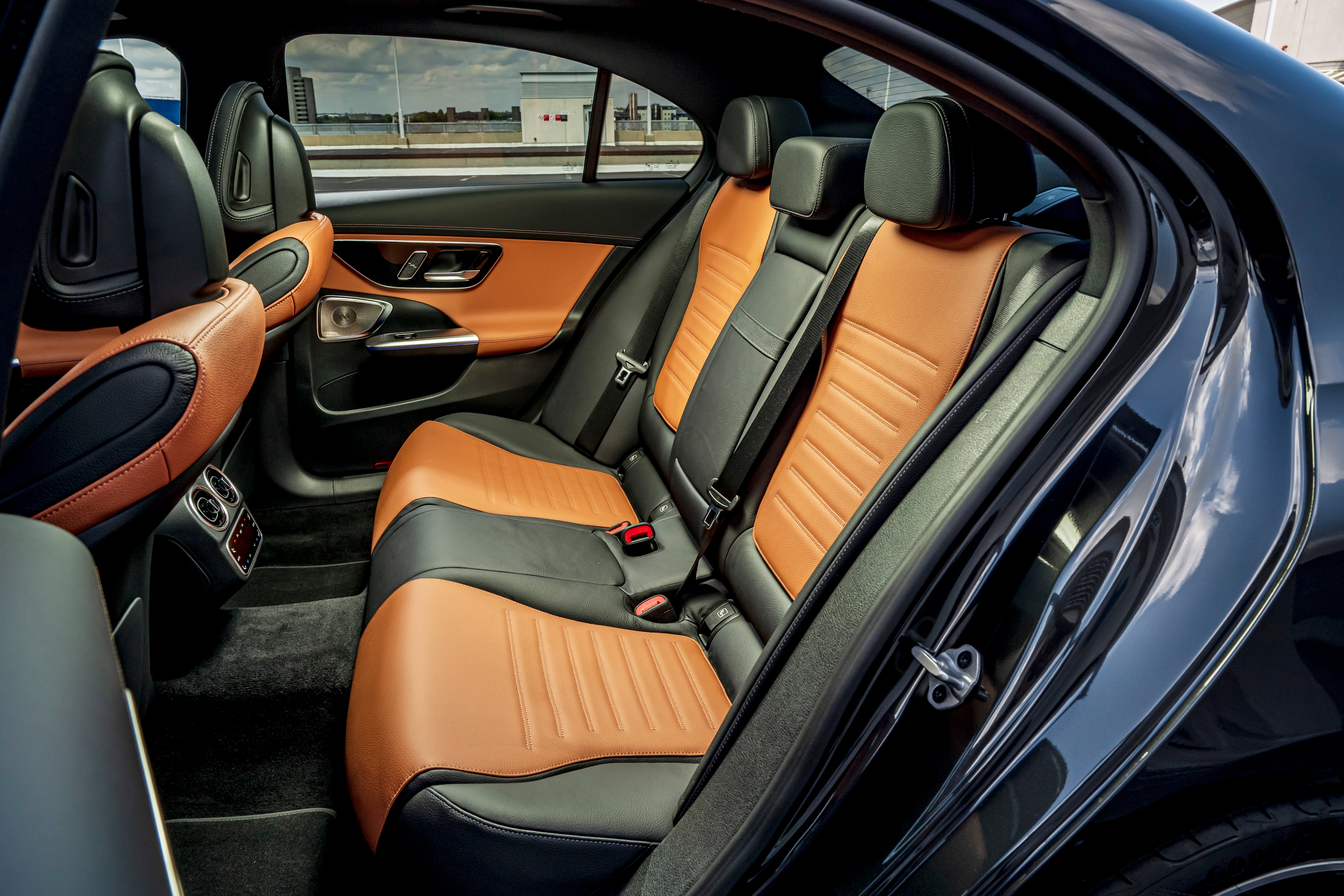
Space is tighter in the back. It’s OK, and certainly not cramped, but alternatives such as the Skoda Superb are appreciably larger back there. It’s best reserved for two people rather than three as well, because of the ultra-wide central tunnel.
Plug-in hybrid Mercedes-Benz C-Class have compromised boot space, due to the need to accommodate the batteries. Regular cars offer a decent 455 litres of space, but this shrinks to just 360 litres in the C-Class saloon. That’s a good 20 litres smaller than a Volkswagen Golf. The estate is little better, dropping from 490 litres to 360 litres. Such compromised boot space is disappointing from a firm with the depth of engineering as Mercedes-Benz.
Technology, stereo and infotainment
All Mercedes-Benz C-Class combine a 12.3-inch driver display with an 11.9-inch touchscreen, running the firm’s MBUX infotainment setup. I love this system, because it’s both extremely comprehensive yet easy to use. It’s also colourful and attractive, with the sort of depth you’ll associate with premium computers rather than in-car systems.
It can even be controlled remotely, by the touch-sensitive buttons on the steering wheel. I’ve mentioned how fiddly these can be, and it will take time to become accustomed to using them, but can be quite handy once you’re used to it. This is where the touch-swipe functionality of the steering wheel buttons starts to make sense, but it’s still imperfect tech.
Sat nav is standard, and includes EV routing so you can make most efficient use of the battery and petrol or diesel engine. Wireless Android Auto and Apple CarPlay are also standard, for those who prefer to use navigation through their mobile device.
The standard stereo is fine, but I really like the optional Burmester sound system. It has outstanding depth and makes listening to music on the move a joy. The system is standard on AMG Line Premium Plus; otherwise, it’s an expensive option.
Another interesting piece of tech is the radar-based battery recuperation. Using a sensor behind the rear-view mirror, it monitors the distance from the car in front and maintains a distance by slowing the car using battery-replenishing recuperation. It can also slow the car as you approach junctions and bends, again discreetly topping up the battery. I found it worked rather well.
Prices and running costs
The Mercedes-Benz C-Class is an expensive executive saloon, particularly in plug-in hybrid guise. The range starts from almost £51,000 and you can spend nearly £64k on a well-specced regular model – or even more if you want one of the sporty Mercedes-AMG versions. You can factor in a healthy spend if you want to add on a few optional extras, too.
Being a premium car, you should expect premium servicing costs, and insurance could be pricey with the C 300 e starting from group 43. Retained values are not quite as glittering as a BMW or Audi either, which could impact monthly leasing and PCP costs.
Mercedes-Benz C-Class rivals
- BMW 3 Series
- Audi A5
- BYD Seal 6
FAQs
How long does it take to charge?
55kW DC rapid charge capability means the Mercedes-Benz C-Class can go from 10-80% charge in 20 minutes.
How much does it cost – is it worth it?
The Mercedes-Benz C-Class is an expensive plug-in hybrid, although the firm will argue you get what you pay for, including its effective hybrid tech and comprehensive infotainment.
Does Mercedes-Benz replace batteries for free?
Mercedes-Benz provides an eight-year, 100,000-mile hybrid battery warranty.
Why trust us
Our team of motoring experts have decades of experience driving, reviewing and reporting on the latest EV cars, and our verdicts are reached with every kind of driver in mind. We thoroughly test drive every car we recommend, so you can be sure our verdicts are honest, unbiased and authentic.


The verdict
The Mercedes-Benz C-Class plug-in hybrid is an impressive technological accomplishment. It has a super-generous EV range and the combustion engines blend in smoothly when the battery is exhausted. I also like the fact it offers a choice of petrol or diesel engines – a novel touch in the world of plug-in hybrids.
Join our commenting forum
Join thought-provoking conversations, follow other Independent readers and see their replies
Comments
Bookmark popover
Removed from bookmarks