Farmers in war-torn Yemen fighting the climate crisis against the odds
With the flow of aid plummeting and water shortages becoming ever more serious, farmers and aid workers tell Nick Ferris of the struggle to survive as the country’s more than decade-long civil war drags on

With at least 10 major conflicts ongoing around the world at the start of 2026 – and events in Iran, Venezuela and Greenland stealing the headlines in recent days – Yemen’s civil war, which began in 2014, too often falls under the radar.
Amid the carnage, the Yemeni people are caught in an escalating humanitarian crisis. Some 23 million people, or two-thirds of the population, required humanitarian aid at the end of 2025, and the country is facing the world’s second-biggest food crisis, with nearly half of all children under five considered to be chronically malnourished.
At the same time, the amount of humanitarian aid reaching the country has been slashed following cuts imposed by Donald Trump and others, with just 24 per cent of requirements met in 2025, leaving a funding shortfall of $1.8bn.
Oxfam Yemen, one of the key humanitarian actors in the country, has told The Independent that its funding collapsed by 80 per cent in 2025 compared to a typical year.
In the north of Yemen, humanitarian operations are further complicated by the Houthis, one of the main groups fighting in the war, arbitrarily detaining aid workers, including some 69 UN staff and dozens of civil society staff over the past 18 months, which has deterred some international NGOs from continuing to operate in Houthi-held territory.
“The humanitarian crisis in Yemen is no longer in the headlines, which is really sad, because you go into the streets here and you can see the despair in people’s faces, many of whom have not received a salary for more than 10 years,” Nada al-Saqaf, from Oxfam Yemen, tells The Independent.
“So often we hear about the ‘resilience’ of the Yemeni people in this crisis, but this is not a nice word for us to hear. It’s romanticising our struggle when we are only trying to survive.”
Conflict amplified by climate change
As well as enduring conflict that has killed an estimated 400,000 people, Yemen is also considered one of the most climate-vulnerable countries in the world. It is grappling with ever more frequent extreme weather events, including flash floods, drought, and extreme temperatures.
Precipitation in the already arid country has fallen by an average of 6.25mm per decade since 1971, according to the World Bank. Extreme heat and the falling use of traditional water-storage infrastructure mean that overall water availability in the country has declined by 60 per cent since 1990.
Experts see the twin challenges of climate change and conflict as exacerbating one another. “Climate change was not the cause of the conflict, but it deepens the wounds,” explains Saqaf. “It multiplies the problems farmers are facing and makes everything more difficult.”
Around half of Yemen’s workforce are farmers, and the common view is that weather patterns are changing, and that “seasons are becoming more and more confusing”, according to Saqaf.
Those affected include 37-year-old Ahmed Mohammed Naji Abdullah, from the Taiz region in western Yemen, who is struggling to keep his family’s farm going amid rising temperatures, erratic rainfall, and the threat of pests. “The heat burned our seedlings, and the cold damaged what survived. Everything became unpredictable,” he recalls.
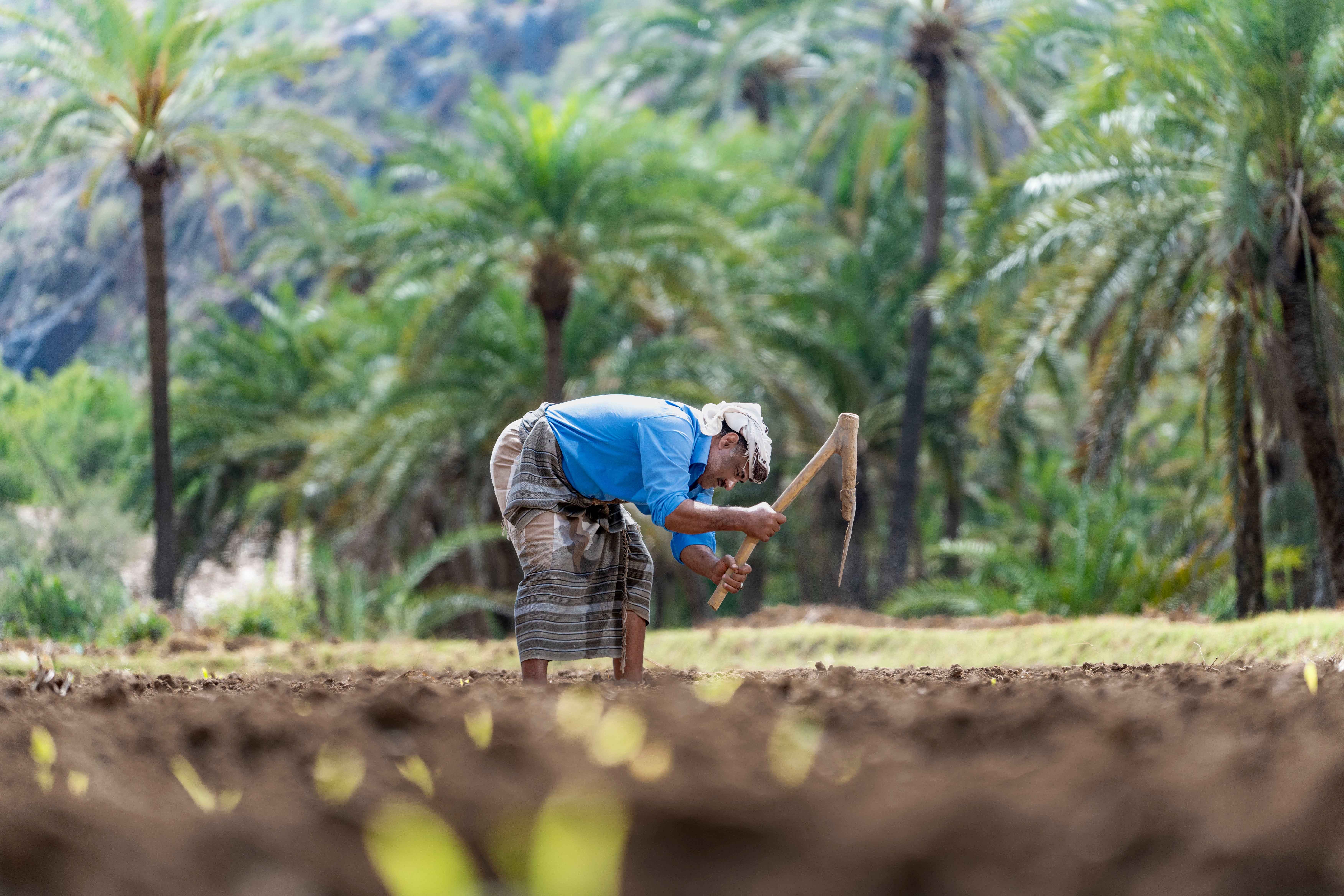
For 51-year-old Mujib Mohammed Ali, another farmer from Taiz, the major problem has been access to water, with dried-up wells forcing the community to walk long distances to collect water. “Even our animals had no place to graze,” he says. “Life becomes harder every day.”
Research from the think tank ODI Global, shared exclusively with The Independent, finds that an “absence of trust” between communities, local authorities, and external actors is increasing local tensions over water in Taiz, a region that is controlled variously by Houthis and the Yemeni government. There is now widespread unregulated borehole drilling, described by interviewees as “anarchy”, while there have been “notable escalations” in local conflicts relating to disputes over wells, land use, energy, and transport.
The paper also finds that water governance in Taiz is “undermined” by unclear regulatory mandates and legal ambiguity, as well as the fact that the region’s branch of the National Water Resources Authority operates on a budget of less than $10,000 per year. This “regulatory void” fuels pre-existing grievances over poor service delivery, which in turn is undermining the Yemeni government’s legitimacy and hindering peacebuilding and economic reform.
“War is obviously the immediate crisis, but climate stress doesn’t pause during conflict; it comes on top of it. It deepens and prolongs human insecurity,” Mauricio Vazquez, head of policy at ODI’s Global Risks and Resilience programme, tells The Independent.
“If you ignore climate, you make recovery harder and conflict more protracted. Climate action in conflict settings isn’t a distraction from peace, it’s part of what makes peace and recovery possible.”
Vazquez’s comments come just weeks after the minister for the environment for Yemen, Tawfeeq al-Sharjabi, told The Independent at Cop30 in Brazil that despite the government facing “immense operational and political challenges”, climate action and accessing climate finance remain a policy priority due to just how severe extreme weather and droughts are becoming in the country.
“The war, with all its tragedies, has obscured a more fundamental crisis: the catastrophic and escalating repercussions of climate change,” he said. “We cannot hope to build lasting peace when communities are infighting for the last drop of water or a loaf of bread, and we cannot rely on humanitarian aid only: we need to create and nurture our own resilient solutions.”
Climate adaptation against the odds
Despite the challenges presented by ongoing conflict, a trickle of positive stories from some communities in Yemen shows that people are still able to prosper with the right financial support.
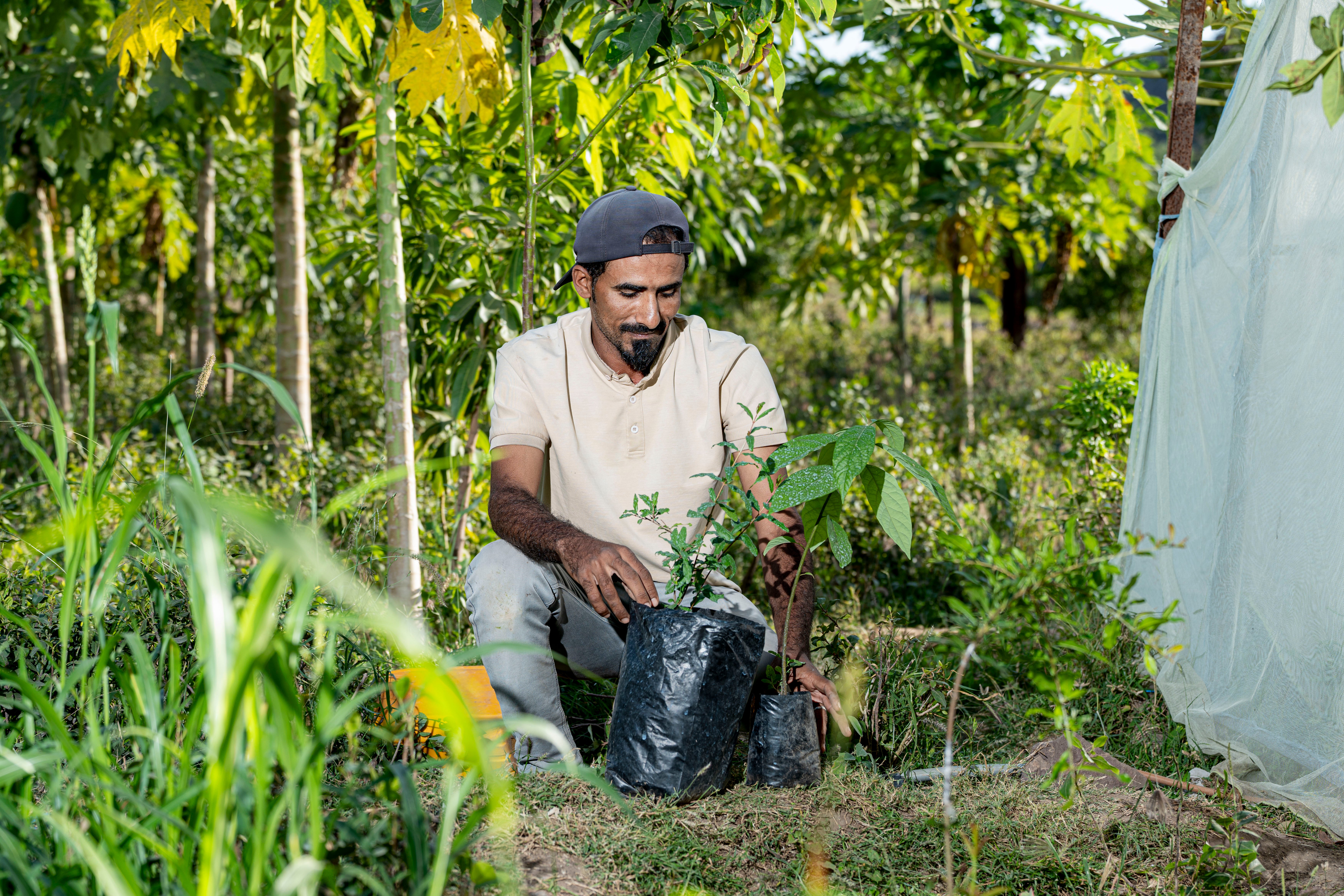
Back in Taiz, Ahmed, working on his family’s farm, received training, drought-resistant seeds, and materials to establish a greenhouse with the help of Oxfam. Today, he cultivates avocado, pomegranate and papaya, and also supplies other members of the community with seedlings. “Before, heat and wind destroyed everything,” he says. “Now, with the greenhouse, my seedlings grow faster, stronger, and with real profit.”
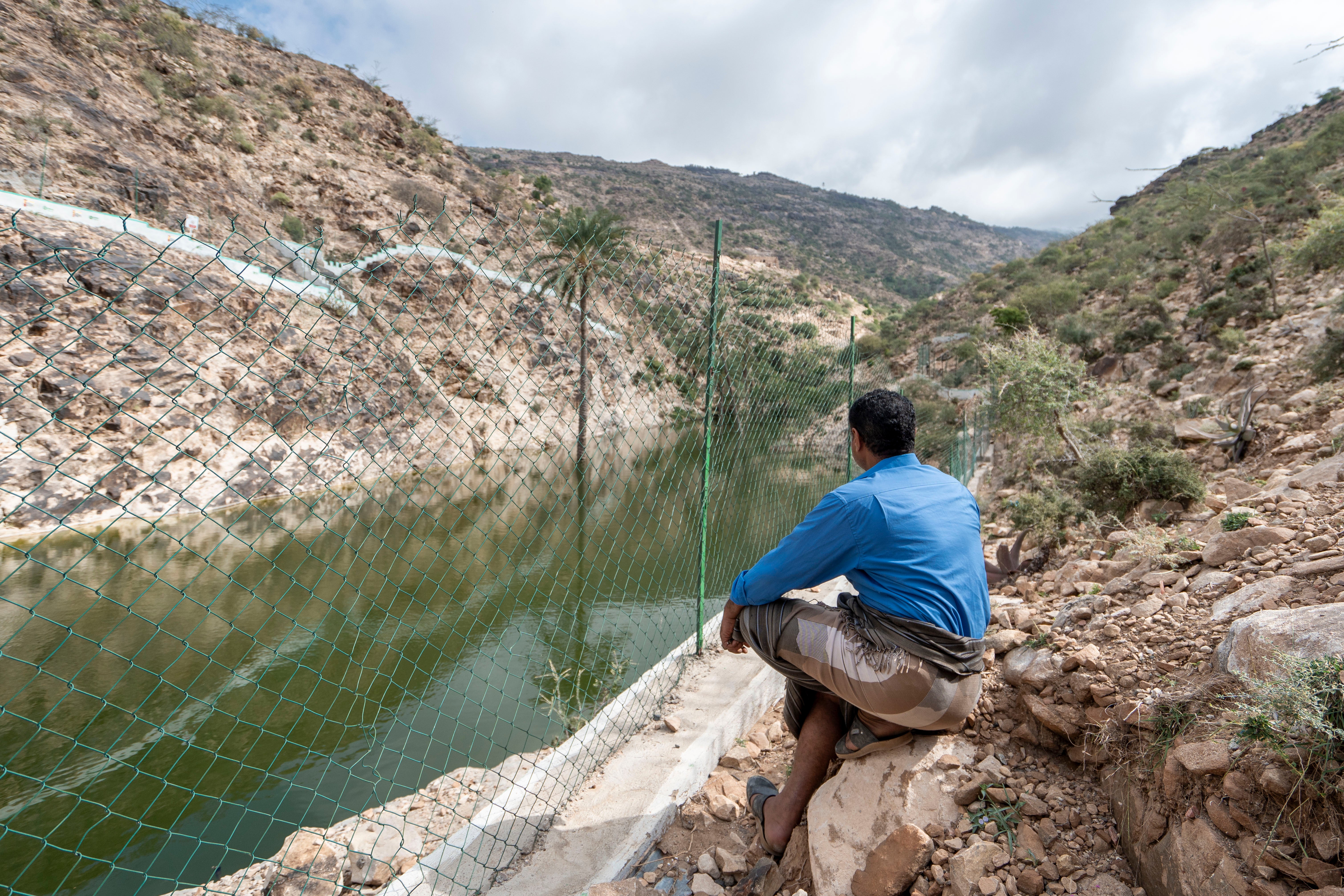
In Mujib’s area, meanwhile, Oxfam has constructed a floodwater-collecting barrier, which is helping to retain water in the soil, replenish the wells, and restore farming conditions. “People’s spirits have returned,” Mujib says. “We feel secure again, and our farms and animals are recovering.”
Another Taiz resident, 55-year-old Jameel Mahyoub Saif, has seen his village’s well and reservoir rehabilitated with concrete through support from Oxfam. “We used to buy water at high prices, and women walked long distances to bring it home,” he recalls. “Now we drink safely. The water stays clear, and floods can’t damage the reservoir any more.”
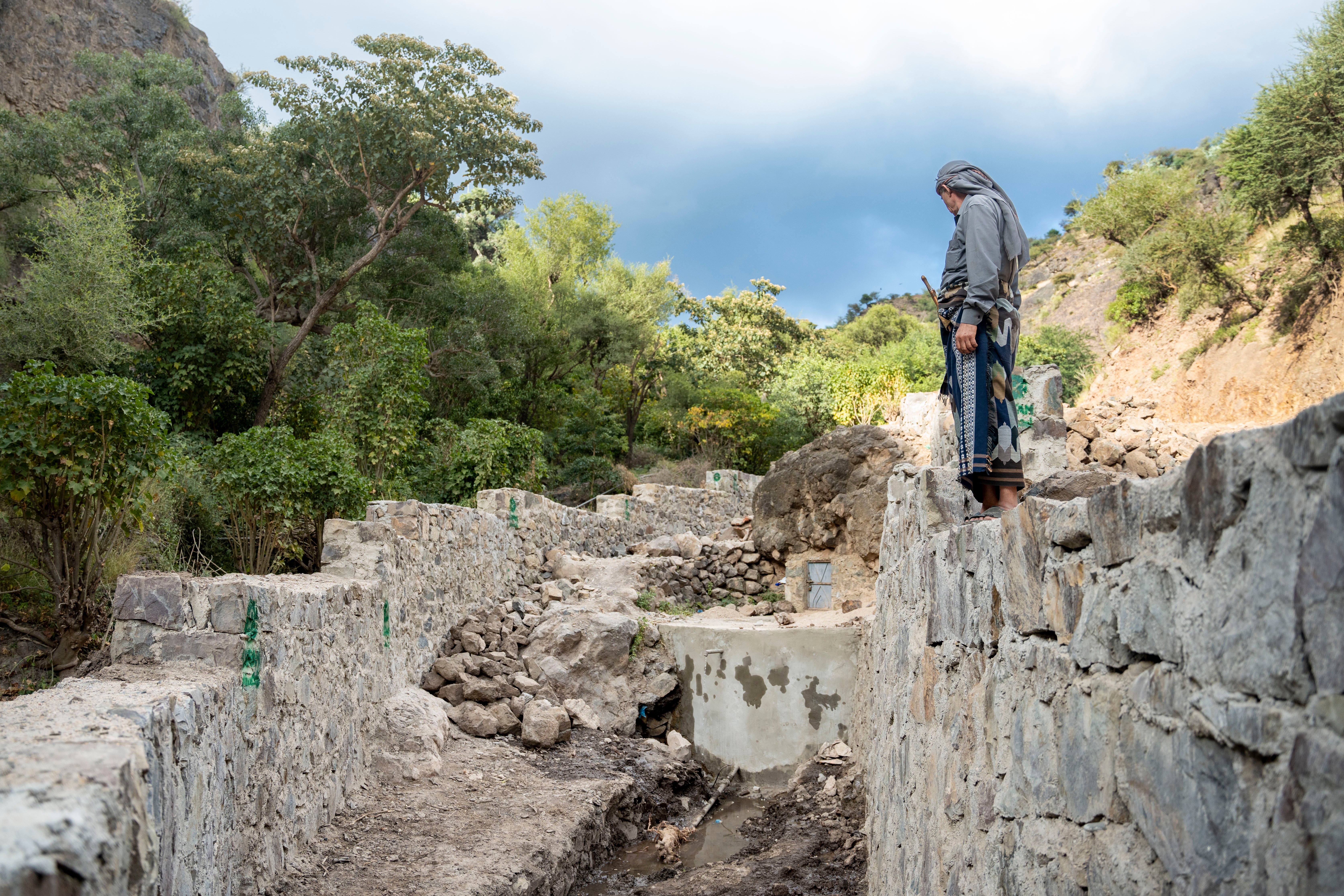
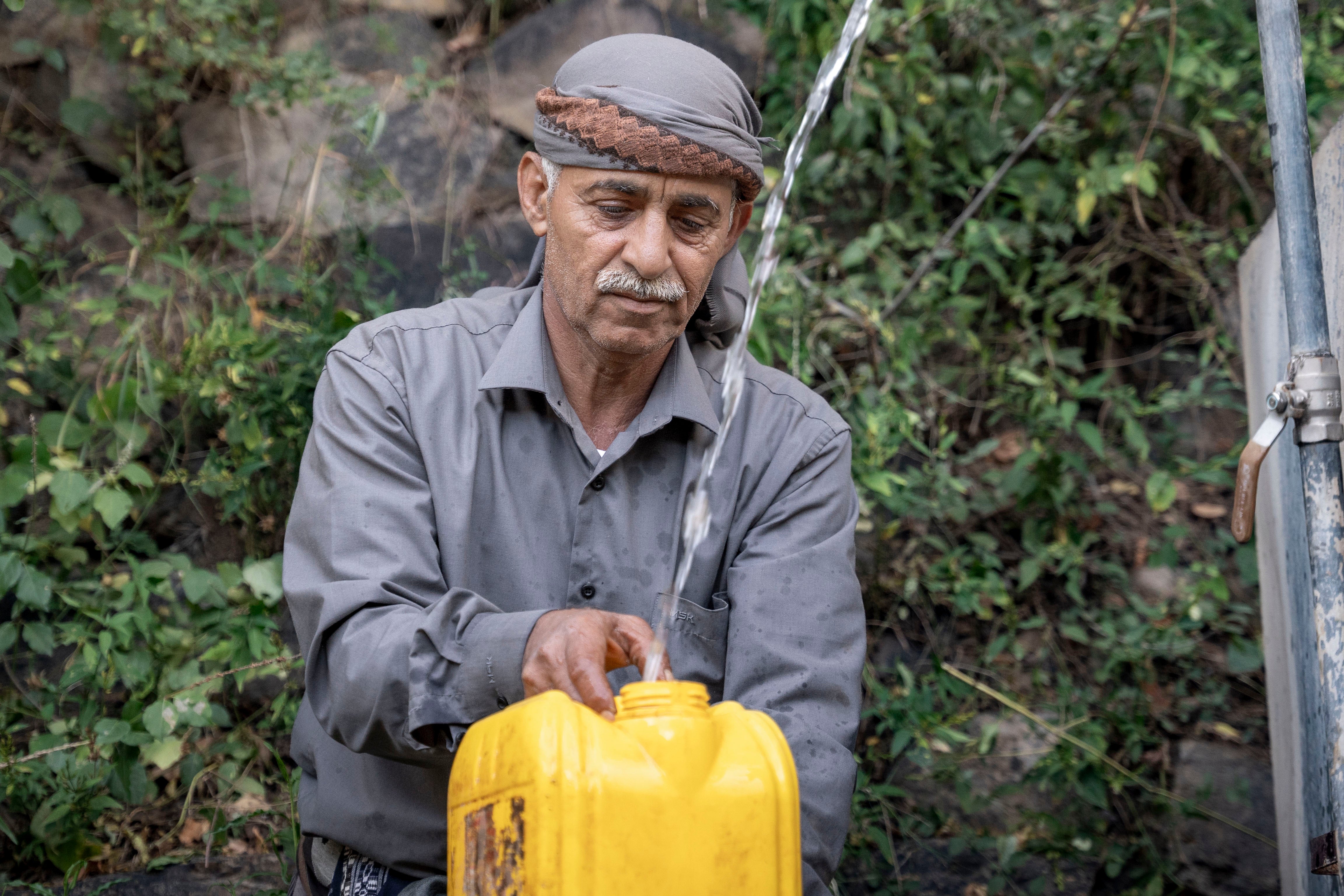
According to Mohammed Hassan, Oxfam’s programme manager in Taiz, the NGO has so far provided greenhouses for 16 farmers, provided capacity-building training to a further 58 farmers, built two dams, and restored numerous water-harvesting tanks. He acknowledges that this might just represent a “small number of beneficiaries”, but the focus has been to support those communities that are hardest to reach.
“It’s short-term funding, but this is long-term investment,” he says. “These people are looking to give their land to their children, so the investment lives on.”
The harsh truth, however, is that Jameel, Ahmed and Mujib are among the lucky ones. Most of Yemen’s millions of smallholder farmers have been left to fend for themselves amid climate- and conflict-driven challenges they did nothing to create.
“Most people in Yemen are just looking for a way to live,” Hassan’s colleague Nada al-Saqaf tells The Independent. “These projects are small in cost, but the impact is huge. Yemen cannot be forgotten from these kinds of interventions.”
This article was produced as part of The Independent’s Rethinking Global Aid project
Join our commenting forum
Join thought-provoking conversations, follow other Independent readers and see their replies
Comments
Bookmark popover
Removed from bookmarks