I am a human performance scientist and these are the best exercises for strength and mobility
Leading strength training expert Dr Andy Galpin shares his formula to decide which exercises will deliver the best results for you
Time is a finite resource. If you’re going to spend it in the gym, chances are you want to optimise your investment by doing the best exercises for your fitness goals; building strength, managing weight, improving mobility or otherwise.
The phrase “best” is subjective in this context – everybody is playing a different hand based on factors such as their goals, genetics and the resources at their disposal. But Dr Andy Galpin, a tenured full professor at Parker University and world-renowned human performance coach, says there is a way to determine which strength training exercises will be most valuable to you.
Rather than recommending specific exercises for all-comers, he says people should: “select exercises that take you through the largest range of motion that is safe for you”.
This means first getting honest with yourself about your current range of motion, what feels comfortable and where your strength level sits; then, applying Dr Galpin’s advice.
 I tried the walking method that offers ‘10 times the benefits’ of walking 10,000 steps per day
 Doctor recommends this simple three-ingredient recipe for supporting gut health and strengthening muscles
 A flexibility expert says these are the three best stretches for fighting tight hips
 I tried ‘the best kettlebell workout’, and it was surprisingly simple yet effective in just 10 minutes
How to perfect your strength and mobility
“If you can get into a great position on the [barbell back] squat, kudos; if you need to move that to a rear foot elevated split squat, great; and if you [are not mobile enough and] need to move that to a leg extension machine, that’s also fine,” he tells me, speaking ahead of Healf’s HX25 wellbeing event.
These three exercises all target the same primary muscle – the quadriceps muscle on the front of the thigh – but each variation requires differing degrees of mobility, stability and skill.
“In all of these exercises, we want to be trying to take the muscle through the largest range of motion we can, while under control,” Galpin explains. An easy way to gauge this is by looking at the change in angle at the main active joint during an exercise – in the case of the example above, this joint is the knee.
Read more: I made a lot of mistakes during my first Hyrox race – here are six things I wish I knew beforehand
People should not include an exercise in their training plans simply due to its reputation, or because its trending on social media. Rather, you should find the variation of an exercise that works for your needs and training experience.
If you cannot perform an exercise pain-free or with good technique, regress it to a similar movement that targets the same muscles while allowing you to move well – for example, swapping a barbell bench press for a hands-elevated press-up. If you can perform an exercise perfectly for plenty of reps, progress it by adding load, adding reps or graduating to a more challenging movement option.
Dr Galpin says this knowledge can be empowering for your training, particularly if you exercise at home. It means that, whatever equipment you have, you can achieve results – so long as you use it to take your muscles through a large, controlled range of motion and perform a number of reps sufficient to challenge your body.
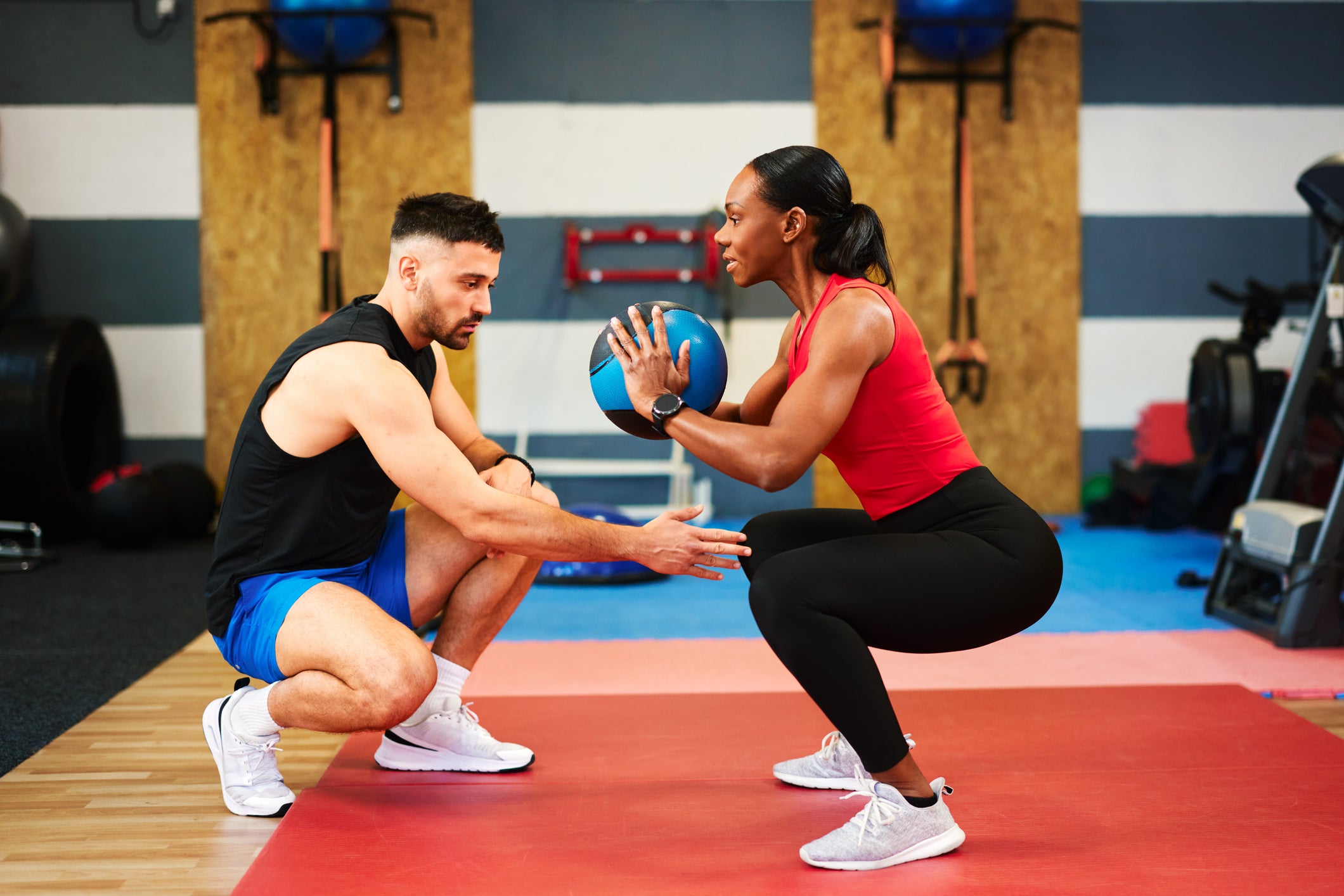
“If you have a giant gym at your disposal, you usually have access to everything,” he says. “But if all you have is a medicine ball, you can still do some goblet squats, some single-leg Romanian deadlifts and some medicine ball slams for a good workout.”
The workout below shows how you can recruit muscles across your entire body using just two dumbbells and four exercises.
The best exercise for improving mobility
Despite its name, strength training’s benefits extend far beyond simply increasing the amount of weight you can move.
“[It can lead to] muscle growth and more range of motion, especially at the end range,” says Dr Galpin. “The more the stretch, the greater the results, and the more likely you are to see connective tissue and joint health improvement, greater strength and better mobility.”
This last point is one most people overlook, he continues, suggesting lifting weights can offer greater mobility benefits than exercises traditionally associated with this attribute, such as stretching.
“This [strength training] is actually the most evidence-based way of improving range of motion, flexibility and mobility, by a large standard,” Dr Galpin adds.
“The best way that we know to improve flexibility and range of motion is to load a stretch position safely. Take your time, progress [the range of motion you use in your lifts] and it will be really effective for that.”
Read more: Swap the gym for this trainer’s six-move kettlebell workout to build full-body strength at home
Join our commenting forum
Join thought-provoking conversations, follow other Independent readers and see their replies
Comments
Bookmark popover
Removed from bookmarks