‘I don’t regret I stopped breastfeeding to take Ozempic. I should have done it sooner’
At the school gates and in so-called ‘sema-mums’ WhatsApp groups, weight-loss injectables during the post-partum period are as common as they are taboo. But, says one new mother – who stopped breastfeeding and started taking Ozempic to get back to her pre-pregnancy weight – the shame has got to stop


I remember standing in the bathroom that October morning in 2023, exhausted, staring at the scale. The number – 88kg, or about 13 stone – hit harder than I expected. I wasn’t shocked, exactly, but I had been avoiding the scale for months. Something about seeing that number in black and white made it feel official: I didn’t look or feel like myself anymore. My maternity clothes were still too tight. My face was fuller, my body unfamiliar. The baby was here, and healthy and I was grateful for that. But I was lost.
I’d been through this cycle before. When I became pregnant with my firstborn, Lewis, in early 2019, I weighed around 65kg, or three stone lighter, which is more or less where I’d always been. At 5ft8, that felt like home: a stable, healthy weight where I had a good relationship with food and with myself.
I was in my early thirties – young enough to “snap back” after pregnancy (or so I thought). Yet, I was more preoccupied with it than I imagined – after his beautiful birth (a low-stress C-section since he was breech), one of the first things I did was get on the scale. Yet I was baffled: how does a baby weighing seven pounds result in a loss of only five, I thought?
Postpartum, I did drop a few more pounds, eventually to around 77kg or 12 stone, but never below that again. Granted, I didn’t diet or exercise particularly aggressively – I’m not built that way – but I stayed stuck. Then, later into my thirties, came Luke, my second son. I stopped looking at the scales midway through.
Regardless of the fact that my body was doing this miraculous thing, despite how overjoyed I felt to have two healthy boys, I couldn’t prevent the wash of shame – and anxiety, disgust, even – that seeing “15 stone” on my record post-birth provoked. I carried guilt along with the extra weight.



Breastfeeding was supposed to be straightforward. According to the thousands – the parenting circles, the health campaigns and comment sections – who religiously repeat the mantra, “breast is best”, and, they’ll add, it burns calories! It’ll help you lose your pregnancy weight! Yet, that’s not exactly a proven theory – and, for so many women, it just doesn’t work. Plus, behind the slogans lies a trap of judgment and internal conflict: women face pressure if they can’t breastfeed and pressure if they do – especially beyond six months, pressure that is linked with increased postpartum anxiety.
The moment that someone stops early, even pain-ridden or supply-stricken mothers, a new wave of judgment from formula-shaming peers, and even loved ones. Couple that shame, then, with the enduring stigma of postpartum weight loss, and with the new judgment du jour – using injectables like Ozempic. Behind closed doors, in hushed voices at the playground, there are plenty of us talking about it both in the US, where I live, and the UK.
In fact, I’ve noticed an increase in women around me using injectables, some to get them back to their pre-pregnancy weight, many of them stopping breastfeeding to do so.
Reportedly, though I’ve never been invited to any myself, there are WhatsApp groups for so-called “sema[glutide]-mums” – and, though I was able to get mine through my own doctor and work benefits in the States, many end up paying through the nose for it themselves. But, in the end, like me, they had to put their own mental health first.
For me, breastfeeding Lewis was agony: I had bleeding nipples, terrifying letdown pain, a baby who fed for ages and still seemed unsatisfied. I alternated between breastfeeding, pumping and formula. When nothing helped, I felt I had failed.
When I switched fully to formula, I felt relief and – you guessed it – more shame. With Luke, I tried again: this time I battled low supply, consulted lactation consultants, fixed his tongue‑tie, used nipple shields – but still, nursing felt like torture.
I couldn’t sleep at night; the obsessive feeding schedule crushed every ounce of mental stability. Two pregnancies and years of disrupted sleep and self-care meant I was stuck. Not just in my body, but in the overwhelming pressure to “snap back”.
The idea that “bouncing back” – re-emerging with their pre-baby bodies weeks after delivery – is only reinforced by media that praises celebrity mums who manage it, and highlights those who retain their postpartum weight as failures. There’s a catch though, as we’re now learning: you might be negligent if you remain overweight – but medicating to lose it? Also, not good enough.
According to most (admittedly) literature and experts, taking Ozempic while breastfeeding is not recommended – while we know the substance transfers to milk, we don’t know the effects that might have on the baby.
I knew that, while some people take it alongside nursing their babies, I wouldn’t have ever taken that risk. So, by October 2023, I had stopped breastfeeding Luke out of sheer discomfort and in an attempt to regain parts of myself I had lost. My energy was gone. My self-esteem teetered at the edge of collapse. Food noise was intolerable – breastfeeding had left me so hungry, and my hormones were all over the place.

I would wake up in the night and eat a whole bag of sweets, or go to McDonald’s and compulsively order 20 chicken McNuggets – it was all so out of character and out of control. I thought that taking my ADHD medication again – from which I’d abstained during breastfeeding – might help me shed a few pounds, but when it didn’t, I went straight to plan B: Ozempic.
I was lucky that I had people around me supporting me, some of whom, like my mother-in-law and a friend, had safely used weight loss injectables themselves. That made the decision seem less shameful.
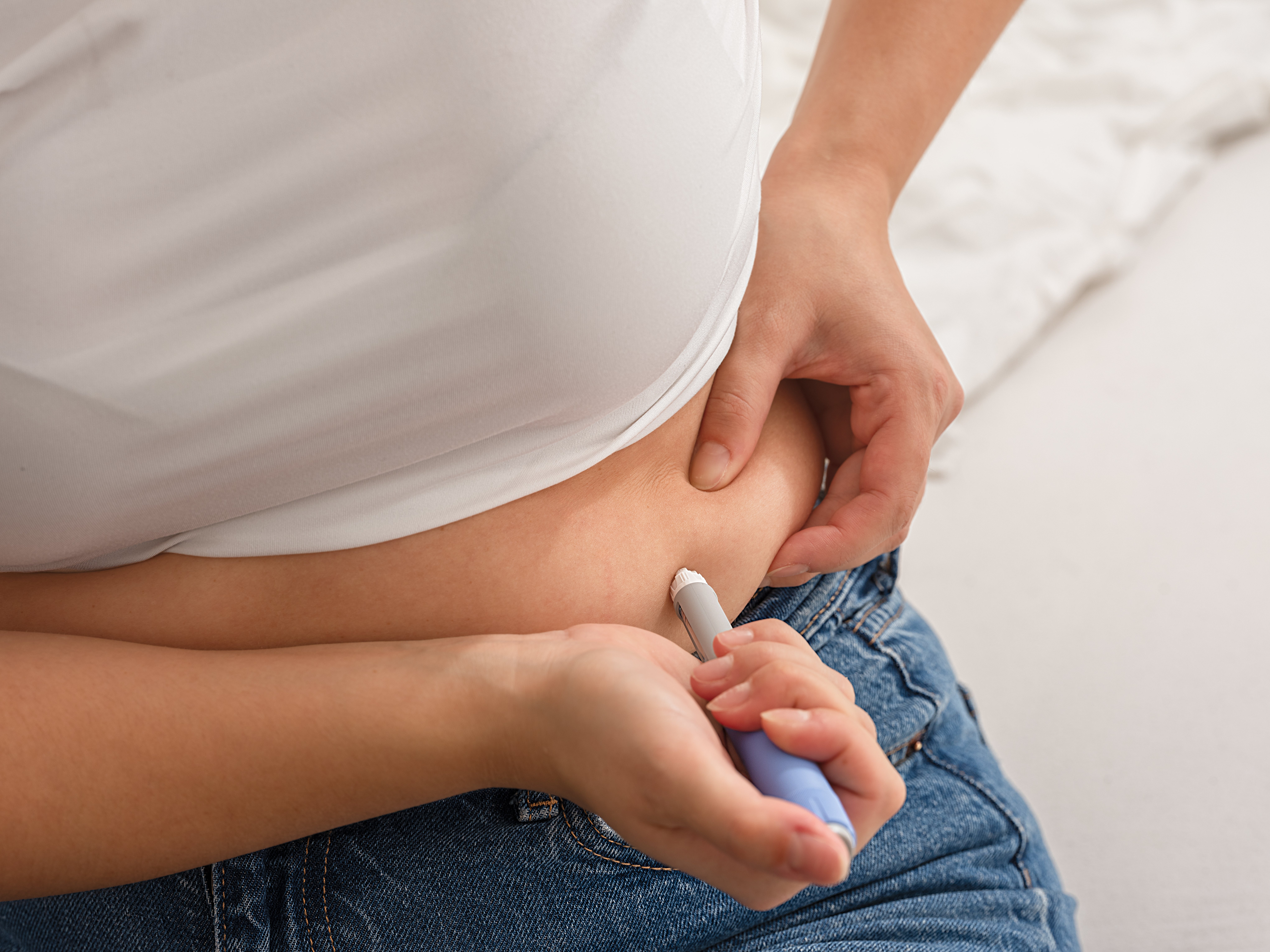
I chose the lowest dose (0.25mg) to begin with, and then doubled it. The shift was magical: within days, food stopped crowding my mind. I wasn’t waking at night to binge. My appetite, finally, felt normal and I wasn’t having destabilising side effects. My son was thriving on formula – finally happy to have more than enough to eat – and within weeks, I was slipping back into my pre-pregnancy clothes.
And the success only continued. By the middle of last year, I was back down to around 10 stone. I’m not skinny – but that was never really my prerogative. More importantly, I felt stable, energetic, and I felt like myself again. I could chase my kids around, feel present and engaged. Ozempic was never laziness or a cop-out – it was medicine that helped me restore a version of myself I’d lost.
Of course, the shame still lingers in some circles. There’s one friend I know I’d never tell (though I wouldn’t lie if she asked). Despite the fact that she’s a nurse, she made very strong comments about being “against” the drugs when I was first going on them (I found it interesting to find out that she took them herself around six months later and lost 10kg). Some friends I’ve never told because they’ve never asked, others think I lost the weight another way, oblivious to the internal struggle I had to wage.
It’s not unusual to be discreet about it – judgment is still rife and, sometimes, you just have to protect your own peace. It’s why the “secret jabbers” (people feeling pressured to hide their Ozempic use) phenomenon is so widespread.
Somehow, it’s seen as a moral failing of sorts to use it over diet or “self-control”. As a result, experts are calling for weight-loss medication to be understood as treating a chronic condition, not as a so-called shortcut.

I believe that women should be able to make their own informed decisions about their own babies and their own bodies. I don’t regret stopping breastfeeding early. I also don’t regret taking Ozempic. These choices helped me reclaim my body and my mental health. They gave me energy, restored my confidence, and let me move freely in my life again.
The more women who hear this without stigma – that whatever choice you make will be best for you and your baby – the more women who hopefully will avoid spiralling in private shame. Maybe someone will feel more at ease skipping another painful feeding session, or feel brave enough to ask their doctor about weight-loss medication without embarrassment.
Ultimately, a cultural shift is needed: less “fat talk”, more celebration of postpartum diversity. Fewer whispers of “just eat less” and more acceptance of body change – especially the radical transformation that pregnancy and birth prompts – as a part of life.
Let’s say that freedom from food noise is worthy. Some women might find healing through treadmill miles, others through letting go of milk and allowing a drug to help them reset. That’s me and I can say, hand on heart, that it’s been nothing short of life-changing for me.
Currently, I weigh around 68kg (10.5 stone). I don’t feel fat. I don’t feel ashamed. I do feel healthy. And I do feel at peace with myself and able to enjoy being a hands-on mum. I’m still trying to find balance – some days I eat better and move my body more than others, but that’s OK. I learned that my worth isn’t tied to the size of my jeans or anyone else’s opinion about that. The only regret I have is not doing it all sooner.
Join our commenting forum
Join thought-provoking conversations, follow other Independent readers and see their replies
Comments
Bookmark popover
Removed from bookmarks