Will taking HRT help with the menopausal dementia risk?
After being diagnosed with breast cancer, Alice Smellie was advised to come off HRT, which had been helping her with the brain fog of menopause. Now that a new study suggests that there is a reduction of grey matter during this time for women, what are the measures women need to take to help prevent dementia?


Is there a definite link between menopause and dementia? A new study suggests that during these hormone-depleted years, women undergo brain changes in the regions affected by Alzheimer’s disease. The authors suggest that this might be one reason why there are almost twice as many cases of dementia in women as men.
I have certainly noticed brain changes; from memory to brain fog to attention span. Aged 53 and firmly post-menopausal, I sometimes struggle to collect my thoughts, fighting through layers of in-head cotton wool to coherently work down my to-do list. Worst of all, because of a 2023 breast cancer diagnosis, I’ve been advised to stop taking HRT. I can’t even clear the mist with a top-up of oestrogen, something I know from experience would help.
The study, published in the journal Psychological Medicine, analysed data from almost 125,000 women, of whom 11,000 had MRI scans. Led by Professor Barbara Sahakian at the University of Cambridge, it showed a reduction in grey matter volume in key brain regions such as those linked to emotional regulation, memory and learning, when comparing pre- and postmenopausal women.
But as with everything to do with menopause, it’s a nuanced picture that’s as grey as our deteriorating brains.
Menopause itself is defined as being 12 months after your last period, and the years leading up to it are perimenopause. Simply put, you run out of eggs, and the oestrogen produced by your ovaries goes down. Oestrogen receptors are found throughout the body, including the brain. There are well-established links between oestrogen and brain function as well as mood changes such as depression and anxiety.
.jpg?quality=75&width=230&crop=3%3A2%2Csmart&auto=webp)


Certainly, cognitive symptoms in menopause, such as memory lapses and poor concentration, can be frightening. I’ve interviewed many women in perimenopause who were worried about early-onset dementia. These symptoms are frequently lumped together as “brain fog”. In the Menopause Mandate 2025 Survey, which had 15,000 respondents, 86 per cent reported experiencing brain fog.
“Brain fog can be very distressing, but it’s not diagnosable,” says Aimee Spector, professor of clinical psychology of ageing at UCL. “Cognitive symptoms are most often referenced in the perimenopause years, and include memory, concentration and attention. People worry that it’s dementia, and brain fog is the symptom most linked to stopping work, but for most women, it settles and improves post-menopause.”
In my early forties, I suffered horribly from brain fog, although I had no idea what it was. I couldn’t concentrate at work, my confidence collapsed, and each day was a battle to meet deadlines. At night, I lay awake worrying that I’d made some catastrophic mistake.
Within a week of starting HRT, aged 46, I was myself again, cheerfully churning out deadlines inbetween school runs. My brain smugly cushioned by oestrogen, I swore I’d stay on it forever, especially as I then co-wrote a book about the subject with broadcaster and campaigner Mariella Frostrup – Cracking the Menopause.
Then, just after my 50th birthday, I had my first mammogram, followed by a recall, a biopsy, a diagnosis, a lumpectomy and then chemo and radiotherapy. 2023 was a terrible year. Because my cancer was triple negative, meaning that it’s not hormonal, I was “allowed” to stay on HRT during treatment. Afterwards, I was advised to stop.
There is little support for menopause after cancer. As my then oncologist said, “I don’t know why you want those fake hormones. Why don’t you just go for a run?” – thus consolidating all rubbish approaches to the cancer/menopause experience ever.

My biggest fear was that without the protective effects of oestrogen, I was at higher risk of other conditions; osteoporosis, cardiovascular disease and – most frightening of all – Alzheimer’s. There was interest in the idea that starting HRT early offered protection against dementia, and I knew many women made the personal choice that it was an intelligent preventative measure (not recommended by official bodies, by the way).
Reassuringly for those of us who aren’t on HRT, the new study suggests that it doesn’t appear to prevent this grey matter loss. “HRT does play a role in slowing psychomotor speed,” says study co-author Christelle Langley. This is basically reaction time, and I have very much noticed it. You wouldn’t necessarily want to be on my pub quiz team.
“This suggests that HRT may help to slow age-related declines in response speed,” says Langley, who adds that the data points to a potential role for HRT in mitigating aspects of cognitive ageing.
And yet, “Brains naturally decline decade by decade, so we’d expect them to look different in older women,” says Prof Spector. In December 2025, she published a meta-analysis in The Lancet Healthy Longevity, showing no significant association between HRT and dementia risk or benefit.
As both studies concluded, more research is needed into the subject. I’d add that I’ve not ruled out going back on HRT in the future, and it’s a discussion that I’ve had with my current – lovely – oncologist.
Women who experience premature menopause before the age of 40 do have a higher risk of dementia, and HRT until the age of natural menopause is recommended. This is extremely hard for younger women who’ve had hormonal cancers and are unlikely to be offered it.
Dani Binnington, the brilliant founder of the support organisation Menopause and Cancer, frequently advises women in this position. “I always recommend not pinning hopes on one strategy, but looking for lots of solutions – sleep, stress, nutrition and exercise.” She says that very few women go back on HRT because of dementia prevention alone. “It’s usually for immediate symptoms as well as long-term health.” Most importantly, she says, there needs to be support. I second that.
Thankfully, there is plenty we can do to support brain function. “There are a number of evidence-based healthy lifestyle habits that help to reduce our risk of dementia and may mitigate these menopause-related changes in brain health,” says Langley.
Strength training – ideally at least twice a week – significantly benefits brain health and cognitive function. Reducing alcohol (no real surprises here) is a good idea. Alcohol damages blood vessels and destroys brain cells. A diet that I’ve written about and attempt to follow is known as the MIND diet, which has a focus on fruit, vegetables, nuts, seeds, whole grains, lean protein and olive oil.
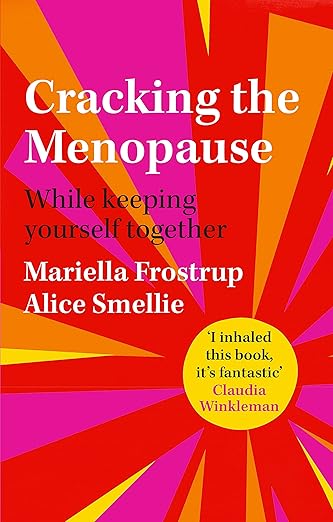
I still love Kit-Kats and Creme Eggs, but I eat at least 30 different fruits and veg a week to support my gut microbiome – research increasingly suggests a link between gut bacteria and dementia. And I drink champagne, but less than previously. Reading-wise, I’ve found great tips in Menolicious by Mariella Frostrup and Belles Berry, and The Feel Good Fix by Lavina Mehta.
I’ve been aware of these lifestyle elements for years without particularly adhering to them, but I can now testify that they make a tangible difference to mood and memory.
The study may suggest a link between menopausal brain changes and dementia, but what I’ve learned in the last couple of years is to see this time of life as one that contains choices. I may not be using HRT (for the moment), but I hope I’ve made other positive decisions that diminish my dementia risk.
Don’t forget there’s also a recent study suggesting that women’s brains don’t hit their prime until they’re in their late fifties. Menopause or not, I’m here for that!
Join our commenting forum
Join thought-provoking conversations, follow other Independent readers and see their replies
Comments
Bookmark popover
Removed from bookmarks