Smart Export Guarantee: how it works, rates and what solar households can earn
Find out how the Smart Export Guarantee (SEG) works, who qualifies, and what rates you can realistically earn
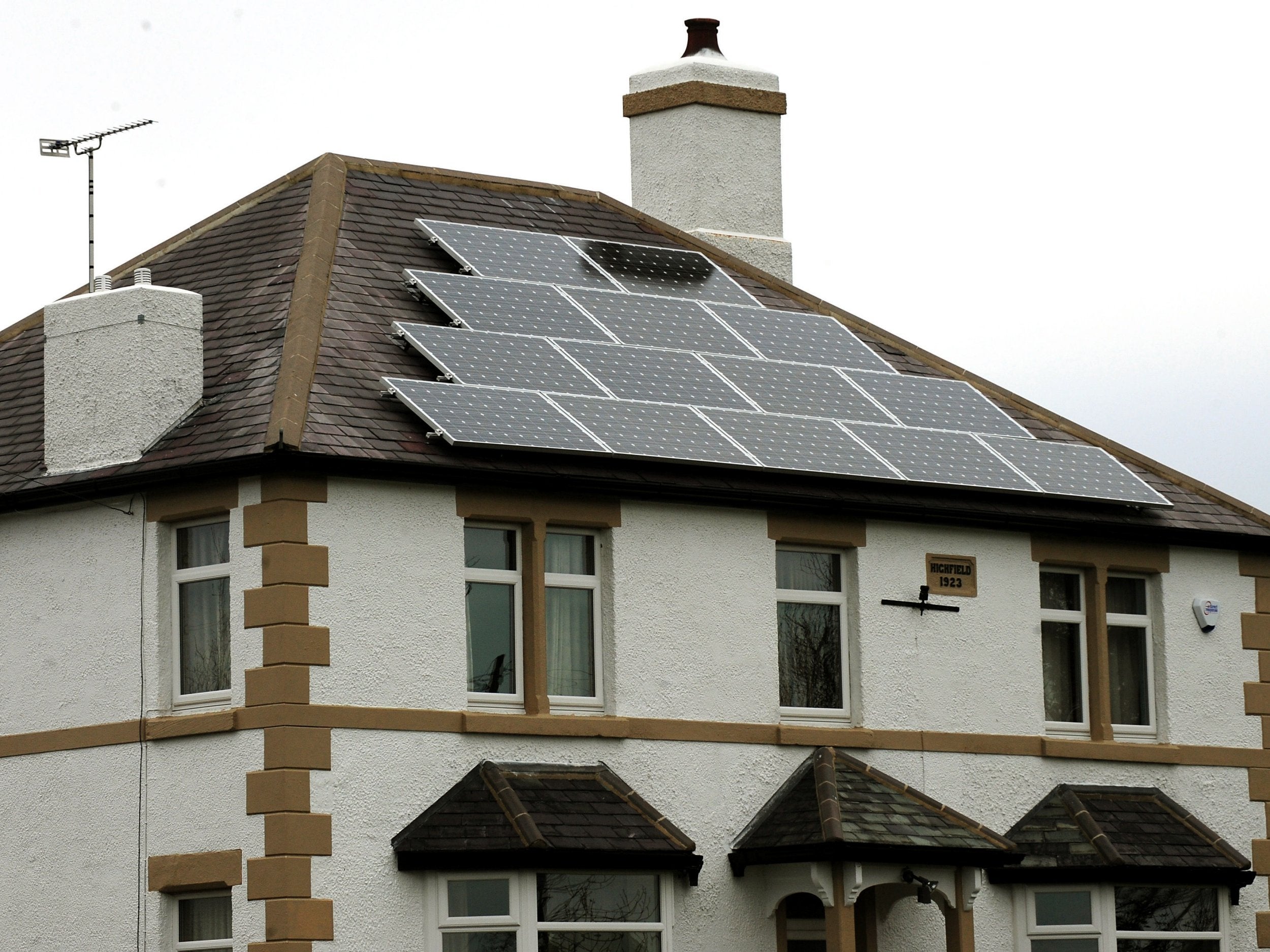
As more homes install solar panels to cut their energy bills and reduce their reliance on the grid, a growing number are generating more electricity than they use, particularly during brighter months. The Smart Export Guarantee (SEG) is the mechanism that allows households to be paid for that surplus. Introduced to replace the government’s Feed‑in Tariff, the SEG offers export‑only payments based on market rates set by individual suppliers.
For homeowners researching the cost of solar panels or comparing the best solar panels on the market, the SEG is an important part of understanding the financial return from a new installation. Export payments won’t determine the entire economics of a system, but they do form one of the key factors people consider when asking: are solar panels worth it? Combined with bill savings and the long-term fall in installation costs, the SEG helps strengthen the overall case for investing in solar.
Unlike the Feed‑in Tariff, the SEG doesn’t guarantee a fixed price for exported energy, and tariff rates vary widely across the market. But for most households, SEG payments offer a straightforward way to boost the financial return on their solar investment.
What is the Smart Export Guarantee?
Launched in January 2020, the Smart Export Guarantee is a government‑backed scheme requiring medium and large energy suppliers to pay households for the renewable electricity they export to the grid. Ofgem regulates the scheme, but suppliers set their own tariff rates.
Crucially, the SEG pays only for exported electricity. There is no generation tariff, as there was under the Feed‑in Tariff. Instead, customers are paid per kilowatt-hour (kWh) of surplus energy that their property sends back to the grid via a smart meter.
Who is eligible?
To receive SEG payments, households must meet several technical and regulatory requirements designed to ensure that exported electricity is safe, measurable, and genuinely renewable.
In addition to the core criteria already outlined, homeowners should also be aware of the following considerations:
- The installation must meet MCS standards, not only for panels but also for inverters. If any component is uncertified, suppliers can reject the application.
- DNO approval can take time. For most domestic solar systems under 3.68kW per phase, approval is usually retrospective (G98). Larger systems require prior approval (G99), which can take several weeks.
- Smart meter type matters. Some early-generation SMETS1 meters may not provide export readings reliably unless they’ve been migrated to the national network. If your meter cannot measure exports accurately, you will need an upgrade.
- You can apply for SEG even if you previously received the Feed‑in Tariff. However, only installations that do not receive the FiT export payment are eligible – you cannot receive both.
These requirements mean your documentation must be complete before applying. Missing or unclear MCS certificates are among the most common reasons for delayed approval.


To qualify for the SEG, you must meet the following requirements:
- Have an MCS‑certified solar panel installation (or equivalent certification)
- Have a smart meter capable of half-hourly export readings
- Have your system connected and approved by your local Distribution Network Operator (DNO)
- Generate power from an eligible renewable technology (solar PV, hydro, wind, anaerobic digestion, or micro‑CHP)
You do not need to buy your electricity from the same supplier that pays for your exports. Many households choose their SEG provider and electricity supplier separately to maximise overall value.
How SEG tariffs work
SEG tariffs are designed to be flexible, market‑driven products, which means different suppliers can – and often do – take very different approaches to pricing and contract design.
Beyond the basic distinction between fixed and variable tariffs, several additional factors influence how SEG payments work:
- Tariff competitiveness varies widely. Suppliers are only required to offer a rate above zero, so some offer very low-baseline tariffs while others use SEG as a tool to attract or retain customers.
- Premium rates often come with conditions. Many of the highest-paying SEG tariffs require customers to buy their electricity from the same supplier, while lower-rate ‘open’ tariffs are available to anyone.
- Half-hourly metering is essential. Suppliers use these readings to calculate export payments precisely. Some may estimate temporarily if there are meter issues, but this can delay payouts.
- Contract terms are generally flexible. Most SEG tariffs have no exit fees, allowing households to switch providers easily. Tariff rates, however, can change with relatively short notice.
- Variable tariffs can track wholesale prices. Although less common, these tariffs may perform better during periods of high grid demand – but can drop sharply at other times.
This market-led structure is meant to foster competition, although in practice it results in significant variation, making regular comparison a key strategy for maximising earnings. SEG tariffs fall broadly into two categories: fixed and variable.
- Fixed tariffs pay a flat rate per kWh exported, regardless of time of day
- Variable tariffs adjust prices depending on wholesale market conditions, though these remain less common
Suppliers must pay above zero, but there is no minimum rate, and tariffs can change over time. Some suppliers offer higher export rates only to customers who also use them for electricity supply.
Export payments are typically made quarterly, and you’re free to switch SEG providers if you find a better rate.
SEG rates: what suppliers currently pay
Smart Export Guarantee rates change frequently, and suppliers are not required to offer competitive prices. Some suppliers pay as low as 1p/kWh, while others offer significantly more at around 15p/kWh. A handful of tariffs at these higher rates sit at the premium end of the market but often come with the condition that you also switch your electricity supply to that provider.
Because Smart Export Guarantee rates fluctuate, it’s important to check the latest tariff tables before applying. Households should also compare payment terms, contract conditions, and any customer‑only restrictions.
How much can you earn from the SEG?
How much you earn depends heavily on your household’s energy profile. While system size and tariff rate matter, the biggest factor is often self-consumption, or the proportion of solar energy you use yourself before anything is exported.
Key variables that influence SEG income
- System size and orientation: south-facing installations tend to export more; systems tilted between 30 to 40-degree angles typically perform best
- Daytime occupancy: homes that are empty during the day tend to export significantly more than those with high daytime usage
- Seasonal patterns: summer exports can be three to five times higher than winter levels
- Tariff structure: a difference of even a few pence per kWh can meaningfully change annual earnings
How to estimate your household’s export potential
Most homes export between 30 per cent and 60 per cent of their solar generation unless they have a battery. For a typical 3.5–4kW system, that often translates to roughly 1,200–2,000kWh exported each year.
Once you estimate your export volume, multiply it by the tariff rate:
- At 2p/kWh, annual SEG earnings may be £24–£40
- At 6p/kWh, this rises to £72–£120
- At 15p/kWh (premium tariff with conditions), earnings could reach £180–£300+
Why SEG earnings shouldn’t be viewed in isolation
Even though SEG payments are helpful, the majority of solar savings come from offsetting grid electricity, which is typically far more expensive than the SEG rate. Export income should therefore be considered the bonus that improves overall system payback rather than the main financial driver.
For households focused on return on investment, a balanced approach, maximising self-consumption while securing a fair export tariff — usually produces the best results. Earnings vary depending on several factors:
- System size: larger arrays generate more surplus electricity
- Self‑consumption: the more energy you use during the day, the less you’ll export
- Location and seasonality: summer exports are far higher than winter
- Tariff rate: supplier rates range dramatically
Example earnings calculation
A typical 4kW solar system might generate around 3,400kWh per year. If a household uses around half of that energy in real time and exports the remaining 1,700kWh, then:
- At 3p/kWh, SEG income would be around £51 per year
- At 10p/kWh, this would rise to £170 per year
For most households, SEG income doesn’t make up the bulk of the financial benefit – bill savings do – but it provides a useful additional return and shortens the payback period for solar.
How to apply for the Smart Export Guarantee
Applying for the SEG typically involves the following steps:
- Choose a tariff. Review supplier rates and decide which export tariff suits you
- Gather documentation. This usually includes your MCS certificate, DNO approval, and details of your installation
- Ensure you have a compatible smart meter. Your supplier needs half‑hourly export data
- Submit your application. Suppliers will verify your documentation and activate your export payments
Approval times vary, but most applications are processed within a few weeks. Payments usually start from the date your application is accepted, not the date your panels were installed.
SEG and solar batteries: how storage affects payments
If you have a solar battery, SEG payments still apply, provided the exported electricity is generated renewably. Some suppliers require you to declare your storage setup to ensure that no energy imported from the grid is re-exported for profit.
Batteries can reduce your SEG earnings by storing energy you might otherwise export. However, they typically improve your overall savings by increasing your self‑consumption rate, which usually benefits your household more than exporting at a low tariff.
Tips for maximising your export earnings
- Compare SEG tariffs regularly, as rates can change or be withdrawn
- Check whether premium tariffs require you to switch electricity suppliers
- Ensure your smart meter is correctly configured to measure exports
- If maximising export earnings is your goal, reduce daytime consumption so that more solar energy flows back to the grid
- If prioritising bill savings instead, use appliances during peak‑generation hours or consider adding battery storage
Pros and cons of the Smart Export Guarantee
Pros
- Provides a direct financial return for surplus solar energy
- Encourages wider adoption of renewable technology
- Flexible – you can switch tariffs or suppliers
- Market competition can lead to higher rates
Cons
- Rates can be low and vary widely
- No generation tariff, unlike the Feed‑in Tariff scheme
- Income can fluctuate across seasons
- Requires a smart meter, which can delay applications
SEG vs other ways to save or earn with solar panels
While SEG offers a simple route to earn money from exports, it’s only part of the broader economic picture. Most households save far more by using their solar energy directly. Combining solar with a battery, going for time‑of‑use tariffs, or shifting appliance use into daylight hours all help reduce reliance on grid electricity and can offer better returns than export payments alone.
Join our commenting forum
Join thought-provoking conversations, follow other Independent readers and see their replies
Comments
Bookmark popover
Removed from bookmarks