The Independent's journalism is supported by our readers. If you submit a form or click links to other sites on this page, we will earn commission.
Best solar panel installers UK: Top-rated fitters of 2025
We compare warranty lengths, pricing, customer satisfaction and regional coverage to reveal which UK solar installers offer the best value

If you’re ready to install solar panels and start generating cheaper, cleaner electricity, the next challenge is choosing a trustworthy installer. With roughly 4,000 solar companies now operating across the UK, narrowing down which offer the strongest mix of value, workmanship and support can feel overwhelming.
As you compare providers, you’ll inevitably be asking are solar panels worth it for your home, while also looking closely at the cost of solar panels, the warranties on offer and the level of aftercare you can expect. A reputable installer should be able to recommend and fit the best solar panels for your property, outline your expected savings in plain terms, and explain whether you qualify for any solar panel grants or incentives.
Because many companies only serve certain regions or specialise in particular brands, your realistic shortlist may be smaller than it appears. In this guide, we review warranty lengths, pricing, customer satisfaction and regional reach to identify installers that deliver the strongest blend of quality and value. Glow Green remains our top pick, recognised for its 14-year track record and competitive pricing, but we also highlight other standout options depending on your priorities — from broader panel choices to market-leading long-term guarantees.
Get a quote for solar panels on your home
Whatever your budget, there are a range of companies in the UK supplying solar panels and services to suit all homes and needs.
Our choices are certified by either MCS, the Flexible Energy Oversight Registration Body (Flexi-Orb), or both.
Finding a fitter with one of these certifications is important, as it ensures that they have the know-how to fit the panels and other electrical equipment – some of it high voltage – safely.
The law does not require fitters to have these certifications, but they do give customers some comfort that fitters know what they are doing.
Best solar panel installation companies at a glance
Fitter | Price per installed kilowatt on a standard house | With a battery pack | Guarantee length | Area covered | Typical time from inquiry to installation | Founded | Best for | |||
Glow Green | £795 to £1,195 | £945 to £2,295 with 5kw battery | 5 years, insurance-backed | All of Great Britain | 87 days | 2011 | Price – no cost overruns and a long track record | |||
| On average, £1250 | Around £1800 | 2 years of HIES-backed installation and workmanship warranty | From Brighton to Edinburgh | 4-5 weeks |
|
| |||
Soly | £969 | £1,402 | 10 years | Great Britain; NI planned | 76 days | 2023 | Long guarantee | |||
Wickes Solar | £1,200 | £1,657 | 2 years | Britain | 50 days | 2021 | Fast turnaround | |||
Heatable | £900 - £1000 | £1400-£1500 | 2 years workmanship warranty | Mainland England, Scotland & Wales | 2-3 weeks from network operator approval | 2017 | Access to high-quality REA Fusion2 panels and a quick turnaround, top customer satisfaction score | |||
Sunsave | £95/month including all equipment, fitting, insurance, downtime cover | Battery included | 20 years all-inclusive | England and Wales | 6-8 weeks now, but aiming for 3-4 weeks | 2022 | Bigger households that want to borrow to get solar and plan on staying put for a while |
Best overall: Glow Green

- Price per installed kilowatt on a standard house: £795 to £1,195
- With a battery pack: £945 to £2,295 with 5kw battery
- Guarantee length: 5 years, insurance-backed
- Area covered: All of Great Britain
- Typical time from inquiry to installation: 87 days
- Founded: 2011
Glow Green as a company has been around for the joint-longest in our list and offers a fixed cost guarantee, which will appeal to many buyers looking to keep to a budget.
It’s also one of the cheapest options on the market.
As well as being affordable, Glow Green has access to high-power 500w panels from the Chinese firm Perlight, whereas most competitor panels push out 400-450 watts.
These are a good option if your roof space is limited, as you will get maximum output for the area that you have. Panels are one of the cheaper parts of a solar installation - most money goes on scaffolding and labour costs.
Perlight panels also offer a 30-year guarantee, the longest we have seen in the UK, which may provide some comfort for those who don’t want to have to rent scaffolding again for a while.
Perlight panels boast high-pressure resistance, meaning they should be able to weather the bumps, bangs and weather that 30 years on a roof will throw at them.
Glow Green will also fit DMEGC Infinity panels, which topped our best solar panels roundup.


DMEGC is considered a tier-1 manufacturer, an industry term for the biggest and longest-running solar panel makers, which have solid financial strength. The status is not a be-all and end-all for solar panel buyers. Still, it does indicate that a company has a good chance of honouring its guarantees and that its manufacturing processes are solid, which is useful bearing in mind how long the panels need to last.
The DMEGC Infinity solar panel provides a good compromise between power output, long warranty and decent power longevity, offering more than 87 per cent of its box-fresh output after 30 years.
Glow Green can fit heat pumps, EV chargers, boilers and air conditioning units.
The company is also a Tesla Premium certified installer and a Duracell platinum partner for battery fittings.
This means choosing them affords some choice when it comes to panels, batteries and other gear.
Choosing to get a heat pump, perhaps using the government’s solar panel grant scheme to save money, whilst getting solar panels and other green goods at the same time, could be a way to negotiate a better deal.
We went along to watch a Glow Green installation, so we can attest to the quality of the company’s work.
Pros:
- Long guarantee
- Fixed costs
- Established firm
- Plenty of product choice
Cons:
- Some mixed reviews
Read our full Glow Green solar review.
Top customer satisfaction score: Solar4Good
.jpeg)
- Price per installed kilowatt on a standard house: On average, £1250
- With a battery pack: Around £1800
- Guarantee length: Two years of HIES-backed installation and workmanship warranty
- Area covered: From Brighton to Edinburgh
- Typical time from inquiry to installation: 4-5 weeks
- Founded: 2021
Solar4Good is a family-run business set up in 2021, but drawing on its founders' 15 years of solar industry experience.
Like most on the list, the company is MCS certified. MCS sets standards for low carbon products like solar panels, heat pumps and battery storage and companies which fit them.
Solar4Good has HIES Membership, NAPIT Registration & Trustmark Endorsement.
It also has the joint-highest online customer review score.
The company’s website is easy to use and has a comprehensive section answering many questions for potential customers.
Reviewers say the firm’s aftercare is particularly good.
The firm also has plenty of offices dotted around the country, including Birmingham, Manchester, Exeter, Glasgow and Leicester, as well as its headquarters in Harrow.
As with other fitters we have reviewed, the firm also fits EV chargers and battery storage which can help you make even more of your investment in solar panels.
Solar batteries are great for homes that use a lot of electric power such as through electric car charging, a heat pump or lots of activity during the day.
You can use them as a sort of time machine, to store sunlight power and use it at night.
Just be careful if you are a light user of power, since they are still quite expensive and you may be better off selling your unused electricity to the grid during the day and simply buying it back later.
If you run a business and want solar panels – a great option if you have your own premises such as a factory or warehouse – then Solar4Good can quote for these installations, too.
Pros:
- Excellent online review score with very few 1-star reviews
Cons:
- Doesn’t cover above Edinburgh
- Other companies have longer guarantees
Read our full Solar4Good review.
Best for selling your electricity back to the grid: Ovo

- Price per installed kilowatt on a standard house: £523-1238 from 4 to 12 panels
- With a battery pack: £676 to £1547 from 4-12 panels
- Guarantee length: 10 years
- Area covered: 70% of UK postcodes
- Typical time from inquiry to installation: from 4 weeks
- Founded: 2023
You may know the name Ovo as an energy company, which has been supplying homes with electricity and gas since 2009.
It started as a minnow and then in 2020 it bought the retail arm of energy giant SSE (formerly Scottish and Southern Energy) to become the UK’s fourth-biggest supplier, according to Uswitch.
It’s our top pick for selling energy back to the grid because of its generous 20 pence per kilowatt hour rate.
This is the best rate for exporting energy from your solar panels that we know of, but you need to have your panels and solar battery installed by Ovo and have your energy supplied by the firm to get it. If you choose not to have a battery fitted, you can still bag 15 pence per unit, a good deal.
This perk is of best value for those who are out during the day and won’t make best use of the electricity they generate from their panels, and also those with big arrays of, say, 7kw or more, since they will have plenty of power to sell even if they have a battery.
Smaller arrays, families who use their power mainly during the day, and those who can use excess power to charge an electric car during the day will benefit less.
As for the install itself, the company’s prices are generally in line with the competition. The more panels you can fit, the cheaper the work per unit of electricity. That’s because the panels themselves are a comparatively small part of the overall costs, with labour, scaffolding hire, and other electronic kit making up the bulk of the cost.
The lesson is, fit more panels if you can. Ovo says it will fit systems from four panels, but we think any fewer than eight will start to make the cost-effectiveness difficult to justify. It is worth doing your own sums, however.
Pros:
- Very good 20 pence per kilowatt hour export rate for selling your energy if you stick with Ovo for installation and electricity supply. Top export price is a great deal, especially if you have a big roof
Cons:
- Still a relatively new solar offering, so long-term customer feedback on system performance and support is limited
Read our full Ovo review here.
Best for a one-stop shop for fitting, generating and selling electricity: Octopus

- Price per installed kilowatt on a standard house: £1,500 for 12 panels
- With a battery pack: £1,658
- Guarantee length: 2 year HIES backed guarantee and 5 year Octopus workmanship warranty
- Area covered: England and Wales
- Typical time from inquiry to installation: 2-3 months
- Founded: 2022
Octopus has had something of a meteoric rise in recent years, one which was given a boost in 2023 when it bought Shell Energy.
It started selling solar systems to households in 2022. The wider energy firm was founded in 2015 by asset manager Octopus Group, which dates back to 2000. As well as operating in the UK, it has energy businesses in France, Germany, Italy, Spain, Australia, Japan, and the US.
The firm is our top pick for those who want one firm to deal with for all their energy needs. Octopus can fit your panels, buy your excess solar power for up to 15 pence per unit on a flat tariff, charge your electric car, fit your heat pump and sell you gas and electricity.
This sort of arrangement will be attractive to enthusiasts for clean energy who don’t want lots of different companies to deal with if they need something.
For the biggest installations, that export power price could be a boon. While 25 pence per unit is possible, that sort of price can be short-lived or based on your using a particular fitter for your panels. With lower export prices, the time it takes to recoup your investment will be longer and you will be fattening your energy provider’s bottom line by offering it cheap electricity.
For solar fitting, Octopus uses JA Solar solar panels at £177 a panel. They deliver up to 450 watts apiece. It carries batteries by Fox ESS, Enphase and Tesla.
Octopus also has a cheap overnight tariff, which can be used to top up your battery for use during the day. This could be particularly useful in winter if you have a smaller array, when solar power might not offer enough for your needs.
The company offers a 2-year HIES-backed guarantee and 5-year Octopus workmanship warranty. The panels themselves will have a 25-year warranty and Octopus covers England and Wales. The firm can have panels on your roof two to three months after your initial inquiry.
Pros:
- One supplier for energy, panels and other supplies
- Which? Recommended energy supplier eight years in a row
Cons:
- There are cheaper fitters
- Limited solar panel choice, although many models can be very similar
Read our full Octopus solar panels review.
Best for long guarantee: Soly
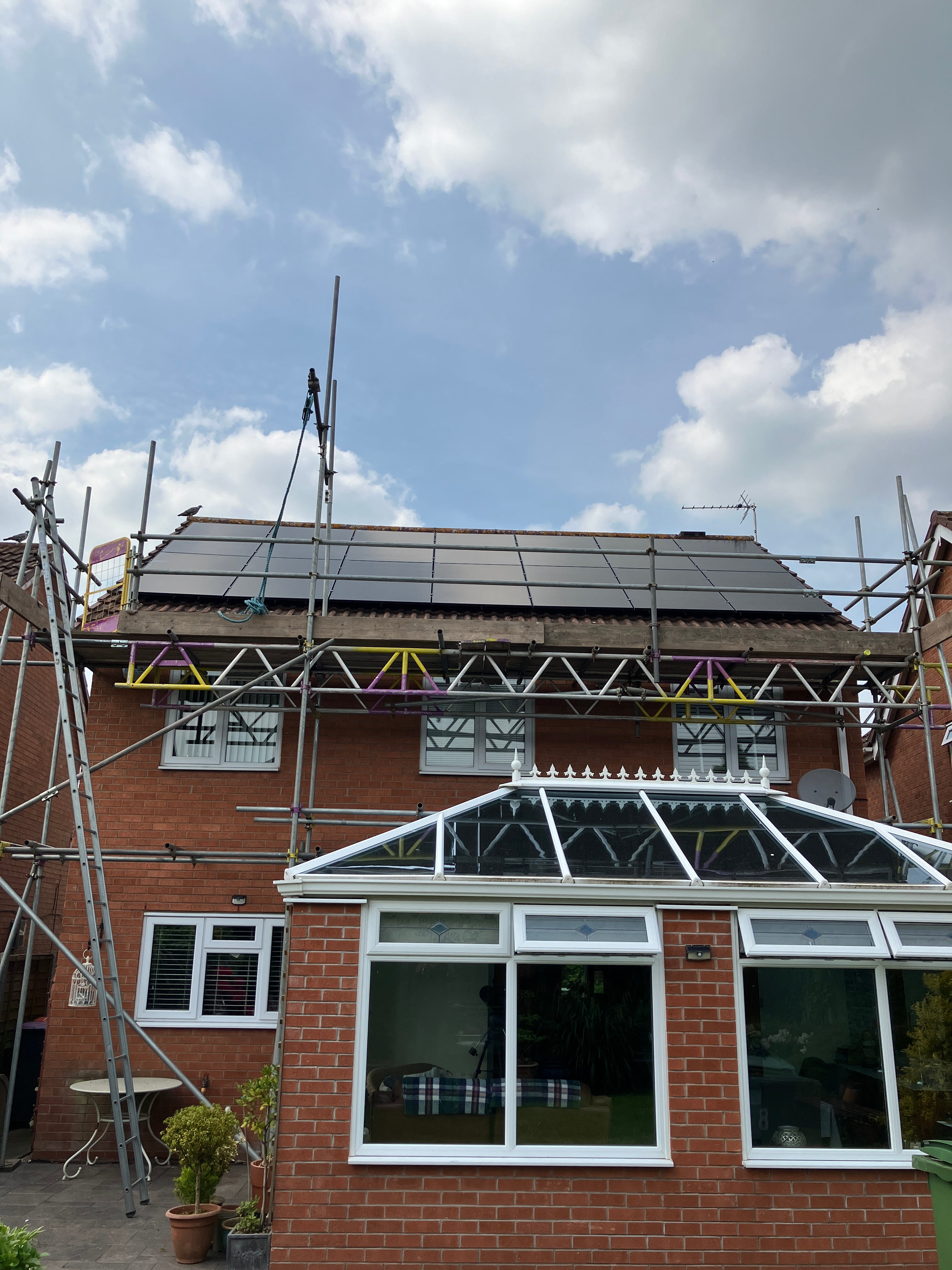
- Price per installed kilowatt on a standard house: £969
- With a battery pack: £1,402
- Guarantee length: 10 years for work done
- Area covered: Britain, with Northern Ireland coverage planned
- Typical time from inquiry to installation: 76 days
- Founded: 2021, but earlier in the Netherlands
Soly may seem like a new kid on the block, having set up in the UK in September 2023, but it has been going for more than 10 years, founded in the Netherlands in 2013 by brothers Patrick and Milan van der Meulen.
It operates in South Africa, Belgium, Germany and Italy as well as the UK and it has installed more than 35,000 solar systems, offering both residential setups and commercial installations.
In the UK, it operates across Britain with plans to expand into Northern Ireland soon.
The firm favours Aiko Neostar 460-watt models as the best value for money because of their high power output for the space allowed, a typical demand for home installations where space is limited. The average installation is 12 panels, said Josh Jones, who is head of sales at the firm.
Its biggest selling point is probably its 10-year workmanship guarantee, which is a lot longer than the 1-2 years many competitors offer.
Granted, most problems with an installation will probably crop up early on if there are any, but some customers shelling out thousands of pounds are likely to see value in a longer guarantee.
As with other firms, installation is typically done within a day, and can be completed just over two months from initial inquiry and 56 days from order to installation.
Soly is MCS certified, part of TrustMark and a Which Trusted Trader.
As for why customers should choose the firm, Mr Jones said: “Really because of the fact that we're so well established as a European brand, we're able to offer fantastic discounts to our customers. We also have our Soly brain. Soly brain is our own product that we use. It's a HEM system, home energy management, and it will come free as standard at this point in time for all of our customers.”
Pros:
- Excellent guarantee
Cons:
- Fairly short UK track record so far
Read our full Soly solar review.
Best for fast turnaround: Solar Fast
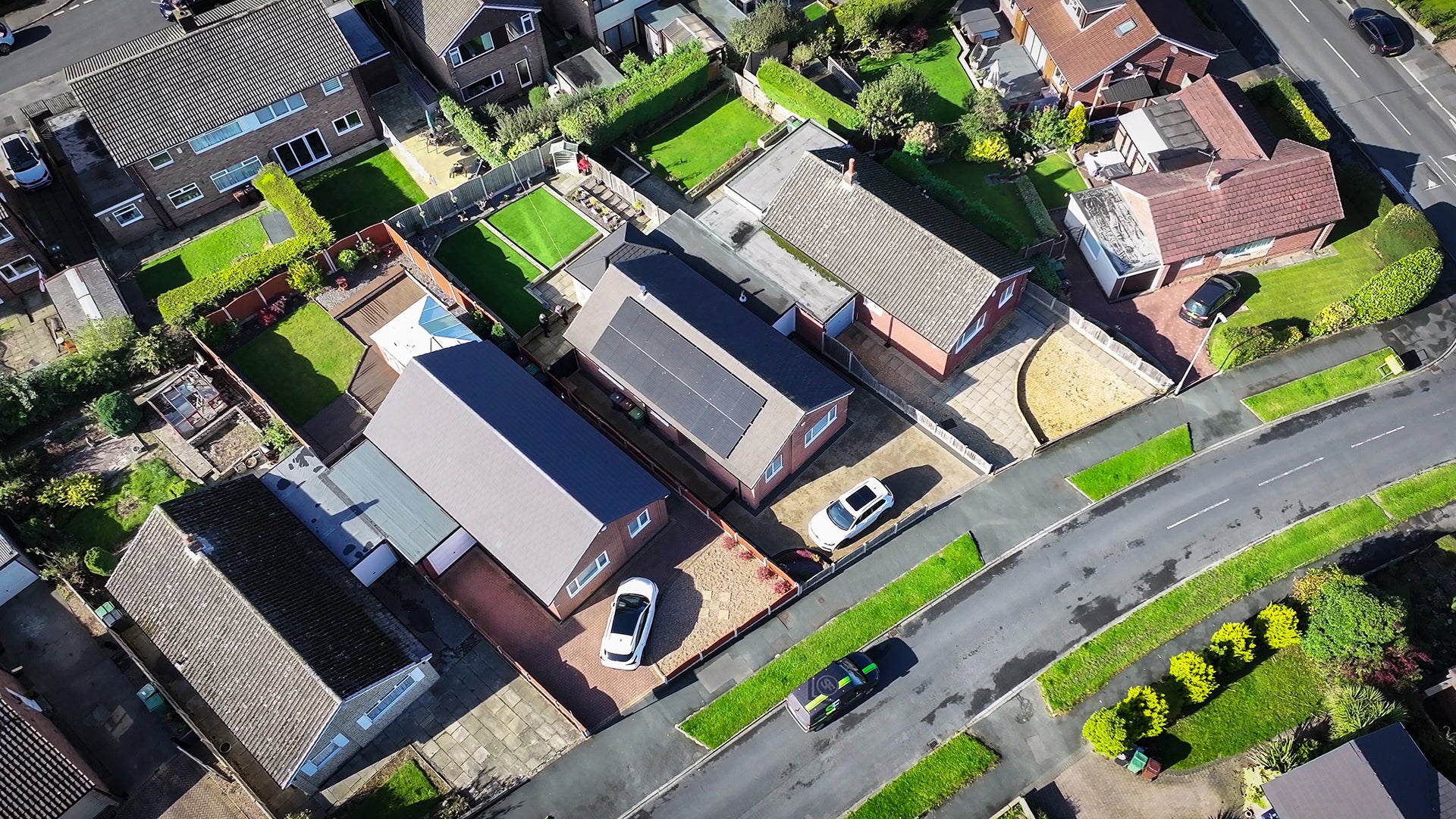
- Price per installed kilowatt on a standard house: £1,200
- With a battery pack: £1,657
- Guarantee length: 2 years
- Area covered: Britain
- Typical time from inquiry to installation: under two weeks
- Founded: 2021
Previously known as Solar Fast, the company now has a new owner in Wickes, the second-biggest DIY brand in the UK behind B&Q. Solar Fast now works under the Wickes Solar brand and promises quick solar installations to homeowners across the UK.
The company says it can get to your home and install a solar system within 50 days of your initial inquiry, so long as you are available for things like surveys.
As a guide, the company says you can get 12 solar panels and a battery fully installed for £8,950. This includes 12 DMEGC 450W panels, a Duracell 3.6kW hybrid inverter, a Duracell 5.12 kWh battery, and installation on a domestic property with single scaffolding for a 2-storey building. But it is also a good idea to negotiate any offers by collecting a few quotes and haggling.
As well as panels, the company will also sell you EV chargers and it offers to fit solar systems for businesses. In common with many firms it also offers financing options, although personal loans from banks are likely to be cheaper.
Pros:
- Fast turnaround
- National coverage
Cons:
- Price
Read our full Wickes Solar review.
Best for high-end panels: Heatable
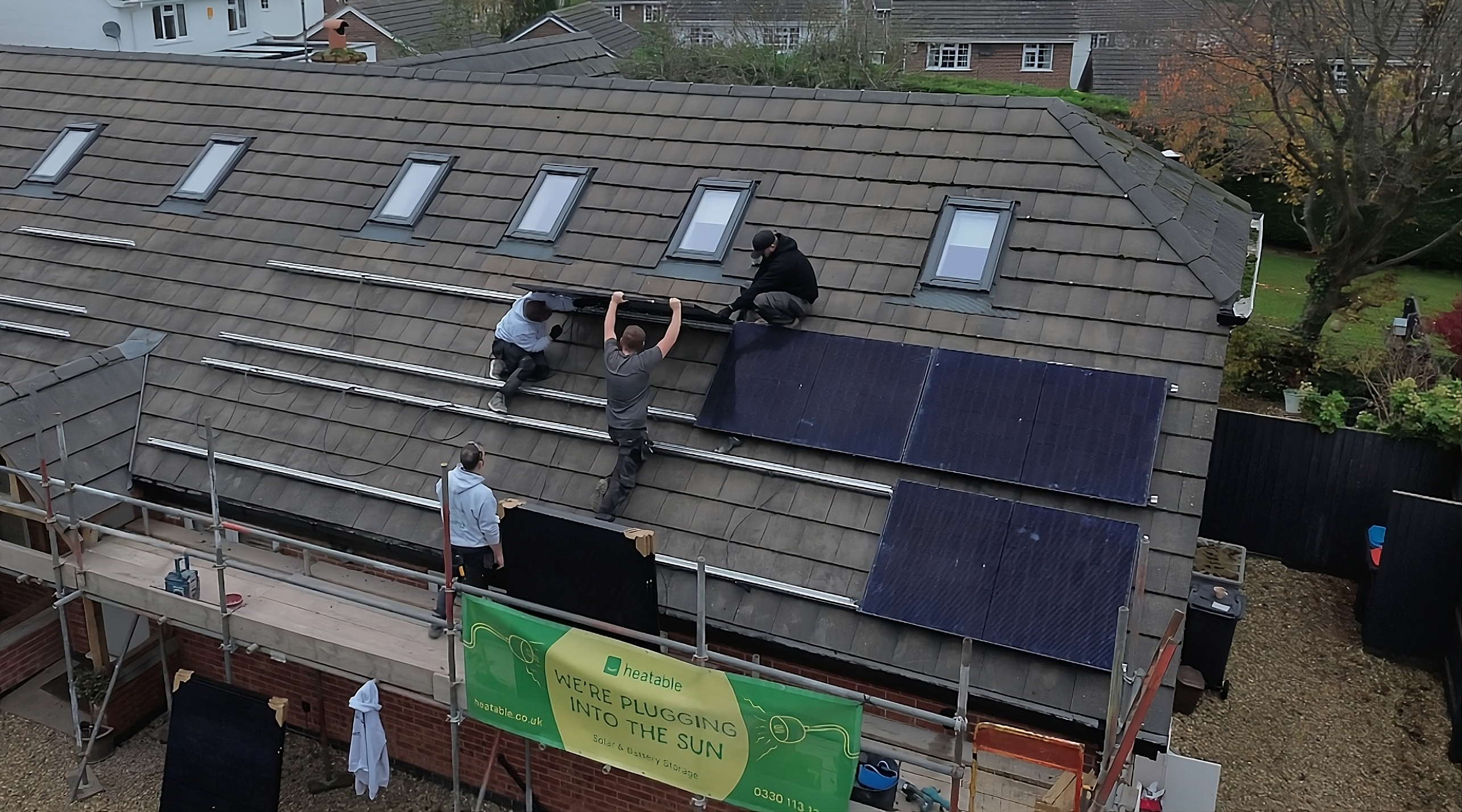
- Price per installed kilowatt on a standard house: A typical array of 7kW would cost £900 - £1000 per kW
- With a battery pack: £1400-£1500
- Guarantee length: 2 years workmanship warranty
- Area covered: Mainland England, Scotland & Wales
- Typical time from inquiry to installation: 2-3 weeks from network operator approval
- Founded: 2017
Heatable distinguishes itself by having exclusive access to high-quality REA Fusion2 panels. These offer a longer useable life than other panels, although they come at a cost premium to match.
The company is a Tesla Premium Partner for batteries and holds Which? approval for both solar and heating equipment.
The company said its quotes are fixed, with any additional costs such as unforeseen structural issues or existing electrical faults being picked up in the survey they perform before beginning work.
Heatable has one of the best online review scores.
Customers say they can tackle older properties and that they would recommend the company to their friends.
Heatable’s website offers an online design process, so you can use satellite imagery to estimate how many solar panels you can get on your roof, and thus how much solar power can be supplied.
We found this quite easy to use and it gave a very good indication of what a solar array would look like.
REA panels, which are one of our top solar panel picks, use micro inverters fitted to each panel. Inverters turn the direct current which the panels provide into alternating current which your home ring main uses. Many setups use one centralised inverter and they usually require a certain amount of power to get going, meaning that some setups can’t make use of low light conditions to generate power.
REA says that its micro inverters, fitted to every panel, are more efficient in generating power on darker days. It also means that an inverter failure does not affect the rest of the array. The inverters will also benefit from the guarantee the panels get – 25 years.
The panels are double sided – sunlight can be absorbed on both sides. When it will be fitted to your roof, why bother? Well, some light will pass through the panel, reflect off your roof and enter through the back. Panels with this feature can generate up to 20 per cent more energy.
Engineered in Australia, the manufacturers say these cells are built to last and they top our chart for efficiency and degradation.
They also have a minimalist all-black design, which is useful if you want to keep your solar installation low-profile.
REA says its cells also have separate zones which mean that less power is lost should part of the array end up in the share from trees, clouds or other buildings. And they make use of lower AC voltage for safety reasons.
REA panels are quite expensive, though.
Pros:
- Excellent reviews from customers
- Access to high-end panels
- Useful online design tool
Cons:
- REA panels are expensive
Read our full Heatable solar review.


Best for solar subscriptions: Sunsave
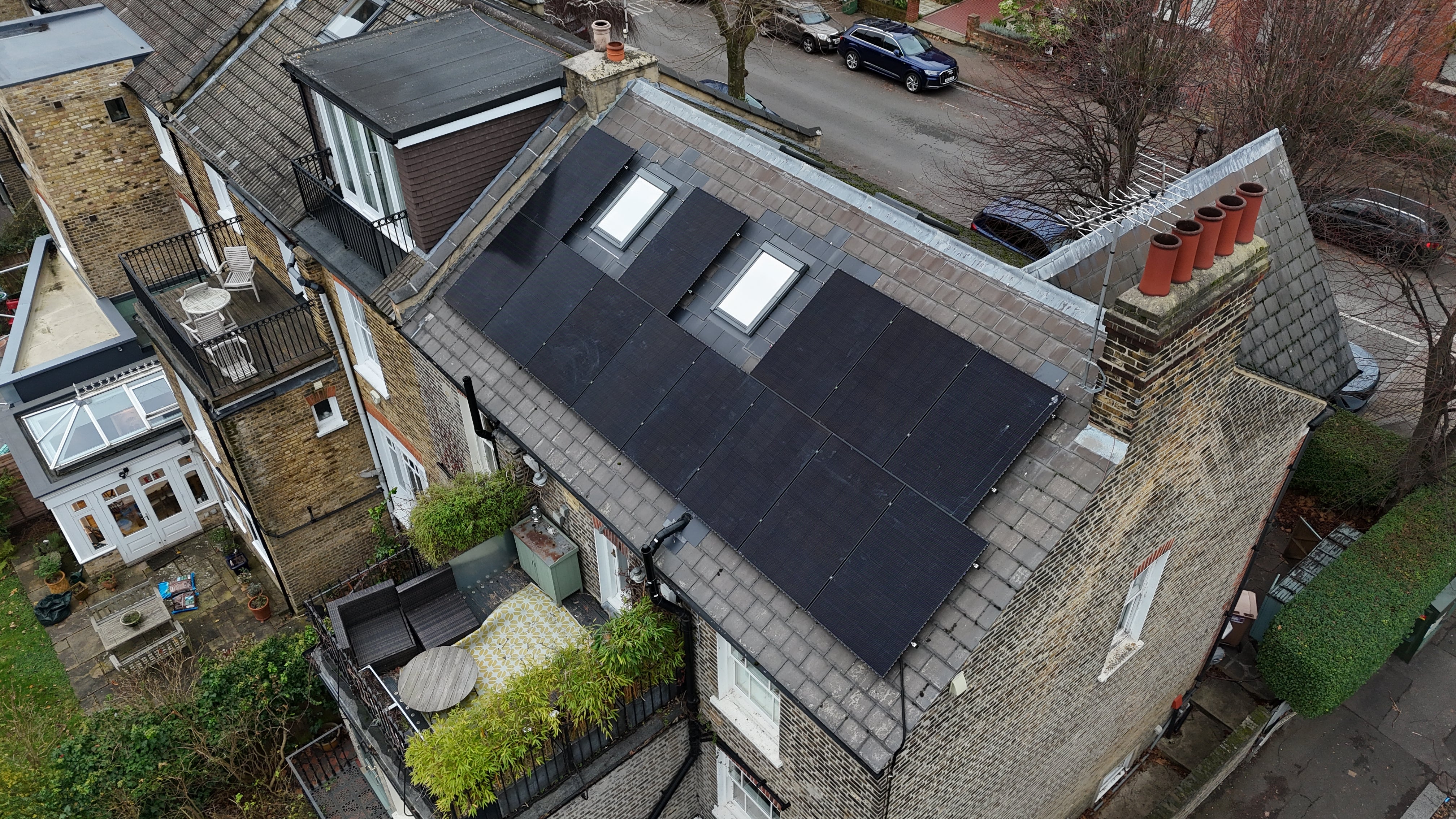
- Price for a typical three-bed house: £95/month including all equipment, fitting, insurance, downtime cover and a 20 year guarantee. The price is fixed for 20 years. Customers can pay off the loan early if they choose. This includes a battery pack.
- Area covered: England and Wales
- Typical time from inquiry to installation: 6-8 weeks now, but aiming for 3-4 weeks
- Founded: 2022
Sunsave differs from the other installers on this list in that it offers a long-term 20-year loan on your solar system, meaning there is no up-front cost. The company says that some users could save a third off their electricity bill from day one.
The setup comes with a battery, so you will get the most use out of the power you generate, so long as everything is set up to maximise solar use.
The interest rate is very low, at 3.3 per cent per year, making it comparable to a mortgage rate.
Sunsave offers free replacements for parts such as batteries and inverters, which may come to the end of their working lives before solar panels do. The company says: “Under the Sunsave Guarantee, whether in warranty or not, we’ll replace any equipment that isn’t working to a suitable level of performance – so the customer has peace of mind their system will be working to at least the projected levels for at least 20 years.”
This is a good option if you want solar, use plenty of power and have loads of roof space but would prefer to borrow to fund the purchase.
The length of the loan means you’ll probably also plan on staying in your home for a long time, although Sunsave says the loan can be transferred to a new owner. You’ll also want to make the best of any power you sell back to the grid, snagging the best deals for exporting.
Adding interest payments to the mix theoretically lengthens the time it takes to break even on the equipment.
For the other suppliers, paying upfront, if can take anywhere from five years to 13 years or even more to break even, depending on the size of your array, your energy usage – both the volume and when in the day – and future electricity prices over the next few decades.
But with so many variables to factor in, you may decide a fixed period of 20 years is a fair deal if you save a little money during that period and get free electricity after that.
Pros:
- No upfront payment, fixed monthly price
- Everything is covered for 20 years
- Claimed savings from day one
- Free electricity after 20 years
Cons:
- More expensive overall because of the loan
- If you move house, will your buyer take on the monthly payment?
Read our full Sunsave solar review.
How to pick the right panels
Choosing a reputable installer is only part of the process. You also need to select the solar panels that best suit your energy needs and budget. Not all panels are created equal, and factors like efficiency, warranty length and manufacturer reputation can make a big difference over time.
Here are a few key considerations:
- Efficiency: higher-efficiency panels generate more power in less space, which is especially important if you have a small roof area.
- Performance warranty: most panels come with a 25-year performance guarantee, but the rate at which they degrade can vary.
- Cost vs. quality: cheaper panels can save you money upfront, but may cost more in the long run due to lower output or shorter lifespans.
- Appearance: some homeowners prefer sleek all-black panels for aesthetic reasons.
For a detailed look at the top-rated products on the market, see our guide to the Best Solar Panels in 2025.
How we made this guide
We spoke to solar companies and fitters across the UK as well as insiders in the solar market to deliver the best research on solar fitters in the UK today.
Why trust us
The Independent has been reporting on green energy and climate matters since it was founded in 1986. Since then, we have written hundreds of reviews and news stories on energy, including the best solar panels and various other guides on green power.
How we chose the best solar panel installers
We compared price, warranty and customer satisfaction to choose the best solar panel fitters. We also chose fitters that have broad national coverage. There are about 4,000 companies or traders who fit solar panels in the UK, so there is plenty of choice and you may find a trusted operator in your area that did not make the list.
FAQs
How do I choose the best solar panel installer?
Look for companies certified by the Microgeneration Certification Scheme (MCS). This ensures installations meet national standards and qualify for export payments such as the Smart Export Guarantee. Compare at least three quotes, checking warranty length, aftercare, and customer reviews. An experienced installer should survey your property, explain options clearly, and be transparent about total costs, including scaffolding and electrical work.
Can I buy solar panels and install them myself?
While it’s technically possible to buy panels and self-install, it’s not recommended. Solar installations involve complex electrical and structural work that must meet Microgeneration Certification Scheme (MCS) standards for safety and eligibility for export payments. DIY systems won’t qualify for the Smart Export Guarantee (SEG), and mistakes can void warranties or damage your roof. To ensure compliance, performance and insurance validity, it’s best to use an accredited professional installer.
Can any electrician fit a solar panel system?
No. Solar panel systems are highly specialist and, because they work with high voltages, can be dangerous if incorrectly installed. You’ll need a qualified and certified electrician to install and connect your new panels to your home and the national grid. For the same reason, you won’t be able to fit them yourself either.
Which solar panel company should I pick?
Only pick reputable companies which have accreditation with schemes like MCS or Flexi-Orb. It’s also worth looking out for other scheme memberships like the government-backed TrustMark, the Energy Performance Validation Scheme (EPVS), the National Inspection Council for Electrical Installation Contracting (NICEIC) or the Home Insulation and Energy Systems Contractors Scheme (HIES).
Companies that have good reviews and a long track record are also good choices – being national is not necessarily an indicator of quality.
Also, make sure to ask the following questions:
- What doesn’t the quote include? This helps expose whether any bills for extras might come your way
- How will you do a shade analysis? This helps make sure any quotes on power output are accurate
- If you are offered an analysis of how quickly the array will pay for itself, ask for all the assumptions of this. Beware of high energy price inflation assumptions since long-term energy price inflation is generally quite low in the UK.
- What isn’t covered by the warranty? Warranties tend to have limitations. It’s worth testing how truthful the fitter is about theirs
- Will my roof need strengthening, and how do you know?
Are local solar panel installers cheaper?
Not always, but they can offer savings on travel and labour costs. Local firms may also have faster response times and familiarity with regional grants or planning rules. However, larger national installers sometimes negotiate better prices on panels and inverters. The best approach is to compare both, focusing on quality, warranty, and reputation rather than price alone.
Do solar panel installers provide help with grants or financing?
Many leading installers guide customers through funding options and available solar panel grants. They can often advise on the Smart Export Guarantee (SEG), local authority schemes, or green home loans offered by banks. Always verify any financial claim before signing, and check whether your installer’s quotation reflects the zero VAT rate on solar installations valid until at least 2027.
How long does a solar panel installation take?
From consultation to activation, installing solar panels typically takes four to eight weeks. The survey and quote process usually happens within one to two weeks, followed by scheduling your installation. The fitting itself often takes one to three days, depending on system size and roof access. Delays can occur if scaffolding is required or if you need permission from your local authority or energy provider. Once complete, your installer should provide certification and register your system for export payments.
Do solar panel installers handle maintenance and repairs?
Many installers offer optional maintenance packages, while others can schedule annual system checks or remote monitoring. Routine maintenance usually means keeping panels clean and ensuring no shading has developed. Inverters may need replacing after 10–15 years, which installers can typically quote for separately. A good installer will be upfront about expected lifetime costs and available aftercare support.
Regional vs national installers – which is best?
Both have advantages. Regional installers often offer more personalised service, local expertise and faster response times, while national companies can provide broader coverage, larger teams and more consistent pricing. Local firms may also have stronger relationships with area councils or electricians, whereas big brands often include longer warranties or finance options. The best choice depends on your priorities. For example, value and service quality versus brand assurance and nationwide support. Always compare at least three quotes before deciding.
Do I need permission to install solar panels?
Most homeowners don’t need planning permission to install rooftop solar panels, as they fall under permitted development rights. However, exceptions apply for listed buildings, conservation areas or flat-roof installations. Panels must not protrude more than 20cm above the roof surface or extend beyond the roofline. Ground-mounted systems or large arrays may require approval. Always confirm with your local planning authority before installation, as rules can vary slightly between councils.
What to avoid when choosing a solar installer
Avoid companies that pressure you into signing quickly, don’t provide clear written quotes, or can’t show MCS accreditation. Be cautious of overly cheap deals, as they may use low-quality components or skip essential safety checks. A reputable installer will carry out a full site survey, explain warranties in detail, and offer transparent pricing with no hidden costs. Reading independent reviews and comparing multiple quotes can help you spot red flags early.
Join our commenting forum
Join thought-provoking conversations, follow other Independent readers and see their replies
Comments
Bookmark popover
Removed from bookmarks