The Independent's journalism is supported by our readers. If you submit a form or click links to other sites on this page, we will earn commission.
Are solar panels worth it in the UK? An expert guide on how they work for your home
Thinking about solar? We explain who it suits, how the savings work, and the key questions to ask before you get quotes
With energy bills still stubbornly high, many UK households are looking for ways to rely less on the grid, and solar panels have become one of the most popular options.
Solar photovoltaic (PV) panels turn daylight into electricity you can use at home. Done well, they can reduce your energy bills, cut emissions, and even earn a little extra through exporting surplus power under the Smart Export Guarantee (SEG).
With technological advances and evolving incentives, more homeowners are exploring whether to install the best solar panels. But the fundamental question remains: are solar panels worth it? For many households, yes – but not for everyone. The homes that tend to benefit most are those with a reasonably unshaded roof, enough usable space for a decent-size system, and the ability to use at least some electricity during the day (or store it for later).
For a deeper dive into pricing, what’s included in quotes, and return-on-investment modelling, see our companion guide to the true cost of solar panels.
Get a quote for solar panels for your home
Use our comparison tool to get a range of free quotes from leading solar panel installers across the UK.
Are solar panels worth it? At a glance
The short answer is yes, solar panels are worth it for many UK households – especially if you plan to stay put for a while and can make good use of the electricity you generate.
Solar panels are worth it if:
- You have enough clear roof space (often 10-25m² for a typical home system)
- Your roof is south-, east- or west-facing (north-facing can work in some cases, but is less ideal)
- Shading is limited (trees, chimneys, neighbouring buildings)
- You can use some electricity in daylight hours – or you’re open to adding storage later
- You’re planning to stay in your home long enough to benefit from payback (often around a decade)


Think twice if:
- Your roof is heavily shaded for much of the day
- You’re likely to move in the next few years
- Your daytime electricity use is very low and you don’t want a battery
- Your roof needs major repairs soon (it can still be worth it – but fix the roof first)
What to expect
- Typical payback: many households see payback in the region of 10-12 years, but it varies by roof, usage, quote price, and export rate
- Panels typically last: 25-30 years with gradual performance loss
- SEG earnings: you can earn money for surplus electricity exported to the grid; rates vary by supplier
Quick reality check: solar savings aren’t one-size-fits-all. Your roof orientation and shading, when you use electricity, and the quality of your system design can make a bigger difference than the headline price.
Justin Webb from Wiltshire, who installed solar panels and a battery on his home more than two years ago, points out that solar offers more than just a financial return: “You don’t get any return on investment from paying your electricity bill. With solar, you’re future-proofing your home against rising prices and becoming more self-sufficient. For households with savings, solar can be a better yield than leaving money in the bank.”
Read more: My honest review of Perlight solar panels
You can read more of Webb’s process for how he maximised his savings with solar in our guide on the cost of solar panels.
Other things to consider when weighing up whether solar panels are worth it for your home:
- A typical 3-5kW system can cut between £500 and £700 a year from bills (according to the Energy Saving Trust)
- Adding a battery boosts savings by letting you use more of your own power
- Average time it takes for solar panels to pay for themselves: 10-12 years, with panels lasting 25-30 years
The table below outlines some examples of what costs and savings you might expect:
Household size | System size in kW | Array cost | Electricity cost per year before solar | Savings (energy used and sold from panels) | Electricity cost after solar | Panels pay for themselves after |
3-bed | 3.6kW | £4,990 | 2,900 kWh @24.5p = £710 | £540 | £170 | 9 years |
4-bed | 5.4kW | £5,470 | 2,900 kWh @24.5p = £710 | £780 | -£70 | 7 years |
5-bed+ | 9.9kW | £7,390 | 2,900 kWh @24.5p = £710 | £1,370 | -£660 | 5 years |
As you can see, with a bigger system, you can be making instant savings, with a 5.4kW system covering your electricity bill and offering £70 surplus each year.
A five-step checklist to decide if solar panels make sense for your home
This is the simplest way to avoid being oversold.
- How long will you stay in the property? Solar is typically a long-term win. If you may move soon, payback may not work in your favour.
- When do you use electricity? Solar saves most when you use power while it’s being generated (daytime). If most of your use is evenings, a battery can help.
- Is your roof suitable? Orientation, shading, pitch and usable area matter. A proper survey should model these.
- Are you sizing the system to your household? Bigger isn’t always better – the best system is one that matches your usage, roof space and future plans (EV, heat pump, working from home).
- What’s your plan for surplus electricity? You’ll either export it (SEG) or store it (battery). Your installer should talk you through both.
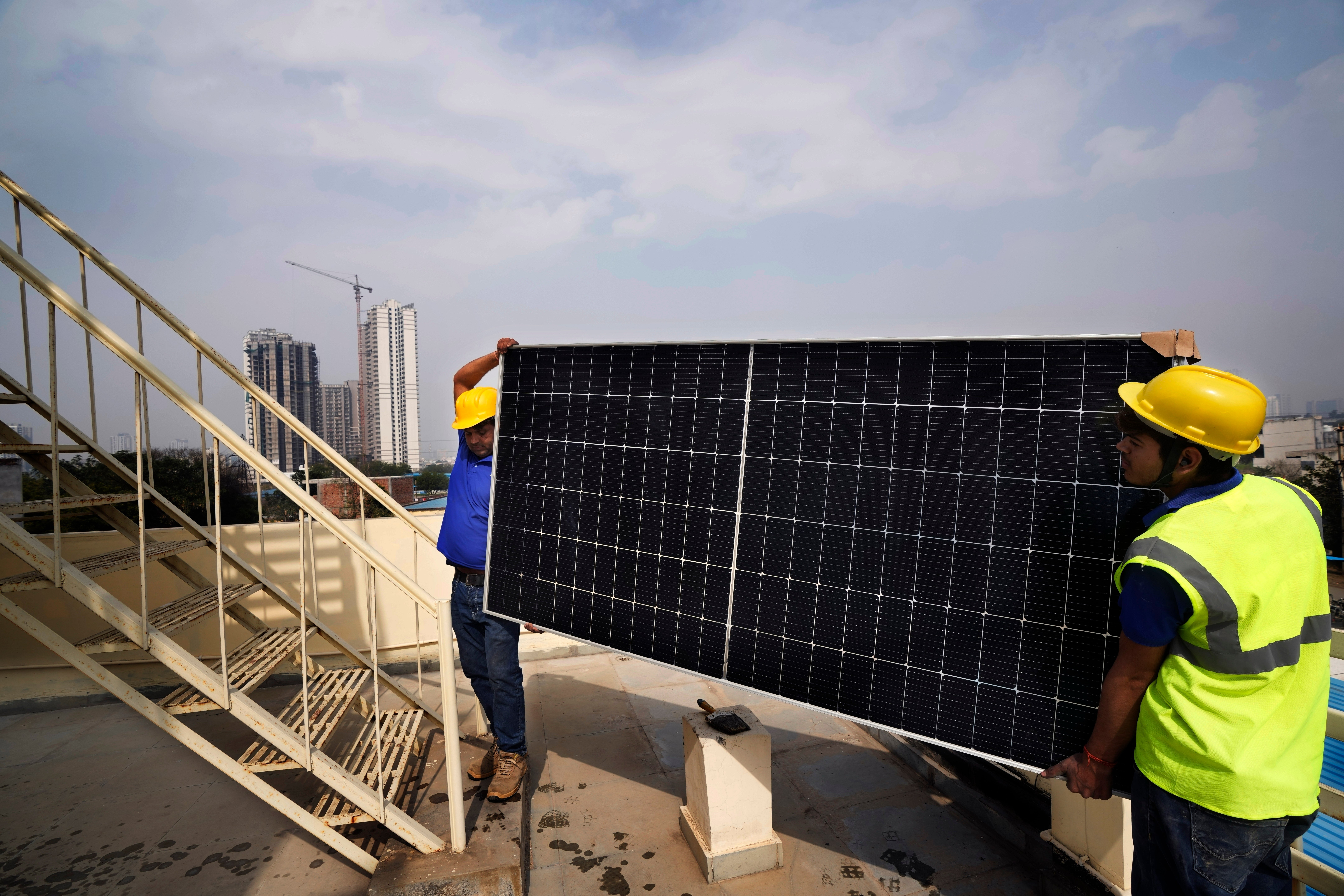
How solar panels actually save you money
There are two main ways solar can reduce the real cost of your electricity:
1) Bill savings: using your own electricity
When your panels generate power, your home uses it first. That means you buy less electricity from the grid, and the value of solar is usually highest when you can use more of that generation yourself. This is why daytime usage patterns matter so much.
As Phil Steele, future technologies evangelist at Octopus Energy, explains, “As soon as you start generating energy for free, there’s a direct financial benefit from your solar panels. But a typical system can produce more electricity than most households can actually use during the day. That’s why it’s so valuable to use what you generate when it’s produced, or store the excess for later.”
If possible, Steele recommends investing in a battery with your solar panels for even greater savings. “If you store the energy you generate in your battery, you can use it again later on for free instead of buying grid energy at a rate of 27p or whatever it may be.”
Steele argues that a battery can keep savings going year-round by letting you “time-shift” electricity: you charge it overnight when rates are low (on a time-of-use tariff), then use that stored energy later when daytime/peak rates are much higher. In other words, on a time-of-use tariff, you can charge the battery overnight when electricity is cheapest, then run your home from that stored power during the day and evening when rates are higher. In colder months, when shorter days mean your panels may not generate enough to fully top up the battery, that “overnight top-up” can effectively bridge the seasonal dip in solar output and keep your reliance on peak-price grid electricity lower.
Read more: My honest review of SunPower Maxeon 7 solar panels
2) Export earnings: getting paid for what you don’t use
Any surplus electricity your home doesn’t use can be exported to the grid and paid via the SEG. How much you earn depends on your export tariff.
Three levers that change payback most:
- Self-consumption – how much of your solar electricity you use at home
- Export rate (SEG) – what you’re paid for surplus electricity
- Quote price and system design – what you pay, and how accurately the system is designed for your roof
But it’s worth remembering the trade-off: if you export a unit of electricity you could have used later, you’re swapping a smaller export payment for avoiding a larger grid purchase.
Putting it in real terms, Steele says: “You forgo the 15p that you could have got from exporting it, but you’re not then having to buy it back at 27p.”
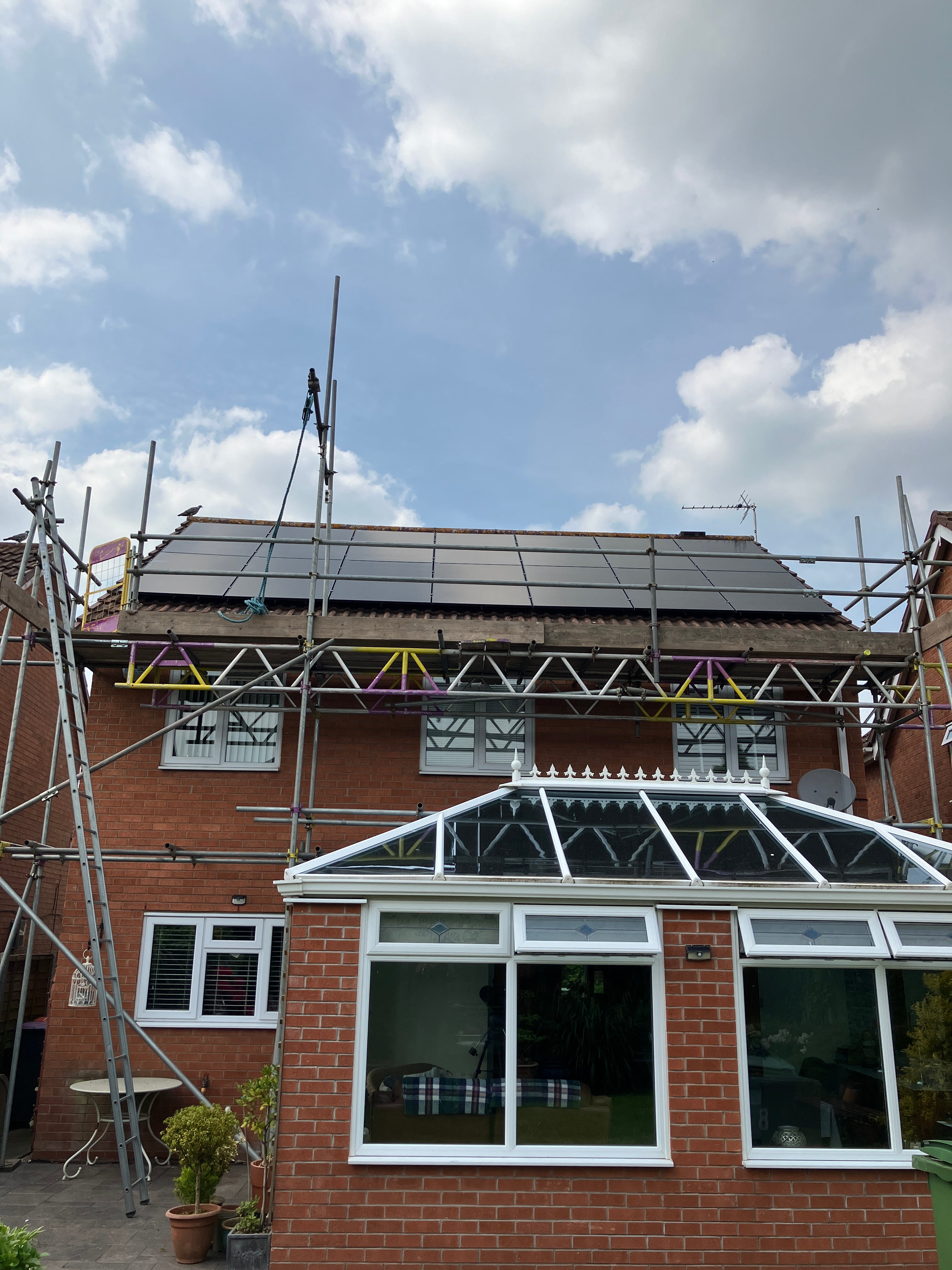
How solar panels affect house value – and what happens if I move?
Solar can make a home more attractive to buyers because it can reduce running costs, especially when the system looks modern and has long, transferable warranties.
Key considerations:
- Keep paperwork organised and transferable
- Be clear about any older tariff arrangements attached to the system
- Aesthetics can matter: newer all-black panels tend to look better than older blue-tinted designs
“When buyers see a panel with a 25- or 30-year warranty from a reputable manufacturer, it gives them confidence,” Greenfield says. “It shows the system isn’t just saving money now, but is a long-term asset for the property.”
For more on this, see our guide on whether solar panels increase your property value.
Choosing panels and inverters: what matters (and what doesn’t)
Panel type and wattage
Most residential solar panels sold in the UK today are monocrystalline. They’re typically the most efficient option for the space they take up, which matters if you have a smaller roof or you’re trying to maximise generation on a limited area.
You may also come across polycrystalline (often cheaper, typically less efficient) and thin‑film panels (lighter and sometimes useful on specialist surfaces, but usually lower efficiency for domestic roofs). For most homeowners, the choice comes down to monocrystalline panels from a reputable manufacturer with a strong warranty.
What wattage should you expect? Many domestic panels now sit roughly in the 350W to 450W range, with some higher‑output models available. Higher‑wattage panels can make sense if you’re tight on roof space – you get more potential generation per panel – but the right answer depends on your roof layout, shading and what your household actually uses.
This is where quotes can get misleading if you only look at the headline price. Greenfield explains: “Customers often get quotes for lower-wattage panels because they’re cheaper up front. But over the same roof space, a higher-wattage panel can generate far more energy and pay back better in the long run. Sometimes it’s worth spending a little more for a system that delivers greater savings over 25-30 years.”
Read more: My honest review of Sunsave solar panels
Warranties and degradation
Most solar panels come with two different warranties: a product warranty (covering defects and failures) and a performance warranty (covering how much output the panels will still deliver after a set number of years). As a rough guide, many reputable manufacturers guarantee that panels will still produce around 80-85 per cent of their original output after 25 years, reflecting gradual degradation over time.
What matters just as much, though, is the installation warranty you get from the fitter because leaks, wiring issues and mounting faults are usually installation problems, not panel problems. It’s worth asking whether that workmanship guarantee is insurance-backed (sometimes called an IBG), which can offer protection if the installer stops trading before the warranty period ends.
Finally, don’t just look at the length of the warranty. Check what’s actually covered, who pays for labour and replacement parts, and whether the manufacturer has an established track record in the UK market.
Greenfield adds: “Some panels only carry a 15-year warranty, while others extend to 30 years. Always check what’s included, and make sure you’re buying from a manufacturer with a proven track record in the UK market.”
For more on what to look for in your quote, see our guide to solar panel warranties and guarantees.
Inverters (and why you need one)
Every solar PV system needs an inverter. Solar panels produce direct current (DC) electricity, but UK homes run on alternating current (AC). An inverter converts DC to AC, allowing it to power your home and feed excess energy back to the National Grid.
There are three main types of inverters:
- String inverters – the most common, linking all panels to one central unit
- Microinverters – attached to each panel, improving efficiency if one panel is shaded
- Hybrid inverters – combine solar and battery management in one system
Choosing an installer: your options and what “good” looks like
A good installer doesn’t just quote you a price – they design a system that fits your home.
In our best solar panel installers guide, we compared fitters on price, warranty and customer satisfaction, and prioritised companies with broad national coverage. It’s worth keeping in mind, though, that there are thousands of solar installers and traders operating in the UK, so you may find an excellent, trusted local installer in your area that doesn’t appear on any national shortlist.
What a proper solar panel survey should cover
- Roof condition, usable area and access/scaffolding
- Shading assessment (not just satellite assumptions)
- A performance estimate that reflects UK conditions
- Clear equipment list (panel model, inverter type)
- Warranty detail and aftercare
Questions to ask every installer
- What panel wattage and model are you quoting – and why?
- What inverter are you using and what warranty does it include?
- How have you accounted for shading?
- What’s included in the quote (scaffolding, electrical upgrades, bird proofing)?
- Do you provide third-party validation (such as EPVS) for performance estimates?
- Who handles SEG/export registration?
Tip: if a quote feels too good to be true, it may be based on lower output assumptions, cheaper kit, or exclusions that show up as extras later.
Should I add a solar battery or a diverter?
Adding a solar battery or diverter can significantly increase the value of your solar system, but both come with extra upfront costs.
Solar batteries
As Steele explained, a solar battery stores unused electricity so you can use it later. This means you rely less on the grid and make the most of the power your solar panels generate. While a battery adds to the installation cost, it can shorten the payback period by boosting your self-consumption.
“If your off-peak rate is 7p and your peak rate is 28p, that’s a 21p spread,” Steele says. “If you can store and use 10kWh a day, that’s roughly more than a pound a day in savings – then you can do the maths on how long the battery needs to pay for itself.”
And the bigger the battery, he says, the more you’ll save and the faster your system will pay for itself.
“If you could charge a big enough battery overnight at around 7p and run your home through the day, you’re effectively running your house at 7p instead of 28p – that’s the sort of thing that can cut bills by roughly three quarters. But you need a sizeable battery to do that.”
Greenfield says that batteries are now becoming part of the default package most homeowners choose. “Over 95 per cent of our customers take a battery with their installation, and about 10 per cent come back within a year to add a second one. With today’s smart tariffs, you can even charge your battery overnight on cheap electricity, run your home or charge your EV, then top it up again with solar during the day. It’s transforming how people think about their energy use.”
For more information, read our guide on solar battery storage and how it works.
Solar diverters
A diverter channels surplus solar electricity into your immersion heater to provide hot water. It’s a relatively low-cost add-on that can reduce gas or electricity bills further by making better use of your solar power. While it won’t save as much as a solar battery, it’s a simple way to get more from your system if a battery isn’t in your budget.
Is it worth it?
- Battery – higher upfront cost but maximises savings and self-sufficiency
- Diverter – affordable add-on that increases efficiency by heating water with excess electricity
Choosing between them depends on your household’s budget, energy use and long-term priorities.
How do solar panels work without a battery?
Without a battery, solar energy must be used as it’s generated. Any excess power you generate is then automatically sent to the grid, earning you payments through the Smart Export Guarantee.
While you won’t have stored energy at night, this setup is cheaper initially and still reduces daytime grid electricity use. Many homeowners later add a battery to increase independence and savings.
How long do solar panels take to pay for themselves?
Savings and ROI from solar panels vary depending on your energy use, the size of your system, and how much sunlight your property receives. For many UK households, a standard 3-4kW system can cut hundreds of pounds from annual electricity bills, while also earning income through the SEG.
Typical savings from solar panels
- Bill reduction – using more of your electricity during the day means you save more, since less power needs to be imported from the grid
- Export payments – any electricity you don’t use can be sold back to the grid under the SEG
- Battery boost – with a solar battery, you can store unused electricity and draw on it in the evenings, pushing your savings even higher
For example, in our guide to the cost of solar panels, one Bristol homeowner we spoke to installed a 5.5kWp (kilowatt-peak) system without a battery and saw her first-year savings reach more than £570, split between reduced bills and SEG income. With installation costs of about £8,750, she expects to break even in about 12 years, even after factoring in the cost of replacing the inverter. As panels typically last 25-30 years, that leaves at least a decade of essentially free electricity. You can read the full breakdown of her savings and ROI estimates in our previously mentioned guide.
According to data from the Centre for Alternative Technology, UK solar panel systems typically generate 800-1,000 kilowatt hours (kWh) of electricity per year for every kilowatt (kW) installed. That means even modest systems can deliver meaningful reductions to annual bills.
With this in mind, Greenfield advises against chasing the lowest upfront price. “We often see homeowners offered lower-wattage panels because they cost less. But over 25-30 years, higher-wattage panels will generate more electricity in the same space and deliver bigger savings. Sometimes spending a little more upfront leads to far greater long-term returns.”
Explore your numbers
If you’d like to see how solar could work for your home, the Energy Saving Trust offers a free solar calculator that factors in your location, shading and usage.

Verdict: Are solar panels worth the investment in 2026?
The short answer is, yes, solar panels remain one of the most effective ways for UK households to reduce their energy bills and reliance on the grid. With electricity prices still high and solar panel efficiency continuing to improve, many homeowners are considering the long-term benefits of solar panels.
But whether solar panels are worth it depends on your circumstances. Homes that use more electricity during the day, when panels are generating, will see greater savings sooner. Excess energy exported back to the grid earns payments through the Smart Export Guarantee (SEG), and adding a solar battery enables you to store unused electricity for evenings or cloudy days – increasing self-sufficiency and the chance to sell electricity back to the grid. The size, angle and shading of your roof will also influence how much energy you can generate.
What’s more, money-saving expert Martin Lewis told The Independent that, despite the upfront cost of installing solar panels, they can immediately reduce your energy bills by around £350 per year. This reduction in bills, along with earnings through the SEG, can help you reach a break-even point on your investment in around 10 years.
And Lewis says that households with older, Feed-in Tariff (FIT) solar panels could make meaningful extra savings by switching their export payments to a Smart Export Guarantee (SEG) tariff. While FIT generation payments remain fixed, Lewis explained that moving to a higher SEG export rate can boost the value of surplus electricity sent back to the grid, potentially saving homeowners hundreds of pounds a year.
Greenfield, founder of Glow Green, says it’s easy to focus on the headline price, but the real question is what a system will generate over its lifetime. Panel wattage, roof space and overall design all affect long-term output, which means the cheapest quote isn’t always the best value once you spread the benefits across decades. “Sometimes it’s worth spending a little more for a system that delivers greater savings over 25-30 years,” he says.
In short, solar panels aren’t just about the financial returns. They also bring peace of mind, lower emissions, and offer protection against increasingly volatile energy markets.
Pros of solar panels
- Lower energy bills – generate your own electricity and rely less on expensive grid power
- Cut carbon emissions – solar is a renewable, zero-emission energy source
- Energy independence – reduce your reliance on fluctuating energy markets
- Long lifespan – panels typically last 25-30 years with minimal maintenance
Cons of solar panels
- High upfront cost – installation requires significant investment, though costs are falling
- Dependent on daylight – output is reduced on short winter days and during cloudy conditions
- Roof suitability – not all properties have the right orientation, space, or structural strength
- Maintenance costs – inverters usually need replacement once in every 10-15 years, at a cost of about £1,000
Join our commenting forum
Join thought-provoking conversations, follow other Independent readers and see their replies
Comments
Bookmark popover
Removed from bookmarks