The abortion rate is rocketing – and the reasons behind it make total sense
With terminations at a record high in England and Wales, Helen Coffey investigates exactly what is behind the increase in unwanted pregnancies


In 2026, information is more readily available to us than ever before. Want to know the answer to a question? You can google it – or, increasingly, ChatGPT it – watch an in-depth YouTube video, or view snappy TikTok clips on the subject. But despite our unprecedented access to knowledge, we appear to have gone backwards in some areas. Namely, contraception.
Effective contraception – first in the form of mass-produced rubber condoms in the 1800s, then more recently in formats including the oral contraceptive pill, the coil, and the hormone-dispensing implant in the 20th century – has been one of the most radical inventions in modern history. Freeing up women to pursue education and careers unencumbered by unwanted pregnancy has been a major driver of female independence and increasing gender equality. But despite its revolutionary impact, Brits seem to be using it less and less.
Data released last month revealed that abortions in England and Wales increased by 11 per cent between 2022 and 2023. The age-standardised abortion rate hit 23 abortions per 1,000 residents, the highest rate since the Abortion Act was introduced in 1967. How did we end up here?
First up, as delicate an issue as abortion can be, it’s crucial not to frame this rise as inherently negative, say the experts. In fact, from one perspective, it can be viewed through an extremely positive lens, given the current political climate. “These abortion figures are a story of two parts,” says Dr Zara Haider, president of the College of Sexual and Reproductive Healthcare. “They are firstly testament to the fact that it is easy to access an abortion in this country – and I think it is absolutely a woman’s right to decide whether she continues with a pregnancy or not.”
Dr Rosie McNee, a public health registrar who has carried out extensive research into the factors behind the significant rise in abortion rates in Scotland, agrees that the increase shows we are “meeting the needs of a population” who need a healthcare service: “The problem might be that our resources within the healthcare service are under strain because we have got increasing numbers, but that’s a resource problem. It’s not a patient problem.”
Hand-wringing about an uptick in terminations isn’t merely unhelpful; it’s potentially dangerous. The overturning of Roe v Wade and the rollback of hard-won abortion rights in the US show just how important it is to proactively and robustly defend legislation around women’s bodily autonomy. In the UK, the Reform party has been accused of “proudly embracing” anti-abortion politics.
And yet, politics aside, the question of why we’re seeing more women conceiving when they don’t want to is pertinent.
While we often frame abortion – and, indeed, anything fertility-related – as a “women’s issue”, it takes two to tango. Condoms, the only form of contraception that also protects against sexually transmitted infections and diseases, have seen a marked decline in usage. A 2024 report from the World Health Organisation (WHO) found that condom use among sexually active adolescents in Europe had dropped significantly between 2014 and 2022, and branded the level of unprotected sex as “concerningly” high.
This finding is borne out by a sharp rise in STIs. According to 2024 figures published by the UK Health Security Agency, STI cases in England jumped 5 per cent between 2022 and 2023. Rates of gonorrhoea and syphilis have doubled in the past decade.
The only other method of contraception that is not reliant on women – vasectomy – has also seen a long-term downward trend. Numbers fell by half between 2008 and 2014, then dropped off a cliff during the Covid pandemic, and have yet to recover.
At the same time, there has been a pronounced shift in women’s attitude towards, and use of, contraception. A major study looking at self-reported contraceptive methods used by patients requesting abortions in England, headed up by McNee and published by the BMJ last year, uncovered some sobering results. Hormonal methods, like the pill, decreased by 7.5 per cent between 2018 and 2023; the use of long-acting reversible contraception, like the coil, fell by more than three-quarters, from 3 to 0.6 per cent. Those reporting that they had been using no contraception at all at the time of conception leapt by 14 per cent.
There’s a whole cohort of people who would really benefit from using hormonal contraception, but they’re scared witless
One piece of the puzzle is what has been dubbed “hormonal hesitancy” – an innate suspicion when it comes to putting things in our bodies. Some of this is fuelled by fearmongering around the potential side effects of methods such as the pill, with misinformation rife on social media, according to Haider.
It’s incredibly damaging, she says: “Word spreads; the rumour mill starts; they tell their friends, they tell their family. Before you know it, there’s a whole cohort of people who would really benefit from using hormonal contraception, but who are not using it because they’re scared witless.”
Constantly hearing negative stories about side effects could even contribute to women experiencing them, according to some research, including one fascinating study by Sheffield University published in September 2025. It’s called the “nocebo effect” – the opposite of the placebo effect – describing the way in which misinformation can be a key driver of oral contraception users suffering expected side effects, like a self-fulfilling prophecy.
“Despite these being psychological in origin, it’s important to understand that these are very real experiences for women, often affecting their decision to continue taking the pill,” said study co-author Dr Rebecca Webster.
And indeed, a history of having their bona fide health concerns and symptoms dismissed by the medical establishment is one major reason why women might be more reluctant than ever to mess with their hormones. Structural sexism persists: one 2022 study conducted by UCL found that gender stereotypes led healthcare staff to routinely discount women’s pain. The upshot? Women were offered psychological treatment instead of appropriate pain relief.

It can be even worse when we seek help for gynaecological issues. One 2024 research paper found that women encounter multiple challenges and barriers when seeking a diagnosis of endometriosis; the term “medical gaslighting” summed up many sufferers’ experiences.
“We’ve seen an increasing awareness that women are not being listened to in health settings, and so they’re tolerating that less, and managing their fertility themselves – taking back a bit of autonomy,” says McNee.
There has been little innovation in the world of women’s contraceptive choices in the past 60 years. Yet over the past decade or so, “there’s been a growing conversation about women’s dissatisfaction with contraceptive methods”, says Katherine O’Brien, head of campaigns at the British Pregnancy Advisory Service (BPAS), the UK’s leading abortion care provider. “There’ll be some women who have tried many methods of contraception, but these don’t work for them, their bodies, their lives.”
Taking medication every day; dealing with side effects such as bad skin, reduced libido or low mood; experiencing regular bleeding outside of their period: “These are all things that women are expected to manage,” adds O’Brien. “More women are now saying that these are not side effects that we should simply be expected to put up with.”
We’ve seen an increasing awareness that women are not being listened to in health settings
This is particularly relevant given that men are potentially not prepared to do the same. Several male contraceptive methods, such as gels and pills, have been successfully developed in recent years – and yet none of them are on the shelves. A lot of this is down to a lack of funding for research, male contraceptives being viewed as neither a healthcare priority nor a big moneymaker by pharmaceutical companies.
But there has been some suggestion that the potential hormone-related side effects are less palatable to men, particularly given that they are not at risk of falling pregnant themselves. One 2016 trial of a hormone injection, for example, was cut short after nearly 1,500 complaints about side effects, including acne, changes to libido and low mood (all common for women on the pill).
The dearth of good sex education also remains a problem. During the pandemic, sex education was one of the first things to drop off the curriculum, and it still hasn’t been fully reinstated in some schools. An entire cohort of students finished school having had no formal sex ed at all. “There’s lots of research that shows there’s such variability in sex education at the moment throughout the UK – it’s not something that we examine [students] on, so it’s not a priority for schools,” says McNee.
Further down the line, plenty of grown adults were never properly taught about their own reproductive organs or sexual health. The pervasive myth about female fertility dropping off a cliff at 30 has contributed to women becoming overly cavalier when it comes to unprotected sex. “There’s this idea that once you’re over 35, your chances of conceiving are really rare, when actually that isn’t the case for a lot of women,” says O’Brien. “Older women might be less inclined to use contraception, because we are fed a narrative of ‘tick tock, tick tock’.”
At BPAS, it’s not uncommon for women in their forties to seek an abortion – and they’re likely to present later in the pregnancy, having mistakenly assumed they missed a period due to the menopause.
Amid this bubbling pot of suspicion, ignorance and frustration around hormonal contraception, an “alternative” has risen to the fore. According to the BMJ study, the proportion of women seeking abortion who used natural family planning methods increased from 0.4 per cent in 2018 to 2.5 per cent in 2023.
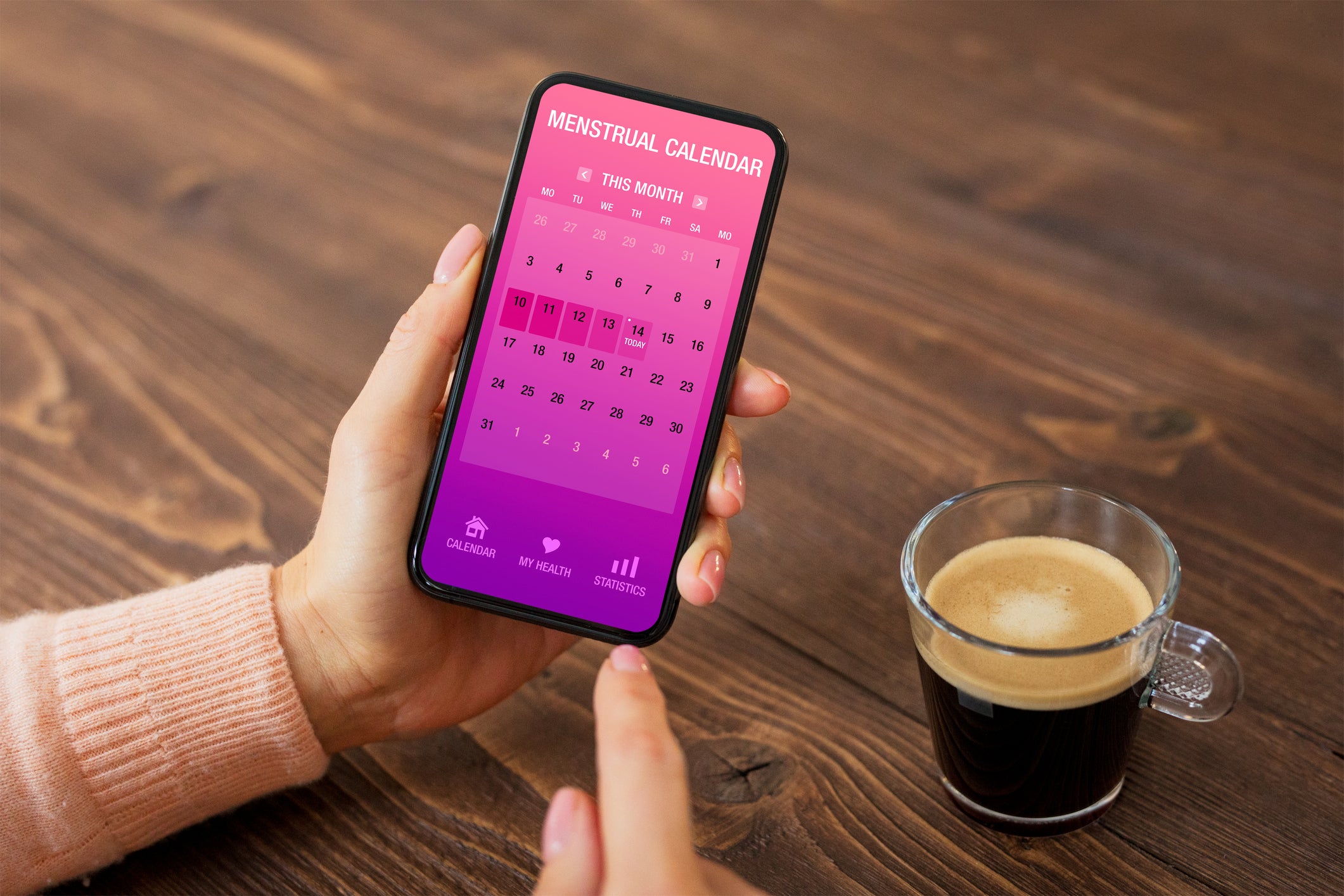
These methods include withdrawal, which is typically only 78 to 80 per cent effective – and, increasingly, period tracking apps. The latter have exploded in popularity over the past few years, relying on data around a woman’s individual menstrual cycle to predict her most and least fertile days each month.
“They’re very popular in the clinics now,” says Haider. “But menstrual tracking apps, by and large, are not meant to be used as contraception.” In general, for every 100 women using all “fertility awareness-based methods” of contraception, almost a quarter – 24 – will get pregnant within a year.
Despite what many women think, only one app, Natural Cycles, is currently certified as birth control in the UK. According to Natural Cycles, the app is 93 per cent effective with typical use, and 98 per cent effective with perfect use. The former stat makes it as reliable a contraceptive method as the pill with typical use. However, it’s a great deal easier to achieve “perfect” use with the pill – you simply have to take it every day for more than 99 per cent efficacy.
“Perfect” use of Natural Cycles, meanwhile, involves recording your basal temperature the moment you wake up every morning, come rain or shine (no popping to the loo first). If you’ve consumed alcohol the night before and feel hungover, feel unwell, or wake up two hours earlier or later than usual, you’re also advised to skip the reading and assume it’s not a “safe sex” day.
As Haider points out, it’s not that it can’t be effective, but that “there are a lot of steps that need to be done properly in order for it to work – and we know that the more steps there are, the more room there is for human error”.
There are also very real concerns about how some femtech companies are using women’s personal data from tracking apps. As Dr Stefanie Felsberger, a research associate at the University of Cambridge, pointed out in the report “The High Stakes of Tracking Menstruation”, cycle-tracking apps can “transform personal health information into data points to be collected, analysed and sold”. This is incredibly lucrative information for advertisers.
For some women, it would be a very much wanted pregnancy if finances were different. And that’s very hard
Then there are the obstacles that have nothing to do with women’s choices and everything to do with an overstretched NHS. Getting access to one’s contraceptive of choice is often far from easy. O’Brien recalls a research project run by BPAS during which one woman said she had sought two abortions while still on the waiting list to have a coil fitted. Meanwhile, sexual health clinics are so underfunded that many have been forced to slash or restrict their services.
And aside from all of the above, the wider impact of the cost-of-living crisis is taking its toll. The majority of women who have an abortion are already mothers, “so they are making that decision in the context of already having children or a child in their care”, says O’Brien. “Many women will tell us that the reason they’re not continuing a pregnancy is because of the financial cost and the impact that might have on their existing children.” The tragic reality is that, for some women, “it would be a very much wanted pregnancy if finances were different. And that’s very hard.”
When it comes to the rise in abortions, the experts paint an incredibly complex and nuanced picture of social and economic factors. Blaming women for unwanted pregnancies won’t get us anywhere; listening to their valid concerns just might.
If you have been affected by the issues raised in this story, the NHS signposts to support through this page. Or you can speak to someone in confidence at the British Pregnancy Advisory Service, the UK’s largest abortion provider, by calling 03457 30 40 30 or emailing info@bpas.org
Join our commenting forum
Join thought-provoking conversations, follow other Independent readers and see their replies
Comments
Bookmark popover
Removed from bookmarks