How to ferment your Christmas leftovers for good gut health
With food waste soaring at this time of year, now is a good time to change the way we think about what we might once have thrown away and breathe new life into it by turning it into kimchi and pickles, says Karen Gray. Do it right and it can be good for your bank balance as well as your gut health
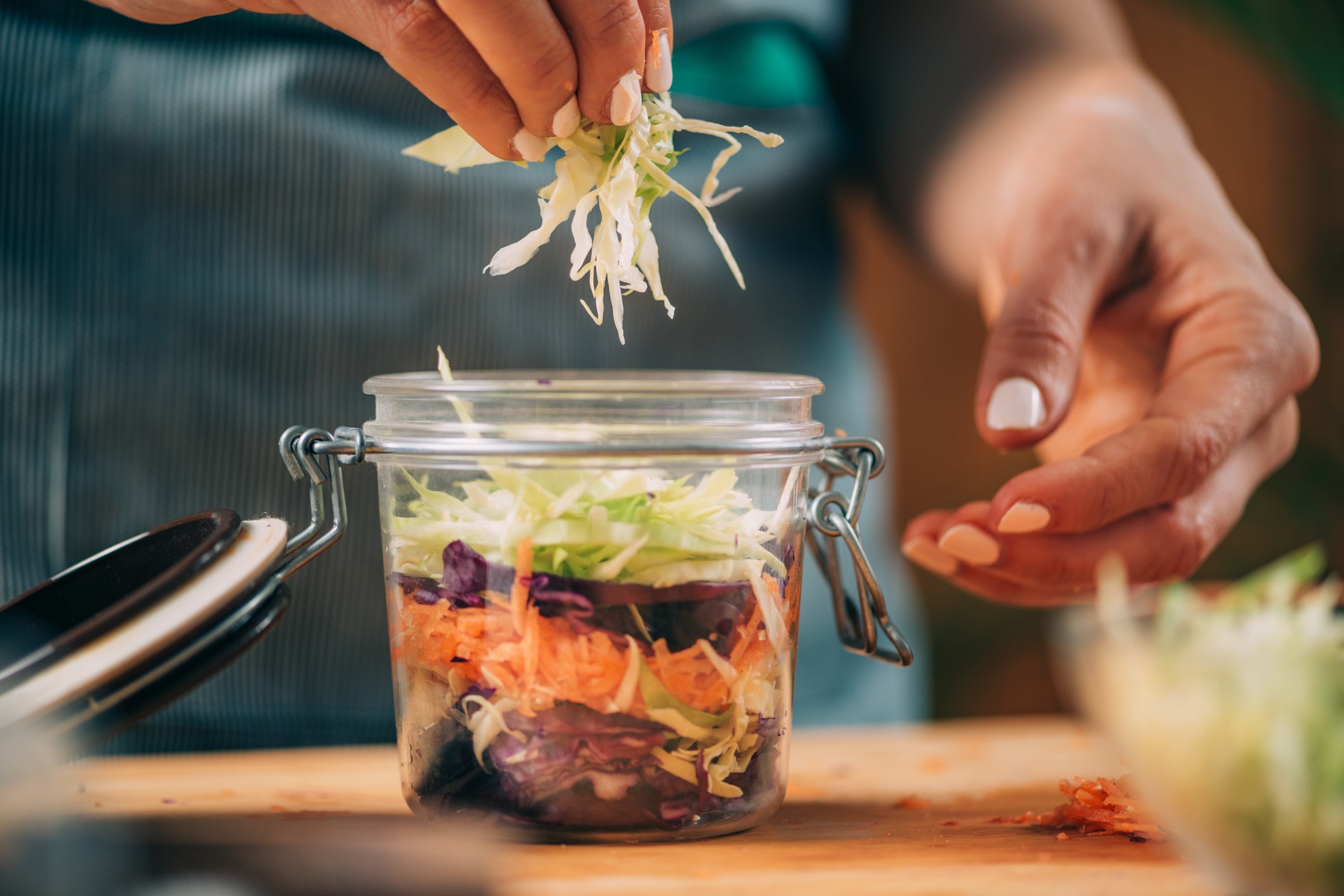
Given that UK households spend 20 per cent more on food during the Christmas period, it is perhaps no surprise that food waste is 30 per cent higher than at any other time of the year. In fact, the equivalent of 4.5 million Christmas dinners are wasted in the UK annually, with the vast majority of turkey, vegetables, and desserts going to waste on Christmas Day itself. Meanwhile, rotting food in landfills releases harmful greenhouse gases like methane, contributing to climate change. And resources like water, land and energy used to produce wasted food are also lost.
In a world of overlapping crises, where food production is struggling to feed a growing population, we need to rethink how and what we eat; our preconceived conceptions of what we throw away, and question why we do so. As Douglas McMaster, founder of the zero-waste restaurant, Silo, says, “waste is a failure of the imagination”.
Boxing Day sandwiches and curries are a step in the right direction. Instead of binning vegetable tops and bottoms, mushroom stalks and the like, chuck them into the freezer to be used later for stock, broth or in a curry. Some dogs love snacking on carrots and broccoli stems. Composting is another solution, but not everyone has access to one. And fermenting is another way to get more out of vegetables.
So much of what we throw away are valuable sources of carbohydrates, fibre, plant-derived proteins, and nutrients that can improve our immune system. A study published in the Journal of Agricultural and Food Chemistry suggested that radish leaves contain more nutrients than the commonly used radish roots – improving our gut health, alleviating metabolic diseases and containing anticancer properties.
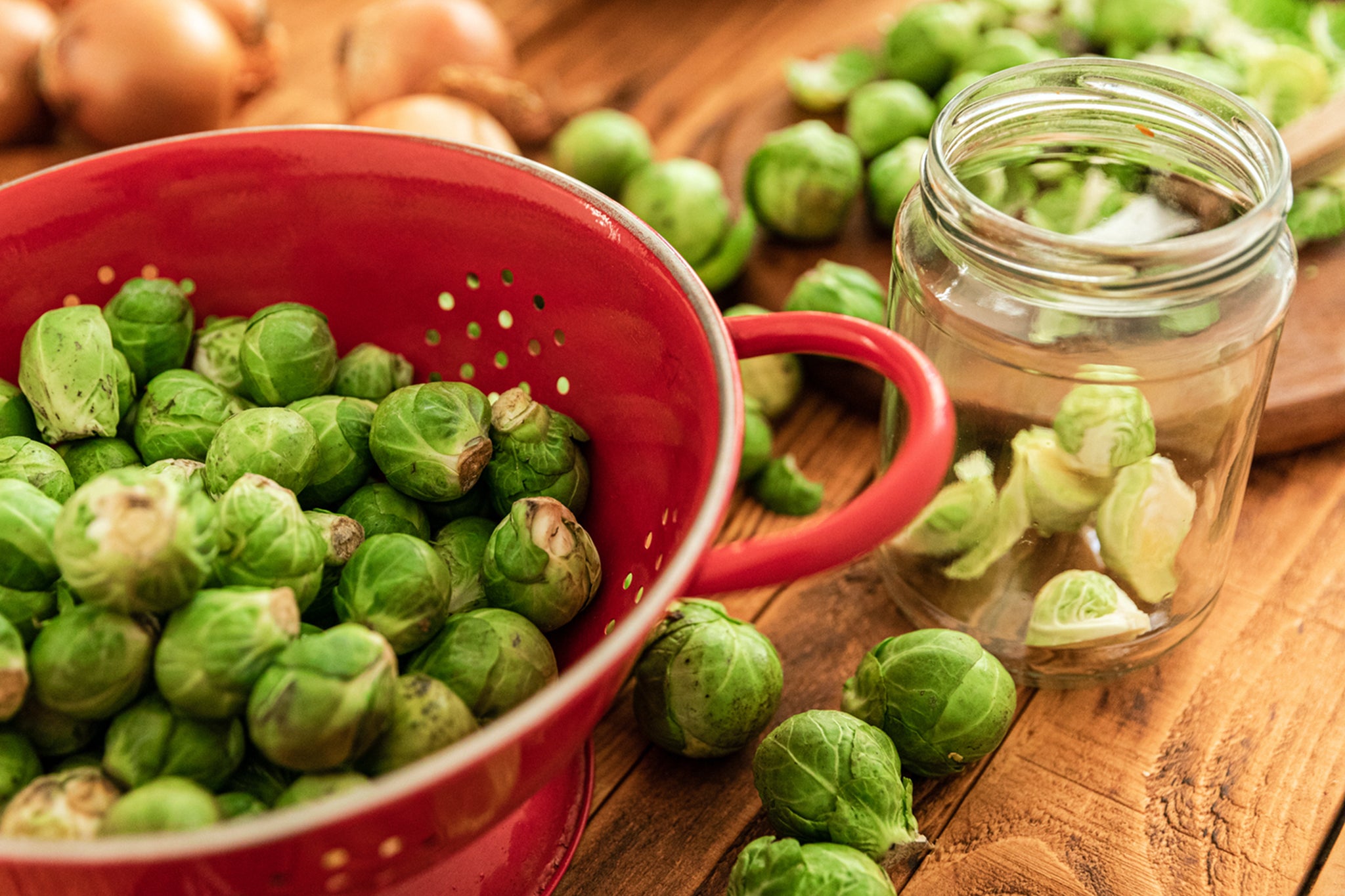
This brings to mind the ultimate festive vegetable: the Brussels sprout. Twenty-five per cent of the annual sprout sales take place in the two weeks before Christmas. 750 million individual sprouts are sold in the UK at Christmas time, with only roughly half actually eaten. About 17 million sprouts end up in landfills or as food waste each Christmas.



During cooking, we systematically and methodically get rid of the stem and outer leaves. Unable to find a statistic for this, I conducted my own home experiment*. A single Brussels sprout weighs 13 grams on average. As part of the ritual deflowering of the sprout, we throw away 3 grams of every sprout. That’s 1125 tonnes of sprouts that immediately end up in the bin straight away, the equivalent of 86,538,462 individual sprouts.
These outer brassica leaves have greater resilience and resistance to pests, a natural evolution resulting from protecting their more delicate hearts, and therefore can contain more nutrition. “They have to be unlocked through fermentation or cooking as they can upset some people's stomachs if not, as this is a form of natural defence,” says Ryan Walker, head of research and development and head of fermentation at Silo London. Discarded parts of vegetables go into kimchi and pickles, but the most common use at SILO is using it for make treacle. “It takes the flavours of these ingredients and yields a honey-like syrup from it.”
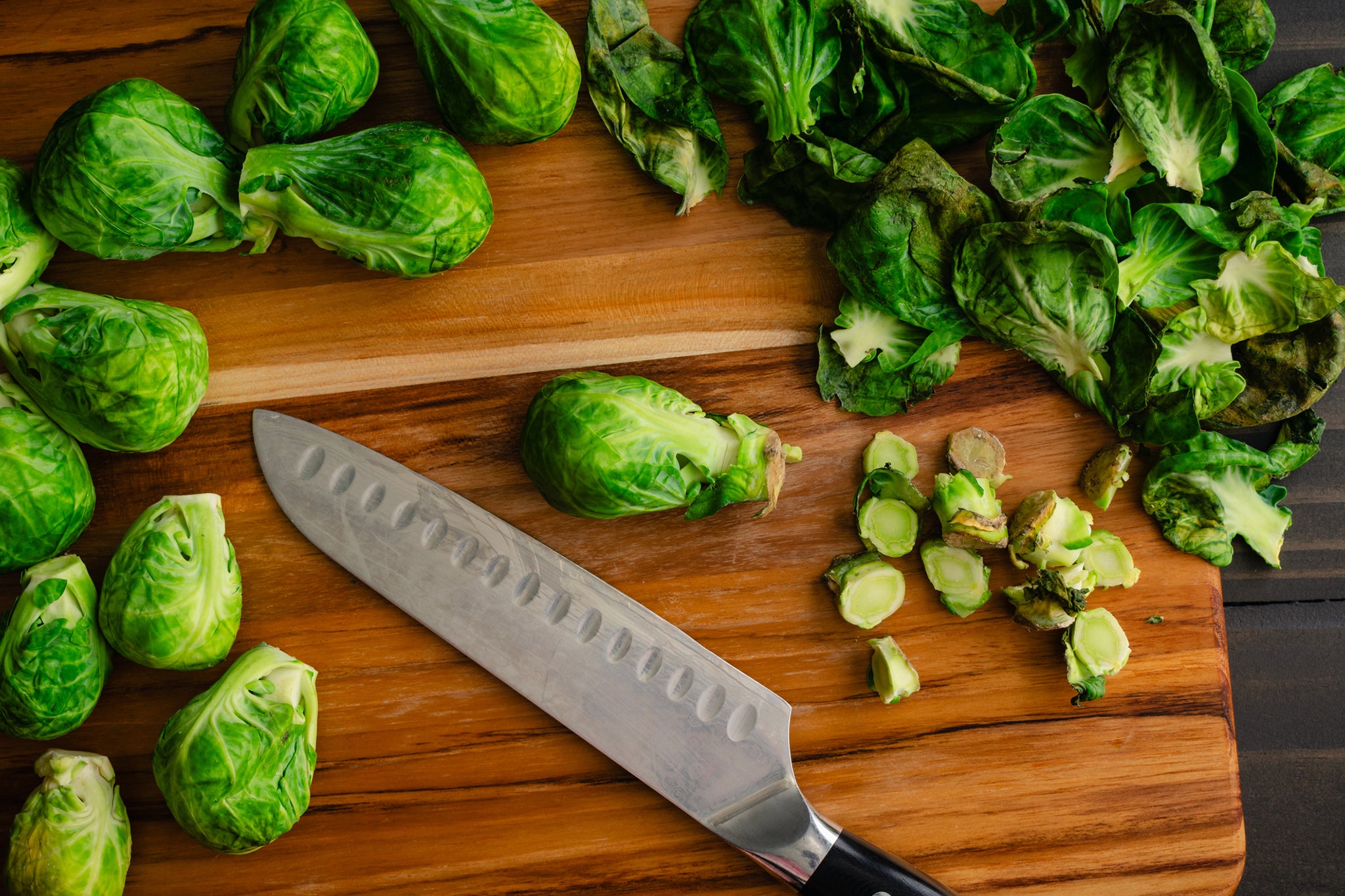
I use the outer leaves of Brussels sprouts, celery leaves, leafy greens of radishes and beetroots in pao chai (a Chinese way of fermenting vegetables in salt brine), kimchi and sauerkraut. Lacto-fermentation transforms the tough textures and breaks it down into something more flavourful, nutrient-dense and digestible. Their tough membrane makes them perfect for kimchi and kraut, withstanding the anaerobic process and holding their structure during fermentation.
Anju Patel, shopkeeper-turned-chef whose family runs Londis N16, serves up a range of home-cooked curries, chutneys and samosas through the shop. Their customers come from as far as Croydon, notified about their latest Gujerati creations through their Instagram profile, which has attained a level of cult status. She uses most things, like vegetable stalks or leaves.
“They can be used in the same way as you would use spinach,” she says. “So, I’ve used them in rice or you stir them through a dal. I’ve used citrus rinds to make chundo, a sweet, tangy Gujarati pickle. The herb stalks can be blended into chutneys. I’ve [also] taken the tough fibres out of the stems of kale and used a food processor to chop them finely and added them to pakora batter.”
Patel grew up in Gangadia, a small village in Gujarat, India, and uses all the parts of vegetables that normally go into the bin: kohlrabi stalks, cauliflower leaves, celery leaves, beetroot leaves, broccoli stalks, herb stalks, the rinds of juiced lemons and limes, and kale stems.
“The idea of those things being waste when I was growing up didn’t even cross my mind. The leaves of the cauliflower were a part of the vegetable as much as the florets were, and that’s the same with all the other vegetables. We also didn’t have the refuse systems we’re lucky to have now. Throwing stuff away wasn’t as convenient as it is now.”

We all need to realise that fresh is not the only way to eat. Fermenting is an effective way to use up unwanted vegetable bits otherwise destined for the bin. Rebecca Ghim runs The Ferm, specialising in producing fermented foods from commonly discarded food byproducts like cauliflower leaves and beetroot stems - she sources them from restaurants. It was a chance encounter with Ghim at a pickling event that inspired me to use cauliflower leaves and broccoli stems in my kimchi.
During this season of goodwill, where excess and gluttony are celebrated, we must also remember to use our imagination. We need to stop unthinkingly throwing away food. Instead, pause to consider how it can be used for other meals. It makes no sense for perfectly edible food and nutrients to go straight into our bins, while we grapple with today's issues and challenges around food production and food poverty. But also, fermenting and pickling and generally repurposing what you might once have seen as waste can be totally delicious.
*Brussels sprouts home experiment working out:
Thrown 3 grams x 375m = 1,125,000,000 (one billion, one hundred twenty-five million) grams = 1,125,000 kg = 1125 tonnes (equivalent of 86,538,462 individual sprouts)
Join our commenting forum
Join thought-provoking conversations, follow other Independent readers and see their replies
Comments
Bookmark popover
Removed from bookmarks