10 delicious Father’s Day recipes – from Tom Kerridge’s smoky beef short ribs to Guinness brownies and
Hannah Twiggs rounds up 10 big-hitting recipes that prove the way to dad’s heart is through his stomach (and maybe a Guinness brownie or two)

Dad doesn’t want another novelty mug. He doesn’t want socks. What he might want is a coronation fried chicken sandwich so big and crispy it needs structural support, a Flintstones-sized T-bone slicked in grape molasses, or a brownie so rich it makes you question your life choices halfway through.
This Father’s Day, skip the pub and take the apron. We’ve rounded up 10 proper recipes that lean big on flavour and generous portions – from slow-roasted lamb that falls apart if you look at it funny to smoky short ribs destined for the barbecue. There are Yorkshire puds with toppings that go from breakfast to braised beef, and even a cinnamon bun hack for the health-conscious dad (or the one pretending to be). Cook one. Cook them all. Just don’t expect to be left with any leftovers.
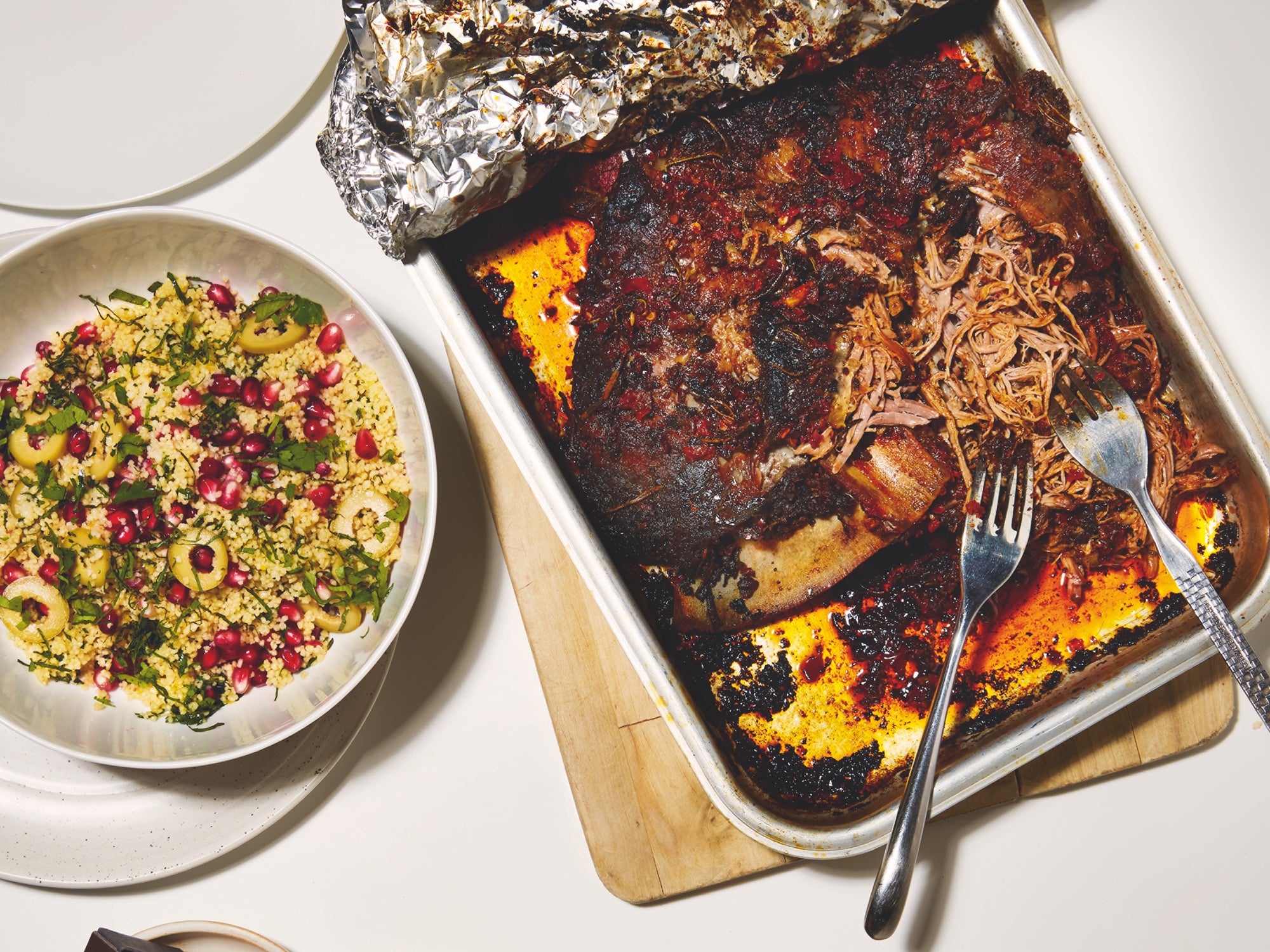
Slow-roasted harissa lamb shoulder
Recipe by: Poppy O’Toole
“These beautiful harissa spices give me flashbacks to a Moroccan holiday with my friends Jackie and Alex, although I can safely say the all-inclusive buffet of mostly chips and pasta didn’t inspire this recipe.


“A slow-roasted number, it will turn even hardened lamb-haters – the meat just tears apart. Put in the effort with the prep, serve it up for dinner and spend half the night convincing your friends you didn’t buy it ready-to-cook. Take the glory.”
Serves: 4-6
Ingredients:
The core:
2 recipe quantities of easy flatbreads (8 flatbreads; see below)
For the lamb:
2 tbsp rose harissa paste
3 tbsp ras el hanout
Zest and juice of 1 lemon
5 garlic cloves, peeled
1 tbsp light brown soft sugar
6 thyme sprigs, leaves picked
6 rosemary sprigs, leaves picked
2 tbsp almond butter
2 tbsp olive oil
1.4-1.5kg lamb shoulder on the bone
For the couscous:
200g couscous
Seeds of 1 pomegranate
A small bunch of mint, leaves picked and chopped
A small bunch of flat-leaf parsley, leaves picked and chopped
5-6 black or green olives, pitted and sliced
1 tbsp dried oregano
Juice of 1 lemon
Salt and black pepper
For the flatbreads (makes 4):
250g plain flour, plus extra for dusting
250g Greek yogurt (or 125ml cup warm water + 2 tbsp vegetable oil, if you’re vegan)
1 tsp onion seeds, poppy seeds or sesame seeds
1 tsp baking powder
Salt and black pepper
Method:
1. Start this the night before you want to cook. Place all of the lamb ingredients apart from the meat itself into a blender and blitz to a smooth paste to make a marinade.
2. With a knife, make some small incisions into the lamb shoulder to help the marinade get right into the meat. Rub and massage the marinade into the shoulder like it’s date night, until it’s completely covered.
3. Transfer the lamb to a roasting tin, cover with foil and place it in the fridge overnight (or for a minimum of six hours).
4. Make the flatbreads: in a bowl, mix all the ingredients – flour, yoghurt, seeds, baking powder and seasoning – into a dough. Knead for about three minutes, to a soft but not sticky ball. Cover with a clean tea towel and leave for 10 minutes to rest.
5. Cut the ball into four equal pieces and use a rolling pin to roll each one out to a thin round. You’re aiming for them to be about 12cm/5in diameter – but don’t worry if they look rustic in shape. Set aside the flatbreads on a lightly floured surface.
6. Place a large, dry frying pan over a high heat. Leave it to get hot, then throw in the first flatbread. Once bubbles start to form in the dough (about 30 seconds) and you’ve got a little bit of char on the underside, flip over the flatbread and cook the other side for about 30 seconds, to get a little bit of char there, too. Keep warm while you do the same with the remaining three flatbreads. That’s it, remove from the pan and either serve right away or cool and tightly wrap to store.
7. Put the couscous into a container big enough to allow it to double in size and pour in 400ml of cold water. Cover the bowl and transfer it to the fridge. Leave this overnight, too.
8. Remove the meat from the fridge 30 minutes before you intend to start cooking so that it can come up to room temperature, and preheat the oven to 190C/170C fan/gas 5.
9. When you’re ready to cook, roast the lamb, still covered with the foil, for 4 hours, until it is charred a little on the outside and the meat is tender and pulls apart.
10. Drain the couscous through a fine sieve, so you don’t lose any of it. Mix all of the other couscous ingredients into it. Season with salt and pepper to taste and leave on the side to come up to room temperature.
11. Towards the end of the lamb cooking time, heat a dry frying pan over a high heat until it’s smoking hot. Place the flatbreads in the pan and warm through (or reheat them in a microwave).
12. Either serve your massive hunk of delicious lamb in the tin as it comes, or transfer it to a wooden board and pour all of the sauce that is left in the bottom of the roasting tin into a little jug.
13. Just let people dig and tear into this huge, sharing-lamb deliciousness, with the warmed flatbreads, the couscous and the sauce served alongside.
Poppy Cooks: The Food You Need’ by Poppy O’Toole (Bloomsbury, £16.99).
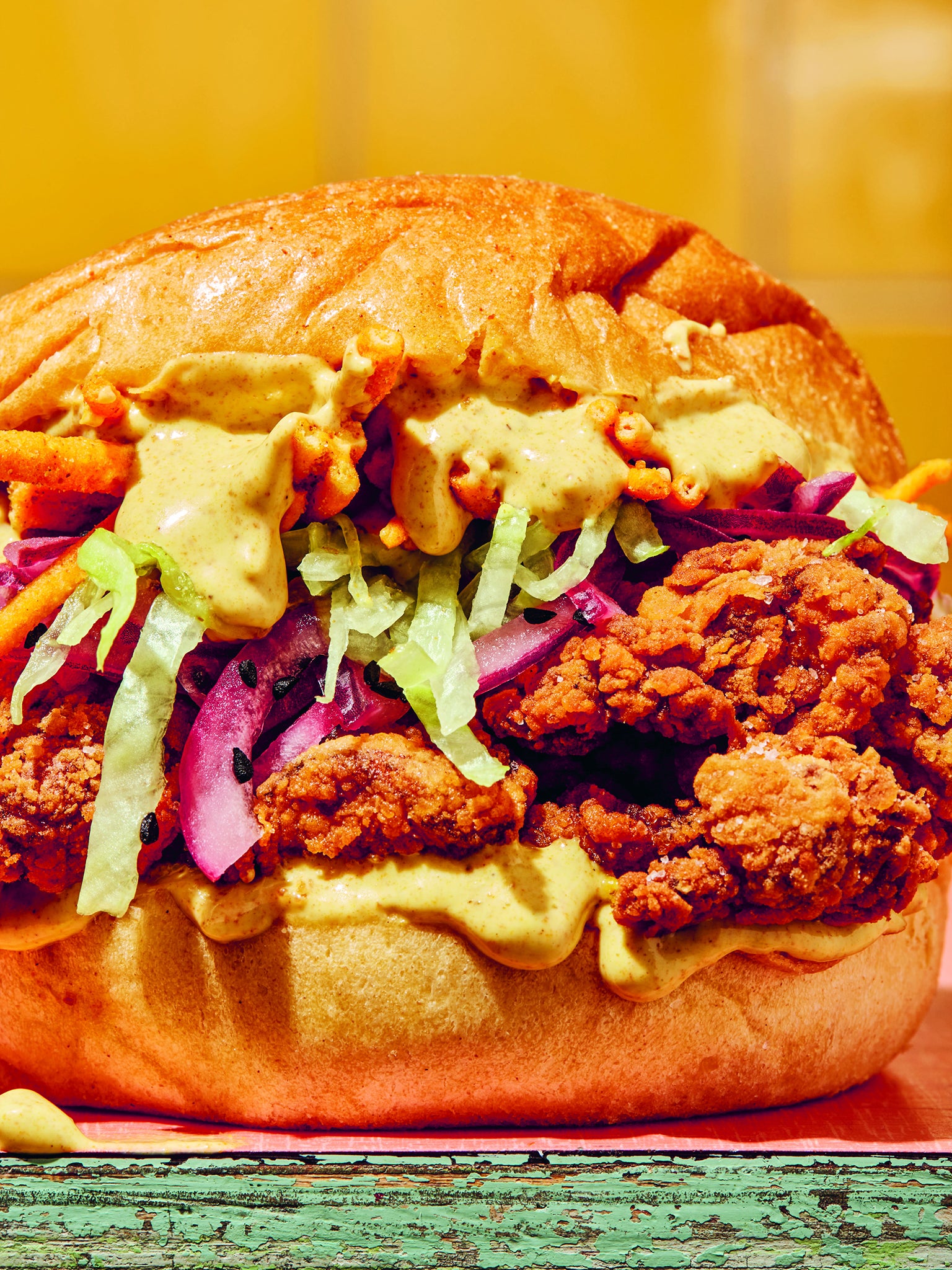
Coronation fried chicken sandwich
Recipe by: Max Halley
Max Halley doesn’t do subtle, and this sandwich is no exception. Crispy fried chicken thigh gets stacked with lime-pickled onions, iceberg, Bombay mix and a tangy coronation sauce that leaves shop-bought versions in the dust. It’s chaotic. It’s brilliant. It might change your life. Or at least your lunch.
Makes: 1 sandwich
Ingredients:
1 brioche or burger bun, cut in half
3 generous tbsp coronation chicken Sauce (see below)
Small handful of Bombay mix (finer London Mix is better if you can get it – the CoFresh brand is excellent)
1 x Carl Clarke’s fried boneless chicken thigh (see below)
1 heaped tbsp lime-pickled onions (see below)
Sprinkling of nigella seeds (if you’ve got them)
1 heaped tbsp shredded iceberg lettuce mixed up with a regular tbsp of finely chopped coriander and mint
For the coronation sauce (makes enough for 2 sandwiches):
2 heaped tbsp store-bought mayonnaise (I like Hellmann’s)
2 heaped tbsp full-fat Greek yoghurt
1 tbsp mild madras curry powder
1 tsp red wine vinegar
Salt and pepper
For Carl Clarke’s fried chicken (makes enough for 4 sandwiches):
4 big boneless chicken thighs, skin on if possible
2l flavourless oil, for deep-frying
For brining the chicken:
284ml buttermilk (that seems to be the size of the containers supermarkets sell)
½ tsp fine sea salt
½ tsp MSG powder (optional)
For the wet bit of fried chicken:
1 free-range egg
120ml whole milk
For the dry bit of fried chicken:
50g plain flour
65g rice flour
20g cornflour
½ tsp fine sea salt
¼ tsp freshly ground black pepper
For the lime-pickled onions (makes enough for 4 sandwiches):
1 large red onion, peeled and finely sliced
Juice of 1 lime
¼ tsp salt
1 tsp nigella seeds (optional)
Method:
1. For the coronation sauce: Mix all the ingredients together. As always, give it a taste. A bit flat? Up the curry powder and vinegar. Lacking depth? A bit more salt and pepper. Too rich, then maybe a drop of lemon juice or again a splash more vinegar. How easy is that?! And so much better than all those fancy ones. And none of that almonds and raisins rubbish – it’s not a chocolate bar, it’s a chicken sauce, what were they thinking? This will keep for three to four days, at least.
2. For the fried chicken: To brine the chicken, whisk the buttermilk and salt and MSG (if you’re using it) together in a glass or plastic bowl or container. Submerge the thighs in it and stick it in the refrigerator for at least 12 hours. Turn the thighs over every now and again if you remember. When you want to cook the chicken, make the wet bit by whisking the egg and milk in a bowl until completely combined and set aside.
3. For the dry bit, combine all the ingredients in another bowl, whisk them all together well, using a dry whisk, and set that aside too. Take the chicken thighs out of the buttermilk, give them a shake and dip them, one by one, into the flour mix and then into the wet batter, then back into the flour mix. Carl says to work/squeeze the coating around the thighs with your hands so it has a texture “almost like cornflakes”. Carl double-fries these babies, so I’m gonna tell you how to do that, but quite frankly, at home, once is probably enough, so skip past this bit to step 6, unless you wanna really go for it.
4. Set your deep-fat fryer to 140C, or if you’re frying in a saucepan, you know the drill: take a large, high-sided pan and heat the oil to 140C which is the temperature a piece of bread sizzles and goes golden in about 40 seconds (as opposed to the usual 20). Fry the thighs two at a time, depending on the size of your pan/fryer, for seven minutes, then take them out, put them on a rack and ramp up the heat in the oil (like you’re making French fries). This time heat the oil up to 180C – when a piece of bread is dropped into the oil sizzles and goes golden in 20 seconds.
5. Fry the chicken again, this time for three to four minutes and rest back on that rack to cool a little while you ready all the other ingredients! If you’re only frying once, heat your oil to 180C from the off and fry the chicken for about seven minutes until it is cooked through and over 70C (158F) inside. If your fried thighs are long and flat, you might wanna cut them in half once they’ve been fried and stack ’em on top of each other in your sarnie.
6. Put the sliced onion in a plastic container with the lime juice and salt and massage them all together. Squeeze, squeeze, squeeze. Lid on, and shake, shake, shake. That’s it. The longer you leave them in the refrigerator (three to four days) and the more regularly you shake the hell out of the tub (five times a day?), the more insanely lurid pink and lip-puckering they’ll become, which is a good thing. If your lime is a bit hard, give it a good firm roll on your chopping board under the ball of your hand before cutting it, you’ll get oodles more juice from it that way. If you want to make these even livelier, add a sliced red chilli and you can always switch the lime for lemon. Using the method above (and with loads of violent shaking – every 10 minutes?), the onions will be tasty and usable after two hours if you’re in a rush. Just before you eat these, you can mix the nigella seeds through them. Only do it just before consumption though, otherwise they’ll swell and lose the pleasing smoky pop/crunch thing they have going on.
7. Make the sandwich: Slather the inside top and bottom of the bun in the Coronation chicken sauce and sprinkle the London/Bombay mix all over the top.
8. Put the fried thigh on the bottom and cover it in the pickled onions.
9. Sprinkle the nigella seeds (if using) all over those, then the lettuce and herb mix, put the lid on and you’re done.
‘Max’s World Of Sandwiches’ by Max Halley and Benjamin Benton (Hardie Grant Books, £25).
Guinness chocolate brownies

Dark, dense and dangerously moreish, these Guinness-spiked brownies are about as far from dry cafe traybakes as you can get. The malty stout deepens the chocolate, while the white chocolate buttons baked into the base give it a little surprise crunch. Best eaten warm, ideally straight from the tin.
Makes: 12 generous brownies, or 16 smaller bites
Ingredients:
185g dark chocolate
50g milk chocolate
185g butter
3 eggs
275g caster sugar
Vanilla essence
85g plain flour
20g cocoa powder
50G white chocolate buttons
Method:
1. Line a baking tray with parchment paper and sprinkle white chocolate buttons in a tray.
2. Melt the Guinness, butter, dark and milk chocolate together, remove from heat when melted. Whip eggs, sugar and vanilla essence (until figure of 8) and fold into the chocolate mix.
3. Sieve in flour and cocoa powder, folding in 3 stages.
4. Pour into tray and spread out. Bake for 20-22 minutes at 160C.
5. Serve warm with vanilla ice cream.
Smoky beef short ribs

Recipe by: Tom Kerridge
“These tender short ribs are seasoned to perfection and present big, bold flavours. The secret is in the initial low, slow cooking, before they are finished on the grill: this is where they will take on that unmistakable smokiness that only a barbecue can deliver.”
Serves: 4
Ingredients:
4 beef short ribs (about 450g each)
For the dry rub:
1 tbsp soft light brown sugar
1 tsp garlic powder
1 tsp ground cumin
2 tsp sweet smoked paprika
1 tsp onion powder
½ tsp cracked black pepper
1 tsp salt
To cook the ribs:
100ml malt vinegar
150ml apple juice
2 tbsp Worcestershire sauce
200ml good-quality smoky barbecue sauce (from a jar), or bourbon barbecue sauce
To serve:
Pickles
Method:
1. Place the beef short ribs on a tray. For the dry rub, mix the sugar, spices and salt together in a small bowl. Sprinkle the ribs all over with the spice mixture and place in the fridge to marinate overnight.
2. The next day, preheat your oven to 170C/150C fan/gas 3.
3. Transfer the beef ribs to a roasting tray. In a bowl, mix the vinegar, apple juice, 200ml water and the Worcestershire sauce together. Pour the mixture over the ribs and cover the roasting tray with a sheet of baking paper, then a layer of foil. Scrunch the edges of the foil and paper around the rim of the roasting tin to seal.
4. Place the roasting tray on the middle shelf of the oven and cook for around three hours until the ribs are meltingly tender.
5. Remove the tray from the oven and leave the ribs to cool slightly. Carefully lift the ribs out of the cooking liquor and place them on another tray.
6. When you’re ready to serve, brush the short ribs all over with the barbecue sauce. Lay the ribs on the barbecue over indirect heat (to achieve a medium heat) and cook for eight minutes or so, basting the ribs with the barbecue sauce as they cook.
7. Lift the ribs off the barbecue, transfer them to a serving platter and brush with any remaining barbecue sauce. Serve straight away, with your favourite pickles alongside.
‘The BBQ Book’ by Tom Kerridge (Bloomsbury, £25).
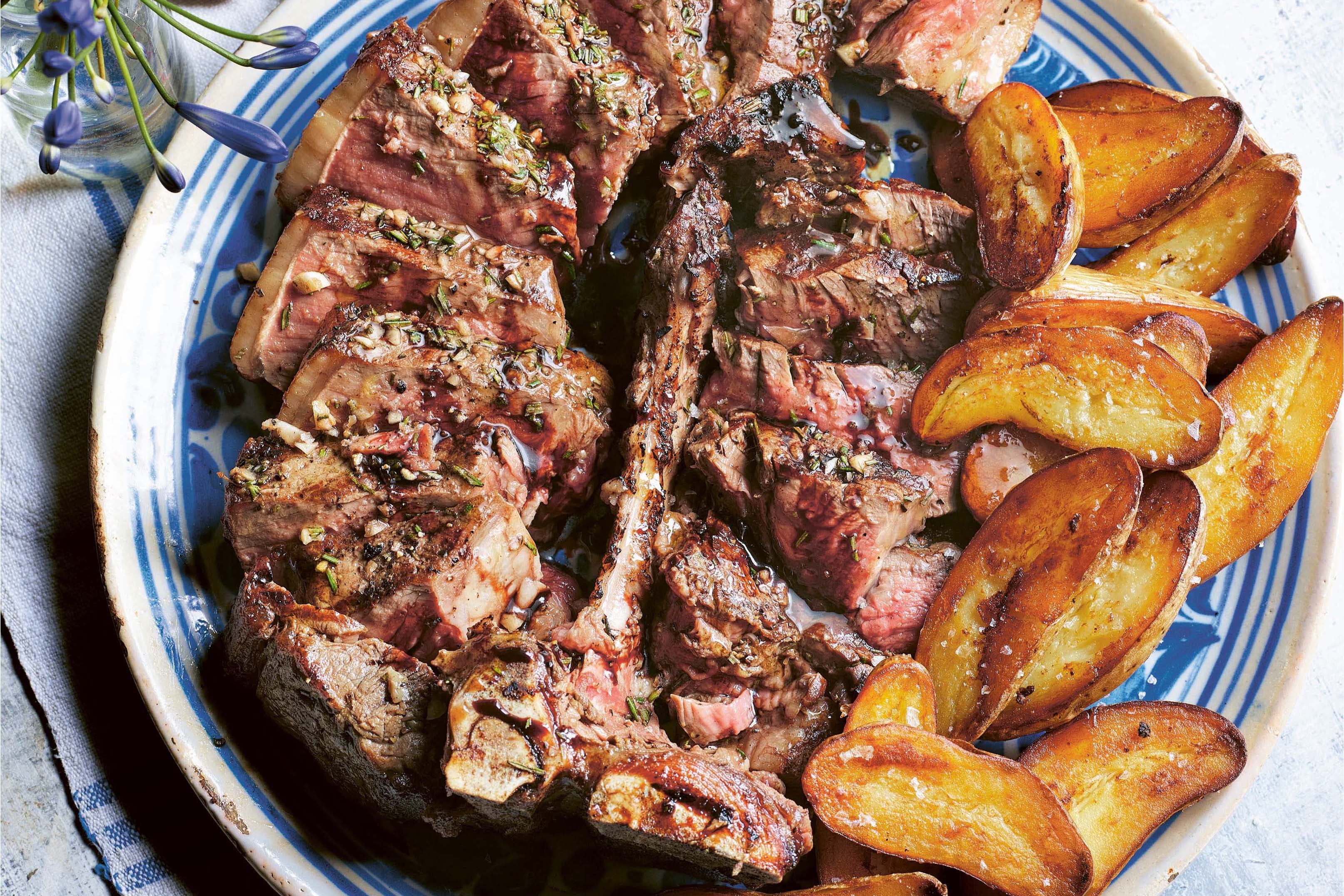
Tuscan-style steak with rosemary, garlic and grape molasses
Recipe by: Ben Tish
“A culinary hymn of praise to simplicity, this is my favourite way to cook steak.
“Fiorentina is traditionally a T-bone or a porterhouse steak – a steak on the bone has more flavour than a boneless one – but a good-quality rib-eye or sirloin steak will work well. The steak must be cut thick, as you want the meat beautifully crisp and caramelised on the outside and medium-rare and pink within.”
To take this dish up a notch, Tish recommends serving the steak with chips and a salad.
Serves: 4
Ingredients:
2 x 1kg T-bone or porterhouse steaks, or 2 x 600g sirloin or rump steaks, at room temperature
Olive oil
4 garlic cloves, finely chopped
Needles from 3 fresh rosemary sprigs, finely chopped
Grated zest and juice of 1 unwaxed lemon
2 tbsp grape or date molasses (optional)
Sea salt and freshly ground black pepper
Method:
1. Light a BBQ about 30 minutes before you want to cook so the coals turn ashen grey and are at the optimum grilling temperature. Position the grill above the coals so it gets very hot. Alternatively, heat a large ridged, cast-iron griddle pan to maximum.
2. Rub the steaks with oil, then season well and place them on the grill or griddle pan. Cook for three minutes on each side, or until nicely caramelised and charred. Now move either the steaks to a cooler spot on the barbecue or turn the heat under the griddle down to medium, and continue cooking for a further six to seven minutes, turning every minute or so for medium-rare. Add another three to four minutes for medium-well.
3. Remove the steaks from the grill and transfer to a tray or rimmed platter and sprinkle over the garlic, rosemary, lemon zest and juice and the molasses, if using. Leave to rest for 10 minutes like this before serving either whole or in the traditional style with the meat cut from the bone, sliced and arranged back against the bone for serving with the resting juices spooned over. Sprinkle with extra salt, if you want.
‘Mediterra’ by Ben Tish (Bloomsbury).
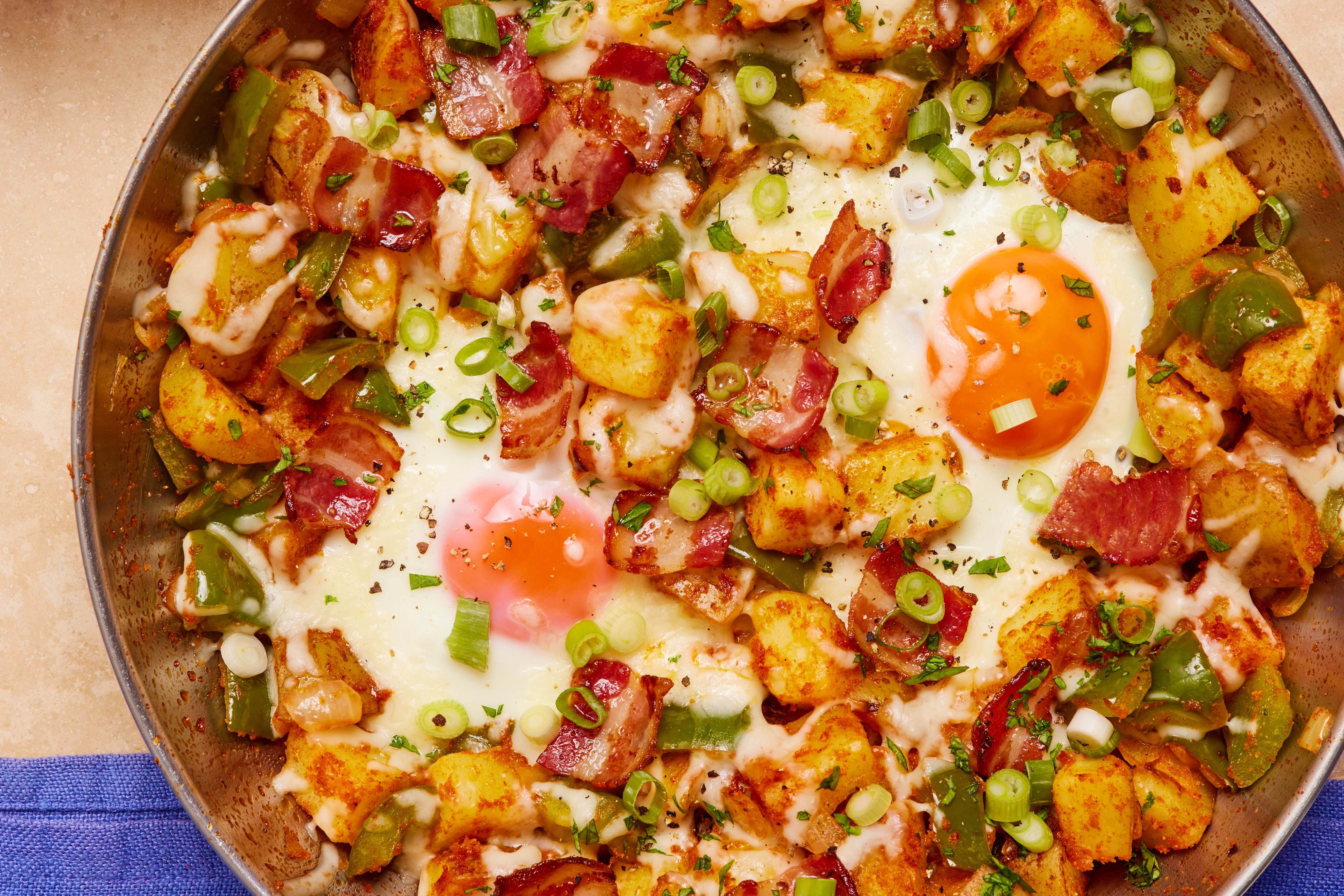
Breakfast potatoes
Recipe by: Alex Hughes
“A pan full of fluffy potatoes finished with fried eggs and gooey melted cheese, this is the perfect brunch recipe. You could easily change the egg for scrambled if you fancy meal-prepping this recipe ahead of time for weekday breakfasts.”
Serves: 2
Time: 30 minutes
Ingredients:
400g golden potatoes, cubed
Low-calorie cooking spray
2 rashers of smoked bacon, sliced
1 small green pepper, diced
1 white onion, diced
1 tsp smoked paprika
1 tsp garlic powder
1 tsp onion powder
Sea salt and pepper
2 medium eggs
40g reduced-fat cheddar, grated
2 spring onions, finely chopped
A few sprigs of fresh parsley, finely chopped
Method:
1. Boil the potatoes for 15 minutes in a large pan of salted water. Drain and leave to steam dry for 5 minutes.
2. Spray a large frying pan with low-calorie cooking spray, add the bacon and fry over a medium heat for 5 minutes until cooked on both sides. Remove the bacon from the pan and add the green pepper and onion and cook over a medium heat for 3-4 minutes.
3. Meanwhile, season the potatoes with the smoked paprika, garlic powder, onion powder, salt and pepper. Once the onion and peppers have started to soften, add the potatoes and fry for 5 minutes.
4. Move the potatoes to the sides of the pan to make space for the eggs, then crack both into the centre, topping with the cheese. Leave on the heat for the eggs to cook.
5. Top with the cooked bacon, spring onions and parsley.
‘Low-Cal Kitchen Bangers’ by Alexandra Hughes (Ebury Press, £20).
Cinnamon buns

Recipe by: Christina Kynigos
“You just can’t beat fluffy cinnamon buns with a cream cheese icing, so I’ve made a high-protein version using my trusty two-ingredient dough to add protein but still keep the amazing texture.”
Serves: 1
Ingredients:
40g 0% fat Greek yoghurt
40g self-raising flour, plus extra for dusting
2 tsp light butter, melted
½ tsp ground cinnamon
1 tsp granulated sweetener (or sugar)
For the cream cheese icing:
25g light cream cheese
1 tsp icing sugar
Method:
1. In a bowl, mix the yoghurt and flour together to form a dough. Flour the work surface and using a rolling pin, roll it out into a rectangle, around the thickness of a pound coin.
2. Brush over the melted butter, then evenly sprinkle over the cinnamon and sweetener. Roll up the dough into a log, then slice in half.
3. With the sliced side facing up, use your hand to gently press down and flatten each piece slightly. Using the brush you used earlier for the butter, brush any remaining butter around a small baking dish, then place the cinnamon buns inside.
4. Air-fry at 170C for 8 minutes until golden and cooked, then let them cool for a few minutes.
5. Mix the icing ingredients together in a small bowl. Spread the cream cheese icing over the buns and devour.
‘Healthy Air Fryer Feasts: Fast, Easy, High-Protein Recipes in 30 Mins or Less’ by Christina Kynigos (HQ HarperCollins, £20).
Baked beans with soy sauce and tomatoes
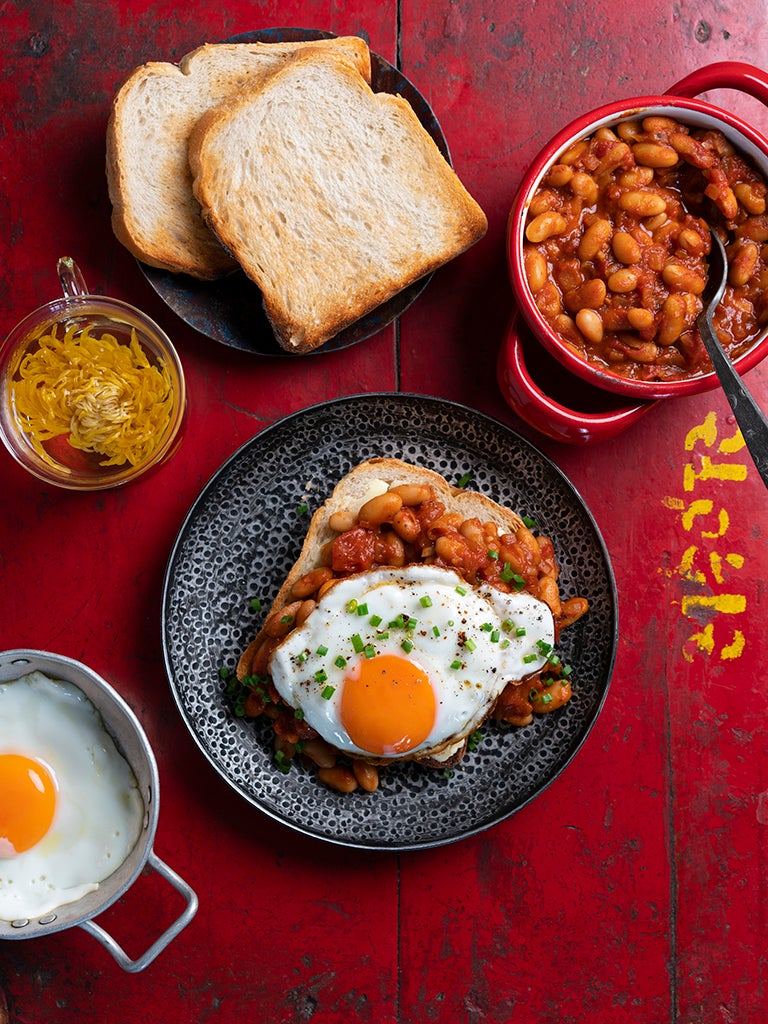
Recipe by: Amy Poon
Amy Poon’s take on baked beans is the pantry-flex you didn’t know you needed. Soy sauce, paprika and dark brown sugar take tinned tomatoes and cannellini beans somewhere smoky, savoury and just a little bit addictive. Throw a fried egg on top and call it brunch.
Serves: 2-4
Ingredients:
2 tbsp olive oil
1 large golden onion, chopped
2 garlic cloves, chopped
3 tbsp dark brown sugar
1-2 tbsp red wine vinegar
4 tbsp soy sauce
2 tsp sweet paprika
1 x 400g tinned chopped plum tomatoes
2 x 400g tinned cannellini beans, drained and rinsed
2 tsp of Worcestershire sauce, plus extra, to taste
Toast, to serve
Fried eggs, to serve
Vegetarians and vegans can drop the Worcestershire sauce or replace it with Henderson’s Relish for a meat-free version
Method:
1. Warm the olive oil in a large frying pan over a medium heat and add the onions. Once you can hear them sizzling, add the garlic and a big pinch of salt and cook for a further 6-8 minutes until they have begun to soften.
2. Add the sugar, vinegar, soy and paprika to the pan and after a minute or so, once they’ve reduced, add the tomatoes, beans, Worcestershire sauce, half a tin of water and some salt and pepper and leave to simmer for 20 minutes until slightly reduced. Check the seasoning and serve with toast and eggs.
Creamy sausage pasta
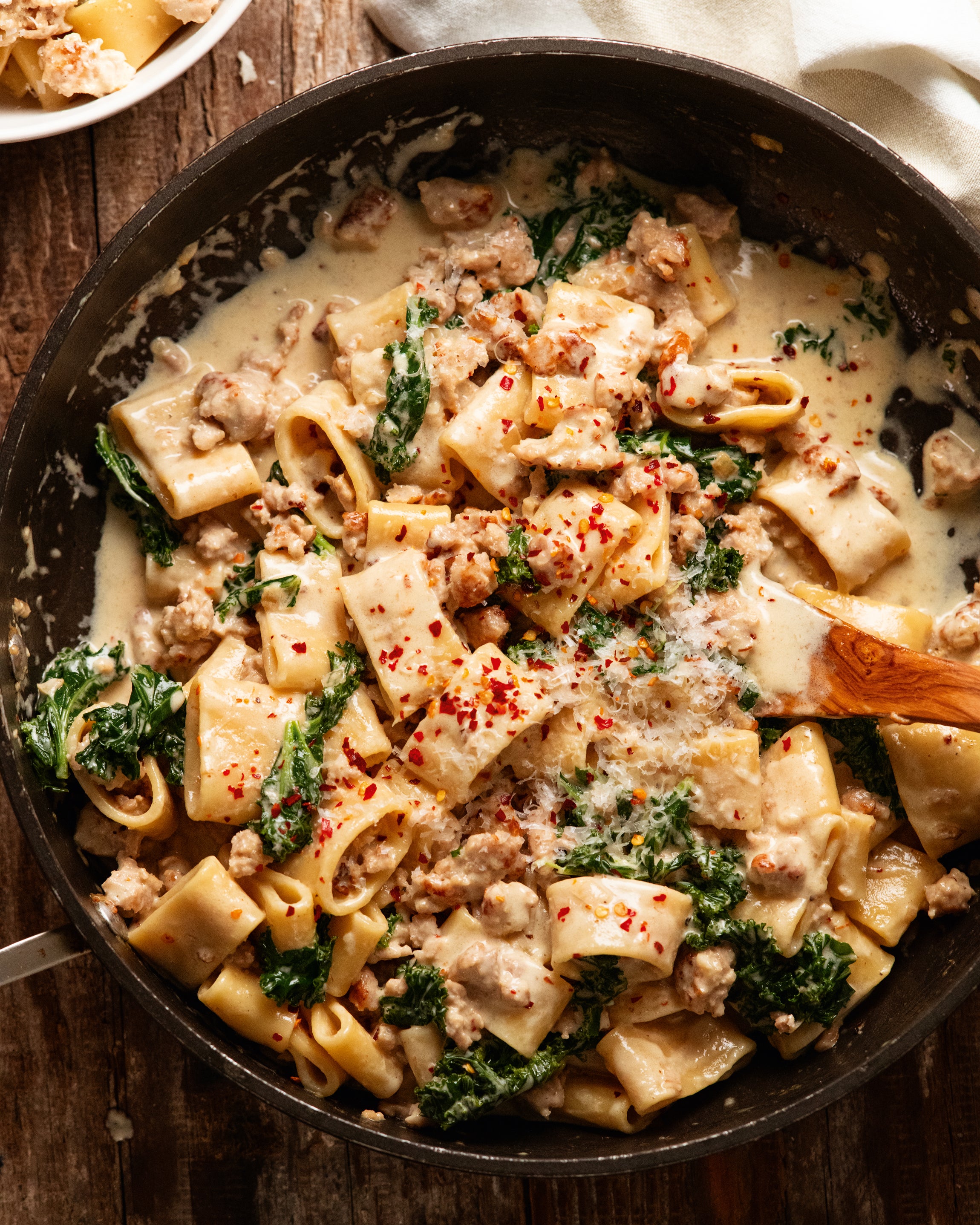
Recipe by: Nagi Maehashi
A proper midweek indulgence that feels like it took hours but absolutely didn’t. Sausage meat is browned until golden and folded into a silky sauce of cream, wine and stock, with just enough kale to pretend it's healthy. Serve with a heavy hand of parmesan and a glass of whatever’s left in the bottle.
Serves: 4
Ingredients:
2 tsp salt, for cooking the pasta
400g calamarata pasta, rigatoni or other large short pasta
For the creamy sausage sauce:
1 tbsp extra-virgin olive oil
½ brown onion, finely chopped
3 garlic cloves, finely minced
500g pork sausages, removed from casings
125ml chardonnay wine
185ml low-salt chicken stock
250ml double cream
½ tsp salt
¼ tsp black pepper
90g kale, torn into bite-sized pieces
To serve:
Finely grated parmesan
Pinch of dried chilli flakes (optional)
Method:
1. Cook the pasta – bring a large pot of water to the boil. Add the salt and cook the pasta according to the packet directions. Just before draining, scoop out a mugful of the pasta cooking water. Drain the pasta in a colander. Time the pasta cooking so it’s ready at the same time as the sauce.
2. Cook the sausage – meanwhile, heat the oil in a large non-stick frying pan over high heat. Add the onion and garlic and cook for one minute. Add the sausage meat and cook, breaking it up as you go as you would mince. Get some colour on the pork by leaving it undisturbed for 30 seconds. Toss briefly, then leave it for another 30 seconds.
3. Creamy sauce – add the wine and let it simmer rapidly for two minutes, scraping the base of the saucepan to loosen any golden bits stuck there (free flavour!). Reduce the heat to medium-high. Add the stock, cream, salt and pepper and simmer for five minutes. The sauce will still be quite thin, but it will thicken more in the next step.
4. Toss with pasta – add the cooked pasta, kale and 60ml of the reserved pasta cooking water to the sauce. Use two spatulas to toss well for one minute or until the sauce coats the pasta instead of being a watery pool in the pan.
5. Serve – immediately divide among bowls and serve sprinkled with parmesan and a pinch of chilli flakes, if desired.
‘RecipeTin Eats: Tonight’ by Nagi Maehashi (Bluebird, £26).
Yorkshire puddings four ways
Recipe by: Mark Hix
“I’ve often heard tales of people eating Yorkshire pudding as a starter; I’ve even heard of leftover ones being served for breakfast with marmalade, which I’ve tried myself on several occasions.
“When I opened my meat-and-chicken restaurant, Tramshed, in east London, I made a conscious decision to serve a large Yorkshire pudding as a starter with a creamy chicken liver pâté – and it’s gone down a storm with customers.
“You can have a lot of fun with filled Yorkshire puds, whether you use leftovers from your Sunday roast or make them fresh for your meal. There’s a huge variety of toppings that will work – and the kids will love making them, too.”
Yorkshire pudding mix
Makes: 4
Ingredients:
2 eggs, beaten
300ml milk
180-200g plain flour
Salt and freshly ground black pepper
4 tsp dripping or duck fat
Method:
1. Whisk the eggs with the milk and a third of the flour, then whisk in the remainder of the flour (or enough to make a fairly thick batter); season.
2. Preheat the oven to 220C/gas mark 7, preferably in fan mode.
3. Heat 4 large Yorkshire pudding moulds, with a teaspoon of the dripping in each, for about 10 minutes in the oven.
4. Once the moulds are warmed up, pour the Yorkshire pudding mix into each, and bake the puddings for about 10 minutes – until they have risen and are starting to colour.
5. Now turn the oven down to 200C/gas mark 6 and continue cooking them for a further 10-15 minutes, until they are crisp.
6. Remove the puddings from the oven and keep them warm until the accompanying topping is cooked.
Vegetable curry
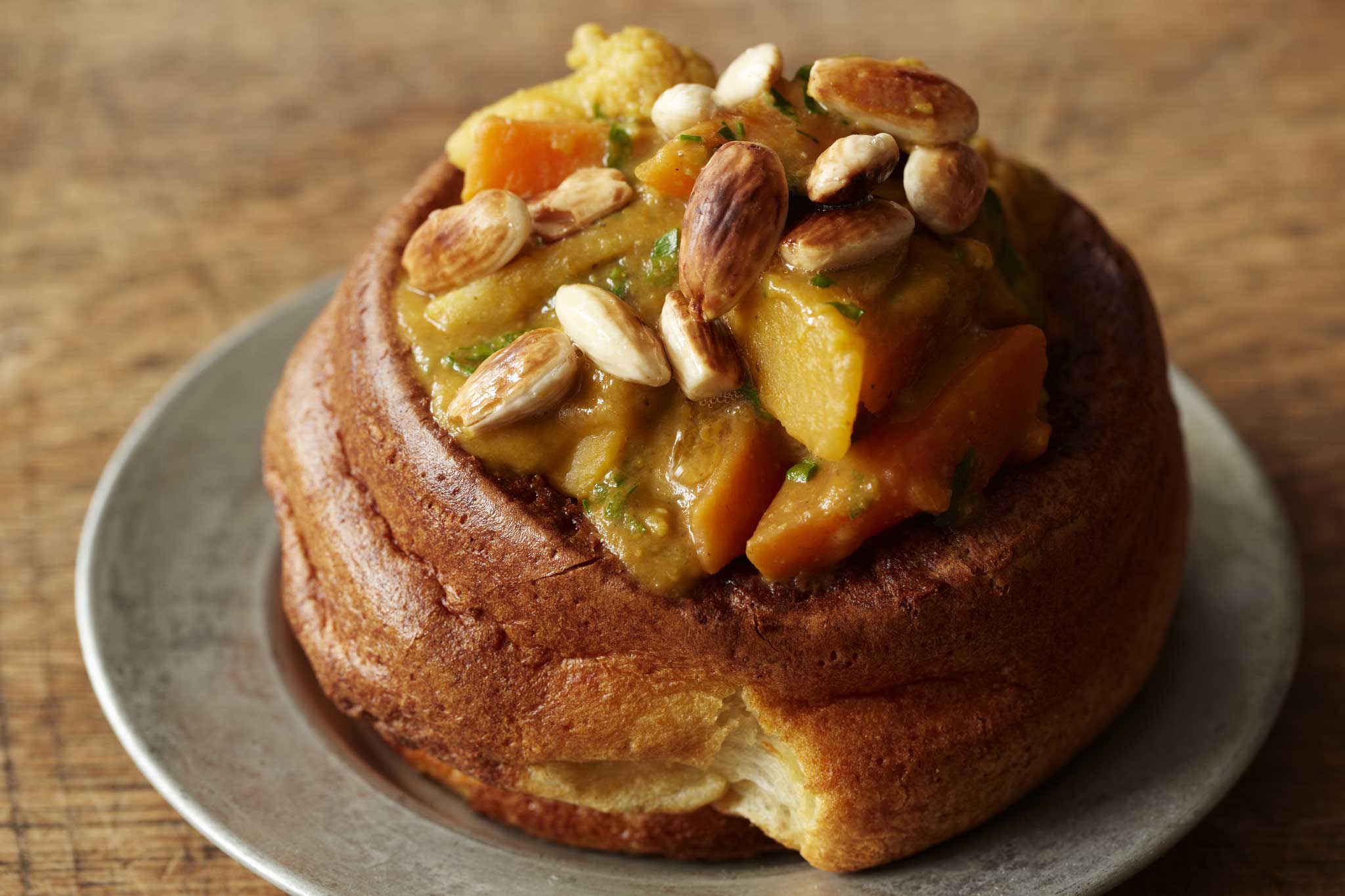
“You can vary the vegetables you use in this curry or just use one, such as the cauliflower or chickpeas.”
Serves: 4-6
Ingredients:
3 tbsp ghee or vegetable oil
1 large onion, peeled, halved and chopped
4 cloves of garlic, peeled and crushed
1 small piece of root ginger, scraped and finely grated or chopped
½ tsp ground turmeric or 1 tsp fresh, peeled and finely grated
1 small medium heat green chilli, seeded and finely chopped
1 tsp mustard seeds
1 tsp ground cumin
1 tsp ground coriander
1 tsp garam masala
A good pinch of curry leaves
8 florets of cauliflower, cut into even-sized florets (large ones halved)
1 large carrot, peeled and cut into chunks
1 large potato, peeled and cut into chunks
Juice of half a lemon
Salt
250ml vegetable stock
2 tbsp chopped fresh coriander
Method:
1. Heat the ghee or oil in a heavy-bottomed saucepan and gently cook the onion, garlic and spices on a low heat for 2-3 minutes. Add the vegetables and the stock, season with a good pinch of salt and bring to the boil.
2. Stir well, cover with a tight-fitting lid and cook on a very low heat, stirring every so often, for 15 minutes or until the vegetables are tender. Remove the lid and continue to cook on a slightly higher heat until almost all the liquid has evaporated. Add the coriander, season if necessary, and serve spooned into the Yorkshire puddings.
Bangers and mash
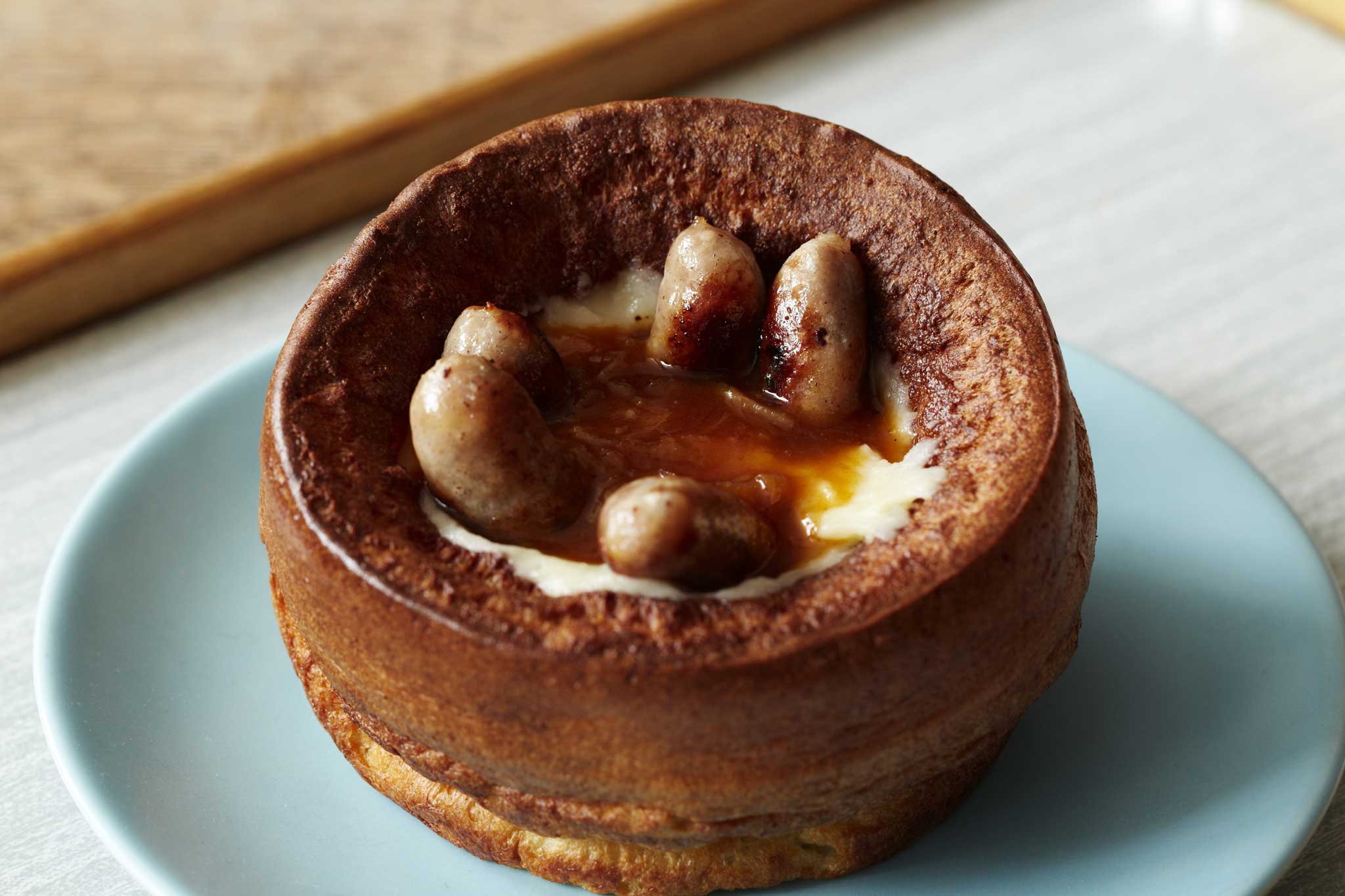
“I do love bangers and mash and served like this, it’s a notch up from a toad-in-the-hole. You can use chipolatas or normal-sized sausages, or if you want to get really adventurous, you can use cooking chorizo.”
Serves: 4
Ingredients:
12 chipolatas or 4 normal-sized, good-quality sausages
4 servings of mashed potato with butter and milk added
For the onion gravy:
2 large onions, peeled and thinly sliced
1 tbsp vegetable oil
30g butter
20g flour
1 tsp tomato puree
2 tbsp red wine
2 tsp English mustard
1 tbsp Worcestershire sauce
500ml beef stock
Method:
1. Fry the onions in the vegetable oil in a thick-bottomed saucepan until they begin to colour, stirring well. Add the butter and continue to cook for a couple of minutes until they brown nicely, add the flour and tomato purée and cook on a low heat for 30 seconds or so.
2. Slowly add the red wine, mustard and Worcestershire sauce, then gradually add the stock, stirring well to avoid any lumps forming. Bring to the boil, season with salt and pepper and simmer gently for about 20 minutes until it has reduced and thickened.
3. Meanwhile, make your mash, then grill your sausages, either under the grill or in a ribbed griddle pan, for 4-5 minutes, depending on size. To serve, spoon the mash into the Yorkshire pudding, stick the sausages in the mash and spoon over the gravy.
Braised beef in Yorkshire ale
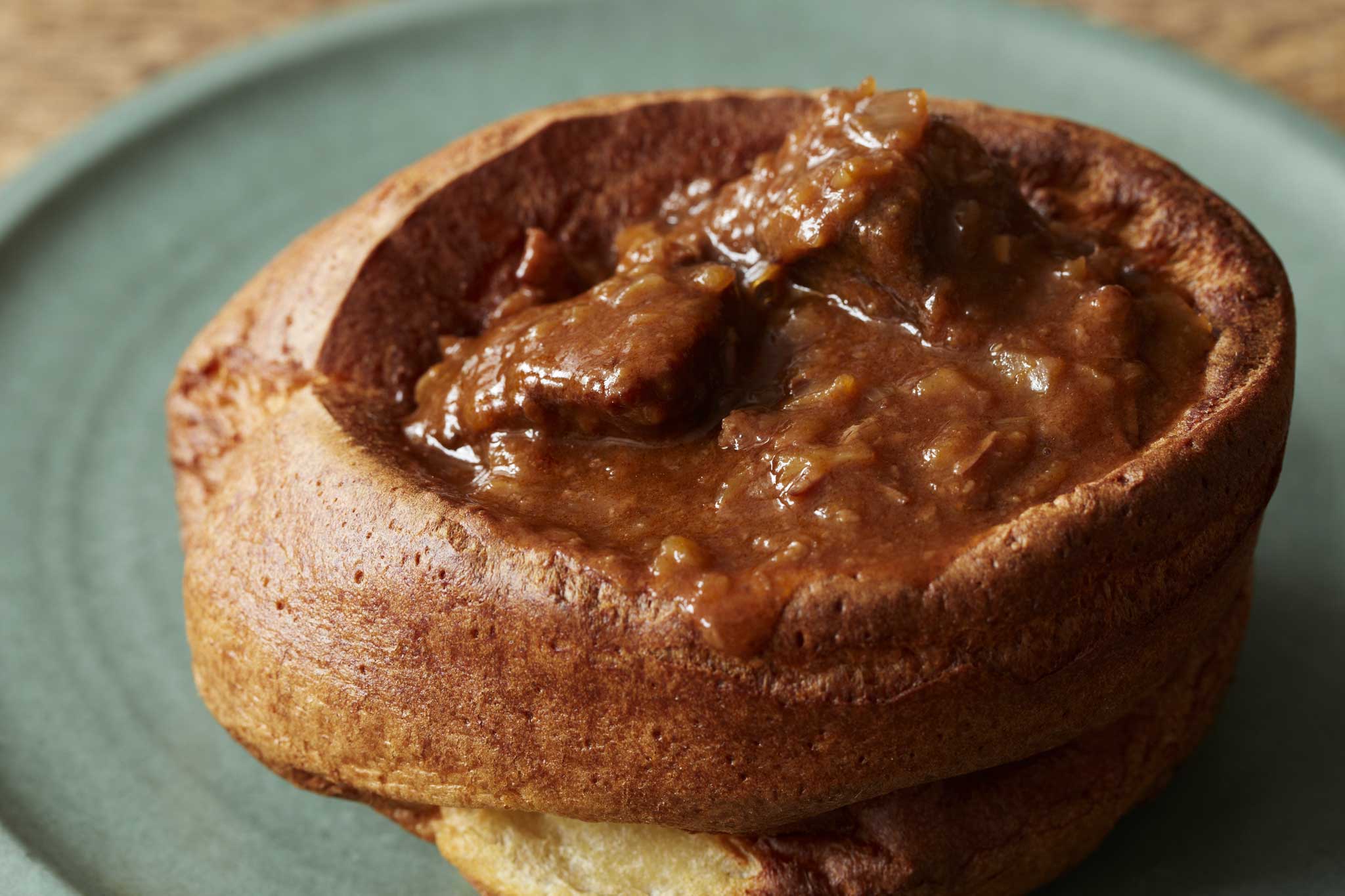
“Try to buy beef from one cut rather than just diced stewing beef, which is often a mixture of cuts and will take different cooking times.”
Serves: 4
600g of braising beef, preferably flank, skirt or silverside, cut into rough 2-3cm chunks
250-300ml Yorkshire ale
1 clove of garlic, peeled and crushed
1 tsp chopped thyme
1 bay leaf
Vegetable oil for frying
30g butter
1 small onion, peeled and finely chopped
1½ tbsp plain flour
½ tsp tomato purée
1½l beef stock (a good cube will do)
Salt and freshly ground black pepper
Method:
1. Heat the vegetable oil in a heavy frying pan, lightly flour the meat with ½ tbsp of the flour, season with salt and pepper and fry the meat on a high heat until nicely browned.
2. Heat the butter in a large, heavy-bottomed saucepan and gently fry the onions, garlic, thyme and bay leaf for a few minutes until soft. Add the flour and tomato puree and stir over a low heat for a minute. Slowly add the ale, stirring constantly to avoid lumps forming. Bring to the boil and simmer until it has reduced by half.
3. Add the beef stock and the pieces of beef, bring back to the boil, cover with a lid and simmer gently for about 2-2½ hours until the meat is tender (you could use a pressure cooker and it will cook in half the time). It’s difficult to put an exact time on braised meats, sometimes an extra half an hour may be required, depending on the meat itself. The best way to check is by actually tasting the meat.
4. The sauce should have thickened to a gravy-like consistency; if not, dilute a little cornflour in some water and stir into the sauce and simmer for a few minutes. To serve, just spoon the beef into the Yorkshires.
Ice cream and marmalade
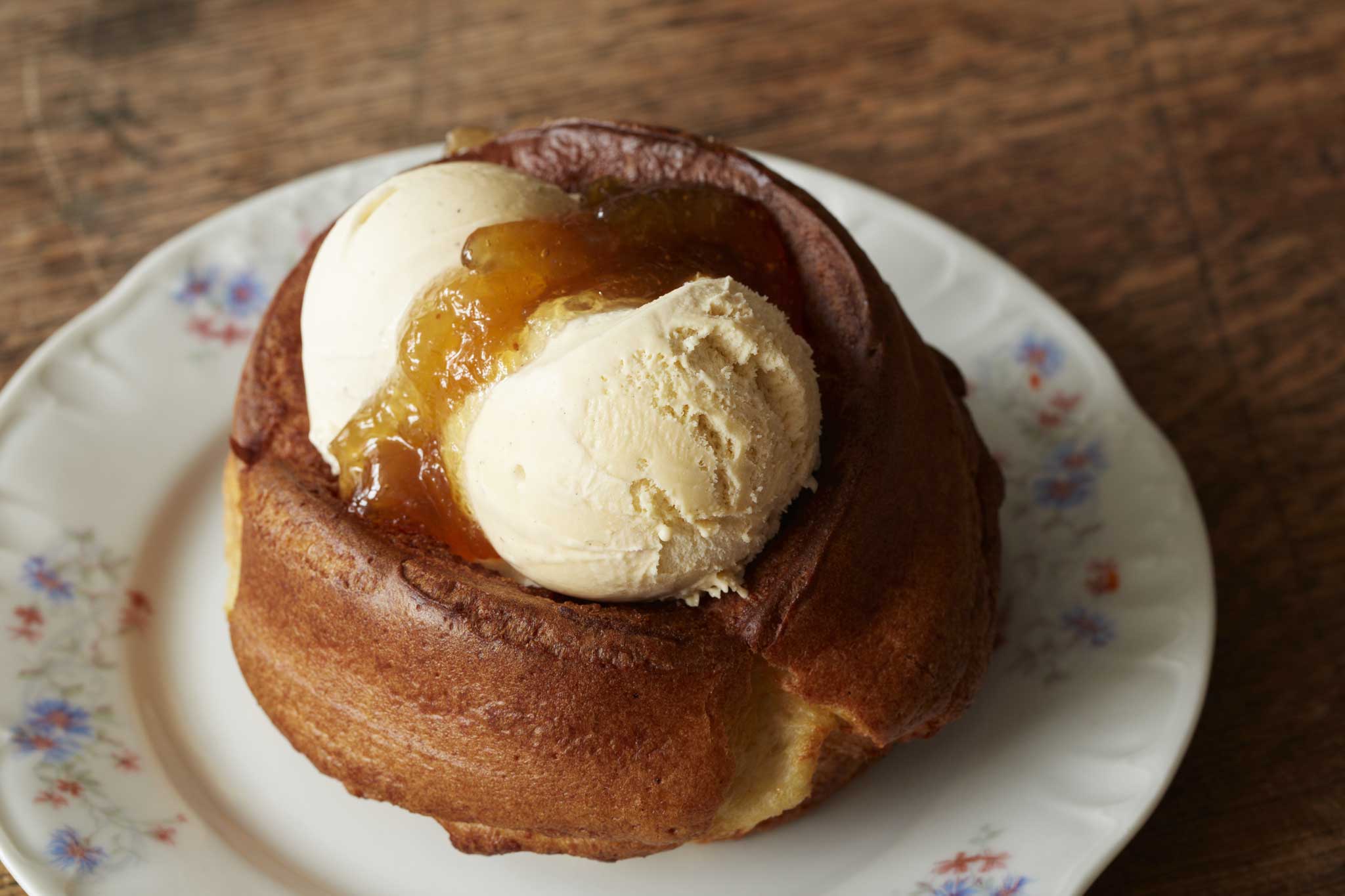
“There is no reason why you can’t serve a Yorkshire as a dessert; I’ve even made one for the restaurant baked with cherries, which is a bit of a take on the French clafoutis. You can adapt this idea how you wish, by varying the flavour of the ice cream, homemade or bought in, and serve things such as chocolate sauce on the ice cream, perhaps with some honeycomb.”
Serves: 4
Ingredients:
8 or so balls of good-quality vanilla ice cream
8 spoonfuls of good-quality or homemade marmalade
Method:
1. To serve, warm the marmalade in a saucepan, scoop the ice cream into the Yorkshires and spoon the marmalade over.
Join our commenting forum
Join thought-provoking conversations, follow other Independent readers and see their replies
Comments
Bookmark popover
Removed from bookmarks