The Independent's journalism is supported by our readers. When you purchase through links on our site, we may earn commission.
Valentine’s Day recipes sorted! From Marcus Wareing, Poppy O’Toole, Jamie Oliver and more
Music may be the food of love, but when it comes to Valentine’s Day, if you really want someone’s heart to sing, it will be what is on the plate that will matter. Luckily, we have some top chefs on hand to help...
Forget to book a restaurant to celebrate the most romantic day of the year? You could try your luck and attempt to snag a last-minute reservation (although let’s face it, it will probably be overpriced and overrated...) or you could try one of these recipes from some of the creme de la creme of the foodie world.
Whether you’re cooking your first romantic meal for two (no pressure...) or you’re planning a feast for your life-long partner, these dishes will ensure this Valentine’s Day will be one to remember.
We’ve got roasts from Poppy O’Toole, oysters from Mark Hix and desserts from everyone to Marcus Wareing and Jamie Oliver. Enjoy.
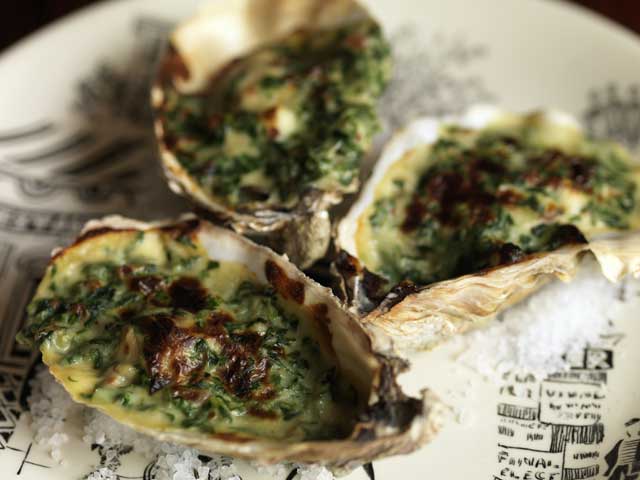
Mark Hix’s oysters with bacon and spinach
This is a simpler version of a classic Oysters Rockefeller – the American dish in which oysters on the half shell are combined with other ingredients (sometimes breadcrumbs) and baked. This combination works a treat and I could eat this any day of the week.


Serves: 2
Ingredients:
6 oysters, shucked and shells and juices reserved
A good knob of butter
2 rashers of rindless, smoked streaky bacon, finely chopped
2 shallots, peeled and roughly chopped
150g spinach, picked, washed and cooked in boiling, salted water for 3 minutes
120-150ml double cream
1tbsp grated Parmesan
Method:
1. In a heavy-bottomed saucepan, gently cook the bacon in the butter for 2-3 minutes without colouring.
2. Remove the bacon with a slotted spoon and put it to one side. In the same pan cook the shallots for a couple of minutes, making sure that you do not colour them, and then add the well-drained spinach, oyster juices and cream.
3. Season with salt and pepper and simmer for 2 minutes with a lid on, giving the occasional stir.
4. Coarsely blend in a liquidiser then transfer to a clean pan. Bring back to the boil and drop the oysters into the sauce for 1 minute.
5. Remove them with a slotted spoon, draining any sauce back into the pan, and put the oysters back into the shell and keep them warm in a low oven.
6. Add the parmesan and bacon to the sauce and bring back to the boil. The sauce should be of a coating consistency, if not, then simmer it for a little longer until it has thickened. To serve, spoon the sauce over the oysters in their shells.
Poppy O’Toole’s slow-roasted harissa lamb shoulder
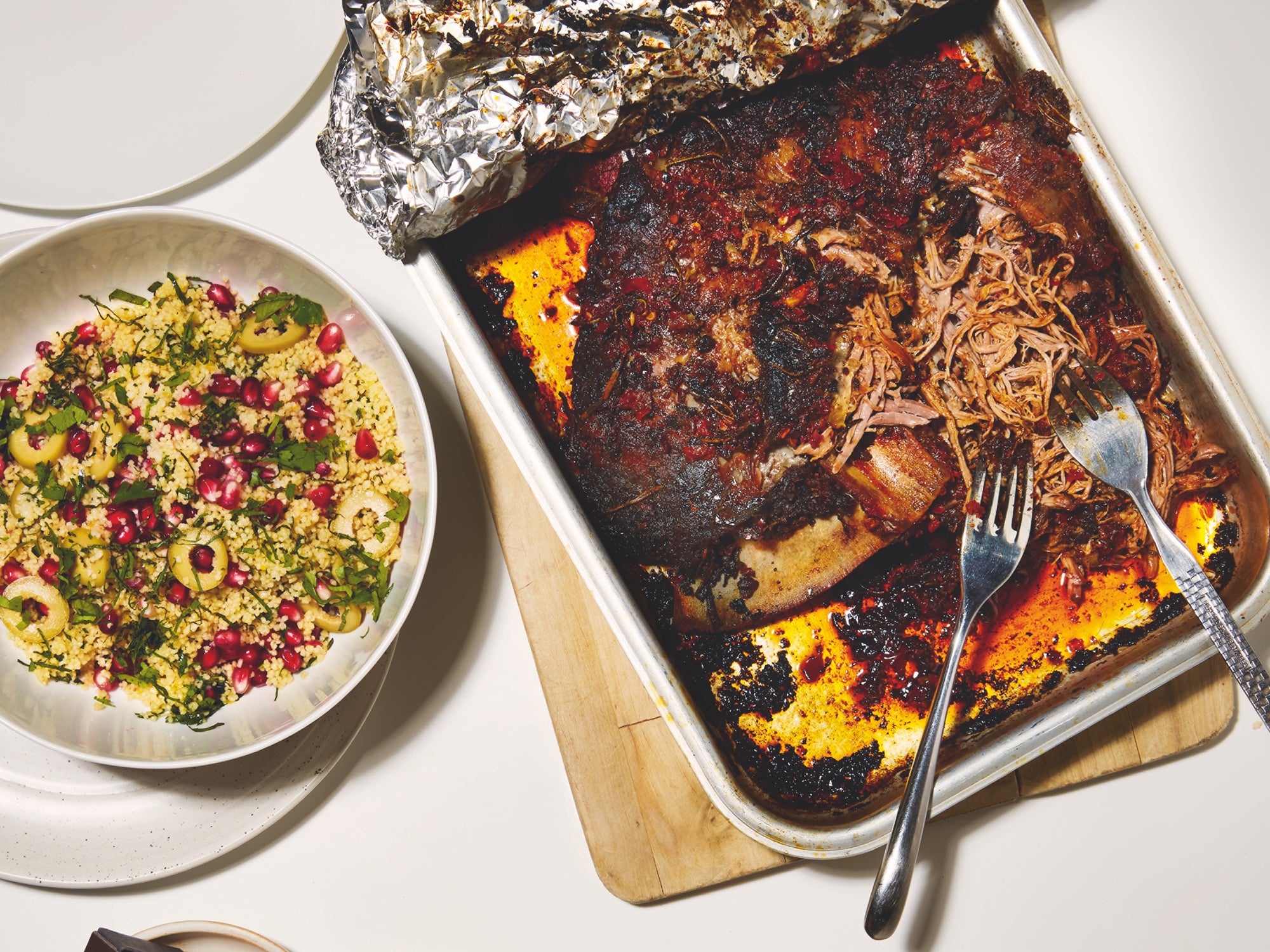
TikTok-famous chef Poppy O’Toole has described her mouth-watering dish as “a slow-roasted number that will turn even hardened lamb-haters”. If that doesn’t convince you, we don’t know what will... and the best bit? With this recipe, there will be plenty left for the day after too.
Serves: 4-6
Ingredients:
The core:
2 recipe quantities of easy flatbreads (see below)
For the lamb:
2tbsp rose harissa paste
3tbsp ras el hanout
Zest and juice of 1 lemon
5 garlic cloves, peeled
1tbsp light brown soft sugar
6 thyme sprigs, leaves picked
6 rosemary sprigs, leaves picked
2tbsp almond butter
2tbsp olive oil
1.4-1.5kg lamb shoulder on the bone
For the couscous:
200g couscous
Seeds of 1 pomegranate
A small bunch of mint, leaves picked and chopped
A small bunch of flat-leaf parsley, leaves picked and chopped
5-6 black or green olives, pitted and sliced
1tbsp dried oregano
Juice of 1 lemon
Salt and black pepper
For the flatbreads (makes 4):
250g plain flour, plus extra for dusting
250g Greek yogurt (or 125ml cup warm water + 2tbsp vegetable oil, if you’re vegan)
1tsp onion seeds, poppy seeds or sesame seeds
1tsp baking powder
Salt and black pepper
Method:
1. Start this the night before you want to cook. Place all of the lamb ingredients apart from the meat itself into a blender and blitz to a smooth paste to make a marinade.
2. With a knife, make some little incisions into the lamb shoulder to help the marinade get right into the meat. Rub and massage the marinade into the shoulder, until it’s completely covered.
3. Transfer the lamb to a roasting tin, cover with foil and place it in the fridge overnight (or for a minimum of six hours).
4. Make the flatbreads: in a bowl mix all the ingredients – flour, yoghurt, seeds, baking powder and seasoning – into a dough. Knead for about three minutes, to a soft but not sticky ball. Cover with a clean tea towel and leave for 10 minutes to rest.
5. Cut the ball into four equal pieces and use a rolling pin to roll each one out to a thin round. You’re aiming for them to be about 12cm/5in diameter – but don’t worry if they look rustic in shape. Set aside the rolled-flat flatbreads on a lightly floured surface.
6. Place a large, dry frying pan over a high heat. Leave it to get hot, then throw in the first flatbread – no oil, no butter, nothing… just dry, hot heat. Once bubbles start to form in the dough (about 30 seconds) and you’ve got a little bit of char on the underside, flip over the flatbread and cook the other side for about 30 seconds, to get a little bit of char there, too. Keep warm while you do the same with the remaining three flatbreads. That’s it, remove from the pan and either serve right away or cool and tightly wrap to store.
7. Put the couscous into a container big enough to allow it to double in size and pour in 400ml of cold water. Cover the bowl and transfer it to the fridge. Leave this overnight, too.
8. Remove the meat from the fridge 30 minutes before you intend to start cooking so that it can come up to room temperature, and preheat the oven to 190C/170C fan/375F/gas 5.
9. When you’re ready to cook, roast the lamb, still covered with the foil, for 4 hours, until it is charred a little on the outside and the meat is tender and pulls apart.
10. Drain the couscous through a fine sieve, so you don’t lose any of it. Mix all of the other couscous ingredients into it. Season with salt and pepper to taste and leave on the side to come up to room temperature.
11. Towards the end of the lamb cooking time, heat a dry frying pan over a high heat until it’s smoking hot. Place the flatbreads in the pan and warm through (or reheat them in a microwave).
12. Either serve your massive hunk of delicious lamb in the tin as it comes, or transfer it to a wooden board and pour all of the sauce that is left in the bottom of the roasting tin into a little jug.
13. Just let people dig and tear into this huge, sharing-lamb deliciousness, with the warmed flatbreads, the couscous and the sauce served alongside.
Recipe taken from ‘Poppy Cooks: The Food You Need’
Skye McAlpine’s pollo alla pizzaiola
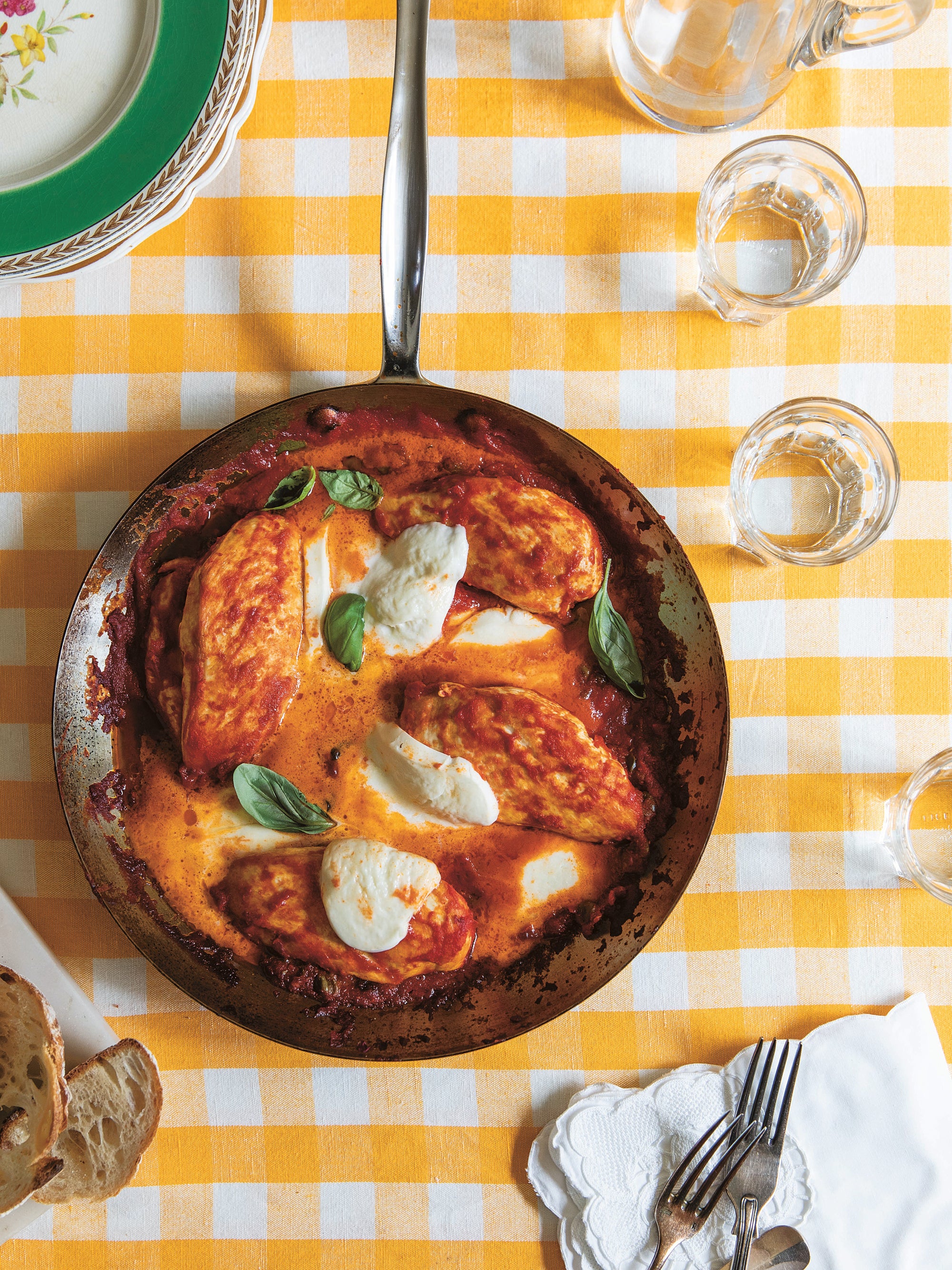
“The meat is browned, then lightly poached in rich tomato sauce, so it stays exquisitely tender,” says Skye McAlpine, “and each piece comes enrobed in a blanket of melting mozzarella. Absolutely essential with this is some crusty bread, for wiping up all the juices on your plate.”
Serves: 4
Ingredients:
2 tbsp olive oil
4 chicken breasts
460ml tomato sauce
2-3tbsp capers
Leaves from a small bunch of basil, chopped
200g mozzarella cheese, sliced
Sea salt flakes and freshly ground black pepper
Method:
1. Heat the olive oil in a large frying pan that has a lid; you want a pan that is large enough to fit the four chicken breasts. Brown the meat on both sides over a medium heat, then take the pan off the heat. Take the breasts out of the pan, set on a plate, and season generously with salt and pepper.
2. Put the tomato sauce in the frying pan while the pan is still off the heat, so the difference in temperature between sauce and hot pan doesn’t cause the sauce to spit, then put the pan back over the heat to warm through. Add the capers and basil. When the tomato begins to bubble, nestle the seasoned chicken in the pan.
3. Cook the chicken in the pan over a medium heat for seven to eight minutes, turning the breasts every now and then, until cooked through.
4. Lay a slice or two of mozzarella over each piece of chicken and cover the pan with its lid, or, if you don’t have a lid big enough, you can cover the pan with foil. Cook for a further minute or two, until the cheese is melted. Serve immediately.
From Skye McAlpine’s book, ‘A Table Full of Love’
Marcus Wareing’s Jerusalem artichoke and barley ‘risotto’ with grated bottarga
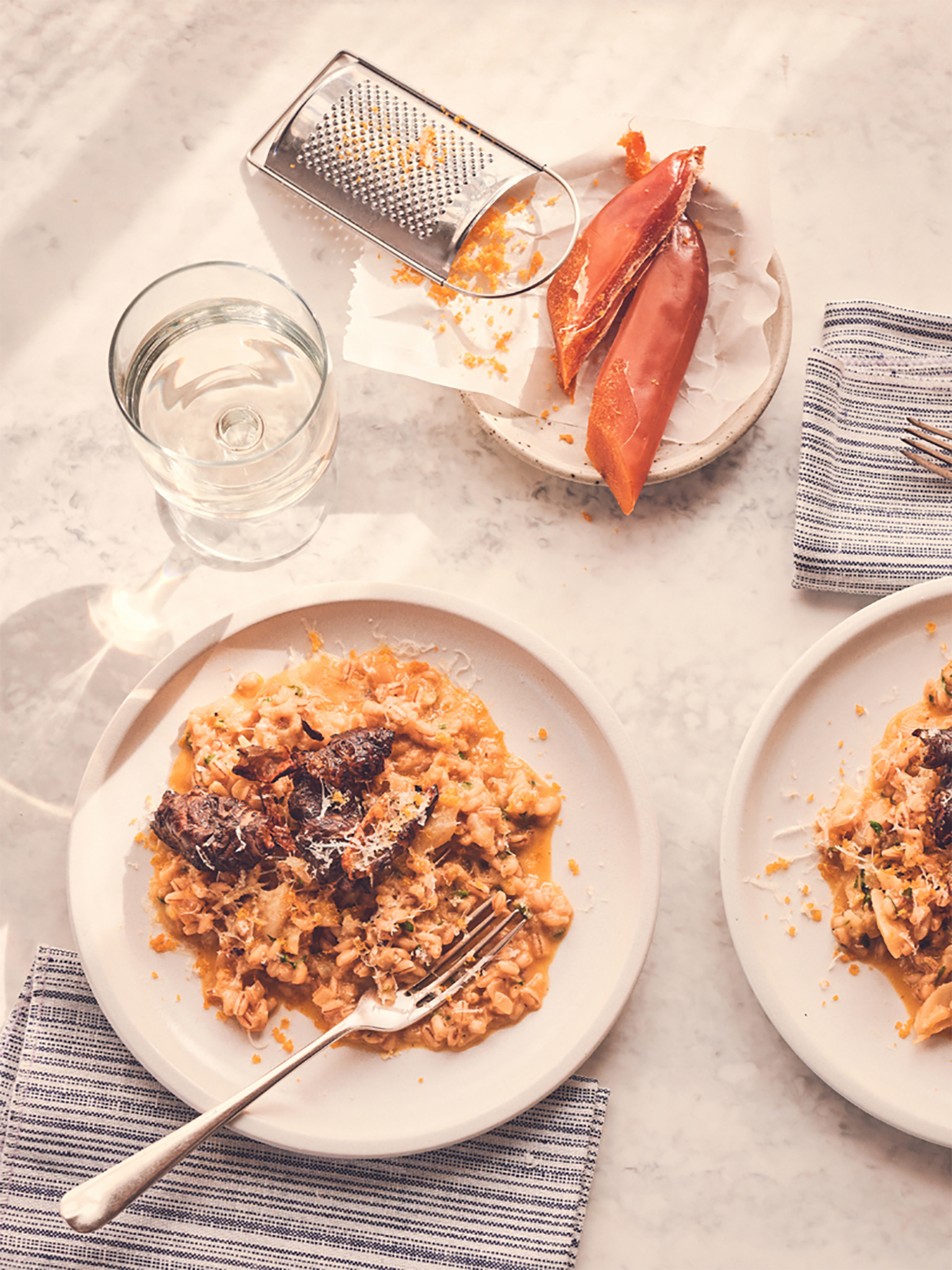
This is similar to a traditional risotto in texture and appearance, but is made with pearl barley instead of rice. It is easier to make because you don’t have to stand over the barley as it cooks. Bottarga is the salted and dried roe sac and is a unique delicacy with a big flavour – the dish will still work well without it, but do give it a try if you can find some.
Ingredients:
300g Jerusalem artichokes
2 sprigs of thyme
2 tbsp olive oil, plus extra for drizzling
1 onion, finely diced
200g pearl barley, rinsed and drained
150ml white wine
700ml good-quality hot vegetable stock
100g mascarpone
50g pecorino, grated
Juice of 1 lemon
½ bunch of tarragon, chopped
Sea salt and freshly ground black pepper
Bottarga, to serve
Method:
1. Put the artichokes, unpeeled, in a saucepan with the sprigs of thyme and a teaspoon of salt. Cover with cold water, place over high heat and bring to the boil, then reduce the heat slightly and cook for 15-20 minutes until they are soft when pieced with a knife.
2. Meanwhile, start the risotto. Heat the olive oil in a large saucepan over low-medium heat, add the diced onion and sweat for 8-10 minutes until soft and translucent, stirring every now and then. Add the wet barley and a pinch of salt and toast the grains in the oil for 1 minute, then add the white wine, turn up the heat a little and reduce until almost all the wine has evaporated.
3. Add the vegetable stock, season with black pepper and cook over medium heat for about 25 minutes until the barley is soft but still retains a slight bite. Meanwhile, preheat the oven to 170C/150C fan/gas 4.
4. While the barley is simmering, drain the artichokes through a sieve, then sit the sieve in a bowl and allow them to air-dry as they cool. Once cool enough to handle, cut the artichokes in half. Using a fork, scoop out the soft flesh and put it in a bowl then crush with the back of a fork. Set the crushed flesh aside for later and retain the skins.
5. Scatter the artichoke skins on a baking tray and dress with a little olive oil. Arrange them on a tray so they lie in a single even layer. Place in the oven and roast for about 15 minutes until crisp. Remove from the oven and season with a pinch of salt.
6. When the barley is ready and still over low heat, add the reserved crushed artichokes and stir everything together gently to warm the artichokes through in the risotto (keeping a bit of the texture as you mix), then remove from the heat.
7. To finish, stir through the mascarpone, grated pecorino, lemon juice and chopped tarragon. Stir well to encourage the mascarpone to melt, then season with salt and pepper to taste. The risotto should be thick but loose enough to be pourable.
8. Divide the risotto among four serving bowls, top each with a few of the crispy artichoke skins and finely grate over some bottarga for an extra layer of flavour.
Taken from Marcus Wareing’s book ‘Marcus’ Kitchen’
The best sweetie martini

No celebration is complete without a toast, so raise a glass to love with a sweetie martini (courtesy of Aldi), which is as refreshing as it is decadent
Serves: 2
Ingredients:
170g Strawberries, sliced
140g vanilla ice cream
2tsp vanilla extract
70ml vodka
150g ice
To garnish:
30g white chocolate
2 strawberries
15g dark chocolate, grated
Method:
1. Place the white chocolate in a heatproof bowl and melt by heating in short bursts in a microwave.
2. Dip the rims of the two martini glasses in the melted chocolate and sprinkle with the dark chocolate shavings.
3. Place the martini ingredients in a blender and blitz until smooth. Decant into the 2 glasses and top with a strawberry. Serve immediately.
Marcus Wareing’s baked honeycomb puddings
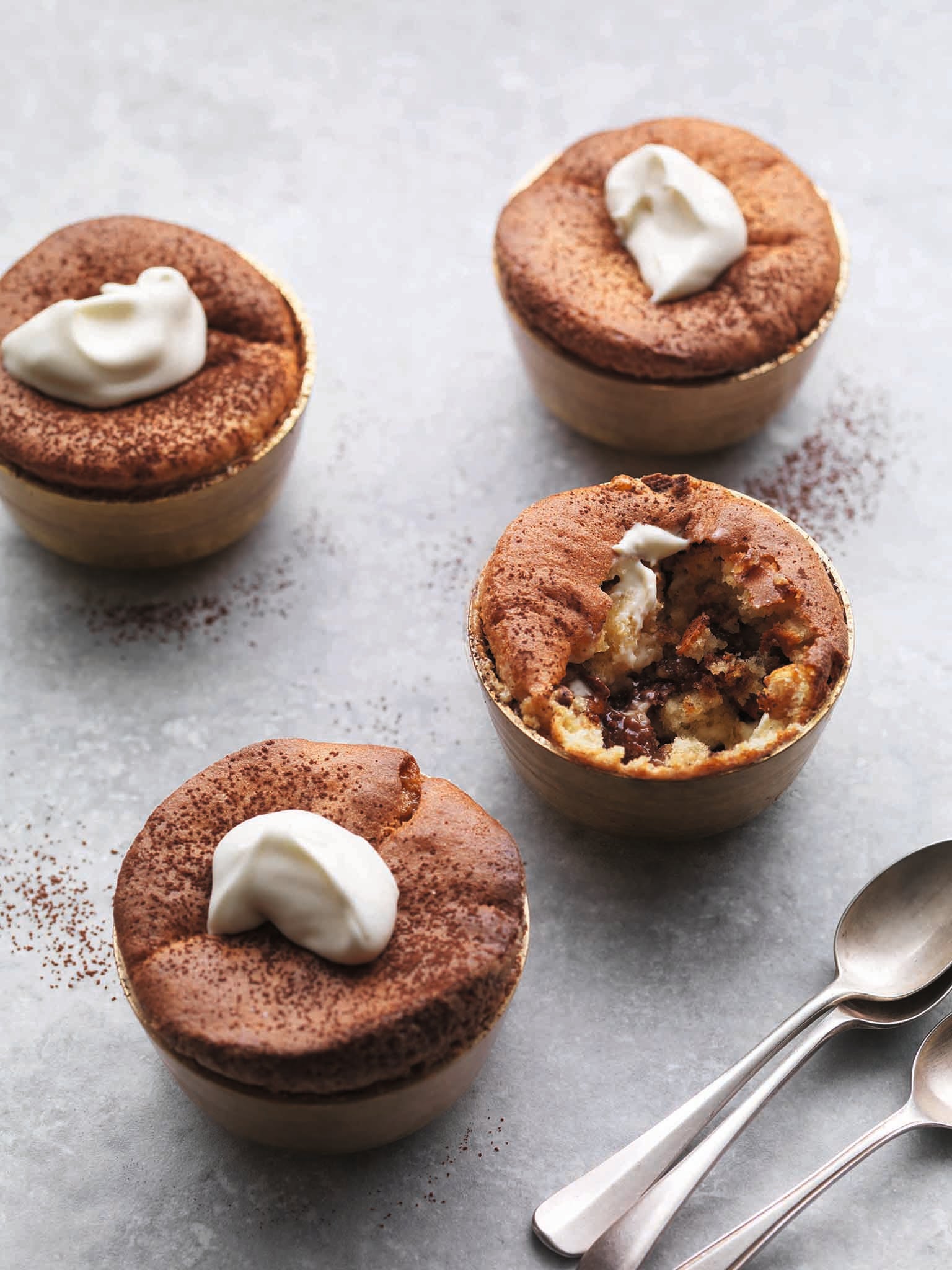
For dessert, you can’t go wrong with baked honeycomb pudding. Sweet and indulgent, these puds from Marcus Wareing will definitely make your Valentine swoon.
Serves: 4
Ingredients:
75g butter, plus extra for greasing
40g caster sugar, plus 1 tbsp extra
2 eggs
40g golden syrup
100g plain flour
1 tsp baking powder
2 x 40g chocolate-covered honeycomb bars, roughly chopped
Cocoa powder, to dust
Creme fraiche or ice cream, to serve
Method:
1. Preheat the oven to 200C/180C fan/gas 6.
2. Lightly butter four ramekins and sprinkle them evenly with the tablespoon of sugar.
3. Put the eggs and 40g caster sugar in a mixing bowl and whisk on high speed until light and fluffy.
4. Melt the 75g butter with the golden syrup in a pan then stir it into the eggs and sugar, and fold in the flour and baking powder.
5. Put a large spoonful of the pudding mixture into the bottom of the ramekins. Sprinkle the crushed honeycomb on top. Finish by spooning the remaining pudding mix over the honeycomb. Smooth over the surface with a palette knife.
6. Sit the ramekins on a baking tray and bake for around 15 minutes, until the puddings puff up and become golden.
7. Remove from the oven and leave the puddings to rest for 1-2 minutes, then dust with cocoa powder and serve with a spoonful of crème fraîche or ice cream.
Recipe taken from Marcus Wareing’s book ‘New Classics’
Jamie Oliver’s sticky toffee coffee pudding

Serves: 16
Ingredients:
For the pudding:
170g unsalted butter, plus extra for greasing (at room temperature)
340g self-raising flour, plus extra for dusting
450g fresh Medjool dates
1 level tsp ground cinnamon
1 whole nutmeg, for grating
50g walnut halves
170g golden caster sugar
170g dark muscovado sugar
4 large free-range eggs
For the caramel sauce:
250g unsalted butter
125g golden caster sugar
125g dark muscovado sugar
50ml espresso
50ml dark rum
250ml double cream
70g walnut halves
Method:
1. Preheat the oven to 180C/350F/gas 4. Grease and lightly flour a 26cm bundt tin or a 20cmx30cm baking dish.
2. Destone the dates and put into a food processor with the cinnamon and 300ml of boiling water, then finely grate in the whole nutmeg. Leave the dates to soak with the lid on for 10 minutes, then blitz to a purée, stopping occasionally to scrape down the sides to help it along.
3. Add the walnuts to the food processor and blitz again. Add both the sugars and the butter and blitz until combined. With the motor still running, crack in the eggs. Add the flour and a pinch of sea salt, then pulse until combined. Pour the pudding mixture into the prepared tin, then bake for 45 minutes, or until an inserted skewer comes out clean.
4. When your pudding is almost ready, make the sauce. Place a wide saucepan over a medium heat, cube and add the butter, then sprinkle over the sugars.
5. Once the butter has melted, stir in the espresso, carefully add the rum (it may splatter), then bring to the boil. Add the cream and walnuts, then reduce the heat to low and simmer for 5 minutes, or until the sauce has thickened and turned a lovely deep golden colour.
6. Remove the pudding from the oven. If using a bundt tin, flip out the cake onto a platter and brush it all over with the sauce – as the cake cools down, the sauce will harden into a delicate crisp layer. If using a baking dish, poke holes in the top and pour over one-third of the sauce.
7. Decorate the sponge with the walnuts, using a fork to remove them from the sauce. Serve with a jug of the remaining sauce and some double cream, ice cream or custard, if you like.
Recipe from Jamie Oliver Enterprises Limited 2024
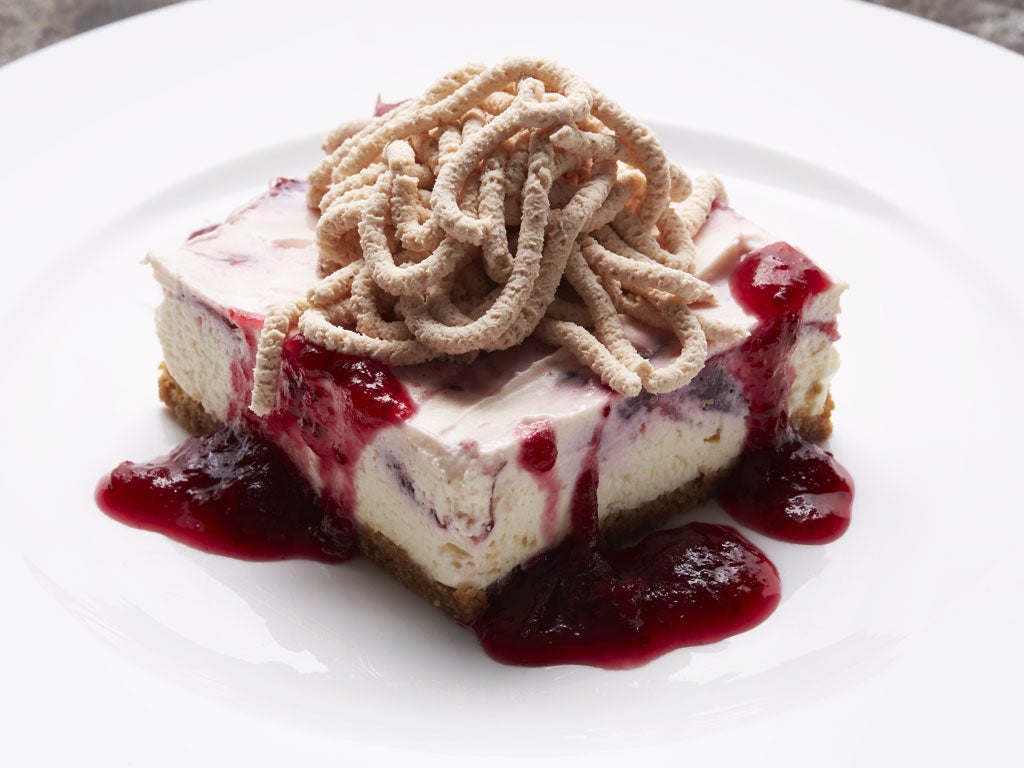
Mark Hix’s cranberry and chestnut cheesecake
Serves: 8-10
Ingredients:
150-200g fresh cranberries
Grated zest and juice of 1 orange
150g caster sugar
100ml water
1tsp cornflour
200g Hobnobs or digestives
80g butter, melted
For the cheesecake:
500g cream cheese, such as mascarpone, softened; you can also use Philadelphia
300ml double cream
120g caster sugar
120g prepared weight of vacuum-prepared chestnuts or fresh, roasted and shelled
Canned chestnut puree (optional)
Method:
1. Put the cranberries in a saucepan with the sugar, orange juice, zest and water, bring to the boil and simmer gently for about 5 minutes; then dilute the cornflour in a little water and stir into the cranberries. Continue simmering for a few minutes until the cranberries are just coated in 3-4tbsps of the thickened liquid, then remove from the heat and leave to cool at room temperature.
2. Place the shelled chestnuts on a tray lined with foil and scatter a couple of tbsps of sugar from the 120g you need for the cheesecake. Lightly toast under a medium grill, turning them as they are cooking, for 2-3 minutes.
3. In a food processor, crush the biscuits to a coarse breadcrumb-like consistency. To do this by hand, put the biscuits in a plastic bag and smash with a rolling pin. Next, mix them with the melted butter.
4. Line a 14-18cm round or square removable-bottomed cake or deep flan tin with greaseproof paper. Because the cheesecake is soft, the sides of the tin must be detachable. Pack the biscuit mixture into the tin, firming it down with the back of a spoon.
5. Using a mixing machine or by hand, whip the double cream and sugar until fairly stiff. In a clean bowl, again by machine or hand, soften the cream cheese then add the whipped cream. If you’re using mascarpone, rather than Philadelphia, you may need about 50g less cream. Carefully fold in half of the cranberry mixture and half the chestnuts to form a rippled effect. Now spoon the mix on to the biscuit base, leaving the top a bit rough. Leave to set in the fridge for 2-3 hours until firm. Remove the cheesecake from the tin – you may need to run a hot knife around the edge – then slide it on to a serving dish. Spoon the rest of the cranberry mixture on top and then scatter the rest of the pecans all over.
6. If you want to add a little final flourish – as I have done – buy canned chestnut puree. Put a small amount in an old-fashioned piping tube/cylinder and squeeze it over the top of the cheesecake.
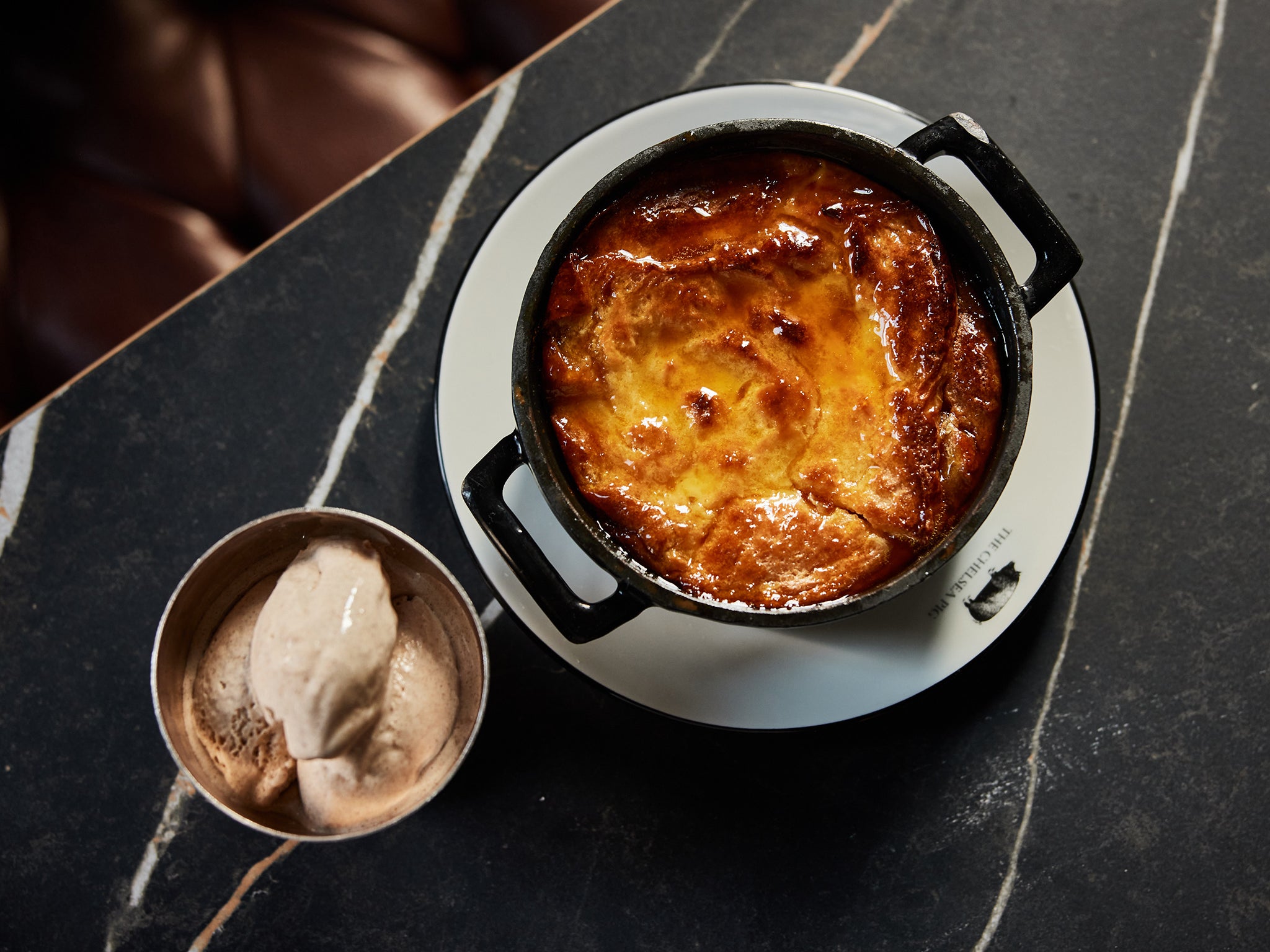
Fionnan Flood’s marmalade bread and butter pudding and cinnamon ice cream
Serves: 2
Ingredients:
For the custard:
110g milk
110g double cream
50g sugar
1 egg
20g egg yolk
For the marmalade bread and butter pudding:
6 brioche slices
Butter
Marmalade (to taste)
Caster sugar
1L orange juice
For the cinnamon ice cream:
330g milk
90g double cream
120g sugar
100g egg yolks
Vanilla extract (to taste)
½ tsp cinnamon powder
Method:
For the custard:
1. In a Kitchenaid, mix all the ingredients for the custard together until emulsified.
For the marmalade bread and butter pudding:
2. In a 5x4in cast-iron pot, melt a stick of butter over a low heat and spread this to evenly coat the base of the pan before dusting with a layer of sugar on top.
3. Separately, spread a liberal amount of butter on one side of each piece of brioche, before adding a layer of marmalade and forming into a sandwich.
4. Cut the sandwiches in half to make a triangle shape and gently place these into your cast iron pot without leaving any spaces or gaps.
5. Pour half your custard into the cast-iron pot to allow the brioche to fully absorb it, before adding the final half of the mix on top.
6. Using a bain-marie, steam your pudding at 150C for 25-30 minutes until cooked through, before allowing this to cool down completely.
7. Next, place the pudding in the oven and bake at 220C until puffed up and golden brown on top.
8. While your pudding is cooking, heat your orange juice in a saucepan with 150g of sugar until thickened into a syrupy consistency.
9. Pour syrup on top of your pudding when ready to serve, before adding a scoop of cinnamon ice cream.
For the cinnamon ice cream:
10. In a saucepan, pour in all the ice cream’s ingredients.
11. Heat the mix to 85C, constantly stirring until you reach a custard consistency.
12. Leave the mixture to cool before placing in the freezer and waiting overnight, or until completely frozen.
13. Cut your frozen custard into smaller pieces before using a blender to blitz until smooth.
14. Refreeze the mixture and use when required.
Join our commenting forum
Join thought-provoking conversations, follow other Independent readers and see their replies
Comments
Bookmark popover
Removed from bookmarks