Giorgio Armani, legendary Italian fashion designer, dies aged 91
The Piacenza-born designer transformed the look of modern menswear, redefined women’s workwear and built one of the world’s last great independent fashion empires
Giorgio Armani, the Italian designer who redefined modern fashion and built a global empire in his own name, has died aged 91.
From Piacenza, near Milan – the city that shaped him, Armani rose from modest beginnings to become a billionaire whose understated suits transformed how men and women dressed in the late 20th century. His name became a global shorthand for elegance, worn in boardrooms, on red carpets and on cinema screens. He died at home on Thursday.
At the time of his death, Armani’s fortune was estimated at $12.1bn (£9bn). He remained sole shareholder and chief executive of the house he created in 1975, presiding over an empire that stretched from Emporio and Armani Exchange to haute couture, hotels, restaurants, cosmetics and homeware.
He had been in declining health and was forced to withdraw from Milan Men’s Fashion Week in June – the first time in his career he had missed a show in the city where his career began.
“With infinite sorrow, the Armani Group announces the passing of its creator, founder, and tireless driving force: Giorgio Armani,” the fashion house said in a statement.

A funeral chamber will be opened in Milan on Saturday and Sunday, the company said, with a private service to follow at a later date.
With one of the most recognisable names in fashion, Armani is regarded by historians and critics as among the most influential European designers of the 20th century. Known in Italy as “Re Giorgio” – King Giorgio – he was celebrated for his exacting standards, personally overseeing everything from advertising campaigns to the way models’ hair was styled before stepping on the runway.
In a statement, his company said he had forged a “vision that expanded from fashion to every aspect of life, anticipating the times with extraordinary clarity and pragmatism”. It added that Armani had been “mindful of the needs of the community” and “active on many fronts, especially in support of his beloved Milan”. The house described itself as “a reflection of this spirit” and pledged to uphold his values.
Tributes from across the fashion world poured in. Donatella Versace said: “The world has lost a giant today.”
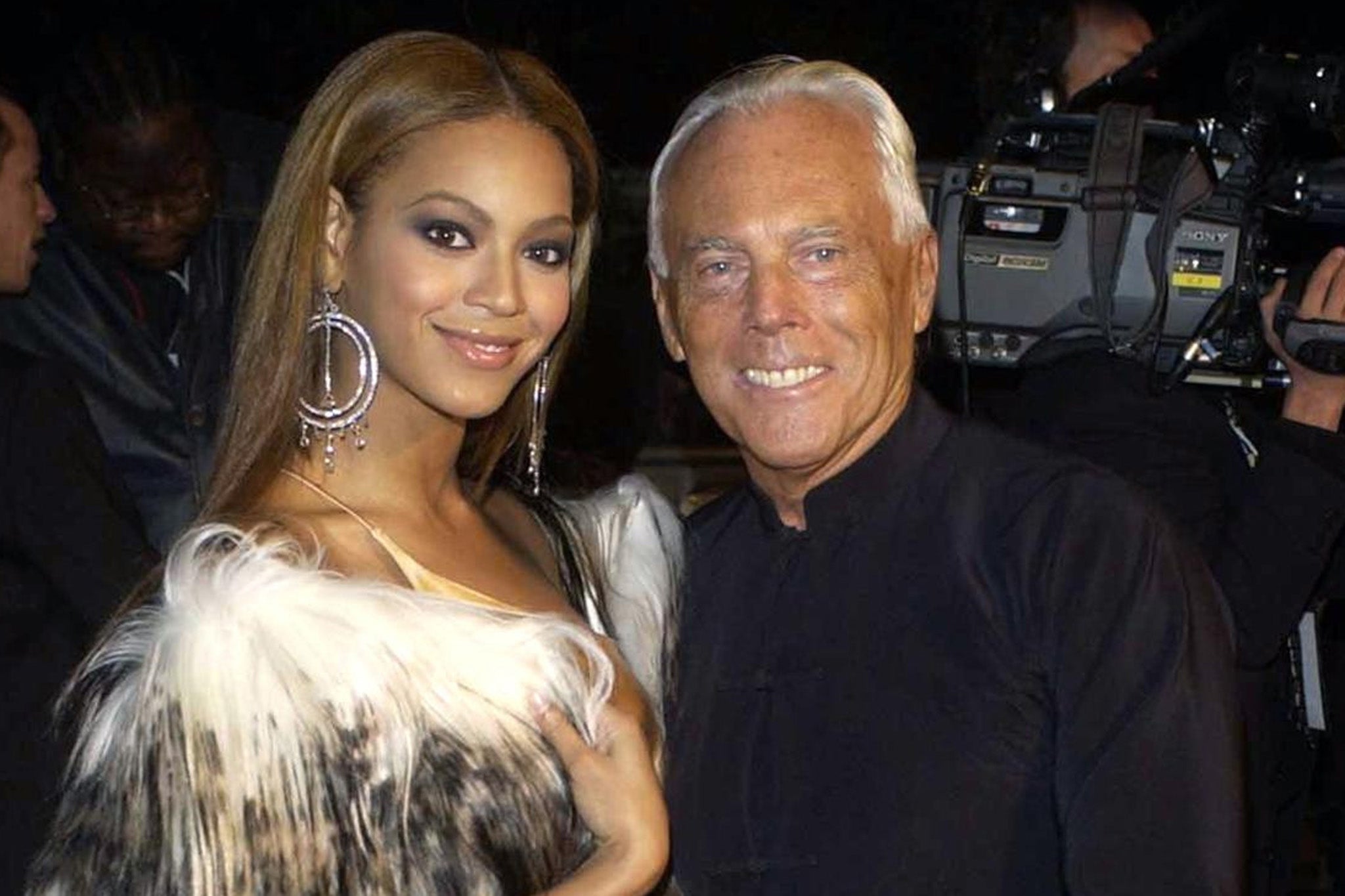
Italy’s prime minister, Giorgia Meloni, paid tribute online, describing Armani as “a man of elegance, sobriety and creativity” who “was able to bring lustre to Italian fashion and inspire the entire world. An icon, a tireless worker, a symbol of the best of Italy. Thank you for everything.”
German actor Diane Kruger, who frequently wore Armani on red carpets, wrote: “Incredibly saddened to hear about the passing of Giorgio Armani. One of the nicest people and mentors I was lucky enough to meet and work with.”
Armani is credited with giving working women of the 1980s a wardrobe of timeless, feminine suits designed for the office. Later in his career, he would say that he created clothes for “the public, not the fashion industry”.
After launching his eponymous label in 1975, he oversaw its transformation into a global empire. The brand grew from menswear into Emporio Armani, Armani Exchange and the high-end Giorgio Armani line, alongside accessories, footwear, cosmetics and homeware.
Perhaps more than any other designer, Armani managed to influence not only fashion but lifestyle itself, reshaping how people travelled, ate and worked. At the time of his death, he was one of Italy’s richest men, with business interests spanning restaurants, luxury hotels – including the Armani Hotel in Dubai’s Burj Khalifa – and a beauty partnership with L’Oréal.
Though his designs evolved across the decades, he remained best known for revolutionising the way women dressed for work and expressed themselves in professional settings. His runway shows often leaned towards the theatrical, with shimmering headpieces, ruffled collars and sequinned gowns – yet always built on the foundation of a clean, classic silhouette.

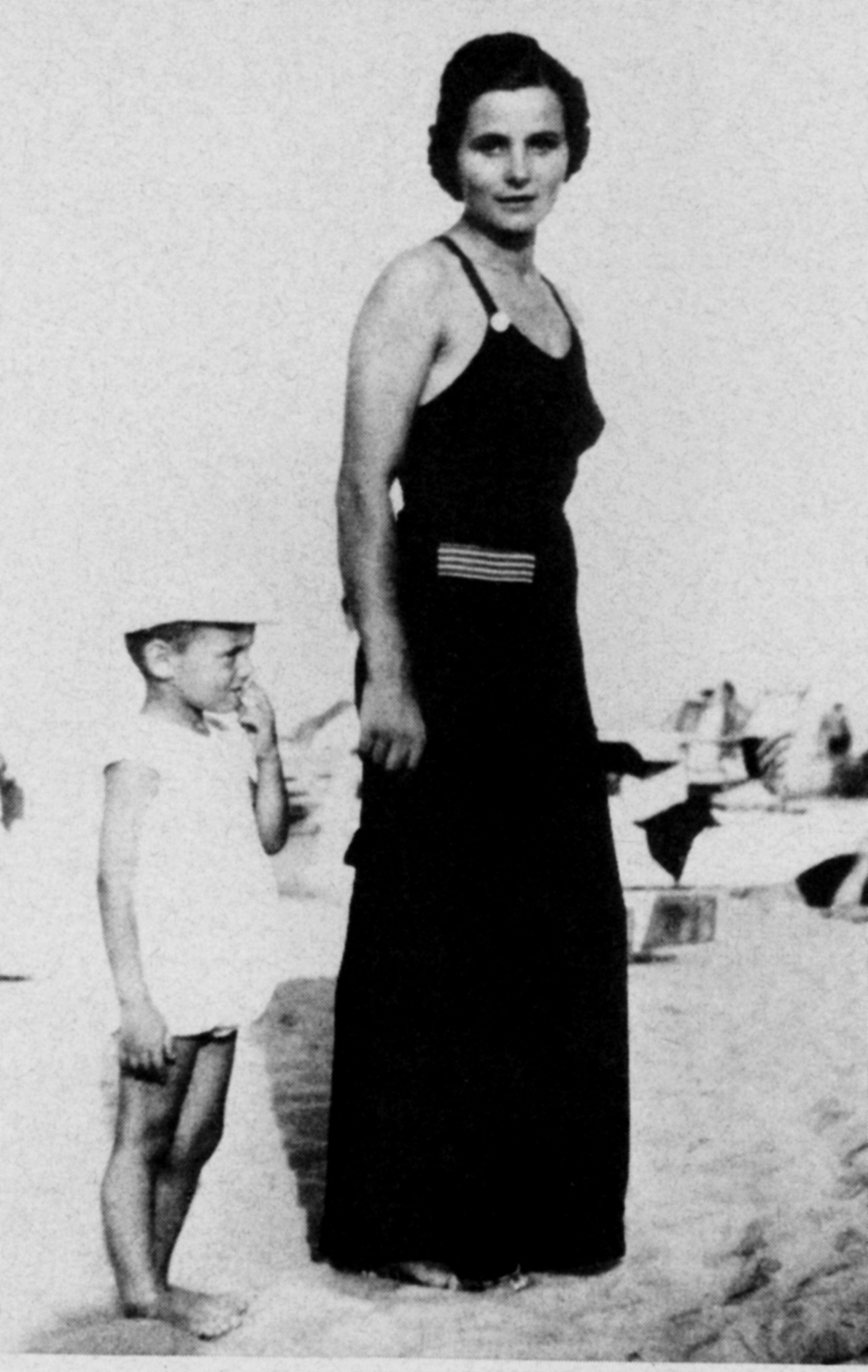
Giorgio Armani was born in Piacenza, northern Italy, on 11 July 1934, the middle child of Maria Raimondi and Ugo Armani, and grew up with his older brother Sergio and younger sister Rosanna. The family had little money, but Armani later recalled how his school friends envied the handmade clothes sewn by his mother. He often spoke of being inspired by his parents’ “inner elegance”, despite their modest means.
As a young man, he aspired to a career in medicine and enrolled at the University of Milan, studying in the faculty of medicine for three years before abandoning the course in 1953. After a spell of national service with the Italian army, where he was stationed at an infirmary in Verona, he turned instead to retail. He joined the Milan department store La Rinascente as a window dresser, working his way up to the menswear department before securing his first design role with Nino Cerruti in the 1960s.
In that decade, he also met Sergio Galeotti, an architect who would become his partner in both life and business. Together they founded the Giorgio Armani label in 1975, when Armani was 41. That October, he unveiled his debut collection: a men’s ready-to-wear line for spring/summer 1976, followed by a women’s line in the same season.

The label’s breakthrough came in 1980, when Armani dressed Richard Gere for his role as Julian Kaye in American Gigolo. The film, with its sleek tailoring and languid sensuality, made Armani a household name and cemented his reputation in Hollywood. He went on to design costumes for Brian De Palma’s The Untouchables (1987) and, decades later, for Leonardo DiCaprio in The Wolf of Wall Street (2013).
Though best known for his revolution in suiting – stripping away padding and stiffness to create a natural, unforced elegance – Armani steadily expanded his reach beyond ready-to-wear. In the early 1980s, he introduced Emporio Armani, Armani Jeans and Armani Junior, followed by lines for underwear, swimwear and accessories. By the early Eighties, he had signed a landmark agreement with the French beauty giant L’Oréal, launching Armani Beauty, which remains one of the most successful global cosmetics brands today.

In 1991, Armani launched A/X Armani Exchange, a line of simpler, more affordable designs offering everyday pieces such as T-shirts for men and women. He became a fixture on red carpets, dressing Hollywood stars and musicians, and was credited with shaping the look of his friend Eric Clapton, even outfitting the guitarist’s entire band in Armani.
Fiercely private about his personal life, he acknowledged in a 2000 interview with Vanity Fair: “I have had women in my life. And sometimes men.”
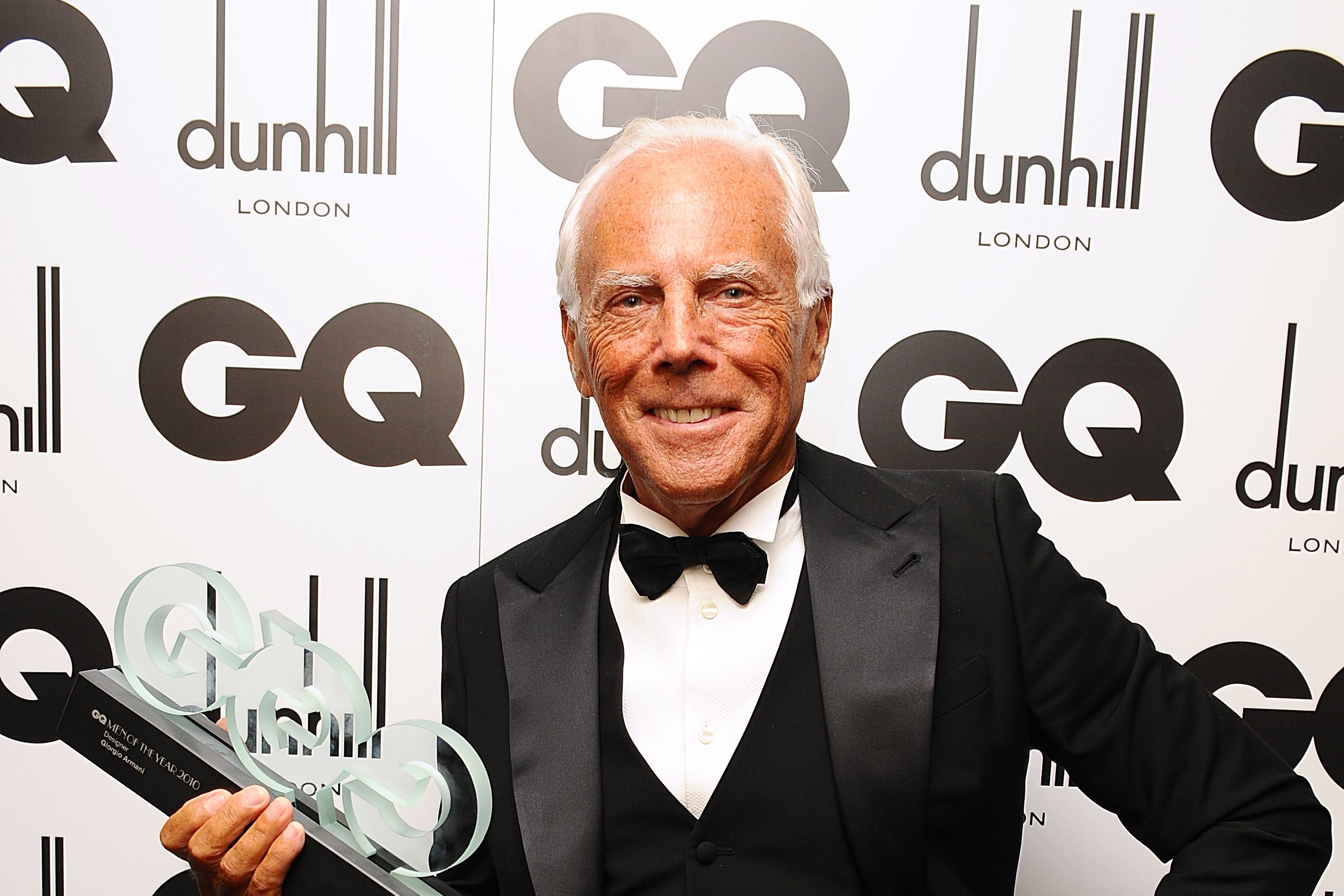
Until his death he remained chief executive and sole shareholder of Giorgio Armani S.p.A, making it one of the few major Italian fashion houses of his generation to remain independent of global conglomerates. He was also an early pioneer of technology, becoming the first haute couture designer to broadcast a collection live on the internet with his Armani Privé spring/summer 2007 show, streamed via MSN.
Armani maintained close control over every aspect of the business. Former aides noted that no document or financial figure passed without his approval. In one of his final interviews, he admitted to the Financial Times that his greatest fear was death, because it would mean relinquishing control of his label.
“I know Giorgio Armani, the company, is identified with me,” he said in 2023. “So it is my responsibility to make sure this will continue and that the company will have a footprint that will resemble il signor Armani.”
In later years Armani became increasingly outspoken about the industry he had helped to shape. He described Anna Wintour, the powerful US Vogue editor, as “not professional”, and criticised the way some gay men dressed, declaring that “a man has to be a man”. He also called John Galliano, dismissed by Dior in 2011 after making antisemitic remarks, “a genius but also a victim”.
To those who dismissed his work as too commercial or too restrained, Armani countered that his designs were created for “the public, not the fashion industry”.
He never married and had no children. He is survived by his nieces Roberta and Silvana Armani, both of whom work for the company, and by his nephew Andrea Camerana, a board member of the group.
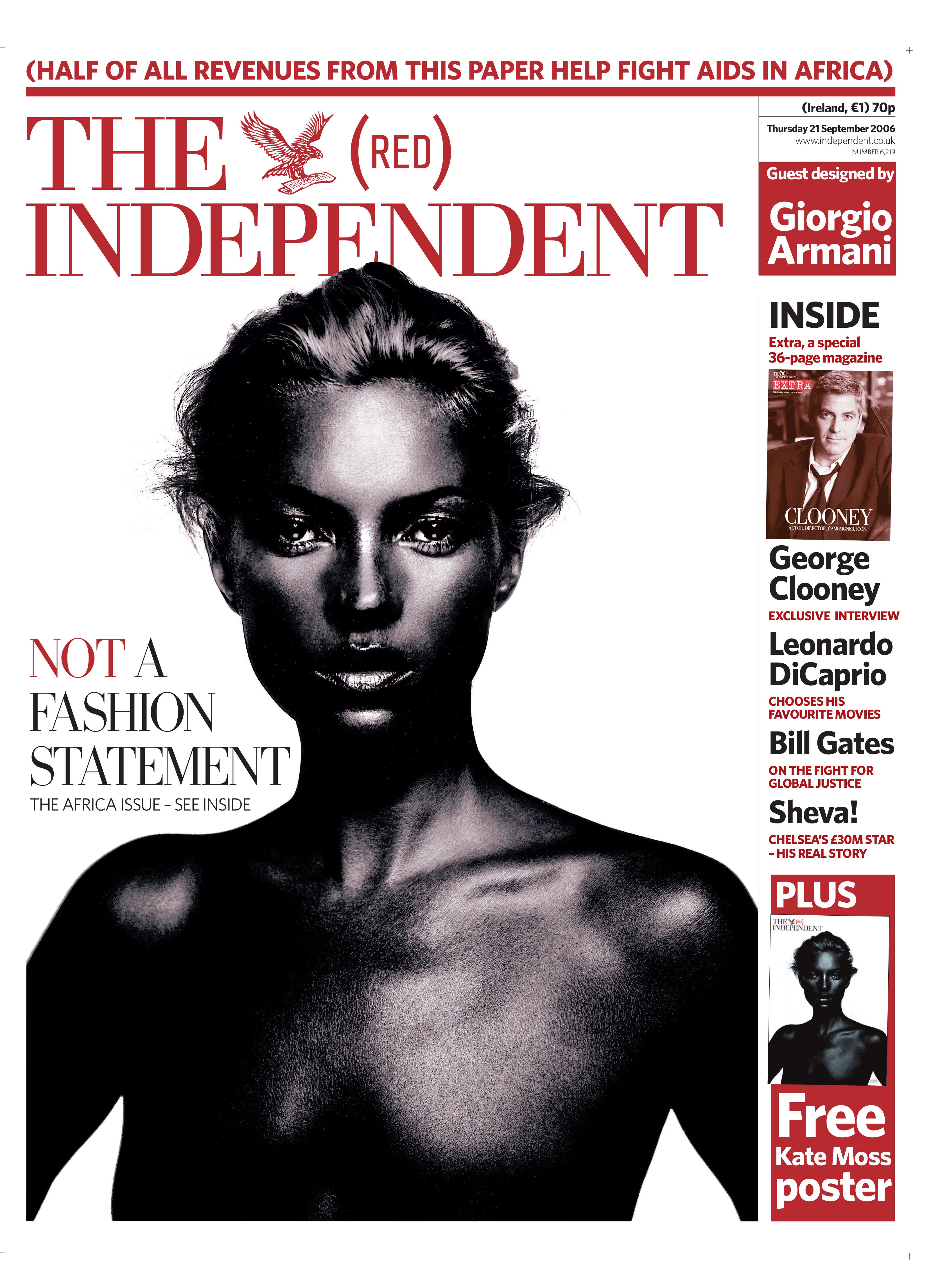
In 2006 he served as guest editor of The Independent, using the platform to highlight his wider cultural influence beyond fashion.
Join our commenting forum
Join thought-provoking conversations, follow other Independent readers and see their replies
Comments
Bookmark popover
Removed from bookmarks