The Independent's journalism is supported by our readers. When you purchase through links on our site, we may earn commission.
From sourdough to the far-right: How the tradwife trend is quietly radicalising women
Tradwife content on social media is more popular than ever, selling an ideal of femininity rooted in nostalgia. But behind the recipes and dresses, Roni Zahavi-Brunner uncovers a pipeline feeding young women into alt-right ideology
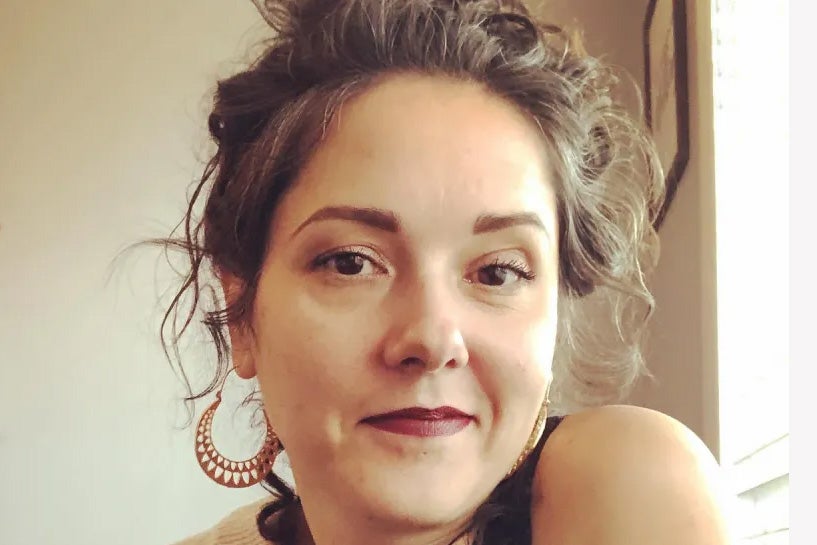
Sarah once prided herself on being a good tradwife. Her purpose, she believed, was inside the home: cooking every meal from scratch and waking up at dawn to clean. “I wanted to be a submissive wife and let my husband lead,” she recalls.
It was a dream she formed as a teenager searching for advice on YouTube: “I was looking for how to clean a house, how to cook on a budget, really mundane things because I was not a huge fan of how my parents’ household was run, and I wanted something different.” Tradwife influencers offered her both practical tips and an aesthetic vision of domestic bliss.
But gradually, that content became a gateway to more extreme ideas, and Sarah fell down the alt-right pipeline. “It starts really harmless, like ‘five easy healthy meals’ all the way to ‘as a woman it’s my job to steward the home’,” she explains. “I ended up going for it hook, line, and sinker.”
By 18, Sarah was married and fully devoted to the tradwife lifestyle. She thought women were biologically built for cooking, cleaning, and child-rearing. Processed food became poison, and protecting her family from it was her duty as a good wife. She was convinced that science, medicine, and the government were systems designed to brainwash and control her. Climate change, she insisted, was a total hoax.


Now 26, Sarah has escaped the life she describes as a cult. She was miserable as a tradwife and her then-husband became abusive. “The whole point, I thought, was to keep women in the home because we will be taken care of and provided for, but that wasn’t my experience. I realised that being the perfect tradwife wasn’t going to save me.”
Despite stories like Sarah’s, tradwife content online is more popular than ever. Influencers embracing conservative gender roles have gone mainstream, depicting a romanticised image of homemaking, homesteading, and stay-at-home motherhood. Nara Smith, for example, is famous for ASMR-like videos of her made-from-scratch snacks, with more than 12 million followers. And Hannah Neeleman, a mother of eight, is better known as Ballerina Farm, who has garnered more than 10 million followers by posting videos of her rural homesteading life.
But there can be more to this content than recipes and the promise of a quaint life on a farm. In between clips, kneading dough to acoustic music or getting ready with whispery voiceovers, some tradwife creators subtly open the door to conspiracy theories and extremist ideas.
Caitlin Huber, known online as Mrs. Midwest, is a smiling wife and mother with a carefully cultivated image of effortless traditional femininity and 203,000 subscribers, who was once one of Sarah’s role models. Her mommy vlogs and beauty tips seemed harmless, but she slowly slipped far-right white nationalist ideas into her videos, even publicly praising figures like Stefan Molyneux, an advocate for eugenics and scientific racism. “You see this person who you learned to trust, and you think ‘oh, I tried her recipe and I loved it’, and you fall into it,” Sarah explains.
Suddenly, Sarah’s recommended videos and search results were flooded with conspiracy theories and far-right content. Looking back, nothing about it feels like a coincidence to her. “These algorithms, the tradwife or healthy food to alt-right pipeline, all of that is not an accident.”
Sarah’s story echoes the vast research into the manosphere's radicalisation pipeline: how boys are fed disinformation and extreme ideas on TikTok, how figures like Andrew Tate and Nick Fuentes prey on men’s unprocessed rage and insecurity.
Associations of the alt-right are often white men and boys looking to blame feminism, people of colour, and migrants for everything wrong in their lives. But could it be that we have missed a parallel – and equally insidious – pipeline targeting women, using curated aesthetics instead of entitlement?
What happened when I ‘became’ a tradwife
I decided to follow the tradwife to far-right pipeline myself. To trace the path Sarah described, I created five fake online personas: young women looking for domestic inspiration on social media. Using burner TikTok and Instagram accounts (attached to burner Android profiles and email addresses to ensure nothing else would interfere with the algorithm), I began interacting with tradwife content: following major creators, liking and commenting, and diving into hashtags like #homemaking and #tradlife. Then, I scrolled, tracking what the algorithms served next.
Each time, it started innocently enough: gardening tips, vintage dresses, tutorials on making recycled paper. But subtly, the algorithm did its thing. A creator named Jasmine Darke, known as jasminedinis, told me that while she could do anything a man could, she’d “much rather bake bread and frolic around the house in pretty dresses all day. I don’t want a job, I don’t want to be a corporate girlie... I want to be home. I want to be cooking in the kitchen. I want to be cleaning, shopping, making brownies”.
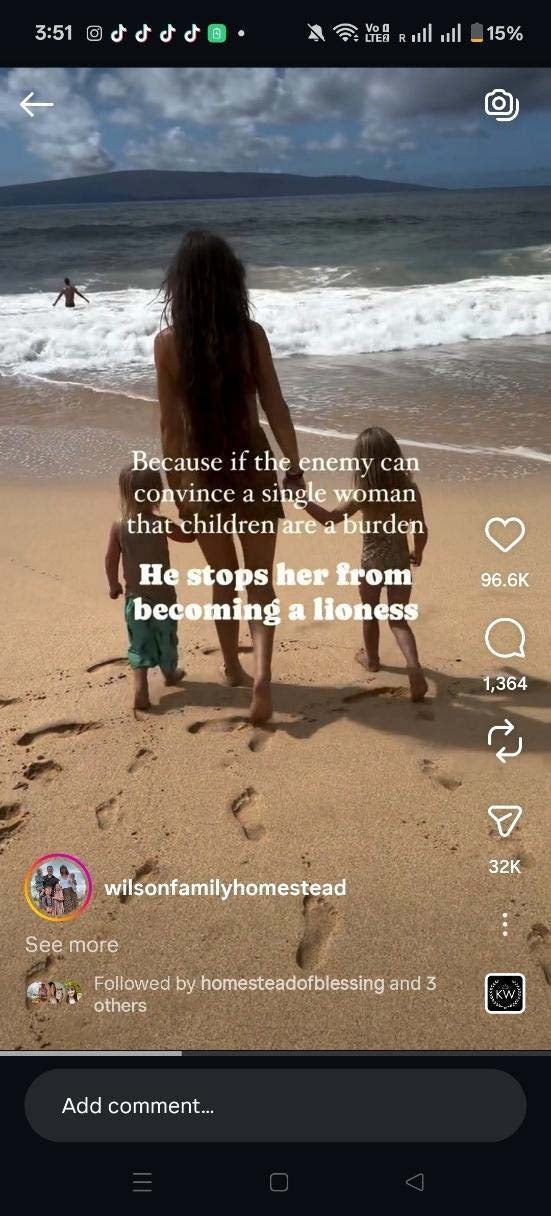
The message, however, quickly shifted from “I want” to “you belong”. My feed began urging me to embrace my innate femininity through motherhood and homemaking and to submit to my husband. Video after video argued that elite feminists had stolen my chances at happiness by ripping women out of their natural place in the home.
The anti-feminist content was predictable. But it got weirder. Clips of homemade cough syrup for my fake persona’s little ones were followed by stories about paediatricians and scientists intentionally making children sick. DIY vegetable preservation videos were replaced by warnings that USDA canning guidelines were designed to kill people. The more my finger flicked the screen, the bolder the claims got. In one video, viewed more than 4.5 million times, tradwife Gubba Homestead explained that catastrophic floods were not natural disasters, but the result of government weather manipulation.
Less than two hours in, the feed showed me a wellness influencer arguing that Holocaust gas chambers were actually “showers to protect migrants from fleas” and that Hitler was unfairly vilified by American historians. Her video had more than six thousand likes.
You might think it would be ridiculous to fall for any of this. But the algorithm is smart, starting by laying the ground and seeding mistrust with light lies. For example, influencer Alex Fasulo, a self-describing “ecopreneur”, argued clearly on my TikTok “for you” page that solar energy “empires” were destroying small farmers and traditional lands with the help of public subsidies, using graphs to illustrate her point.
If I hadn’t intentionally been looking for misinformation and had not researched her claims (which were easily debunked) I would have probably fallen for this myself. Once you start believing such disinformation, more extreme conspiracies later seem logical.
Nothing about this is accidental, and while we must hold creators to account, we can’t just blame the already extreme content. “There are real algorithmic pathways that lead people to more extreme content,” explains Cecile Simmons, an expert on digital policy, misogyny, and hate speech, and the author of CTRL HATE DELETE: The New Anti-Feminist Backlash and How We Fight It.
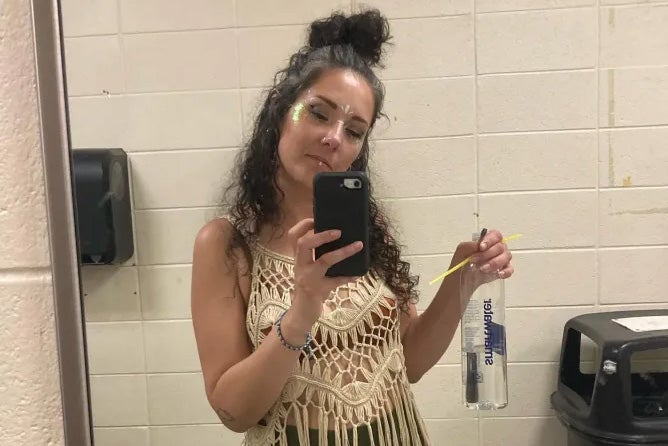
Platforms like TikTok and Instagram are so effectively engineered to keep you scrolling forever that they’ll happily lead you off a cliff just to keep your dopamine high. “We know that algorithms recommend more extreme content to users to keep them engaged,” Simmons explains. Last year, researchers at University College London and the University of Kent found that “the algorithm privileges more extreme material, and through increased usage, users are gradually exposed to more misogynistic ideologies which are presented and gamified through soft or humorous cultural forms”.
Life in the femme alt-right Matrix
Enitza Templeton once lived a life of submission to her husband. It didn’t matter what she wanted; her desires were his desires. She juggled the equivalent of multiple full-time jobs: homeschooling the kids, baking fresh bread before dawn, and managing all the household chores.
She used to believe anything mass-made was poisonous and that traditional schooling would expose her children to evil sources. “It’s this great distrust in experts, the idea that the bad people, the evil people have infiltrated everything, and everybody is lying to us and trying to hurt us, and the government just wants to control us,” she says now.

Of course, not all tradwife content creators are promoting these extreme ideologies. The problem, however, is that once you go down the tradwife rabbit hole you’re bombarded with so much content that the kernels of truth snowball into an all-consuming paranoia until you are unable to discern valid critique from conspiracy, and everything outside of your own ecosystem becomes evil. “It creates this little bubble, to keep you brainwashed from anybody that can speak some sense into you, but you’re just thinking ‘I’m keeping my family safe’,” Templeton recalls.
One day, Templeton reached a breaking point and knew she had to end her marriage. Nowadays, divorced with four kids, she creates popular TikToks and produces the Emerging Motherhood podcast to empower women to seek their true selves beyond traditional gendered expectations and to deconstruct the harmful ideology of tradwives.
Many of those harmful ideas are popular in the manosphere as well, where the pipeline is also designed to make its targets think that they have unlocked the truth about the world: they can see the reality that other people are oblivious to. In other words, they have taken the “red pill”. Just like in the manosphere, the femme alt-right is full of videos of young women talking about the tough responsibility of being aware that you live in “the Matrix”.
Sarah recognised this feeling from her own past: “You believe that you have some sort of knowledge that all the ‘normal’ people don’t have. There is an air of superiority to it – like, I possess wisdom that you are just too weak to understand.” Eventually, it was her husband’s abuse that convinced Sarah she had to leave and start a new life, but she remained a “conspiracy theorist”, even after her divorce. It was only a few years ago that she slowly found reliable sources and started untangling the disinformation web.
The tradwife lifestyle illusion

Tradwife content is perhaps so popular because it offers an appealing escape from a broken and overwhelming world. The unemployment rate for young workers in the US is at double digits, the highest it has been since the pandemic. Even those with a job are struggling to make ends meet due to stagnating wages and the rising cost of pretty much everything (and that’s without mentioning student debt). Paired with the fact that 60 per cent of young people report being extremely worried about the climate and their future, its no wonder that people are looking for a way out.
“[Tradwives] are fixated on a time in history where the US was more clearly globally dominant,” explains Sarah Brouillette, a professor at Carleton University. “They’re presenting the breadwinner/housewife historical dynamic as if it’s an available lifestyle that you can just opt into. But the idea that women can just go back to being in the home and men can go to work is an illusion, it’s not possible for most families. There is no way you can say women are working just because of feminism – women are working because they have to.”
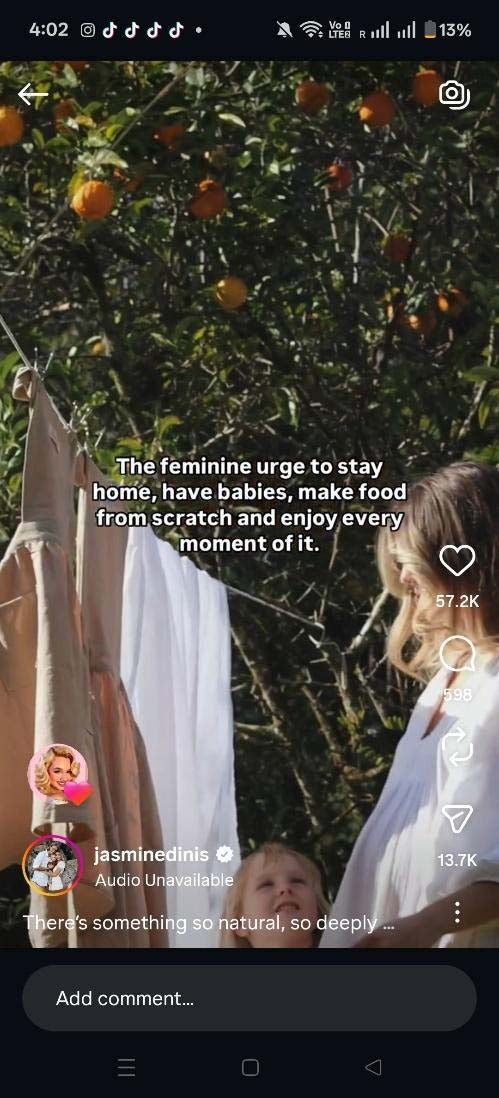
The image of a romanticised past as a political project echoes the MAGA movement. The messaging can be quite similar, for example, in posts saying: “I think the reason we are all obsessed with the 1980s and 1990s vibes is because that was the last time we all felt safe”, or “it wasn’t long ago that homeschool was just school and home-grown food was just food”.
Interestingly, most tradwives won’t try to recruit you to become overtly political; the focus is more on being quiet. Jasmine Darke once went viral with a post saying: “I used to be really into politics, but now I just relax while my husband tells me what to think.”
Templeton had a similar experience in her days as a tradwife; she did not even have a smartphone to scroll on. “If you think it’s your job to protect your family, you’ll be too busy cooking and cleaning and homeschooling, you’re not gonna be able to have a say in anything that’s happening in this world.”
These examples sound extreme, but there are more subtle versions packaged as self-care. My feed encouraged me to stop looking at the news, with one account longing for a time “before the internet took over and we all became vastly aware of the atrocities of the world”, and another telling me that headlines bring more pain than peace, and that I should instead turn to the things that bring life and light, like kids or nature.
It’s tempting for me – but even more so for women who have been left behind by the mainstream brand of “girlboss” feminism where only rich women can “have it all”. Most women do the majority, if not all, of the unpaid childcare and chores while also holding down a full-time job outside the house. Tradwives don’t tell them it’s empowering; instead, they say that you are right to be tired. You were not built to take on so much. What if you only did the housework?
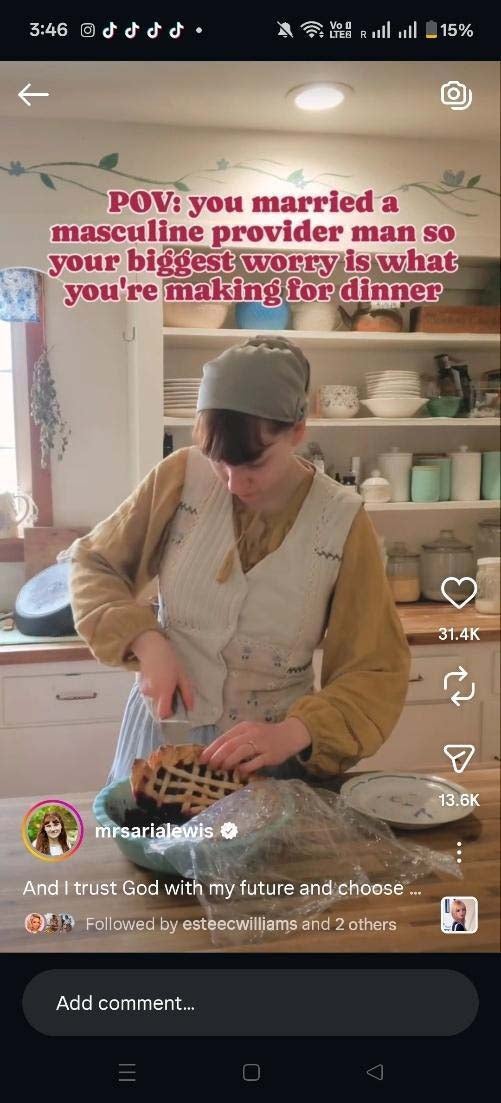
To counter this, “the discussion has to be focused on what feminism and progressive organising can achieve for women,” explains researcher Cecile Simmons. “We need real, concrete campaigning that actually achieves results, that offers something other than the commercial feminism that we see today that only speaks to a minority.”
Instead of a return to an imagined past, we need to offer a fight for a liveable future. The good news is that people like Enitza Templeton or Sarah have managed to find their way out from the alt-right – and others can, too.
“There are a lot of elements that I am still deconstructing,” Sarah says. “I have to remind myself sometimes that it is not a moral failing that my husband makes dinner.”
Research for this article was made possible with the support of the Heinrich Böll Foundation, Washington, DC
Join our commenting forum
Join thought-provoking conversations, follow other Independent readers and see their replies
Comments
Bookmark popover
Removed from bookmarks