The True Cost of Growing Your Own: Does a Greenhouse Actually Pay for Itself?
With grocery bills still squeezing household budgets, more Britons are eyeing up greenhouses. But will that glass structure actually save you money, or is it an expensive fantasy? Here’s a closer look at the numbers.
.jpg)
The Independent was not involved in the creation of this sponsored content.
There’s a moment every January when seed catalogues land on doormats across Britain and a familiar thought takes hold: “This year, I’m going to grow my own.”
For many, that thought quickly expands to include a greenhouse. The logic seems sound enough. Extend your growing season, protect tender crops from unpredictable British weather, and harvest tomatoes that actually taste of something. But beneath the romantic vision lies an uncomfortable question that rarely gets an honest answer: Does a greenhouse actually pay for itself?
With quality greenhouses ranging from £500 to £5,000, the maths should be straightforward. It isn’t.
The upfront reality
The true cost of getting started is often overlooked.
A decent aluminium greenhouse suitable for a family’s growing ambitions—traditionally an 8ft x 6ft model—typically costs between £600 and £1,200. However, with modern gardens shrinking, many buyers are now finding that 6ft x 6ft or 6ft x 4ft models offer a more practical entry point, often cutting that initial outlay significantly.
.jpeg)
Opt for a high-quality wooden structure, and you’re looking at £2,000 to £4,500. At the premium end, a bespoke Victorian-style greenhouse can easily exceed £15,000.
But the sticker price is just the beginning.
“The greenhouse itself is often only 60–70% of the total investment,” explains Matt from Greenhouse Stores, a specialist online greenhouse retailer. “Base preparation, delivery, accessories, and installation can add 30–50% to your initial budget.”
A concrete or slab base typically costs £200–600 for DIY installation, or £400–900 if you hire a contractor. Staging (the internal shelving) adds £80–200. Automatic vent openers, which most growers consider essential, run £25–40 each. You’ll likely want at least two.
Then there’s the ongoing spend: seeds and young plants (£50–150 annually for an active grower), compost and fertiliser (£60–120), and replacement pots and trays (£30–50). If you’re heating your greenhouse through winter—and most serious growers do at least frost-protect—budget £80–250 per season depending on your energy costs and target temperature.
A realistic first-year total for a mid-range setup: £1,200–2,000.
What can you actually save?
Here’s where proponents of greenhouse growing make bold claims. And here’s where honesty matters.
The highest-value crops for UK greenhouse growing are tomatoes, cucumbers, peppers, aubergines, and chillies—plants that struggle to ripen reliably outdoors in most British summers. Tomatoes alone can yield 8–12kg per plant in a greenhouse environment, compared to 3–5kg outdoors.
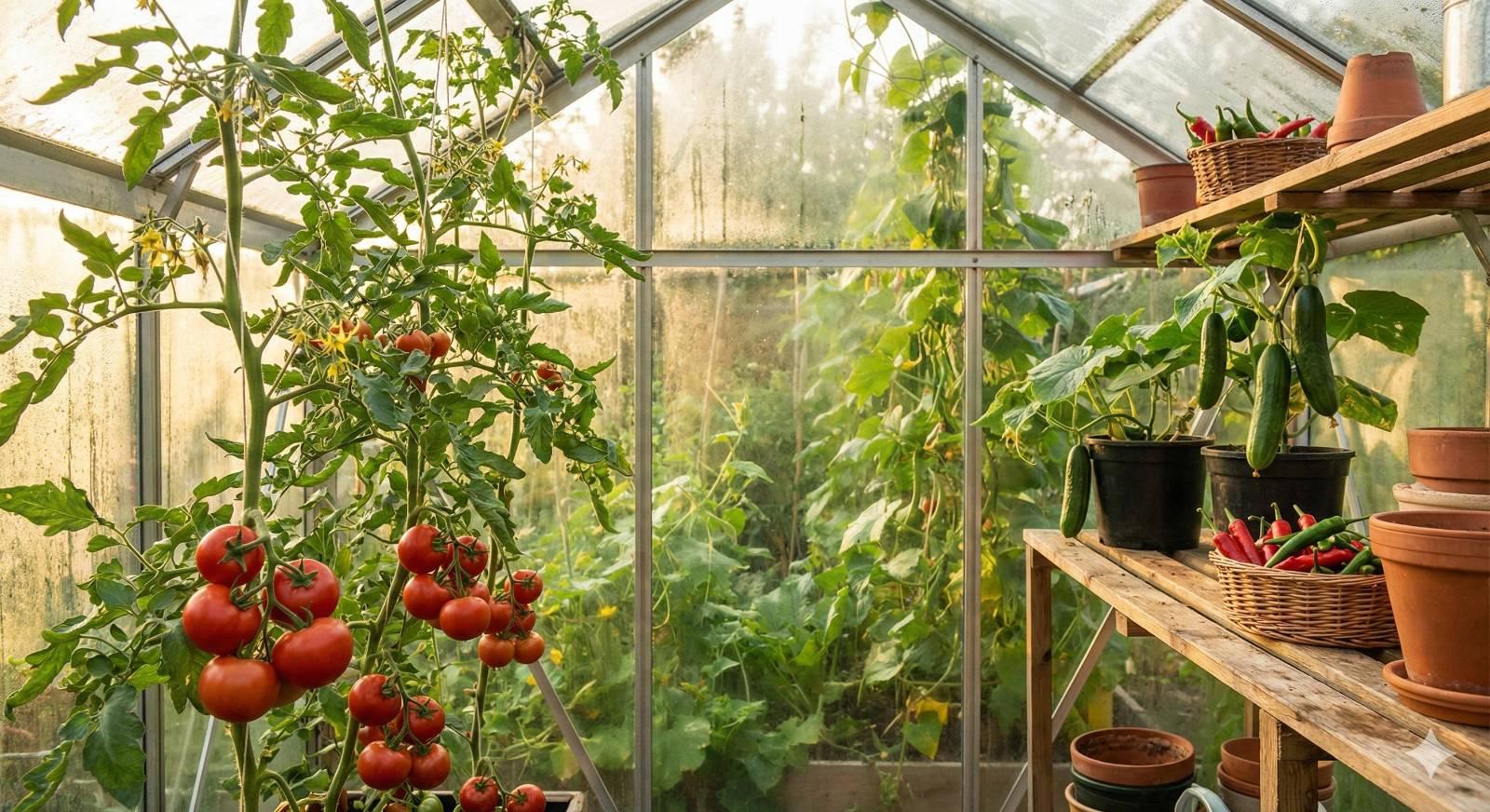
At current prices, greenhouse tomatoes may offer savings of several pounds per kilogram compared to supermarket options. With multiple healthy plants, growers could potentially offset a portion of their grocery spend over a season.
Factoring in cucumbers, peppers, chillies, and early salad crops, annual savings from a productive 8x6 greenhouse could range from a modest to a more substantial amount, depending on yields and market prices.
That’s the optimistic scenario. The realistic one accounts for failed crops, holiday absences, pests, and the learning curve every new grower faces. Many first-time greenhouse users see modest savings in their initial year, with more experienced growers typically becoming more productive by the third season.
The payback calculation
With moderate setup costs and consistent productivity, some greenhouses may offset their initial investment within five to seven years.
That timeline may shorten for those who prioritise high-value crops, grow efficiently year-round, and manage costs carefully. It lengthens if you’re growing what’s already cheap at the supermarket, heating enthusiastically, or treating the space more as a pottering shed than a productive growing environment.
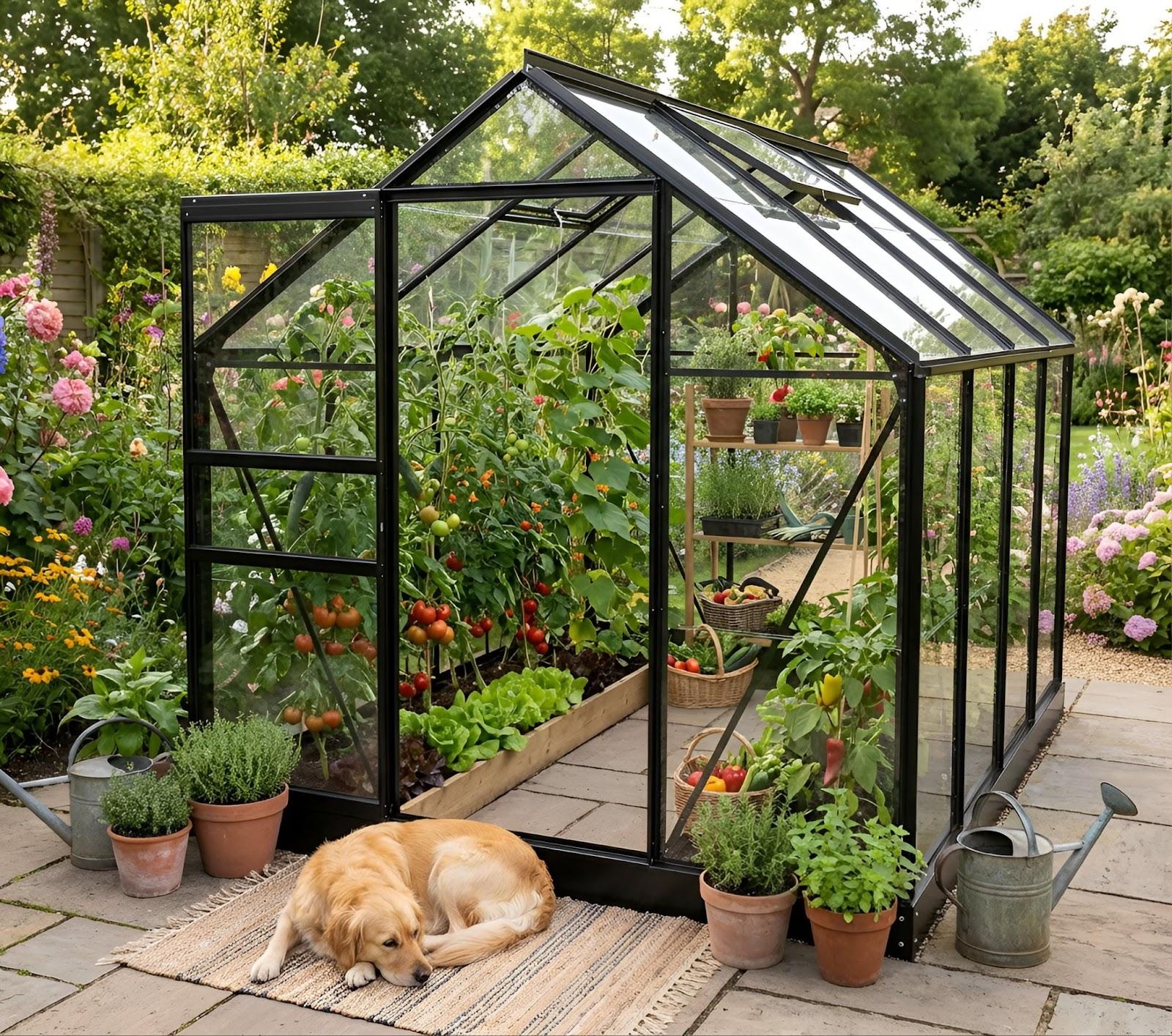
The equation also changes with build quality. A budget aluminium greenhouse might last 10–15 years before corrosion and wear force replacement. A well-maintained cedar greenhouse can remain functional for 30–40 years. A Victorian-style aluminium structure with proper care often outlasts the gardener who installed it.
“Customers often ask us whether to buy a cheaper greenhouse now or save for something better,” notes the team at Greenhouse Stores. They explain that investing in a quality greenhouse upfront may reduce long-term costs and improve growing conditions year after year.
What the spreadsheet misses
If pure financial return were the only measure, plenty of greenhouses would fail the test. But the calculation ignores factors that are harder to quantify yet matter enormously to those who own them.
The taste difference is real. A greenhouse-ripened tomato, picked warm from the vine, bears almost no resemblance to the supermarket equivalent that was harvested green and ripened in transit. For many growers, this alone justifies the investment.
Bookmark popover
Removed from bookmarks