Are my pensions or investments at risk from an AI bubble?
Lots of companies in the AI sphere are potentially in funds within your portfolios - should you be concerned around recent news?
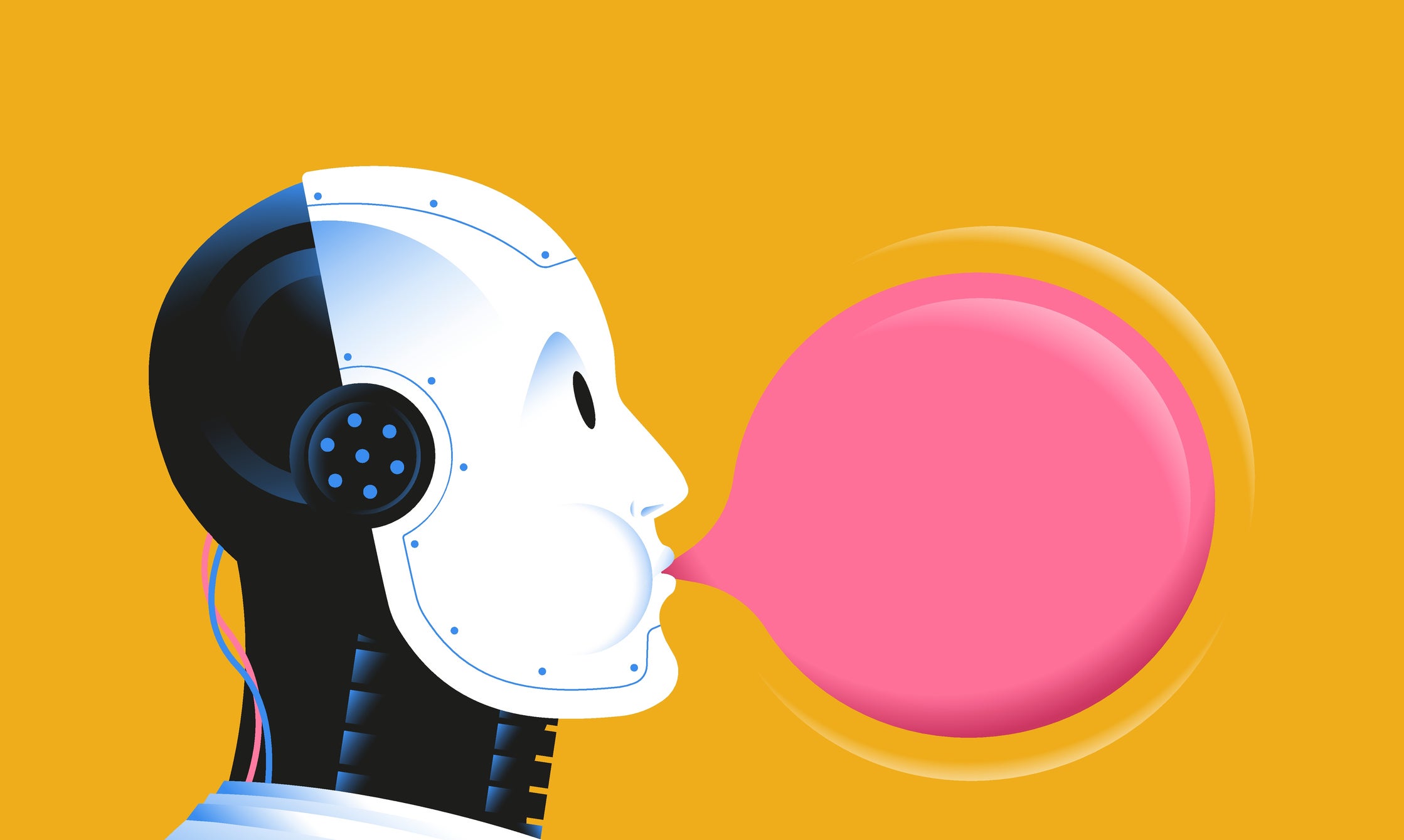
Artificial intelligence (AI) has been the story driving global markets for the past couple of years.
From chipmakers to cloud computing giants, companies associated with AI have driven stock markets to record highs. But alongside the excitement, warnings are growing louder.
With several of the so-called Magnificent 7 (Mag 7) seeing declines in recent months, investors are becoming increasingly nervous that the AI bubble is about to burst.
If this happens, will it be bad news for your pension or investment portfolio?
What is a stock market bubble?
A stock market bubble occurs when asset prices rise rapidly, driven by investor overconfidence and speculation.
Bubbles are dangerous because prices become wildly disconnected from the real value of the companies underneath.
This means they can collapse suddenly and without warning.
When that happens, pensions and investments tied to those inflated stocks can suffer sharp, painful losses that take years to recover from.
Who are the ‘Magnificent 7’?
The Mag 7 is a group of major tech companies with stock growth that, on average, has far outpaced the general stock market over the past decade.
All seven of the firms – Alphabet, Amazon, Apple, Meta Platforms, Microsoft, Nvidia, and Tesla – are heavily involved in AI, from providing the infrastructure to developing consumer-facing AI applications.
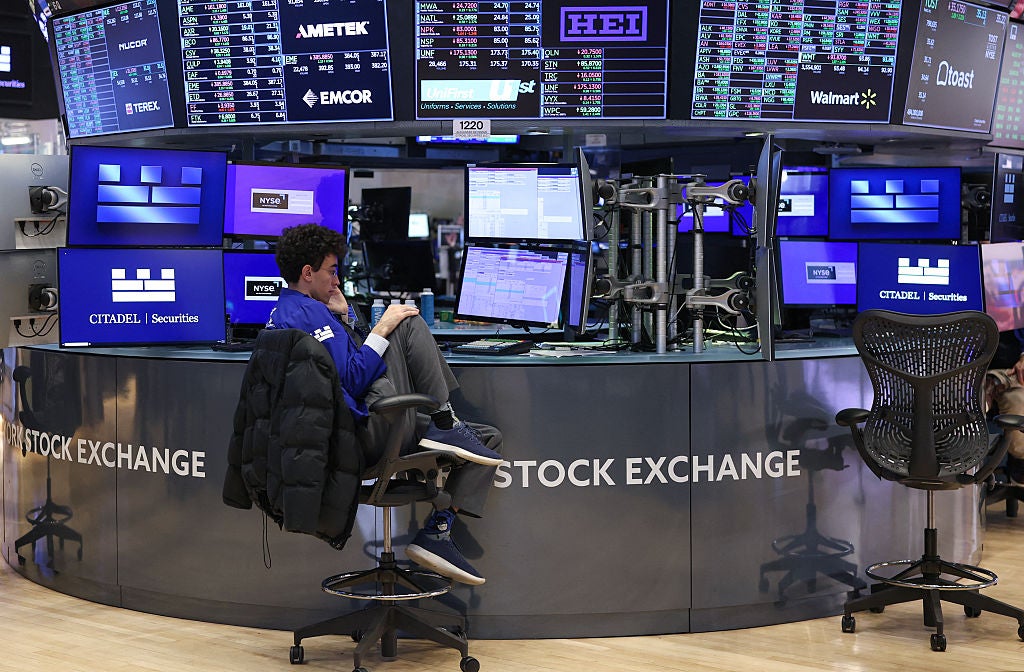
The spectacular rise of these firms has been powering the performance of major indices including the S&P 500 and the Nasdaq Composite.

Get a free fractional share worth up to £100.
Capital at risk.
Terms and conditions apply.
ADVERTISEMENT
Get a free fractional share worth up to £100.
Capital at risk.
Terms and conditions apply.
ADVERTISEMENT
Why do experts fear a bubble?
Several major financial institutions have raised concerns that the market may be entering bubble territory, with valuations increasingly detached from underlying earnings.
Back in December 2025, the Bank of England warned that if the AI boom deflated suddenly, the shock could impact the pension pots and investment portfolios of ordinary savers.
Analysts at the bank warned that UK share prices were close to their most overstretched levels since the 2008 financial crisis and that US equity valuations were starting to resemble the run‑up to the 1990’s dot-com crash.
Several of the Mag 7 have stumbled in early 2026, with Alphabet, Amazon, Meta, Microsoft, Nvidia and Tesla posting negative returns over the past month. Apple was the only member showing a small gain.
Dan Kemp, CEO and founder of Portfolio Thinking, says: "The recent wobble in these share prices isn't just about valuation; it’s a referendum on their spending. The market is waking up to the reality that these companies are burning billions on AI infrastructure with no guarantee of immediate returns. It’s less of a bubble popping and more of a reality check: investors are realising they’ve priced in perfection for companies that are currently undertaking the most expensive construction project in history.”
Katy Stoves, investment manager at Mattioli Woods, points out that AI bubble concerns extend far beyond the Mag 7.
“Growing levels of capital expenditure across the sector – with tech giants pouring billions into AI infrastructure – combined with fears about how AI could fundamentally disrupt software business models, are creating sector-wide jitters,” she explains.
What do AI bubble fears mean for pensions?
For people approaching retirement or already drawing an income from their pension, a sudden market correction can be particularly damaging.
The danger for retirees is bad timing – if the market drops just as you start withdrawing income, it can permanently damage your pot.

“The best defence isn't to sell everything, but to ensure your portfolio has a 'crumple zone,’” says Kemp.
“If you are near retirement, you should hold enough cash or bonds to cover your spending for a few years. This buys you the luxury of time, allowing you to wait for the tech sector to recover without having to sell assets at a loss to pay the bills.”
What do AI bubble fears mean for investors?
For anyone investing through ISAs or general investment accounts, the risk is similar. A sudden drop in tech valuations could drag down overall portfolio performance.
Even investors who don’t hold individual tech stocks may be exposed through global index funds, which are increasingly dominated by large US technology firms.
Andrew Prosser, head of investments at InvestEngine, says: “Investors can’t control whether AI gets overhyped or whether tech sells off. What they can control is making sure they’re holding a sufficiently diversified portfolio, and understanding the size of drawdowns it could realistically experience. That way, if a sell-off does arrive, it won’t come as a shock, and they’re less likely to panic at the worst possible time.”
In the end, market ups and downs are part of investing. What matters most is staying focused on the long term, keeping a diversified portfolio, and resisting the urge to react to every market wobble.
When investing, your capital is at risk and you may get back less than invested. Past performance doesn’t guarantee future results.
Join our commenting forum
Join thought-provoking conversations, follow other Independent readers and see their replies
Comments
Bookmark popover
Removed from bookmarks