Gold and silver prices collapse: Should you be buying or selling?
The price of the precious metal is up more than 80 per cent across the last year
Gold has been in the headlines for rapid price rises over the past few weeks - but across the weekend and into Monday, both it and fellow precious metal silver have taken steep nosedives in the opposite direction.
After gold broke the through $5,000 barrier last week, more investors looked to pile into it as geopolitical uncertainty continued.
But it dropped to as low as $4,500 per troy ounce - the standard measure - by Monday morning, before rebounding a little. It remains down almost 2 per cent down for the day by noon GMT.
However, the sell-off in silver has been even steeper. After rising well over 150 per cent in price across the past year, silver futures dropped from $120 on Thursday last week to below $74 Monday morning - an out of hours drop of more than 30 per cent across the weekend.
So, where do the metals stand now, and how do you buy or sell?
How high did the gold price rise?
Gold traded at more than $5,500 at one stage last week, with plenty of experts still suggesting the $6,000 barrier will be surpassed at some stage this year.
Even after a fall, it’s still up more than 10 per cent in the past month and more than 70 per cent in the past year. Since the start of 2024, gold has continually pushed higher in price at a faster rate, setting continual new record highs along the way.
Silver, meanwhile, is up 125 per cent in just six months, including the weekend sell-off.
For some context, the FTSE 100 is up 19 per cent over the past year.
Why did gold and silver fall so sharply?
There are always multiple reasons for markets to sell off, but in this particular case a couple of factors in particular stand out.
First, with both having risen so quickly, profit-taking is normal and especially if investors sought to reallocate parts of their portfolio.
Additionally, there was a market reaction to Kevin Warsh being picked as the probable new Federal Reserve leader.

Get a free fractional share worth up to £100.
Capital at risk.
Terms and conditions apply.
ADVERTISEMENT
Get a free fractional share worth up to £100.
Capital at risk.
Terms and conditions apply.
ADVERTISEMENT
Finally, several analysts have pointed to positions of more specialised trades needing to be sold to cover their positions, which exacerbated the declines.
“The sharp pullback in gold looks more like a liquidity and positioning event than a change in the long‑term case for the asset. After a powerful run‑up driven by momentum strategies, short squeezes and leveraged buying, that same positioning has unwound rapidly, amplifying downside moves,” explained John Wyn-Evans, head of market analysis at Rathbones.
“Reports of unsettled trades in parts of the metals market have added to near‑term pressure, but, in our view, this reflects stress among specific market participants rather than systemic weakness across precious metals.”
In other words, there was a sell-off which sparked an extra section of the market needing to sell otherwise they’d have had to pay more money to keep their positions open.
But the second wave of sales, though impacting price, were not reflective of a wider expectation of gold (or silver) being “worth” less.
Why buy gold, and should everyone have some?
Gold has long been seen as a “safe haven” – in other words, a place investors put their money when there is uncertainty in other areas, like government bonds or the stock market.
The precious metal isn’t usually so volatile, and over long periods can grow in value.
However, unlike other assets like shares in a business (through dividends) or cash in the bank (with interest), it does not “pay out” anything, meaning in periods of no price growth, it can lag behind other means of growing wealth.
Unlike other metals, such as silver or platinum, gold isn’t typically as widely-used in manufacturing and production, so the value of it is largely limited to being a store of value.
In addition, stock markets (or parts of them) can rise rapidly when conditions are right, meaning an over-exposure to gold can mean you miss out when the metal is no longer in favour.
Experts tend to recommend no more than 5-10 per cent allocation toward gold in a diversified portfolio of investments, but the real amount you require depends on a range of factors specific to you: timeframe, amount, risk tolerance, whether you are focused on preserving wealth or generating it and plenty more.
How do you buy and sell gold?
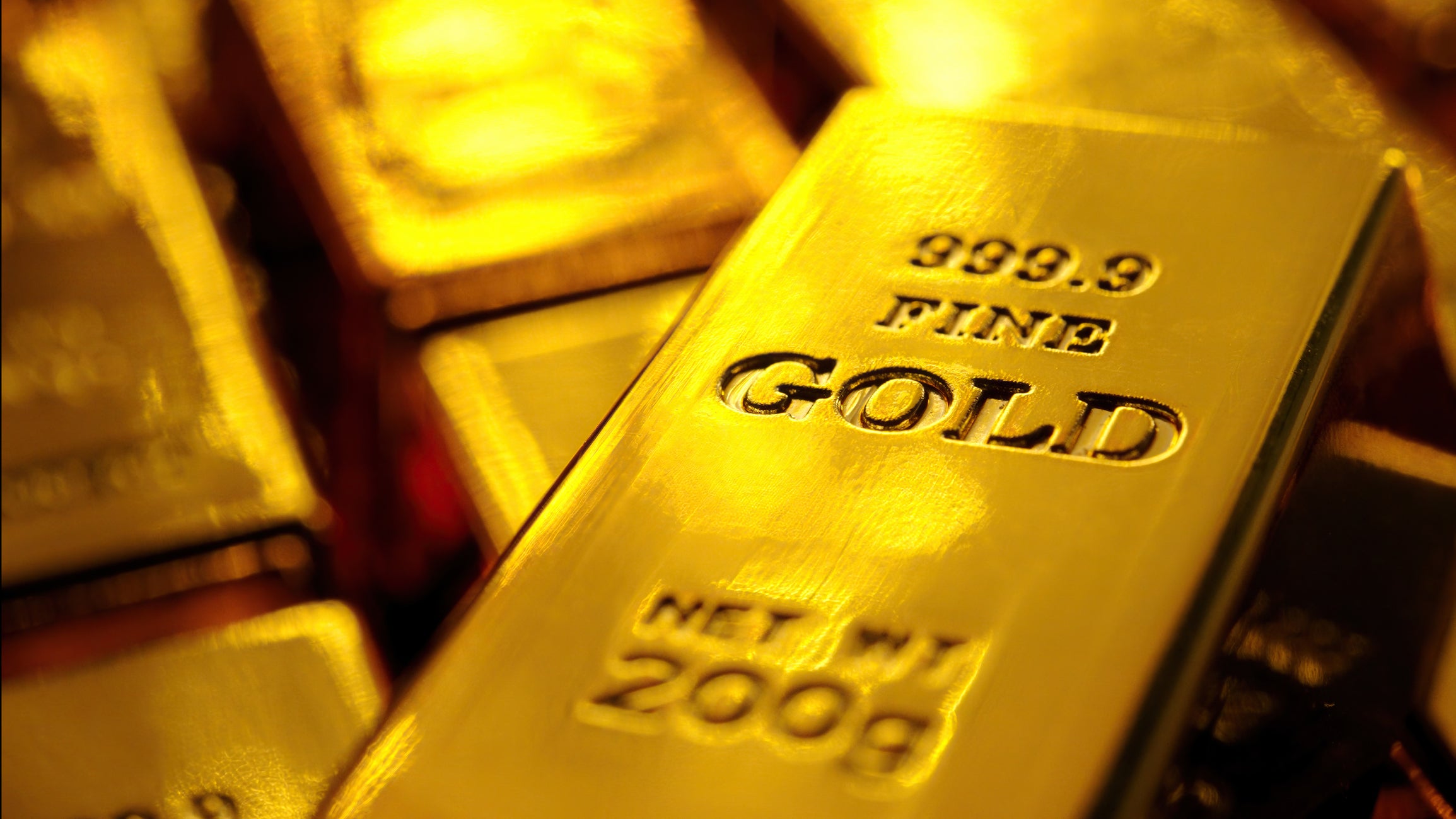
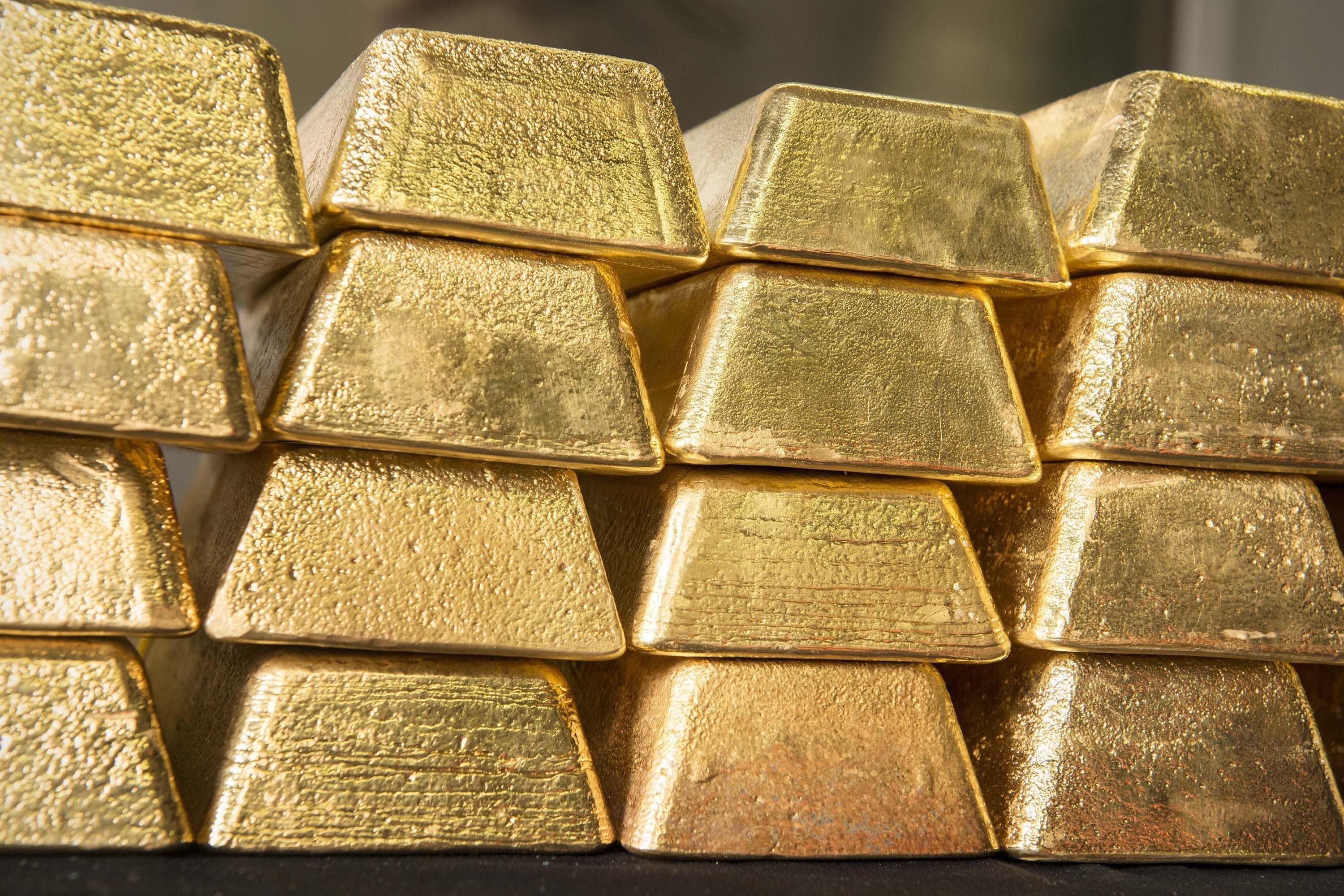
You can, of course, buy physical gold bars - called bullion - but the complexity of this, along with storage and insurance costs of doing so, makes it improbable for most people.
However, a simpler method is to buy what’s called an exchange-traded commodity (ETC) – these are investment vehicles which essentially track the price of gold for you and will rise or fall in accordance with gold’s spot price. There is usually a small annual charge associated with them.
Examples of these are the iShares Physical Gold ETC (ticker SGLN on the London Stock Exchange) or the Royal Mint Responsibly Sourced Physical Gold ETC (ticker RMAU).
If you buy these within a stocks and shares ISA, any gains made will be tax-free.
Alternatively, you can directly invest in the companies which mine gold, or you can invest in a more broad fund which includes gold in its holdings if you don’t want a pure focus on one single metal.
What do the experts say?
Most analysts and companies tracking commodities – such as oil or copper, as well as gold or silver – think there’s still scope to go higher, though nobody knows when the tide might turn or for how long.
Geopolitical stresses can change at any moment, but more than one researcher has put a target of $6,000 for gold before 2026 is out.
Lale Akoner, global market analyst for eToro, added that gold is replacing long-term bonds as a defensive store alongside other investments. “Gold is increasingly being used by investors as a hedge against equity risk, and in many portfolios, it is starting to replace long-duration government bonds as the preferred defensive asset. The shift reflects a structural breakdown in the traditional equity-bond relationship.
“Since 2022, correlations have hovered around zero, which has reduced bonds’ effectiveness as a diversifier.
“Gold, by contrast, has held up better as a defensive asset. If the bond-equity correlation remains unstable, gold’s role as a volatility dampener could become more entrenched, reshaping how portfolios hedge downside risk across the cycle.”
Market research firm Yardeni say the outlook for gold will send the price even higher. “We are still targeting $6,000 by the end of this year and $10,000 by the end of 2029,” they said.
Join our commenting forum
Join thought-provoking conversations, follow other Independent readers and see their replies
Comments
Bookmark popover
Removed from bookmarks