The UK’s most-applied for jobs in 2026 - and the salary you can expect from them
Unemployment continues to rise in the UK making applying for a new job a difficult task at times
In a time when jobs in the UK are increasingly difficult to come by, it can pay to be armed with knowledge - particularly regarding which roles are most sought-after.
With unemployment running above 5 per cent and higher numbers of people applying for each vacancy, it can be demoralising for those looking for new work if applications or interviews don’t go to plan.
But there are still jobs around, and while unemployment is expected to go up slightly further this year, in the longer term that should drop as interest rates fall, businesses start to spend more on projects and personnel - and industries get to grips with what level of hiring their AI plans would benefit from, of course.
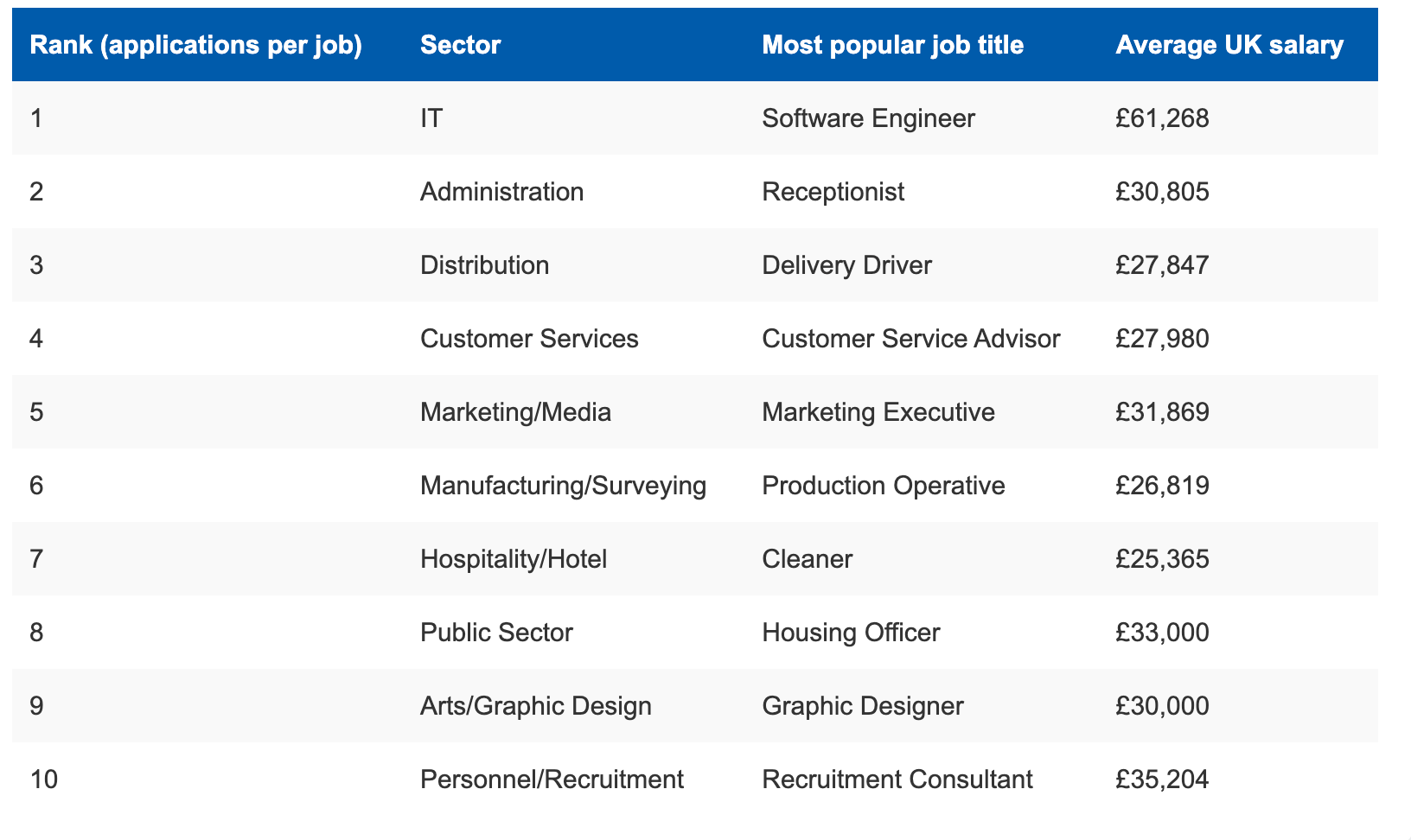
CV-Library has compiled the most in-demand roles that brits are applying for recently, based on total applications per vacancy and highlighting the average salaries you can expect for them.
Most wanted and highest paying
Perhaps it’s no surprise but jobs in IT and specifically as a software engineer remains the most sought-after role.
It’s a high-paying, skilled job requiring particular knowledge and any suggestion that AI might wipe out such a sector are entirely unfounded for now - in fact it’s seen as a future-proofed job in some roles, given the required level of knowledge.
In addition, “clear progression opportunities” are an important part of future prospects in this area, as well as a strong salary in excess of £60,000 per year.
Top ten
If technical knowledge isn’t in your skillset, fear not - the top ten most applied for jobs feature a wide mix of roles.
Administration, customer services roles and hospitality jobs all feature prominently, alongside a clutch of design and marketing types of jobs.

Get a free fractional share worth up to £100.
Capital at risk.
Terms and conditions apply.
ADVERTISEMENT
Get a free fractional share worth up to £100.
Capital at risk.
Terms and conditions apply.
ADVERTISEMENT
Cleaner was the most popular type of role among hospitality staff being applied for, while delivery drivers made the top three - both offering salaries between £25k and £26k.
Receptionists took second place behind those much-wanted software engineer roles, with those jobs averaging close to earning £31,000 annually.
Katie Emerton, recruitment expert at CV-Library, said: “These roles attract such high application numbers because they tick a lot of boxes for today’s jobseekers: flexibility, stability and clear progression.
“Roles such as software engineer, marketing executive and graphic designer offer future-proof skills and long-term career potential, while others like receptionists and cleaners appeal because they’re widely available, flexible and don’t require lengthy entry routes.
“Together, these jobs feel secure but also rewarding – key to attracting UK candidates to apply.”
What’s next in 2026?
Further research from CV-Library has shown that while many businesses had paused employment decisions while awaiting clarity from the Autumn Budget, almost three-quarters (71 per cent) of businesses “were prepared to increase hiring, either moderately or significantly, throughout 2026”.
Among those already doing so, engineering, hospitality, and construction sectors were displaying signs of growth in late 2025, with engineering as a sector having the higher number of open roles - over 377,000 across the final three months of last year.
Lee Biggins, CEO of CV-Library, noted there were “cautious signs of a recovery” but pointed to the wide range of costs businesses are facing as they weigh up whether or not to hire more staff.

“Higher business rates, employment costs, and an employment rights bill that brings greater risk to hiring may yet derail any recovery,” he said. “And it's a worry that Millennials in their prime early-career phase are being hit hardest when it comes to the reduction in payrolled employees.”
In terms of what people might be searching for, Jobhire.ai conducted an analysis which claimed remote roles were now more than four times as tough to land as office or hybrid roles - despite search for remote jobs being up 85 per cent.
Meanwhile, the British Retail Consortium says their latest survey of CFOs and finance directors showed increasing anxiety over labour costs for 2026.
Helen Dickinson, chief executive at the BRC, said: “The economy is expected to remain fragile, with weak wage growth, unemployment rising, and low consumer confidence, all pointing towards falling demand. At the same time, businesses face sharply higher costs, from rising input prices and wage bills to new burdens created by government policy.
“We all want more high-quality, well-paid jobs. But retail has already lost 250,000 roles in the past five years, and youth unemployment is climbing fast. The Employment Rights Act is the biggest shakeup of employment rules in a generation, and how it is delivered will make or break job opportunities.”
Join our commenting forum
Join thought-provoking conversations, follow other Independent readers and see their replies
Comments
Bookmark popover
Removed from bookmarks