Student housing costs are out of control and Gen Z (and their parents) are paying the price
As student accommodation becomes more expensive than ever, even their loans don’t touch the sides to live in what can often be sub-standard housing, says Jennifer Howze. It’s another example of how university is becoming a game of haves and have-nots, and why it’ll end up costing us all dear


It’s that time of year, when parents of university students drop off our young people at accommodation we would decline to enter without anti-bac spray and a hazmat suit. I’ve seen carpets you’d cross the road to avoid, toilets that are the stuff of nightmares, holes in walls that evoke existential dread. So I understand the fear, trepidation and even, yes, revulsion, many other parents may be experiencing.
But there’s something even scarier than houses with mouse infestations, spongy floors and mould that’s become sentient: what we pay for them. The cost of student rent has ballooned over recent years – increasing as much as 26 per cent in some places – throwing young people (and their parents) under a bus… and potentially damaging higher education itself.
My first brush with the brutal reality of the cost of student housing came during a summer holiday. I went to make my daughter’s first rent payment for her year two flat. It wasn’t £670, the monthly rent on her room in a five-bed Bristol flat. It was a three-month advance payment of £2,010. While everyone else drank margaritas, I sat in a bedroom frantically moving money to cover the cost, hoping I wouldn’t get stung with a late fee. I should have thanked my lucky stars. The following year, my quarterly payments rose to £2,300.
This academic year, living away from home as a university student costs up to £10,544 outside of London, according to Student Finance England. In London, that figure is £13,762. On average, student rents have jumped more than 14 per cent over the past two years alone, according to the Higher Education Policy Institute (HEPI). That means for three years of undergraduate study, families could be paying £30k and £40k for housing alone – not counting tuition, books and other living costs.
Why are student housing costs out of control?
While we can thank the usual suspects of real estate madness for some of it – scarce supply, inflation, high interest rates – other factors are pushing up the cost of student accommodation and turning the screws on students and their families.


Universities are building or renovating less. New spaces in purpose-built student accommodation (PBSA) have dropped by a third, meaning universities can’t house all first-year students in halls. That squeezes them into the student rental market… which is also squeezed on the other side by other types of renters.
Increasingly, student housing is provided by the private sector, which is, naturally, more motivated by profit than by selfless housing of the next generation of leaders. The Unite Group, a public limited company which describes itself as one of the UK’s leading student accommodation providers, reported 7.4 per cent rental growth in its latest results. It reports an optimistic outlook, citing growing student numbers and limited new supply (hurrah for them, yah boo for the rest of us!).
Maintenance loans don’t touch the sides
Of course, government maintenance loans, based on household income, can help – but as many parents will be finding out as they deliver this year’s batch of freshers to UK campuses, they need a magical maths degree to make those sums work.

The maximum maintenance loan is £13,348 (for a student from England studying in London) and the average student rent is £13,595 (according to the Housing Education Policy Institute). So £13,343–£13,595 = –£247. You’re in debt before eating a single Pot Noodle.
That is, if you can afford to eat. The cost of living has risen so fast that some students have even cut down on food simply to afford everyday living costs, according to the Office for National Statistics (ONS). A shocking 17 per cent of students now resort to food banks, according to a 2024 NUS survey – all while attending class, writing papers and revising for exams.
Look what you get for your money
All these statistics tell one story. Walk into any student flat and you’ll see another: Dubai-level prices, Dickensian-level squalor.
To be sure, student housing has always had the reputation of being, shall we say, bohemian – a bit grubby, kitted out with sagging bookcases and end tables made from old crates. But it’s one thing to live someplace downmarket. It’s another to pay through the nose for a glorified squat.
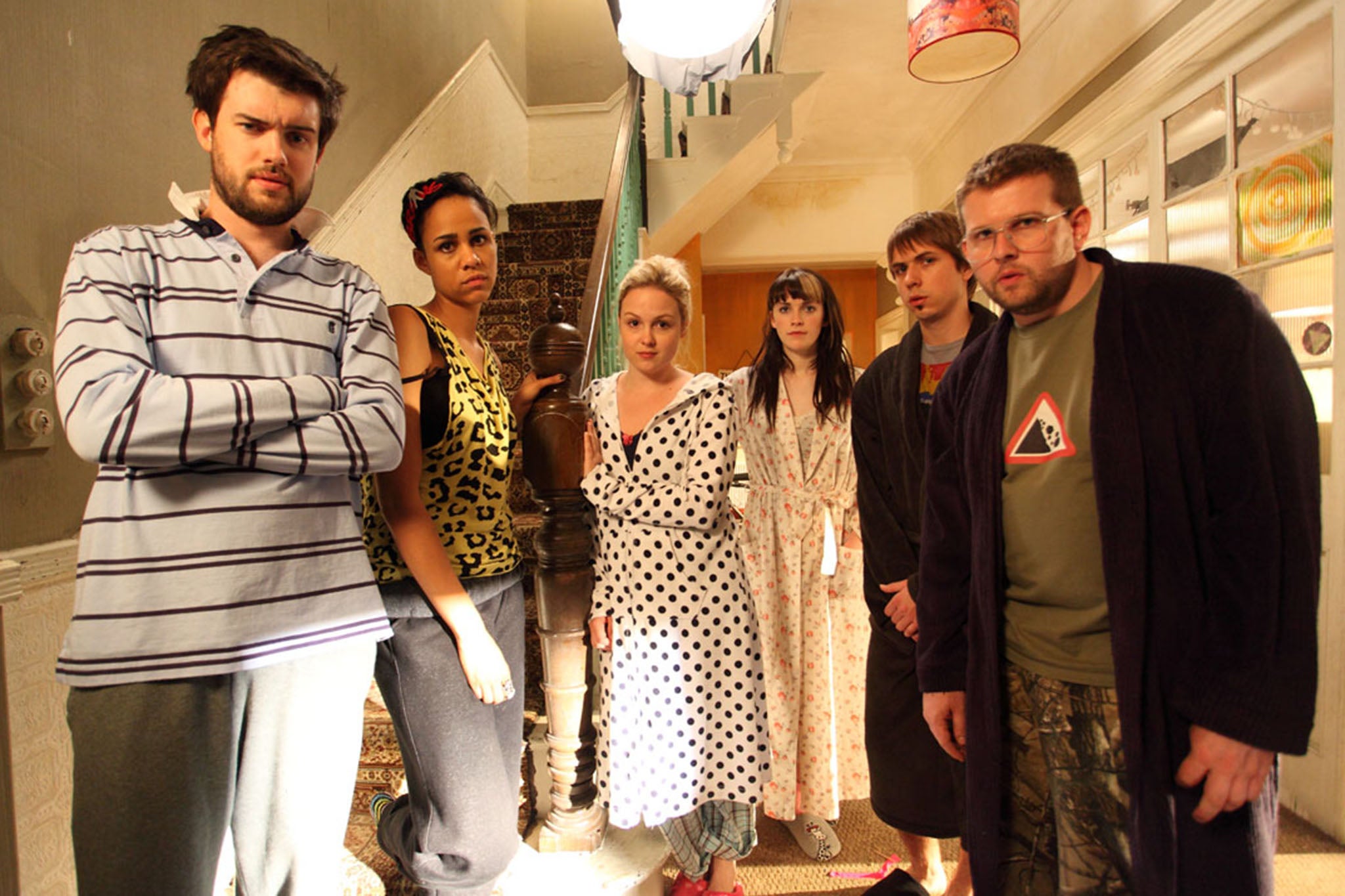
When we arrived at the flat my daughter would be sharing in year two with four other students, I imagined the Victorian building in the Clifton area of Bristol would be shabby but pleasant. Half an hour later, we were still wiping up dead insects and scrubbing mould off the wardrobe walls. I put my hand in squidgy gum left on a bookshelf. She opened a drawer and the front came off in her hand.
“I don’t even know where to begin because it was so awful,” says Anisa Ogunyemi, who graduated last year from Newcastle University, describing a flat she shared with three others. “The carpets were gross – old, covered in gum and stains, and coming away at the walls. You couldn’t walk around barefoot. Slugs crawled from under the floorboards, a grimy black cooker had knobs that fell off, and dirty water pooled in the shower.”
Another student tells of her house’s daily battle of “OK, it’s time to shower”, when drains would overflow. “We would complain and they’d say, just use drain unblocker. But the seventh time, I’m thinking you surely just have to fix whatever’s wrong with the pipes.”
Her rent was around £600 a month in the second year and nearly £900 with bills in her third year – “which is crazy. I had to ask my parents for rent every month, because the loan did not cover it at all. I was very lucky that they did that for me.”
Eighty-four per cent of students have experienced problems with accommodation, with half having mould or mildew, according to the National Union of Students. Last year, students across the country demanded rent refunds from Unite Students, the UK’s biggest university hall owner, claiming they had endured infestations of rats, mice and bedbugs, and had their health affected by mould and damp in the company’s halls in Liverpool, London, Coventry and Birmingham.
Molly Penketh, a Manchester University graduate, describes a typical response of private landlords: “The people they sent to fix it merely scraped it off and painted over it. It crept back, despite us always having the window cracked. We were all convinced we were getting ill from it.” Her parents bought her a dehumidifier, and “one of my housemates, who had the mouldiest room, had a cough for the entire year”.

Avani Sohi, who shared a flat in Bristol with three others, slept in a hoodie year-round to combat the cold (“You could see our breath in the kitchen”). Despite documenting the problems upon move-in – mould, dirty carpets, broken cupboards, Blu Tack on the walls, a mattress with springs poking up – the landlord tried to keep their deposit. “It was around £600 per person. Luckily, we’d taken pictures and kept arguing with them. It took months, but we got all our money back.”
The experience, however, has left her jaded. “When you actually look at what you’re getting, it’s like, what am I paying for? They know they can get away with it,” she says.
Why it’s more than just the money
Yes, university costs money. It’s a privilege to attend. But at a time when we expect our students to work harder and compete more aggressively around the world, we’re showing them how little we care about their wellbeing. And this is coming at a cost to them and to us.
We’re producing fewer world leaders than universities in the United States and other countries – reducing our soft power – yet we expect young adults to live without heat, with vermin, in spaces we wouldn’t spend one night in.
Student accommodation isn’t being shaped by what students actually need and can afford (imagine that!). Instead it’s often delivering hefty profits to providers who have identified an opportunity of being in a business where demand outstrips supply.

As the scramble to secure accommodation is so intense, many students are too scared to speak out, or may not even know their rights when they do. Excited to embrace the campus lifestyle and embark on the first step to fulfil their potential as young adults, the experience is becoming an expensive turn-off for many, winnowing out those without deep pockets, reducing social mobility and deepening the divide between the haves and have-nots.
This weekend, experts told The Independent that debt, combined with the spiralling cost of living, means many young Britons are likely to be “trapped renting” for decades. Over a 30-year period, The Independent’s calculations, from ONS data, show that renters could spend £483,000 on average, if private rental prices remain the same, without the financial security of owning their own home to show for it.
Chris Foye, a real estate and housing economist who lectures at University College London (UCL), said that the knock-on effect will stretch across generations: “It’s not just younger generations, it’s the middle-aged as well, who also haven’t accumulated housing wealth or other forms of wealth,” he said. “They have to live in smaller spaces, change their life decisions. They might have to live further away from work. And these are all very unfair and uncomfortable ways in which people deal with these affordability constraints.”
We need to think about the lessons we are teaching our young. Instead of protecting them, they are being taught that they’ll be fleeced if someone can get away with it – that someone can get away with it. The financial pressures on students and their parents are becoming unsustainable. As of 2024, the average student debt for graduates in England stood at approximately £53,000, a 10 per cent increase from the previous year. The total outstanding student loan debt in England reached £267bn by the end of March 2025. Government projections indicate this figure could escalate to around £500bn by the late 2040s, reflecting the high rates of interest and extended repayment periods under current loan schemes.
For students where accommodation costs are escalating faster than available financial support, further education is becoming increasingly out of reach. With maintenance loans not covering the costs of spiralling accommodation and living costs, this is becoming a cost of learning crisis that doesn’t add up for them, or society as a whole.
Join our commenting forum
Join thought-provoking conversations, follow other Independent readers and see their replies
Comments
Bookmark popover
Removed from bookmarks