Roman altars found near Edinburgh reveal secrets of mysterious cult
The artefacts were once part of a temple to the god Mithras
Two stone altars, unearthed at a Roman fort near Edinburgh and now acquired for the nation, will make their public debut in a new exhibition.
The artefacts once formed the heart of the Roman Empire's most northerly known temple to the god Mithras, and are said to “really bring the beliefs of the Roman frontier to life”.
Experts describe the cult of Mithras as a secretive, male-only religion, celebrating the triumph of good over evil and light over darkness.
Excavated at Inveresk in East Lothian, the altars date to around 140AD, a period when southern Scotland was reoccupied under Antoninus Pius. Curators believe they offer fresh insights into the beliefs and lives of soldiers on the frontier.
They were acquired in 2016 by National Museums Scotland.
The altars have since undergone extensive conservation work and will go on show for the first time in November in Roman Scotland: Life On The Edge Of Empire.
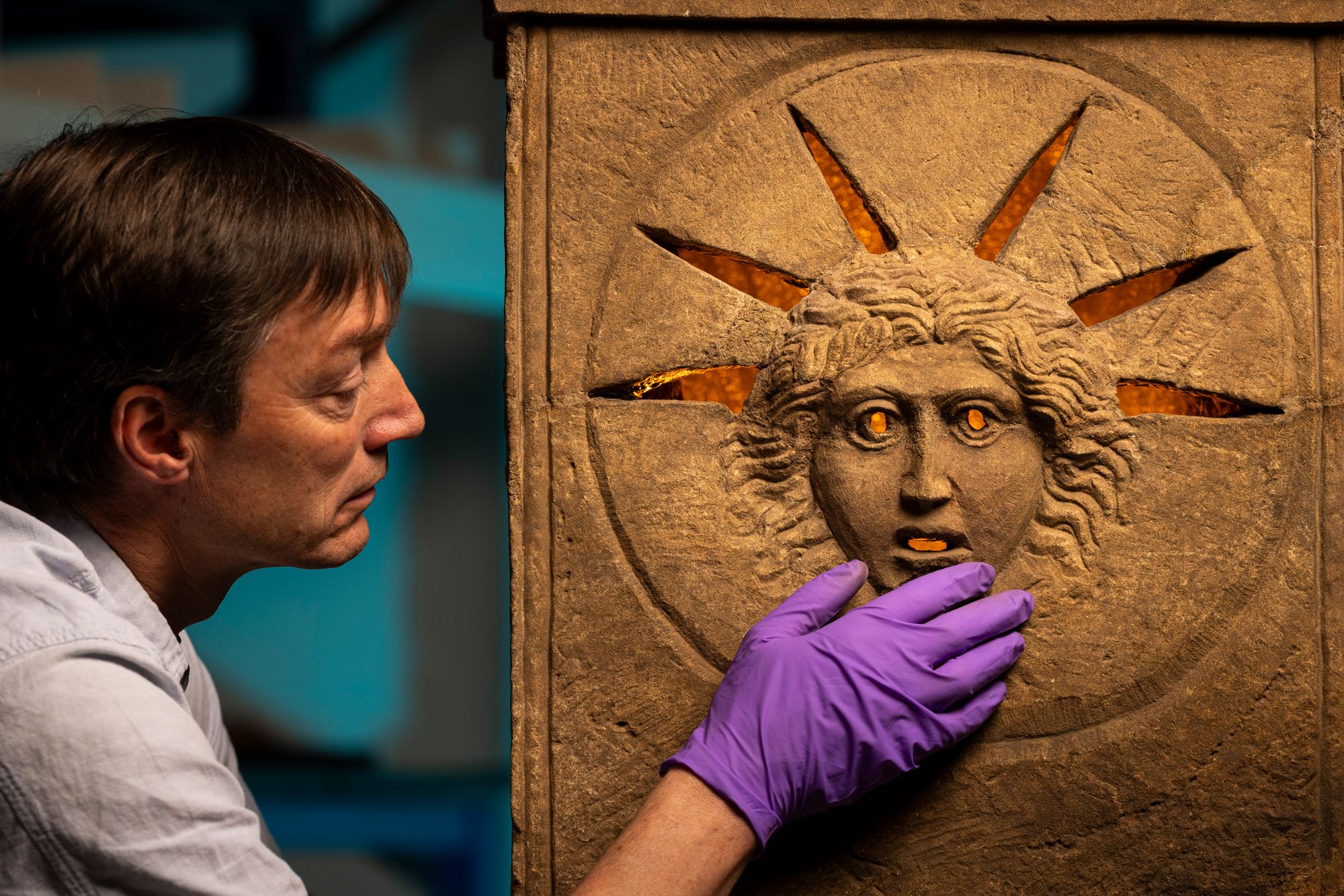
Dr Fraser Hunter, principal curator of prehistory and Roman archaeology at NMS, said: “These stunning altars really bring the beliefs of the Roman frontier to life.
“The quality of the carving, traces of paint and dramatic lighting effects show they were impressive and expensive monuments.
“The cult of Mithras represented the triumph of good over evil and gave soldiers a sense that there was a purpose to their world and a life after death.
“I’m sure visitors will be amazed by them when they can see them up close in our new exhibition, Roman Scotland: Life On The Edge Of Empire.”
One of the altars depicts the face of the sun god Sol and also features carvings of the four seasons, depicted as female deities.
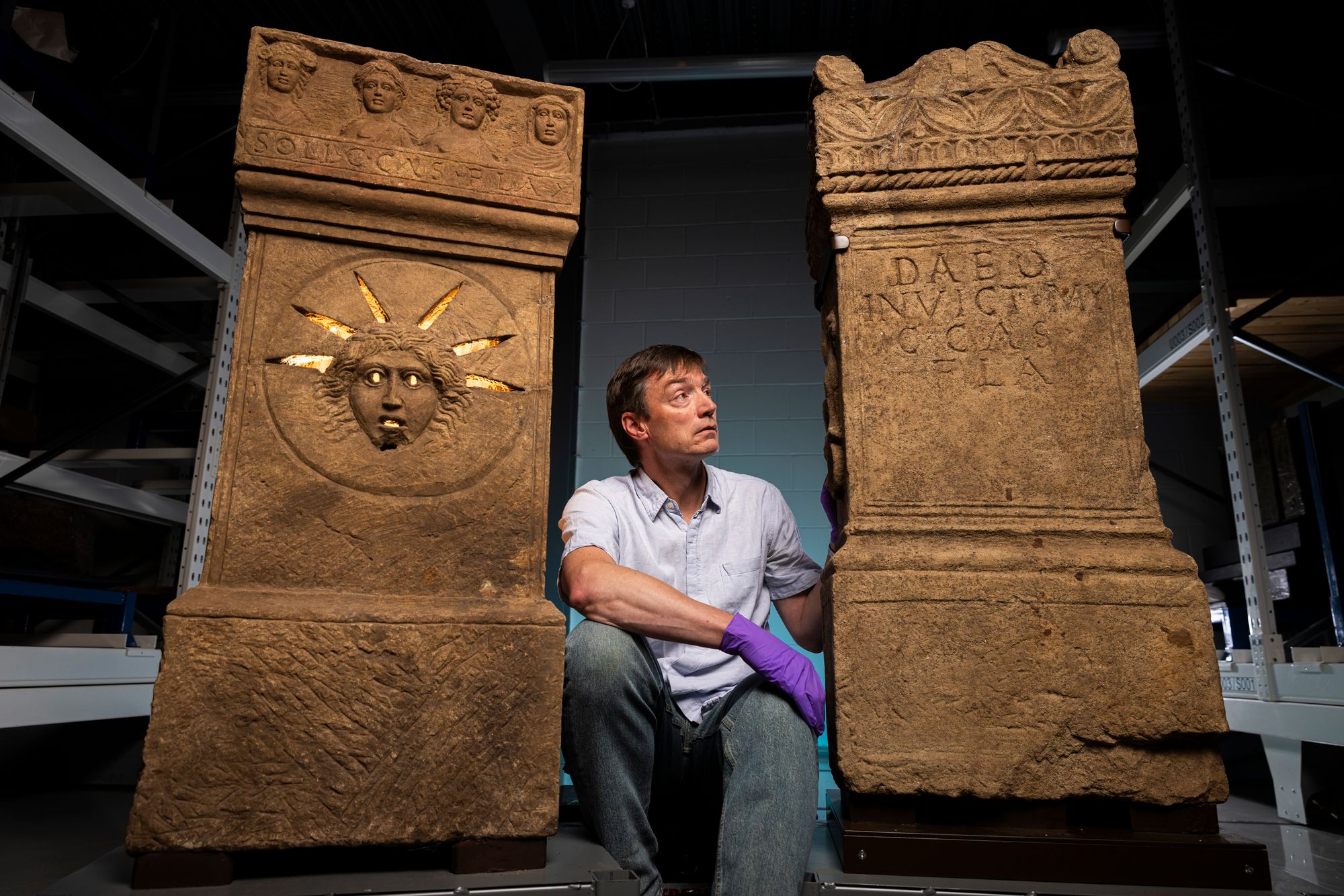
Curators said it would have been illuminated from behind so that in the low light of the temple, worshippers would have seen Sol’s eyes, mouth and the rays of his solar crown glowing.
The other altar honours Mithras himself and is decorated with carvings linked to the god Apollo, another god of light, including a lyre, a griffin and a plectrum as well as two ravens, which are often seen in Mithraic imagery.
Both altars were dedicated by a legionary centurion thought to be Gaius Cassius Flavianus whose name was abbreviated on the altar as G CAS FLA.
It is thought he was probably in command of the fort garrison at the time.
During their time buried underground, the altars, which were excavated in 2010, had broken into fragments and they have undergone conservation work to reconstruct them and prepare them for display.
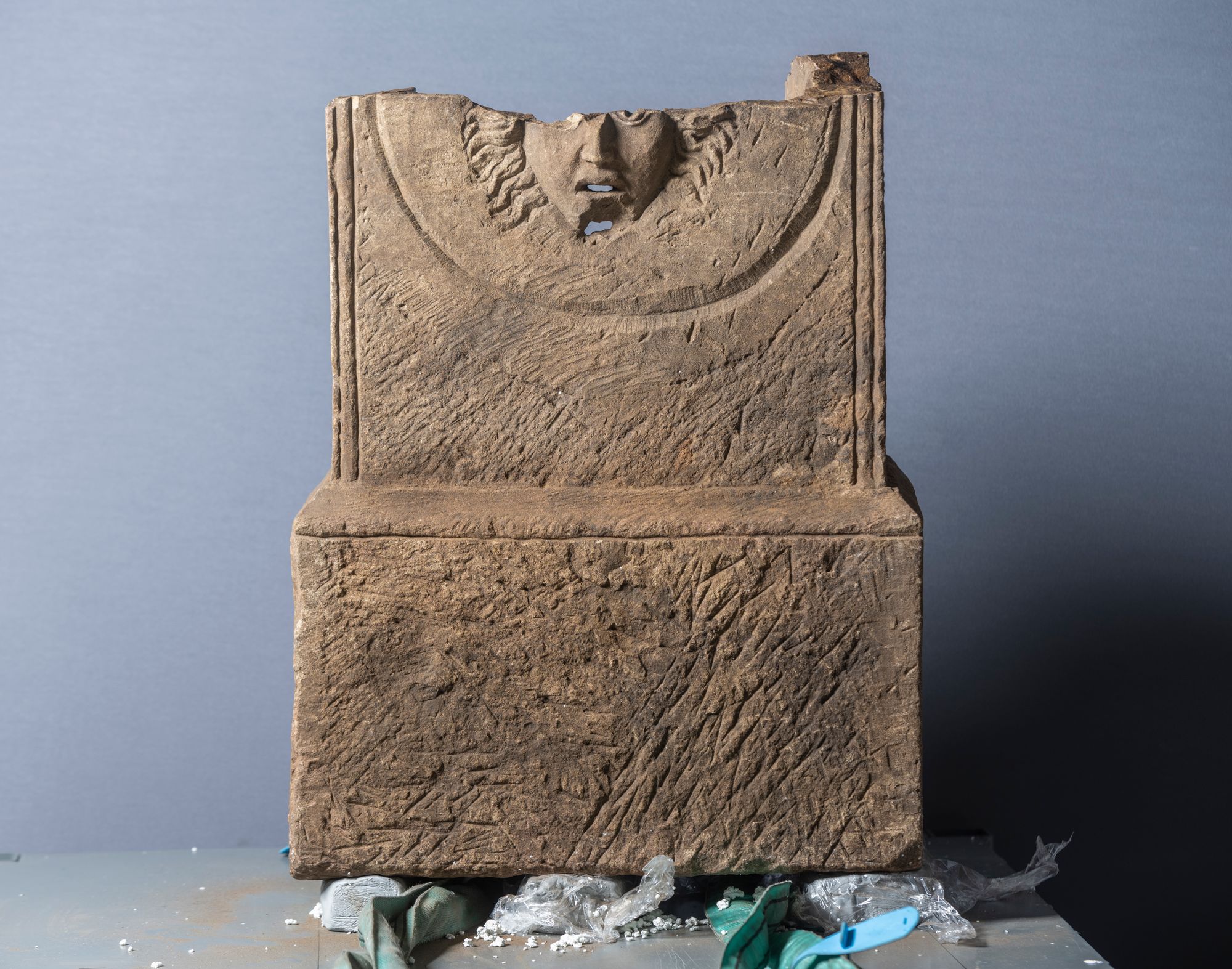
While they were carrying out this work conservators identified traces of paint on the carvings, revealing that originally they would have been painted in vibrant colours.
The exhibition Roman Scotland: Life On The Edge Of Empire at the National Museum of Scotland in Edinburgh will address the common misconception that the Romans never got beyond Hadrian’s Wall.
Experts said the empire in fact extended its reach much further north three times, up to Scotland’s central belt and deep into north-east Scotland.
Fortifications built by the Romans included the Antonine Wall which was constructed across the narrowest part of Scotland from the Clyde to the Forth, with additional forts along the coasts to the west and east including Inveresk.
In the exhibition finds from Inveresk will be displayed together for the first time.
Curators said this will shed new light on the Roman occupation in Scotland, and demonstrate how this “significant frontier outpost” was supplied from across the empire, and the impacts this occupation had on the local population.
Roman Scotland: Life On The Edge Of Empire will run from November 2026 until 28 April 2027.
Join our commenting forum
Join thought-provoking conversations, follow other Independent readers and see their replies
Comments
Bookmark popover
Removed from bookmarks