Invictus Games gold medallist could face jail over dishonest disability claim
The Ministry of Defence has accused Debbie O’Connell of ‘lies’ about the extent of her injury
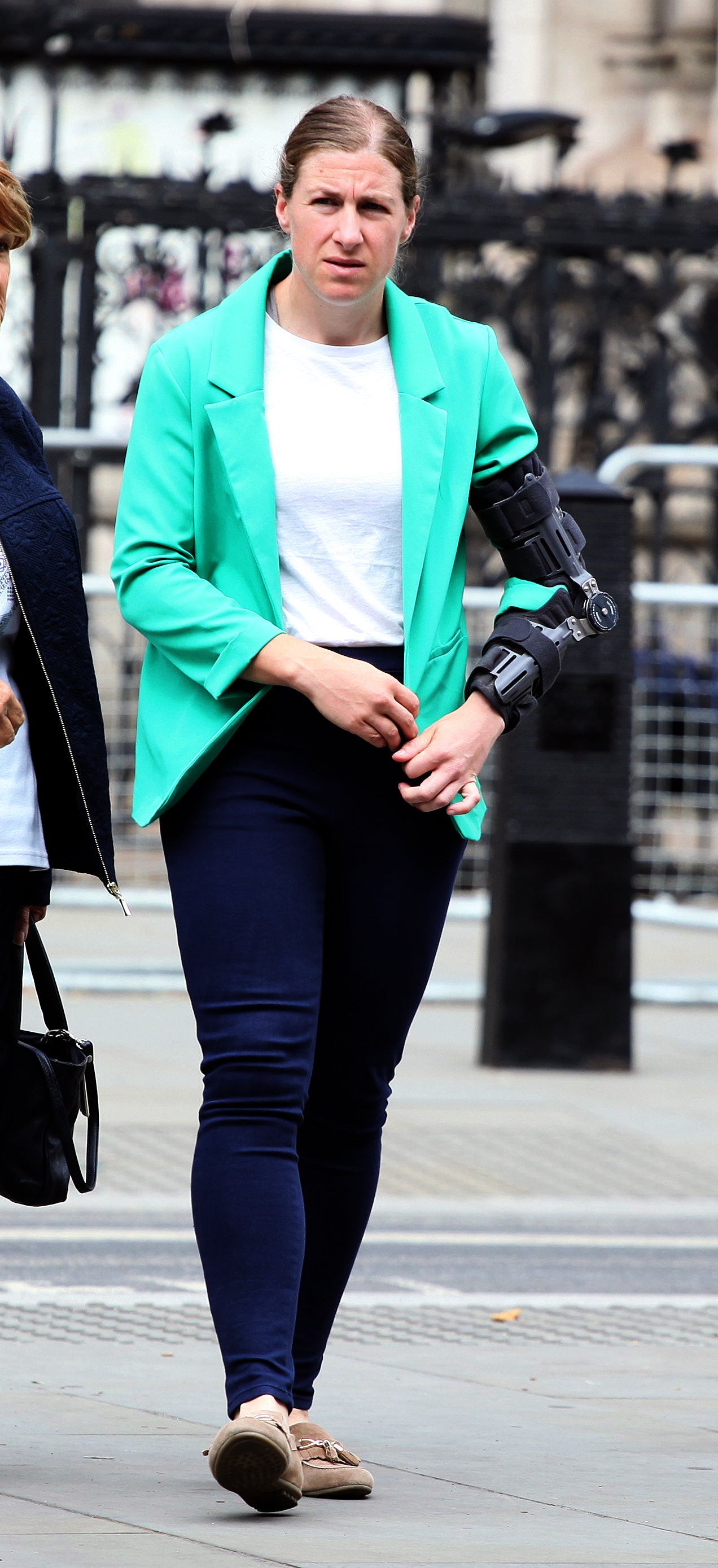
A former soldier turned champion para-athlete could go to prison after being “dishonest” about her disability in a £1.74m damages claim.
Debbie O’Connell was in the Royal Horse Artillery’s ceremonial unit, the King’s Troop, in 2015 when she fell off her horse and broke her collarbone.
Ms O’Connell claimed that the fall made her left arm almost useless.
After she left the army, she embarked on a successful para-athletics career. She won gold medals for cycling at the 2018 Invictus Games, and for sprinting at world-level competitions.
In September 2018, she launched a £2.4m compensation claim against the Ministry of Defence, later scaled down to £1.74m. However, despite a judge's finding that she was injured, she had her case thrown out due to “fundamental dishonesty”.
At the High Court in 2025, Judge Christopher Kennedy KC said Ms O’Connell’s evidence about ongoing pain “must be dishonest” due to video footage showing her doing various activities, including leading a horse and chopping vegetables, and slapped her with the £200,000-plus costs bill for the case.
But her case was back in court again on Friday after the MoD launched an application to have Ms O’Connell committed to prison for contempt of court, accusing her of telling “lies” about the extent of her disability.
Lawyers for Ms O’Connell argued the contempt bid should be blocked, telling the court she has already “suffered enough”.

But giving permission for the contempt case to go ahead, Mr Justice Coppel said it is in the “public interest” that committal applications be pursued when claims are “prosecuted on a false basis, as has been found in this case”.
“It seems to me that the public interest plainly permits, and requires, that this committal application be made,” he said, giving permission for a five-day contempt hearing to take place.
During the trial of the case, the court heard Ms O’Connell shattered her left collarbone in four places when she fell in 2015, leading to damage she claimed left her with chronic pain in her left arm and shoulder.
She had been training as a mounted gunner with the Royal Horse Artillery’s King’s Troop, but ended up being discharged from the forces two years later.
The King’s Troop is a ceremonial unit of the Royal Horse Artillery, tasked with driving teams of six horses pulling First World War-era cannons during high-profile public displays.
Troopers wear a distinctive blue and gold uniform dating back to the Napoleonic wars and are called on to fire the royal salutes marking grand-scale state occasions, such as the Queen’s birthday and platinum jubilee.
In her claim, Ms O’Connell claimed her fall was caused by riding boots which were two sizes too large and because the horse allotted to her had a tendency to buck.
But disputing the claim, the MoD accused her of exaggerating the impact of her injuries while “dishonestly” pursuing a para athletics career in the T46 category – for competitors with limb impairments comparable with an “athlete with a unilateral above-elbow amputation”.
MoD barrister Niazi Fetto KC said she had “relied upon her dishonest pursuit of a para-athletics career in the knowledge that her condition does not fall within the T46 category”.
Giving evidence, Ms O’Connell, of Lincoln, denied being dishonest, insisting that her damages claim was genuine and that allegations of “cheating” are “not credible” because she fits squarely into the T46 classification.
She told the court she had simply “described my condition” when asked and been given the classification.
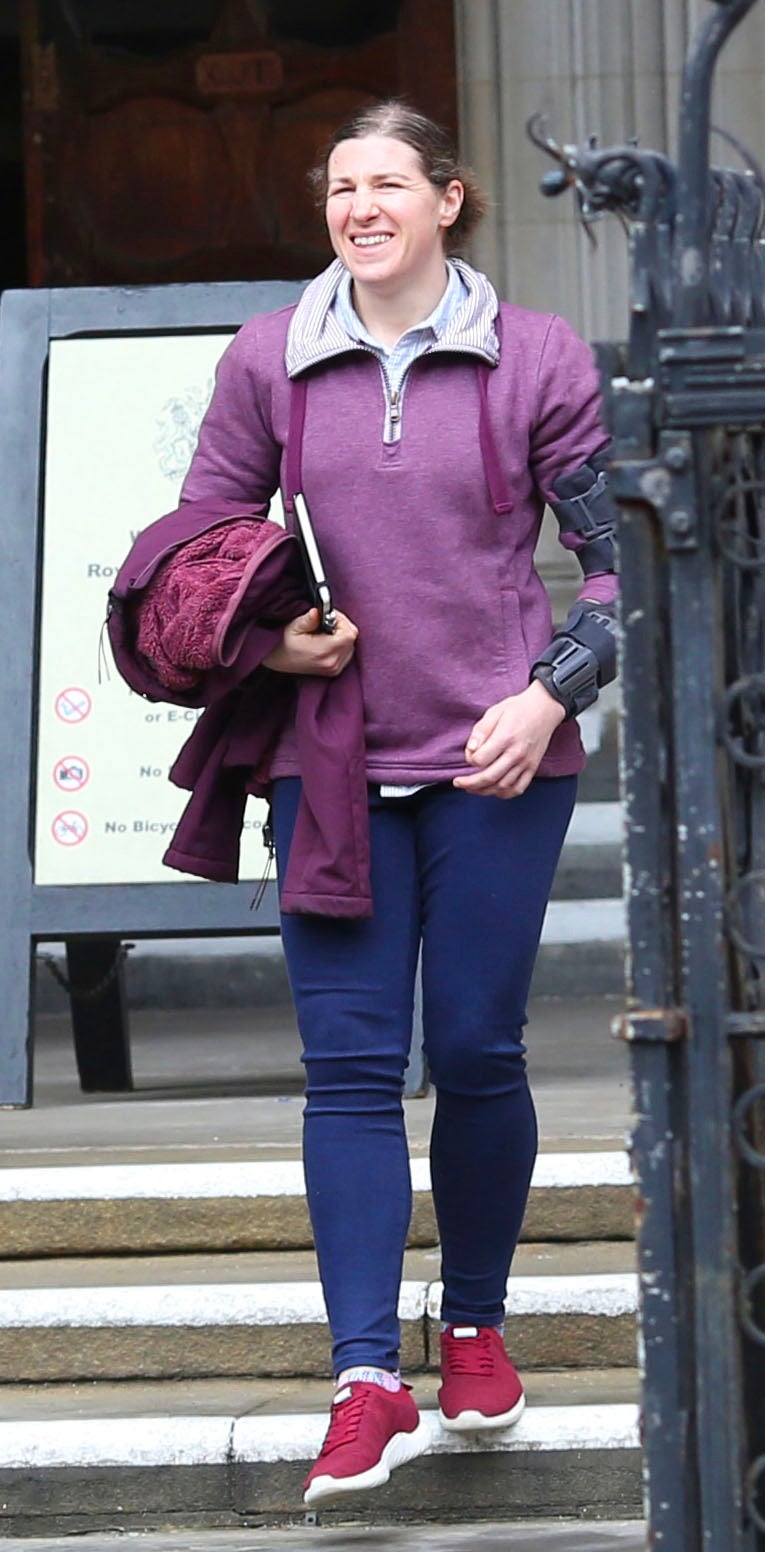
As a soldier, she said she had been taught to “push through pain” and, in pursuing her athletics career, is simply doing her best to make the most of her life, despite her injury.
She competed in the Invictus Games in 2018, winning two gold and two silver medals, before also competing in para-athletics as a sprinter and also in CrossFit, which tests the fitness and endurance of athletes.
In his judgment on the claim last year, Judge Kennedy said that by 2022, when the surveillance footage was shot, Ms O'Connell was still reporting that she “needed assistance with cutting food and preparing hot drinks along with aspects of bathing and dressing/undressing. She reported that her pain remained the same as before and it restricted her daily activities.”
“[But] the claimant’s presentation on the video is of someone with normal or near normal function in their left upper limb and shoulder,” he said.
“That is what I find the claimant had at that time. I do not accept her accounts of continuing pain and hypersensitivity. I find her evidence in relation to her symptoms must be dishonest.”
Although the accident had for some time had “serious disabling consequences”, there was a “stark” difference between what she had told experts in the case and what she was seen doing by the time of the surveillance footage in 2022.
“This is a claim which I have found to be fundamentally dishonest. The claimant has persisted with her dishonesty over a long period. She has sought to engage others and her attempts to conceal the truth have been sophisticated.”
On Friday, the case went back to court, with MoD barrister Mr Fetto applying for permission to bring contempt of court proceedings against Ms O'Connell.
The KC said there was a “public interest” in the contempt case – which could result in up to two years’ imprisonment – being allowed to proceed.
However, for Ms O’Connell, barrister Ian Denham argued that the case should not go ahead, telling Mr Justice Coppel that Ms O’Connell had “suffered enough already.”
She had lost her case, been handed the MoD’s massive legal costs bill for it and, having been found “fundamentally dishonest” in a public judgment, would suffer further public repercussions, he said.
He also argued that some of the specific allegations of contempt were not backed by evidence, since they involved statements made before the surveillance evidence.
She had also only been found dishonest to the civil standard of proof, not the higher criminal standard which would apply in a contempt case, he said.
But after a short hearing in London on Friday afternoon, Mr Justice Coppel ruled against Ms O’Connell.
“There are strong findings of fundamental dishonesty made against the defendant in the judgment,” he said.
“I am going to give permission, insofar as it’s necessary, for the claimant to pursue each of the allegations.”
A hearing to decide if Ms O’Connell was in contempt of court and if she should be jailed will now take place at a later date.
The maximum sentence for contempt of court is two years behind bars.
Bookmark popover
Removed from bookmarks