Why does London get so hot?
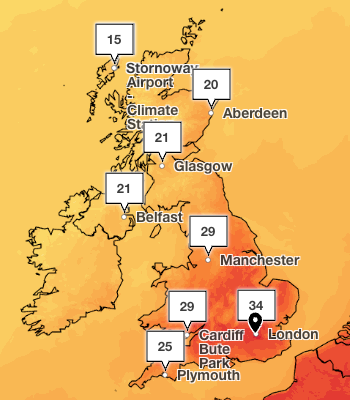
The mercury could reach 34C degrees in London on Monday, according to the Met Office - but why are the UK’s highest temperatures usually in London?
Another heatwave is forecast with weekend temperatures in the south of England set to soar to as high as 30C degrees on Sunday.
Then, on Monday, the Met Office has predicted temperatures could reach a sweltering 34C degrees in London.
Met Office spokesman Graham Madge said: “Temperature models have been edging up slowly and we do believe that the temperatures will be the hottest on Monday in this heatwave period.”
He added that it is “most likely be an isolated temperature somewhere in the South East, London or maybe Cambridge.”
It could mean the country could see its hottest June day, with the previous record standing at 35.6C, recorded at both at Southampton Mayflower Park on June 28 1976 and at Camden Square, north London, on June 29 1957.
So, why does it get so hot in the capital? And is there a reason London heat feels so much more unbearable?
Lack of air conditioning
Unlike other countries around the world that experience temperatures above 30C degrees, most houses in the UK are not fortunate enough to have air conditioning to escape the heat.
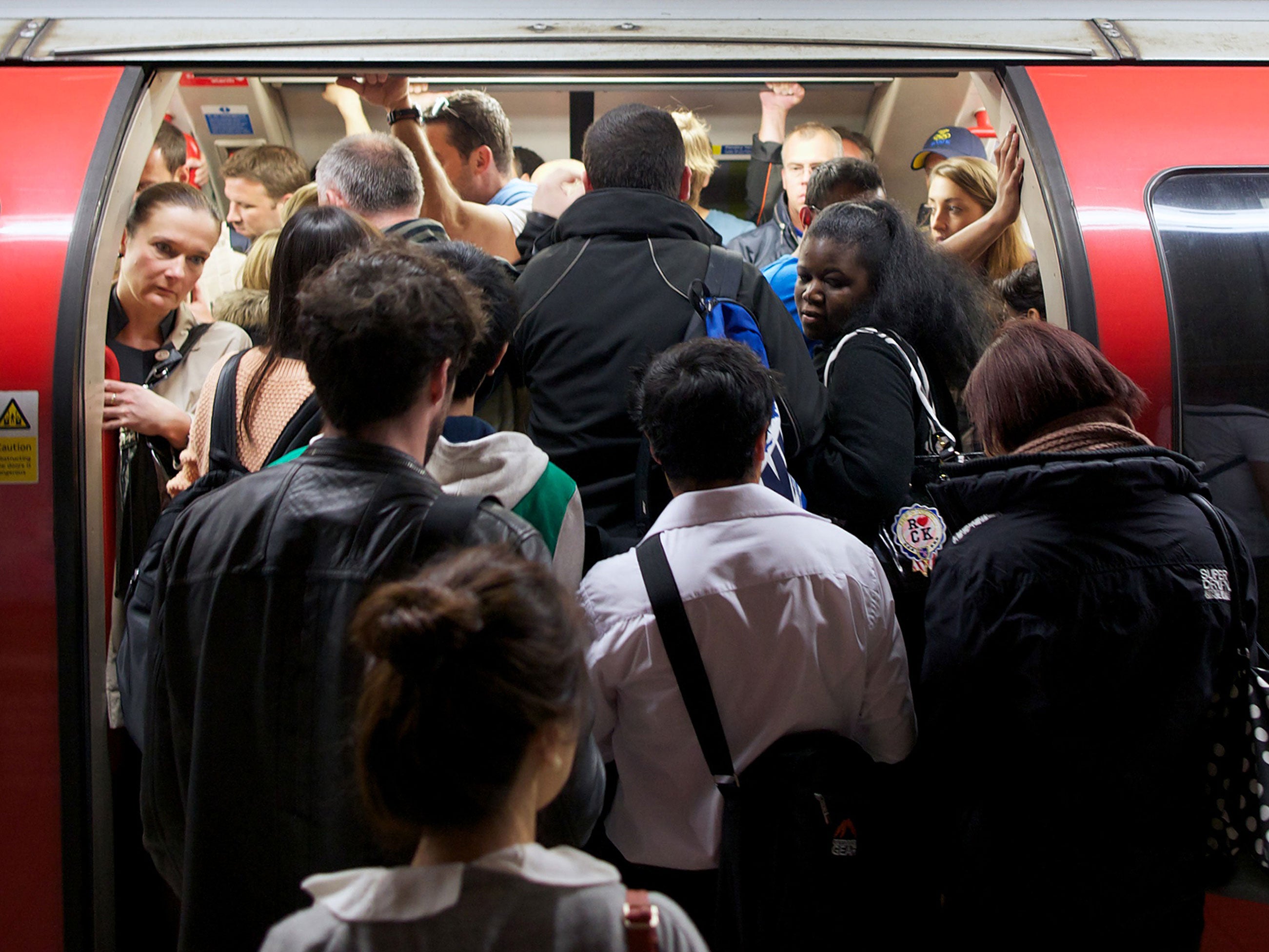
While there are air-conditioned shops and offices in London, not all public transport has the luxury – resulting in some very sticky commutes.
However, although air-conditioning in city centre shops offer some relief, waste heat from air conditioners and vehicles can add warmth to the surroundings, increasing temperatures.
Buildings are designed for cold weather
For most of the year, weather in the UK is not baking sunshine, but instead a chillier climate, as a result houses are designed to keep the heat in.
The country focuses on making homes insulated to reduce energy usage and retain heat in winter, but that means it can get very hot in the summer.
Dr Oscar Brousse, an expert in Urban Meteorology at University College London, told the Independent: “Buildings absorb heat efficiently because of their radiative and thermal properties induced by the common materials we use to build them.”
She added: “These properties can be changed, by implementing green or cool roofs, for example.”
Concentration of people in urban areas
The urban heat island effect is another phenomenon that occurs with a dense population.
“Living in a city can increase vulnerability to heat. Many deaths during heatwaves occur because of the combined effect of high temperatures and the urban micro-climate,” the Met Office has warned previously.
Buildings absorb rather than reflect the sun’s heat, the forecaster explained.
Dr Brousse added: “Buildings also release heat really efficiently and can cool down quickly.
“The issue in urban environments is that this heat is then radiated back to surrounding buildings, therefore delaying the cooling process and leading to the so-called ‘urban heat island effect’, particularly pronounced in the early morning just before sunrise; the coolest hours of the day.”
In cities like London, tall buildings and narrow streets reduce wind speeds, and the removal of trees reduces the natural cooling effect of shading and evaporation, the Met Office said.

Air pollution
Pollution from car fumes and planes overhead not only decreases air quality but also increase heat by trapping it in.
“Air pollution can also cause the effect of a micro greenhouse gas layer, stopping heat from radiating back into the atmosphere,” the Met Office said.
Dr Brousse said: “Certain aerosols may indeed impact incoming solar radiation, in particular, and reflect back part of the incoming energy, thus having a protective effect.
“It can also contribute to increase cloud coverage which have important implications on heating/cooling of land during day/night.”
London’s location
The record-breaking temperatures are often recorded in London and Kent - which are the furthest South and East parts of the British Isles.
Dr Brousse explained that heatwaves tend to come from southern and eastern continental climates.
He said: “As they progress further North, they lose energy, thereby making Southerner parts hotter relatively speaking.
“All of this contributes to hotter temperatures on average in the southeast of England. On top of this, London observes a pronounced urban heat island which further increases the average temperatures experienced in the city.”
Join our commenting forum
Join thought-provoking conversations, follow other Independent readers and see their replies
Comments
Bookmark popover
Removed from bookmarks