Fire crew dealt with almost 27,000 wildfires this year amid summer heatwaves
Fire chiefs said that the escalating frequency and intensity of wildfires placed a significant strain on resources
England’s fire services battled almost 27,000 grassland, woodland, and crop fires during the UK’s warmest spring and summer on record, according to new research.
The unprecedented conditions saw some services record their highest number of incidents for the spring period since comparable data began, as prolonged dry weather led to drought declarations across several regions.
Fire chiefs said that the escalating frequency and intensity of wildfires placed a significant strain on resources.
However, they commended their crews for demonstrating “exceptional bravery and professionalism in challenging conditions”.
Figures obtained by the Press Association through freedom of information (FOI) requests reveal that at least 12,454 grassland, woodland, or crop fires were recorded by fire services in England between March and May 2025.
This represents a more than fourfold increase compared to the 2,621 incidents logged during the same period in 2024, marking the highest spring total in over a decade.

A further 14,448 of these types of fires were recorded in June to August, one of the highest summer totals in recent years, though not as many as in 2022 (20,858) when a spell of very hot weather pushed temperatures in the UK above 40C for the first time.
This year didn’t see quite such intense heat, with a peak of 35.8C measured on 1 July in Faversham.
But both spring and summer 2025 were the UK’s warmest on record, based on Met Office mean temperature data, as persistent high-pressure weather systems brought prolonged spells of sunshine to the country, including a run of four heatwaves from mid-June to mid-August.
Spring was also the driest in the UK for more than 100 years and it was the combination of dry soils, little or no rain and above-average heat that sparked so many wildfires across the country.
The figures of 12,454 grassland, woodland or crop fires in March-May this year and 14,448 in June-August, 26,902 in total, will underestimate the true scale of the outbreaks, as PA obtained full data from only 35 of the 43 mainland fire services in England.
Fires in this category include those on heathland and moorland; in fields and hedgerows; and by the side of roads, rivers and railways.
Dorset and Wiltshire fire service recorded 298 of these incidents between March and May this year, its highest number for spring since comparable data began in 2011, followed by 459 in June-August during a summer that was “one of the most challenging for wildfires that we’ve ever faced”, according to chief fire officer Andy Cole.
A fire on Holt Heath near Bournemouth in Dorset in August was declared a major incident and took nearly a week to extinguish fully, destroying 72 hectares and requiring support from services across the UK.

“Our firefighters worked around the clock in arduous conditions, often for days at a time, to protect lives, homes, and our natural environment,” Mr Cole added, with the increased frequency and intensity of wildfires putting “a strain on resources, such as equipment and finances”.
Dorset and Wiltshire was one of 10 fire services that reported a record number of grassland, woodland and crop fires this spring, according to PA analysis.
Others include Tyne and Wear, which reported 1,240 such fires, Durham & Darlington (719), Derbyshire (334) and Northumberland (309).
Official figures on outdoor fires in England are published by the housing department, with 2011 the first full calendar year for which data is available.
PA used FOI requests to obtain the latest equivalent figures up to and including summer 2025.
West Yorkshire fire service recorded 1,094 grassland, woodland and crop fires this spring, six times the number in 2024, with a further 1,156 incidents in the summer.
Mick Rhodes, wildfire lead at West Yorkshire, said: “2025 has been one of the driest years on record and we saw the real impact of this with spikes in demand with large fires at Marsden, Rishworth and Castle Hill, all near Huddersfield.
“Moorland fires can burn for days and require a huge response operationally – they’re also exhausting for our firefighters who tackle them, due to the often-remote nature and hot weather that accompany them.
“To combat these threats, we take a proactive approach, working in our communities to educate and highlight the importance of enjoying our moorland safely. We also invest in the latest firefighting technology and have specialist wildfire crews who train specifically in tackling these types of fire.”
Kate Saint, head of prevention at Devon and Somerset fire and rescue service, said 2025 saw a “significant increase” in wildfires, with crews showing “exceptional bravery and professionalism in challenging conditions, using specialist training and equipment to respond quickly and limit damage”.
“Preventing these incidents in the first place is the most effective way to protect lives and our landscapes,” she added, as “Many wildfires are avoidable and are often caused by everyday activities such as discarded cigarettes, barbecues or fires not properly extinguished.”
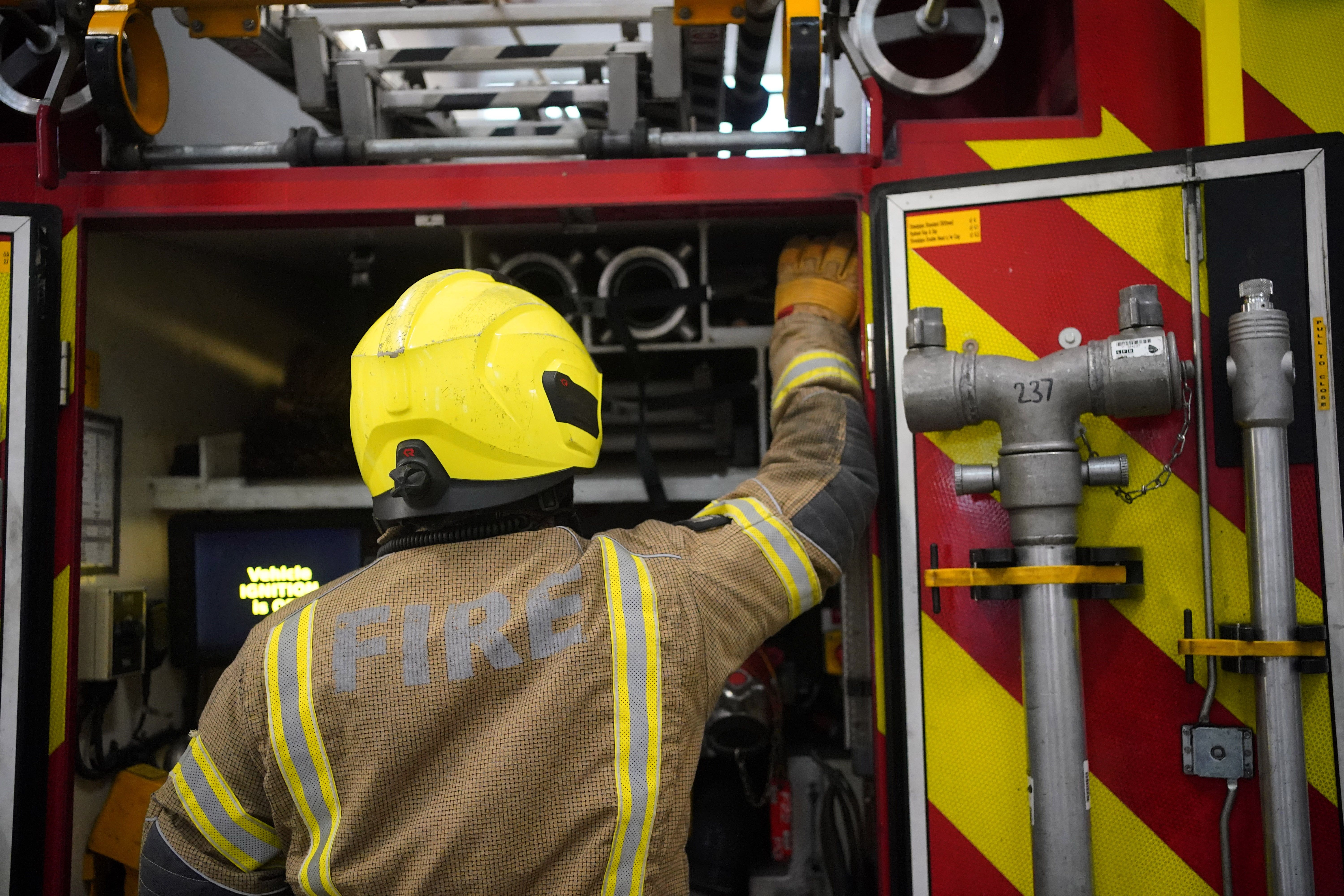
Some 229 grassland, woodland and crop fires were recorded by the Devon and Somerset service in spring this year, up from just 46 in 2024, with 443 in the summer.
Outbreaks of wildfires in 2025 were not just confined to the rural areas or remote parts of the countryside.
Dozens of homes were evacuated in July after a fire in a field near Marlbrook, close to Bromsgrove in Worcestershire, while the same month saw homes evacuated after a grass fire in Dagenham, east London, which led to roughly eight hectares of land scorched, with around 125 firefighters needed to extinguish the blaze at its height.
A fire the following month on Wanstead Flats near Ilford in northeast London damaged four hectares of grassland.
London fire commissioner Jonathan Smith said the force had learned from previous events, such as the summer of 2022, to invest in new equipment and training to help tackle wildfires.
“We know that climate change is having an impact on London’s weather, particularly during the summer, where we are seeing drier and hotter conditions more often,” he added.
“As the threat from wildfires continues to increase, it is also important that there is continued investment to ensure we have the necessary tools available to address the challenges that lie ahead.”
There were 659 grassland, woodland and crop fires recorded by the London Fire Brigade in spring 2025, up from 183 last year, with a further 1,235 in the summer.
The Met Office has already said 2025 is “likely” to be the UK’s warmest year since records began, based on the mean average temperature across the country up to 21 December.
It will confirm the exact figure in early January 2026.
Bookmark popover
Removed from bookmarks