Nigel Farage says he would vote against putting UK boots on ground in Ukraine
Nigel Farage said the UK has neither ‘the manpower nor the equipment to go into an operation that clearly has no ending timeline’
Nigel Farage has said he would vote against the deployment of peacekeeping troops in Ukraine, saying the UK has neither “the manpower nor the equipment” for such an operation.
It came after Sir Keir Starmer said MPs will have the opportunity to vote on the final number of troops deployed to Ukraine in the event of a peace deal.
Addressing a press conference alongside Emmanuel Macron in Paris on Tuesday, Sir Keir said that British and French forces will help to train Ukrainian troops and protect stocks of weaponry, aimed at deterring future Russian aggression.
But the Reform UK leader hit out at the plan, saying the Coalition of the Willing - a partnership of countries that have been discussing putting boots on the ground in Ukraine to preserve a possible peace deal - is “just two countries”.
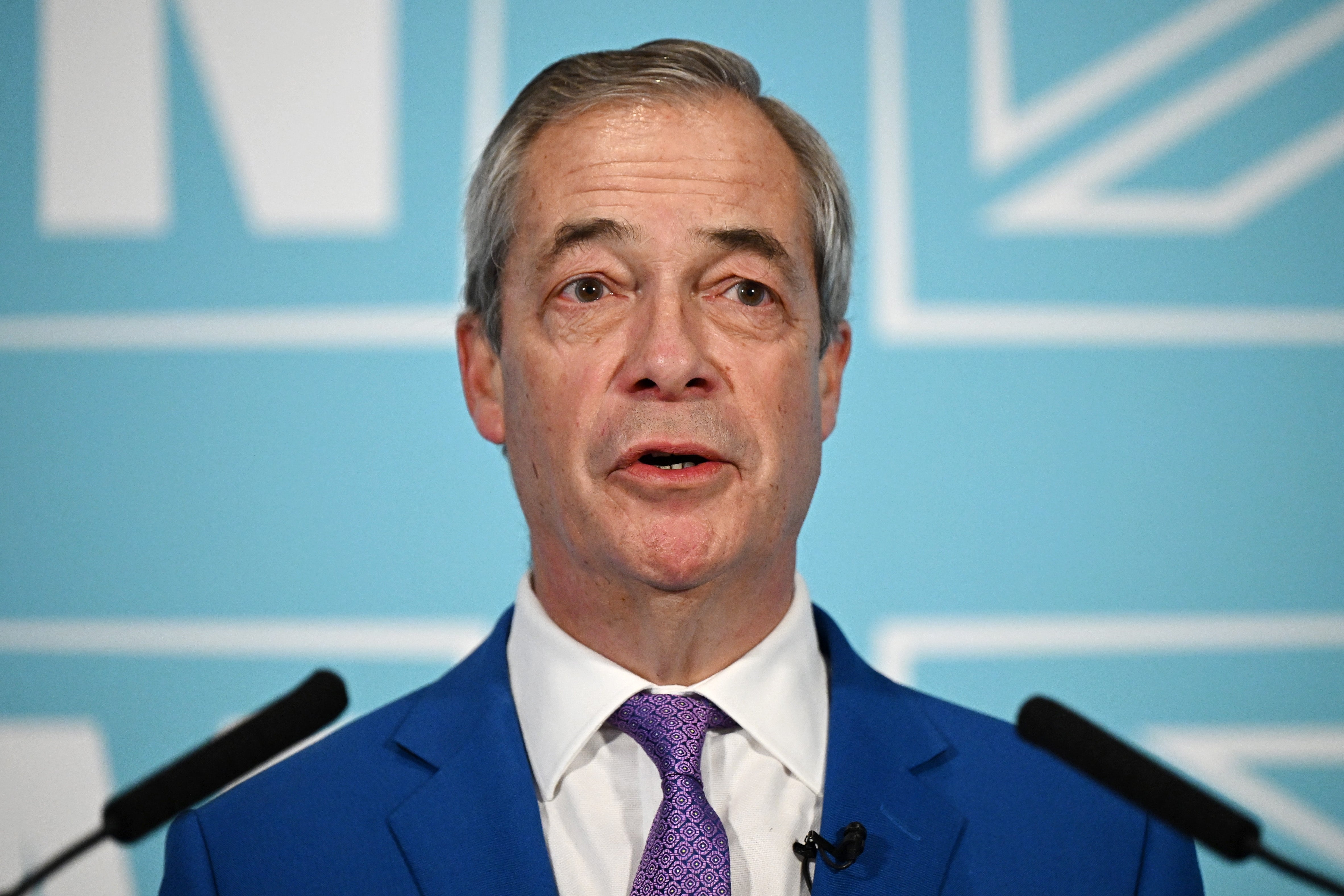
The MP for Clacton told Times Radio: “It would be a very interesting vote. I would vote against. We neither have the manpower nor the equipment to go into an operation that clearly has no ending timeline.
“If it was a sort of Korean-style UN where lots of countries were involved and we could rotate in and out, I might consider it then. But frankly, what you saw yesterday was Macron standing there with the British prime minister.
“Giorgia Meloni was outside having a cigarette, not getting involved. The German gave a speech and said nothing. The Coalition of the Willing is just two countries.
“Frankly, what this would be is a modern-day British army of the Rhine. When we did that, defence was 5 per cent of our national expenditure, and we were there for 50 years.”
He added: “If the coalition of the willing was eight, ten, a dozen countries and we could rotate battalions through then I might then I might well say, ‘Yeah, absolutely let’s do it.’ As it is, it will be us and the French completely exposed for an unlimited period of time.”
Mr Farage’s party has previously faced accusations of pandering to Russia after one of its politicians admitted taking bribes to make statements in favour of Vladimir Putin’s Russia while he was a member of the European Parliament.
The prime minister told the Commons during Prime Minister’s Questions (PMQs) on Wednesday that the number of personnel placed in “military hubs” in Ukraine will be determined in accordance with the UK’s military plans. The agreement was revealed following a meeting of the coalition of the willing on Tuesday.
The US has signalled it will provide a security guarantee to the European-led peacekeeping efforts, something which Donald Trump has previously appeared reluctant to do.
Opening the first PMQs of the year, Sir Keir said the coalition of the willing had made “real progress on security guarantees, which are vital for securing a just and lasting peace” at Tuesday meeting.
“I will keep the House updated as the situation develops and, were troops to be deployed under the declaration signed, I would put that matter to the House for a vote,” he adding, saying a statement would be made to the House “at the earliest opportunity”.
But Tory leader Kemi Badenoch suggested Sir Keir wanted to dodge questions from MPs, adding: “Why is today not the earliest opportunity?”
She then pressed the prime minister to “confirm how many troops would be sent to Ukraine and whether they would be in a combat role”.
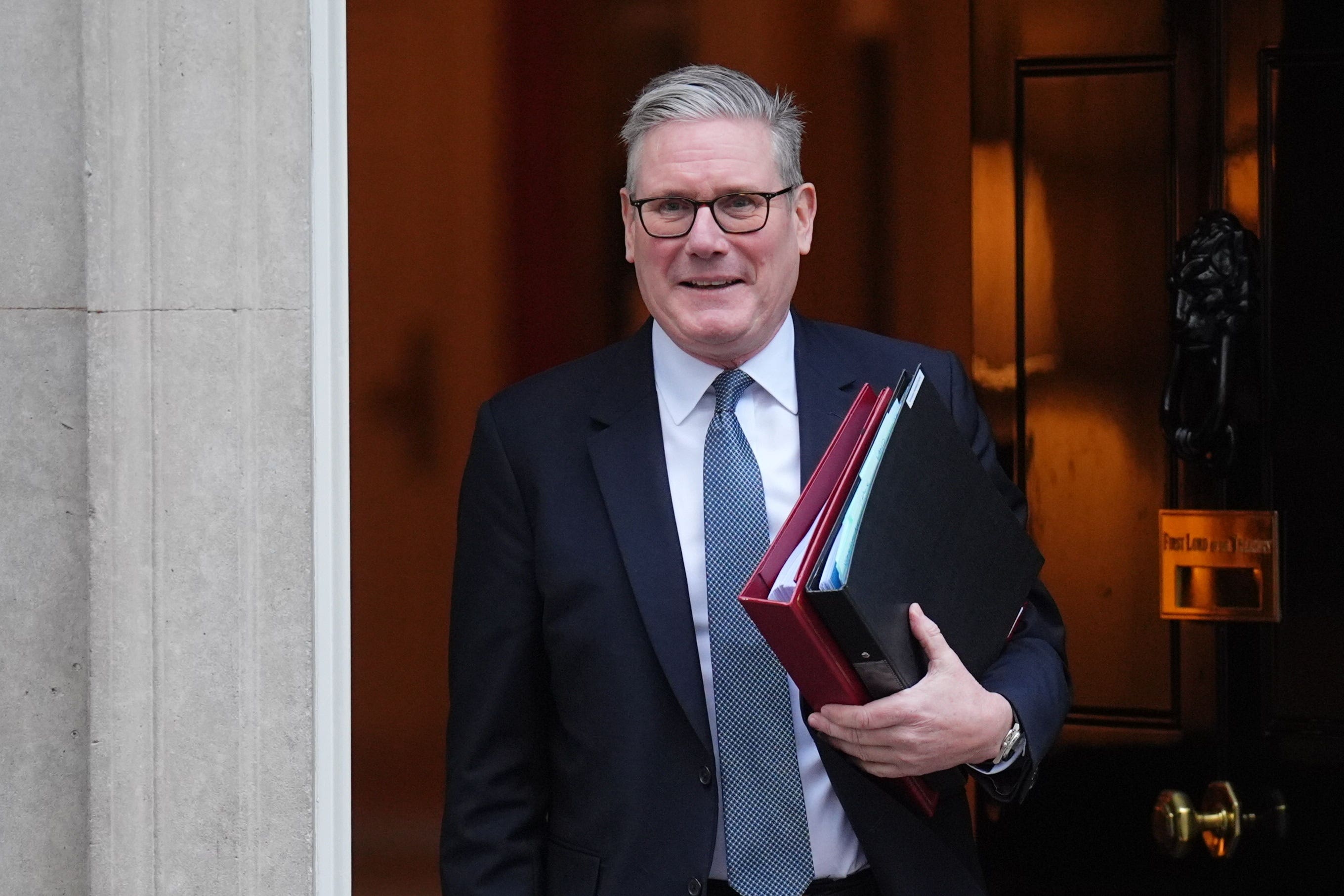
He replied: “I will be clear with the House that there would only be deployment after a ceasefire, it would be to support Ukraine’s capabilities, it would be to conduct a deterrence operations and to construct and protect military hubs.
“The number will be determined in accordance with our military plans, which we are drawing up and looking to other members to support. So the number I will put before the House before we were to deploy.”
He reiterated if there was a “legal instrument” required, he would have a debate and vote in the Commons.
Neither the prime minister’s press secretary nor the official spokesman could say whether a Commons vote rejecting British deployment in Ukraine would bind the government, as it did when David Cameron lost a vote on military action in Syria in 2013.
The spokesman told reporters: “I think the point is, until we’ve secured the cessation of hostilities, our planning teams are focused on ensuring the coalition of the willing is able to flex to the requirements of any peace deal and ensure Ukraine’s armed forces are able to regenerate, to defend Ukraine, and support European security for generations to come. So it is a staged process.”
The spokesman would not say how many British troops would be deployed in Ukraine under the plans, nor whether there was a commitment by France and the UK to match each other’s military contribution.
Join our commenting forum
Join thought-provoking conversations, follow other Independent readers and see their replies
Comments
Bookmark popover
Removed from bookmarks